


Geoff Read
@annelidsci.bsky.social
Marine annelid taxonomist, Aotearoa
Pinned
Geoff Read
@annelidsci.bsky.social
· Apr 4

The journey to discover New Zealand marine annelids starts here: niwa.co.nz/biodiversity... Kingdom Animalia, phylum Annelida (bristleworms & kin). Chapt 18, in Kelly et al, Dec 2023. Marine Biota of Aotearoa New Zealand
Reposted by Geoff Read

oh Wow! A male epitoke (reproductive stage) of this polychaete, Proceraea hanssoni! #wormwednesday www.inaturalist.org/observations...

Proceraea hanssoni
Proceraea hanssoni in January 2026 by Jen Strongin
www.inaturalist.org
February 4, 2026 at 4:21 PM
oh Wow! A male epitoke (reproductive stage) of this polychaete, Proceraea hanssoni! #wormwednesday www.inaturalist.org/observations...
Reposted by Geoff Read
Registration and Abstract Submissions for the 15th International Polychaete Conference is now open!! #IPC15
polychaete-association.com/ipc15-frankf...
polychaete-association.com/ipc15-frankf...

IPC15, Frankfurt 2026
Frankfurt, Germany • 27–31 July 2026Hosted at the Senckenberg Research Institute and Natural History Museum Frankfurt The 15th International Polychaete Conference (IPC15) will bring together resear…
polychaete-association.com
February 2, 2026 at 4:30 PM
Registration and Abstract Submissions for the 15th International Polychaete Conference is now open!! #IPC15
polychaete-association.com/ipc15-frankf...
polychaete-association.com/ipc15-frankf...
Reposted by Geoff Read
Star-shaped worm colonies? ✨🪱
Our new paper describes 𝘚𝘢𝘭𝘮𝘢𝘤𝘪𝘯𝘢 𝘴𝘵𝘦𝘭𝘭𝘢𝘦𝘣𝘢𝘺𝘦𝘯𝘴𝘪𝘴, named after Mauritania’s Baie de l’Étoile (Bay of Stars).
Open access & featured on the Feb cover of Ecology & Evolution.
🔗 doi.org/10.1002/ece3...
#newspecies #polychaete #taxonomy
@sgn.one @oceanspecies.bsky.social
Our new paper describes 𝘚𝘢𝘭𝘮𝘢𝘤𝘪𝘯𝘢 𝘴𝘵𝘦𝘭𝘭𝘢𝘦𝘣𝘢𝘺𝘦𝘯𝘴𝘪𝘴, named after Mauritania’s Baie de l’Étoile (Bay of Stars).
Open access & featured on the Feb cover of Ecology & Evolution.
🔗 doi.org/10.1002/ece3...
#newspecies #polychaete #taxonomy
@sgn.one @oceanspecies.bsky.social

Macroid Formation in Salmacina stellaebayensis n. sp. From Mauritania's Baie de l'Étoile With New Insights on Mitogenome Evolution in Serpulidae (Annelida)
We describe Salmacina stellaebayensis n. sp. from Mauritania's Baie de l'Étoile and provide the first complete mitochondrial genome for the genus Salmacina. The species forms distinctive macroid colo...
doi.org
January 29, 2026 at 7:22 PM
Star-shaped worm colonies? ✨🪱
Our new paper describes 𝘚𝘢𝘭𝘮𝘢𝘤𝘪𝘯𝘢 𝘴𝘵𝘦𝘭𝘭𝘢𝘦𝘣𝘢𝘺𝘦𝘯𝘴𝘪𝘴, named after Mauritania’s Baie de l’Étoile (Bay of Stars).
Open access & featured on the Feb cover of Ecology & Evolution.
🔗 doi.org/10.1002/ece3...
#newspecies #polychaete #taxonomy
@sgn.one @oceanspecies.bsky.social
Our new paper describes 𝘚𝘢𝘭𝘮𝘢𝘤𝘪𝘯𝘢 𝘴𝘵𝘦𝘭𝘭𝘢𝘦𝘣𝘢𝘺𝘦𝘯𝘴𝘪𝘴, named after Mauritania’s Baie de l’Étoile (Bay of Stars).
Open access & featured on the Feb cover of Ecology & Evolution.
🔗 doi.org/10.1002/ece3...
#newspecies #polychaete #taxonomy
@sgn.one @oceanspecies.bsky.social
Reposted by Geoff Read
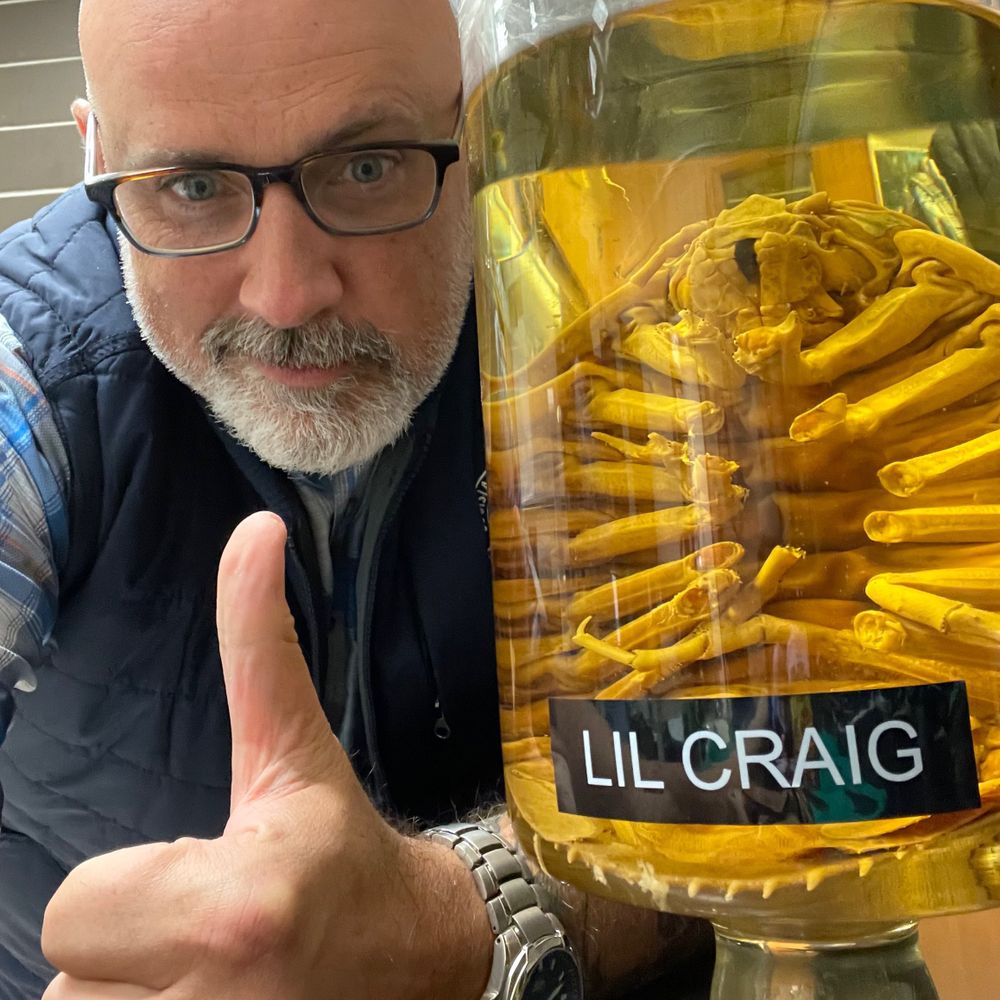
The balloon worm looks nothing like a typical worm because it doesn’t live on the seafloor, it floats in the deep midwater. With a gelatinous, bag-like body for buoyancy, it drifts and feeds on sinking organic particles. www.youtube.com/watch?v=N5KG... #marinelife #wormwednesday

Weird and Wonderful: The balloon worm floats in the ocean’s twilight zone
YouTube video by MBARI (Monterey Bay Aquarium Research Institute)
www.youtube.com
January 21, 2026 at 2:50 PM
The balloon worm looks nothing like a typical worm because it doesn’t live on the seafloor, it floats in the deep midwater. With a gelatinous, bag-like body for buoyancy, it drifts and feeds on sinking organic particles. www.youtube.com/watch?v=N5KG... #marinelife #wormwednesday
Reposted by Geoff Read

I am done screaming into the void today so here you go, have a whole loaf of scale worm. That thing is huge. From @schmidtocean.bsky.social dive 784 #antarcticclimateconnections #MarineLife
January 1, 2026 at 7:53 PM
I am done screaming into the void today so here you go, have a whole loaf of scale worm. That thing is huge. From @schmidtocean.bsky.social dive 784 #antarcticclimateconnections #MarineLife
#WormWednesday Hyalinoecia onuphids (quillworms) scavenging something organic
January 1, 2026 at 1:17 AM
#WormWednesday Hyalinoecia onuphids (quillworms) scavenging something organic
Reposted by Geoff Read
MOAR colorful NOTOPYGOS from Kwajalein Atoll! #wormwednesday www.inaturalist.org/observations...

Notopygos albiseta
Notopygos albiseta from Kwajalein Atoll, RMI on November 13, 2011 by uwkwaj
www.inaturalist.org
December 10, 2025 at 4:31 PM
MOAR colorful NOTOPYGOS from Kwajalein Atoll! #wormwednesday www.inaturalist.org/observations...
Reposted by Geoff Read
Kwajalein has a lot of these! NOTOPYGOS! #wormwednesday and thanks to Scott Johnson for these great shots! www.inaturalist.org/observations...

Notopygos albiseta
Notopygos albiseta from Kwajalein Atoll, RMI on June 24, 2014 by uwkwaj
www.inaturalist.org
December 10, 2025 at 4:34 PM
Kwajalein has a lot of these! NOTOPYGOS! #wormwednesday and thanks to Scott Johnson for these great shots! www.inaturalist.org/observations...
Reposted by Geoff Read

New paper out on the impact from a deep sea mining test in the Pacific Ocean. Great collaboration with the Natural History Museum London and the National Oceanography Centre Southampton . www.nature.com/articles/s41...

Impacts of an industrial deep-sea mining trial on macrofaunal biodiversity - Nature Ecology & Evolution
A species-level dataset of sediment-dwelling macrofauna, sampled 2 years before and 2 months after a test of a commercial deep-sea mining machine, reveals losses of macrofaunal density and species ric...
www.nature.com
December 5, 2025 at 9:49 AM
New paper out on the impact from a deep sea mining test in the Pacific Ocean. Great collaboration with the Natural History Museum London and the National Oceanography Centre Southampton . www.nature.com/articles/s41...
Reposted by Geoff Read
#Crustmas and #wormwednesday!
Codonobdella is a genus of leech found in the depths of Lake Baikal - there are three different species, and unlike most leeches which feed on vertebrate animals, Codonobdella is a parasite of amphipods
#Invertebrate 🧪
www.sciencedirect.com/science/arti...
#Invertebrate 🧪
www.sciencedirect.com/science/arti...

December 1, 2025 at 4:06 PM
#Crustmas and #wormwednesday!
One day we might learn what the "tubeworms" were that formed this convenient refuge for fish. They are identified only as a Lamellibrachia.

Congregation of cusk-eels (Genypterus chilensis, Ophidiiformes) at a deep-sea methane seep off Chile
🧪🦑🌊
esajournals.onlinelibrary.wiley.com/doi/10.1002/...
🧪🦑🌊
esajournals.onlinelibrary.wiley.com/doi/10.1002/...

October 24, 2025 at 2:52 AM
One day we might learn what the "tubeworms" were that formed this convenient refuge for fish. They are identified only as a Lamellibrachia.
Reposted by Geoff Read
📢 The First Circular for the 15th International Polychaete Conference (IPC15) is out! Join us in Frankfurt, Germany • 27–31 July 2026
#IPC15 #Polychaetes #Annelida
polychaete-association.com/ipc15-frankf...
#IPC15 #Polychaetes #Annelida
polychaete-association.com/ipc15-frankf...

October 23, 2025 at 7:32 PM
📢 The First Circular for the 15th International Polychaete Conference (IPC15) is out! Join us in Frankfurt, Germany • 27–31 July 2026
#IPC15 #Polychaetes #Annelida
polychaete-association.com/ipc15-frankf...
#IPC15 #Polychaetes #Annelida
polychaete-association.com/ipc15-frankf...
Reposted by Geoff Read
Palola worms! is for EATIN'! #wormwednesday Indonesia www.inaturalist.org/observations...

Genus Palola
Palola from Pulau Sumba, East Nusa Tenggara, ID on February 4, 2018 at 10:47 AM by littleoceankid
www.inaturalist.org
October 1, 2025 at 2:32 PM
Palola worms! is for EATIN'! #wormwednesday Indonesia www.inaturalist.org/observations...
Reposted by Geoff Read
Meet Spinther bohnorum n. sp. Tilic & Rouse 2025 ✨— a tiny but stunning worm!
Spinther species are enigmatic worms that always seem to dwell on sponges, but we still don’t know exactly where they belong on the annelid tree of life. A shiny small mystery wrapped in glitter, basically. 😅🪱
Spinther species are enigmatic worms that always seem to dwell on sponges, but we still don’t know exactly where they belong on the annelid tree of life. A shiny small mystery wrapped in glitter, basically. 😅🪱


October 16, 2025 at 3:55 AM
Meet Spinther bohnorum n. sp. Tilic & Rouse 2025 ✨— a tiny but stunning worm!
Spinther species are enigmatic worms that always seem to dwell on sponges, but we still don’t know exactly where they belong on the annelid tree of life. A shiny small mystery wrapped in glitter, basically. 😅🪱
Spinther species are enigmatic worms that always seem to dwell on sponges, but we still don’t know exactly where they belong on the annelid tree of life. A shiny small mystery wrapped in glitter, basically. 😅🪱
Whoa indeed! What life form is that? #WormWednesday
Whoa, check that out! I figure it's a worm, but I've never seen tubes like this coming off the seafloor. Wait for it... @nautiluslive.org dive L1008 #CookIslands #MarineLife
October 14, 2025 at 1:39 AM
Whoa indeed! What life form is that? #WormWednesday
Reposted by Geoff Read
SO MANY PATTERN! from India! Hesione ceylonica! #wormwednesday www.inaturalist.org/observations...

Hesione ceylonica
Hesione ceylonica from India on October 17, 2024 at 04:40 PM by Sachin Rane🐾
www.inaturalist.org
September 24, 2025 at 4:04 PM
SO MANY PATTERN! from India! Hesione ceylonica! #wormwednesday www.inaturalist.org/observations...
Reposted by Geoff Read
LONG ARM= genus Longibrachium! Wotta critter! Wotta set of prongs! #wormwednesday Indonesia www.inaturalist.org/observations...

Longibrachium arariensis
Longibrachium arariensis from Komodo, Komodo, Manggarai, Nusa Tenggara Timur, Indonesia on August 28, 2015 at 06:40 PM by Mark Rosenstein
www.inaturalist.org
October 1, 2025 at 2:36 PM
LONG ARM= genus Longibrachium! Wotta critter! Wotta set of prongs! #wormwednesday Indonesia www.inaturalist.org/observations...
Reposted by Geoff Read

Nightmare fuel for corals: The Bearded Fireworm 😱🔥🪱🪸 #beardedfireworm #fireworm #nightmarefuel #corallivore #coral #coralhead #coralcitycamera #miami #portmiami #biscaynebay #coralcity
September 11, 2025 at 4:59 PM
Nightmare fuel for corals: The Bearded Fireworm 😱🔥🪱🪸 #beardedfireworm #fireworm #nightmarefuel #corallivore #coral #coralhead #coralcitycamera #miami #portmiami #biscaynebay #coralcity
Reposted by Geoff Read
Usually, when something or someone touches a Christmas tree worm's feathery radioles, it would immediately retract back into its hole.
But not blennies and gobies - the worms consider those fishes as homies who are allowed to touch their radioles.
#Invertebrate 🧪
link.springer.com/article/10.1...
But not blennies and gobies - the worms consider those fishes as homies who are allowed to touch their radioles.
#Invertebrate 🧪
link.springer.com/article/10.1...

September 1, 2025 at 3:26 AM
Usually, when something or someone touches a Christmas tree worm's feathery radioles, it would immediately retract back into its hole.
But not blennies and gobies - the worms consider those fishes as homies who are allowed to touch their radioles.
#Invertebrate 🧪
link.springer.com/article/10.1...
But not blennies and gobies - the worms consider those fishes as homies who are allowed to touch their radioles.
#Invertebrate 🧪
link.springer.com/article/10.1...
Reposted by Geoff Read
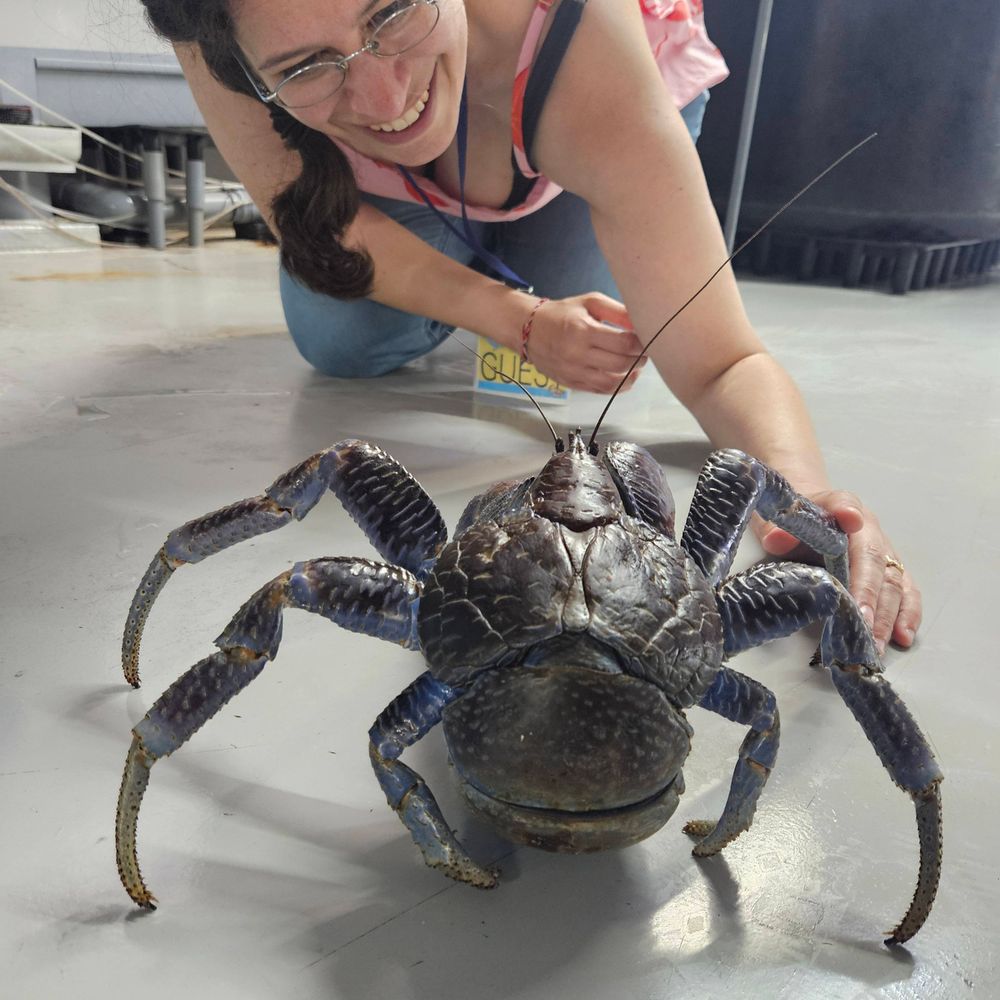
Porcelain crabs are the icon of "fooled ya, not crab". But Eulenaios cometes goes further by living inside a worm tube!
(Actually, several true and false crabs, and a second worm, are all up in these tubes wtf) 🦀🧪🦑 #InverteFest
peerj.com/articles/2930/
(Actually, several true and false crabs, and a second worm, are all up in these tubes wtf) 🦀🧪🦑 #InverteFest
peerj.com/articles/2930/


August 29, 2025 at 11:48 AM
Porcelain crabs are the icon of "fooled ya, not crab". But Eulenaios cometes goes further by living inside a worm tube!
(Actually, several true and false crabs, and a second worm, are all up in these tubes wtf) 🦀🧪🦑 #InverteFest
peerj.com/articles/2930/
(Actually, several true and false crabs, and a second worm, are all up in these tubes wtf) 🦀🧪🦑 #InverteFest
peerj.com/articles/2930/
Reposted by Geoff Read
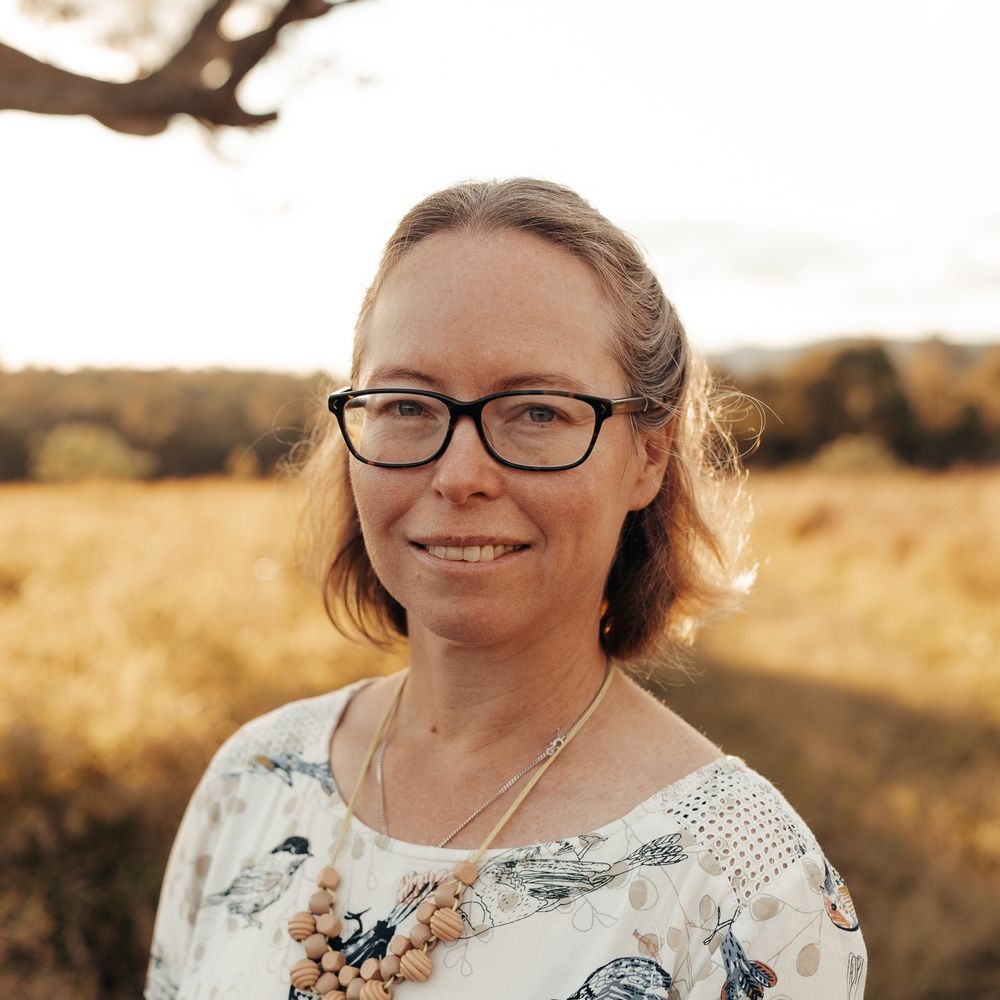
Sad news that Dr Janet (Bradford) Grieve passed away on Saturday. She was a world expert in Copepods, a pioneering woman in biological oceanography in NZ and first women to lead a marine research voyage in nz with her first voyage in 1967. She was a role model, a mentor and a leader.

Janet Grieve - Wikipedia
en.wikipedia.org
August 20, 2025 at 9:43 AM
Sad news that Dr Janet (Bradford) Grieve passed away on Saturday. She was a world expert in Copepods, a pioneering woman in biological oceanography in NZ and first women to lead a marine research voyage in nz with her first voyage in 1967. She was a role model, a mentor and a leader.
Reposted by Geoff Read
Wow. Scale worm? OP reads "Plankton fr the coast of Hitachinaka City, Ibaraki Prefecture. Body length 0.7mm. Perhaps a polychaete larva? It has a distinctive transparent disc-like structure, .. Its eyes are cute too." via @a1AgqW93RTKPUD9 #wormwednesday

August 20, 2025 at 4:36 PM
Wow. Scale worm? OP reads "Plankton fr the coast of Hitachinaka City, Ibaraki Prefecture. Body length 0.7mm. Perhaps a polychaete larva? It has a distinctive transparent disc-like structure, .. Its eyes are cute too." via @a1AgqW93RTKPUD9 #wormwednesday
Reposted by Geoff Read
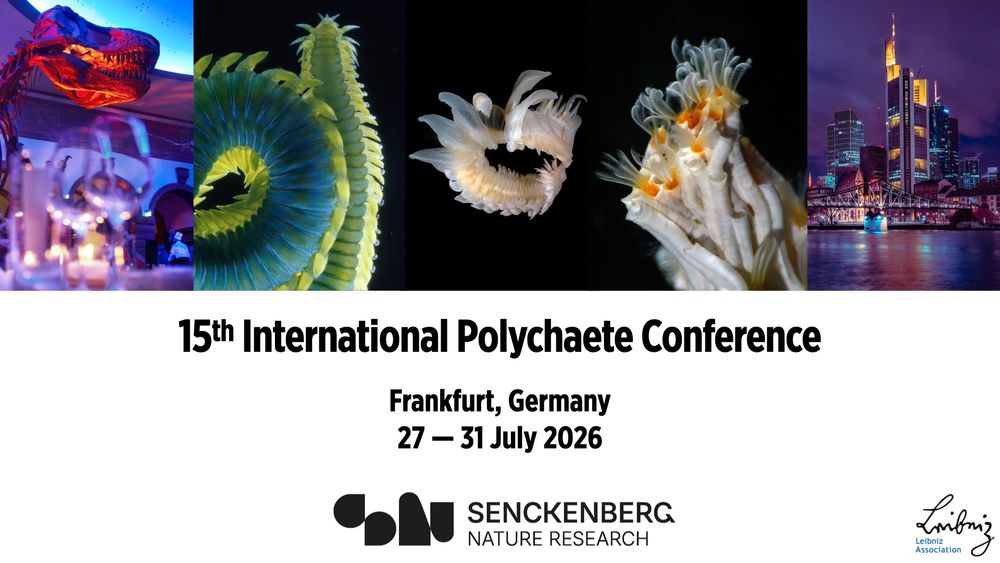
Remember, the next Polychaete Conference #IPC15 is coming to Frankfurt in 2026! Make sure you save the dates - and in the meantime check out the website for the polychaete-association.com
August 16, 2025 at 4:21 AM
Remember, the next Polychaete Conference #IPC15 is coming to Frankfurt in 2026! Make sure you save the dates - and in the meantime check out the website for the polychaete-association.com
Reposted by Geoff Read

What did bone worms eat before whales? Marine reptiles!
www.nhm.ac.uk/discover/new...
www.nhm.ac.uk/discover/new...
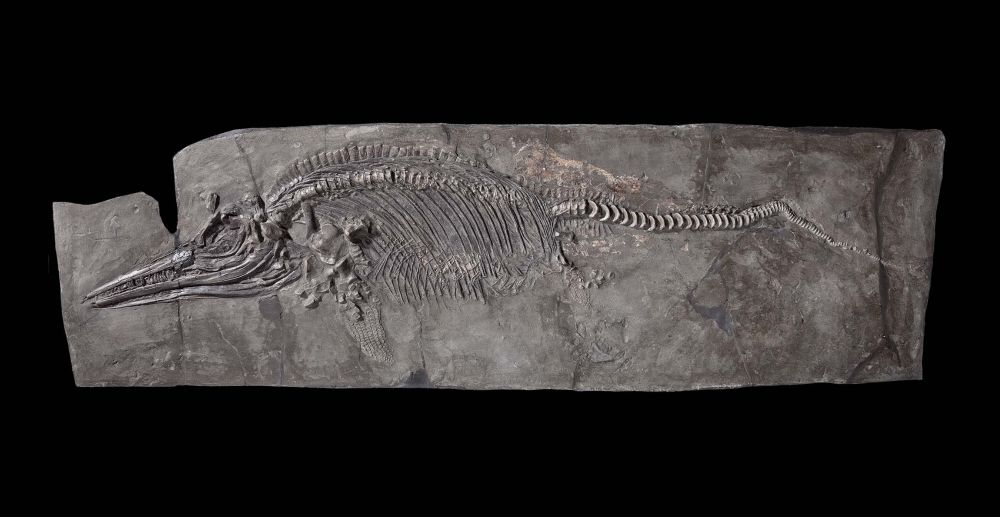
Ancient bone-eating worms ate mosasaur, ichthyosaur and plesiosaur skeletons | Natural History Museum
Bone-eating worms have been cleaning up the ocean floor for over 100 million years.
www.nhm.ac.uk
July 8, 2025 at 10:04 AM
What did bone worms eat before whales? Marine reptiles!
www.nhm.ac.uk/discover/new...
www.nhm.ac.uk/discover/new...
Reposted by Geoff Read
Hey Star Trek nerds, FYI there's Gagh IRL, and they're called palolo.
They're polychaete worms, or more specifically the detached, self-propelled reproductive bits of Palola viridis
#Invertebrate 🧪
- www.abc.net.au/news/2020-10...
- en.wikipedia.org/wiki/Palola_...
They're polychaete worms, or more specifically the detached, self-propelled reproductive bits of Palola viridis
#Invertebrate 🧪
- www.abc.net.au/news/2020-10...
- en.wikipedia.org/wiki/Palola_...

July 16, 2025 at 1:00 AM
Hey Star Trek nerds, FYI there's Gagh IRL, and they're called palolo.
They're polychaete worms, or more specifically the detached, self-propelled reproductive bits of Palola viridis
#Invertebrate 🧪
- www.abc.net.au/news/2020-10...
- en.wikipedia.org/wiki/Palola_...
They're polychaete worms, or more specifically the detached, self-propelled reproductive bits of Palola viridis
#Invertebrate 🧪
- www.abc.net.au/news/2020-10...
- en.wikipedia.org/wiki/Palola_...