



@aitoralbaina.bsky.social
Reposted
It is already more than 10 years old but this open access book about the Tree of Life can still be interesting for (Spanish-speaking) people. We collaborated to write some chapters about different groups of microorganisms.
bit.ly/3tZelyx
bit.ly/3tZelyx

December 15, 2024 at 11:20 AM
It is already more than 10 years old but this open access book about the Tree of Life can still be interesting for (Spanish-speaking) people. We collaborated to write some chapters about different groups of microorganisms.
bit.ly/3tZelyx
bit.ly/3tZelyx
Reposted
Short video about what we do in the MicroMon project hosted in @azti.bsky.social (funded by Spanish govt. and EU) with estuary microbial communities, their global biogeography, interactions, effects of environmental impacts, and their use in eDNA-based monitoring.
www.youtube.com/watch?v=G04y...
www.youtube.com/watch?v=G04y...
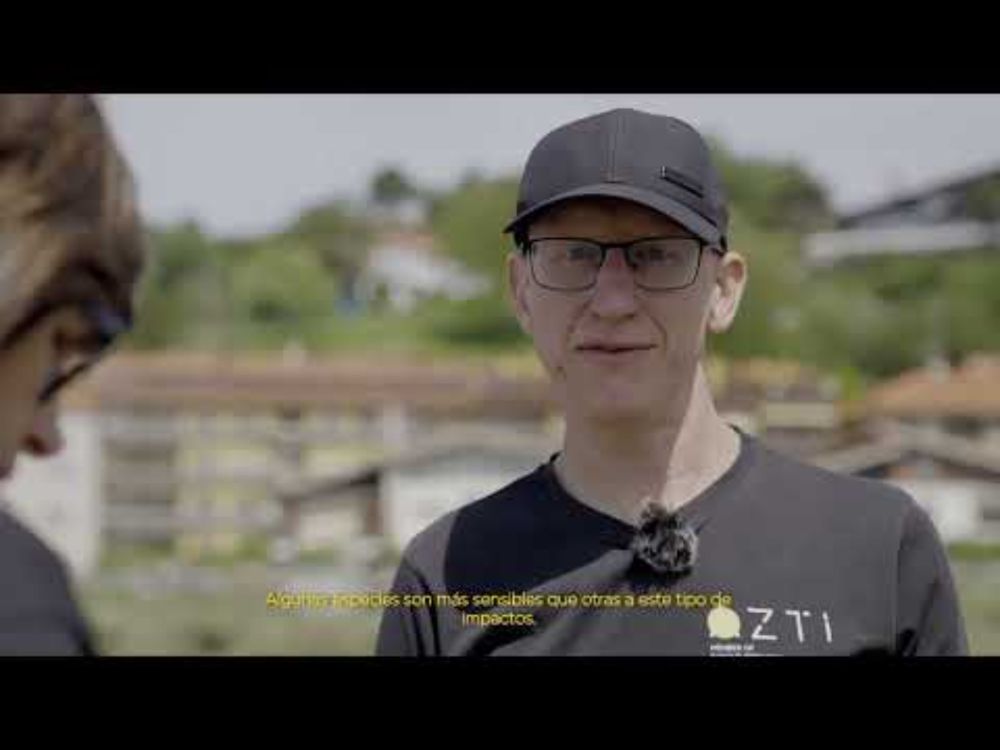
MICROMON: DNA from micro-organisms to monitor the health of estuarine ecosystems
YouTube video by AZTI
www.youtube.com
June 27, 2025 at 4:37 PM
Short video about what we do in the MicroMon project hosted in @azti.bsky.social (funded by Spanish govt. and EU) with estuary microbial communities, their global biogeography, interactions, effects of environmental impacts, and their use in eDNA-based monitoring.
www.youtube.com/watch?v=G04y...
www.youtube.com/watch?v=G04y...
Reposted
The answer, based on #eDNA #metabarcoding seems to be that in addition to their favourite staple, #copepods of the genera Clausocalanus, Paracalanus, Pseudocalanus and Ctenocalanus, they eat as much as 14% of other fish larvae.
September 19, 2025 at 4:37 PM
The answer, based on #eDNA #metabarcoding seems to be that in addition to their favourite staple, #copepods of the genera Clausocalanus, Paracalanus, Pseudocalanus and Ctenocalanus, they eat as much as 14% of other fish larvae.
Reposted
Proud to have contributed in a small way to this study, now published in Marine Biodiversity, where we ask the question that is on everybody's mind, namley
-> What do #hake (Merluccius merluccius) larvae eat? <-
link.springer.com/article/10.1...
-> What do #hake (Merluccius merluccius) larvae eat? <-
link.springer.com/article/10.1...

Diet of European hake (Merluccius merluccius) preflexion larvae in the Atlantic through DNA metabarcoding: eating fish from the very beginning - Marine Biodiversity
The diet of preflexion European hake larvae (Merluccius merluccius) in the North-Eastern Atlantic was assessed through miniCOI metabarcoding in its fishery’s Northern and Southern stocks. As previousl...
link.springer.com
September 19, 2025 at 4:37 PM
Proud to have contributed in a small way to this study, now published in Marine Biodiversity, where we ask the question that is on everybody's mind, namley
-> What do #hake (Merluccius merluccius) larvae eat? <-
link.springer.com/article/10.1...
-> What do #hake (Merluccius merluccius) larvae eat? <-
link.springer.com/article/10.1...
Reposted
¿Han cambiado los veranos en España?
Y tanto: aquí vemos cómo se comportaban en la década de los 80 frente a cómo lo hacen ahora.
T. diaria promedio a 850 hPa (~1500m) y su comparación con la media 1940-2025.
Las anomalías cálidas (+) son ahora más intensas, pero especialmente más persistentes.
Y tanto: aquí vemos cómo se comportaban en la década de los 80 frente a cómo lo hacen ahora.
T. diaria promedio a 850 hPa (~1500m) y su comparación con la media 1940-2025.
Las anomalías cálidas (+) son ahora más intensas, pero especialmente más persistentes.

August 19, 2025 at 8:58 AM
¿Han cambiado los veranos en España?
Y tanto: aquí vemos cómo se comportaban en la década de los 80 frente a cómo lo hacen ahora.
T. diaria promedio a 850 hPa (~1500m) y su comparación con la media 1940-2025.
Las anomalías cálidas (+) son ahora más intensas, pero especialmente más persistentes.
Y tanto: aquí vemos cómo se comportaban en la década de los 80 frente a cómo lo hacen ahora.
T. diaria promedio a 850 hPa (~1500m) y su comparación con la media 1940-2025.
Las anomalías cálidas (+) son ahora más intensas, pero especialmente más persistentes.
Species in disguise: why taxonomic uncertainty matters in zooplankton monitoring.
Long-term zooplankton time-series in the ICES region are vital for tracking ecosystem change.But how reliable are the signals they provide if species are taxonomically unresolved? MORE HERE: www.ices.dk/news-and-eve...
Long-term zooplankton time-series in the ICES region are vital for tracking ecosystem change.But how reliable are the signals they provide if species are taxonomically unresolved? MORE HERE: www.ices.dk/news-and-eve...
Species in disguise: why taxonomic uncertainty matters in zooplankton monitoring
www.ices.dk
July 5, 2025 at 4:14 PM
Species in disguise: why taxonomic uncertainty matters in zooplankton monitoring.
Long-term zooplankton time-series in the ICES region are vital for tracking ecosystem change.But how reliable are the signals they provide if species are taxonomically unresolved? MORE HERE: www.ices.dk/news-and-eve...
Long-term zooplankton time-series in the ICES region are vital for tracking ecosystem change.But how reliable are the signals they provide if species are taxonomically unresolved? MORE HERE: www.ices.dk/news-and-eve...
Reposted

We’re hiring #Plankton Analysts! 🌊💼
🔬 Analyse marine samples from across the globe
🌍 Contribute to vital research on climate, biodiversity & more
🧠 Full training provided – ideal for early-career scientists or #taxonomy enthusiasts
📍 Plymouth, Devon, UK
🔗 mymba.mba.ac.uk/job/plankton...
🔬 Analyse marine samples from across the globe
🌍 Contribute to vital research on climate, biodiversity & more
🧠 Full training provided – ideal for early-career scientists or #taxonomy enthusiasts
📍 Plymouth, Devon, UK
🔗 mymba.mba.ac.uk/job/plankton...

June 9, 2025 at 8:00 AM
We’re hiring #Plankton Analysts! 🌊💼
🔬 Analyse marine samples from across the globe
🌍 Contribute to vital research on climate, biodiversity & more
🧠 Full training provided – ideal for early-career scientists or #taxonomy enthusiasts
📍 Plymouth, Devon, UK
🔗 mymba.mba.ac.uk/job/plankton...
🔬 Analyse marine samples from across the globe
🌍 Contribute to vital research on climate, biodiversity & more
🧠 Full training provided – ideal for early-career scientists or #taxonomy enthusiasts
📍 Plymouth, Devon, UK
🔗 mymba.mba.ac.uk/job/plankton...
Reposted

For proper monitoring of the oceans, we need to know what we have, and what we do not have. But, sometimes, it is very difficult due to taxonomic challenges. Here we review some of the major issues in the ICES and Mediterranean waters for zooplankton uncertainties
academic.oup.com/icesjms/arti...
academic.oup.com/icesjms/arti...

Taxonomic uncertainty in North Atlantic and Mediterranean zooplankton limits species-level monitoring accuracy
Abstract. Taxonomic discussions often permeate the broader scientific community slowly, yet they may hold more relevance than typically assumed. In many zo
academic.oup.com
June 19, 2025 at 11:31 AM
For proper monitoring of the oceans, we need to know what we have, and what we do not have. But, sometimes, it is very difficult due to taxonomic challenges. Here we review some of the major issues in the ICES and Mediterranean waters for zooplankton uncertainties
academic.oup.com/icesjms/arti...
academic.oup.com/icesjms/arti...
Our new review paper "Taxonomic uncertainty in North Atlantic and Mediterranean zooplankton limits species-level monitoring accuracy" is available at @icesmarine.bsky.social ICES Journal of Marine Science.
Congratulations to Janna Peters & coauthors! Download it at academic.oup.com/icesjms/arti...
Congratulations to Janna Peters & coauthors! Download it at academic.oup.com/icesjms/arti...

Taxonomic uncertainty in North Atlantic and Mediterranean zooplankton limits species-level monitoring accuracy
Abstract. Taxonomic discussions often permeate the broader scientific community slowly, yet they may hold more relevance than typically assumed. In many zo
academic.oup.com
June 19, 2025 at 10:22 AM
Our new review paper "Taxonomic uncertainty in North Atlantic and Mediterranean zooplankton limits species-level monitoring accuracy" is available at @icesmarine.bsky.social ICES Journal of Marine Science.
Congratulations to Janna Peters & coauthors! Download it at academic.oup.com/icesjms/arti...
Congratulations to Janna Peters & coauthors! Download it at academic.oup.com/icesjms/arti...
Nuestra compañera Lidia Yebra del @ieo-malaga.bsky.social ha publicado un resumen de nuestro nuevo trabajo en Journalof Plankton Research: Know your limits; miniCOI metabarcoding fails with key marine zooplankton taxa academic.oup.com/plankt/artic...
laboratorioplancton.blogspot.com/2024/12/revi...
laboratorioplancton.blogspot.com/2024/12/revi...

December 2, 2024 at 1:16 PM
Nuestra compañera Lidia Yebra del @ieo-malaga.bsky.social ha publicado un resumen de nuestro nuevo trabajo en Journalof Plankton Research: Know your limits; miniCOI metabarcoding fails with key marine zooplankton taxa academic.oup.com/plankt/artic...
laboratorioplancton.blogspot.com/2024/12/revi...
laboratorioplancton.blogspot.com/2024/12/revi...
December 2, 2024 at 1:14 PM
Nuestra compañera Lidia Yebra del @ieo-malaga.bsky.social ha publicado un resumen de nuestro nuevo trabajo en Journalof Plankton Research: Know your limits; miniCOI metabarcoding fails with key marine zooplankton taxa academic.oup.com/plankt/artic...
laboratorioplancton.blogspot.com/2024/12/revi...
laboratorioplancton.blogspot.com/2024/12/revi...
Reposted

The Economist covered our "Strain on scientific publishing" paper.
What is this all about?
We collectively churn out more & more papers *per scientist*, an increasing pace, in a rapidly changing publication landscape.
Why? How? Want to make sense of this? 🧵
www.economist.com/science-and-...
What is this all about?
We collectively churn out more & more papers *per scientist*, an increasing pace, in a rapidly changing publication landscape.
Why? How? Want to make sense of this? 🧵
www.economist.com/science-and-...
Scientific publishers are producing more papers than ever
Concerns about some of their business models are building
www.economist.com
November 23, 2024 at 2:17 PM
The Economist covered our "Strain on scientific publishing" paper.
What is this all about?
We collectively churn out more & more papers *per scientist*, an increasing pace, in a rapidly changing publication landscape.
Why? How? Want to make sense of this? 🧵
www.economist.com/science-and-...
What is this all about?
We collectively churn out more & more papers *per scientist*, an increasing pace, in a rapidly changing publication landscape.
Why? How? Want to make sense of this? 🧵
www.economist.com/science-and-...