


Alex Gunderson
@agunderson.bsky.social
Assistant professor, Dept of Ecology and Evolutionary Biology, Tulane. Eco-evo physiology, thermal biology, heavy metals, global change.
http://www.physiologicalecology.com
https://scholar.google.com/citations?user=7m2bmbsAAAAJ&hl=en&oi=ao
http://www.physiologicalecology.com
https://scholar.google.com/citations?user=7m2bmbsAAAAJ&hl=en&oi=ao
Pinned

Unprecedented lead tolerance in an urban lizard
Lead (Pb) is an extremely toxic heavy metal pollutant pervasive in many environments with serious health consequences for humans and wildlife. We foun…
www.sciencedirect.com
Early view: we find that brown anole lizards are one of, if not the most, lead tolerant vertebrates known to science combining measures of field exposure, responses to lab dosing, performance assays and functional genomics. Led by PhD student Annelise Blanchette
www.sciencedirect.com/science/arti...
www.sciencedirect.com/science/arti...

Reposted by Alex Gunderson

Oxygen supersaturation has been reported to protect aquatic animals from heat waves. We tested this in a large collaborative experiment on many species of fish and crustaceans. Our new paper in @plosbiology.org shows that the effect of hyperoxia on thermal tolerance is negligible. Unfortunately.

November 5, 2025 at 10:34 AM
Oxygen supersaturation has been reported to protect aquatic animals from heat waves. We tested this in a large collaborative experiment on many species of fish and crustaceans. Our new paper in @plosbiology.org shows that the effect of hyperoxia on thermal tolerance is negligible. Unfortunately.
New paper! PhD student Julie Rej found that invasive brown anoles are more aggressive than native green anoles across a wide range of temperatures. The difference is greatest when it's hottest, ie, heat amplifies the aggression of an invasive species!
www.sciencedirect.com/science/arti...
www.sciencedirect.com/science/arti...

High temperatures amplify aggressiveness of an invasive lizard toward a native congener
Invasive species cause major disturbances to endemic wildlife and often displace native species. Behavioral aggression can contribute to invasive spec…
www.sciencedirect.com
September 11, 2025 at 3:29 PM
New paper! PhD student Julie Rej found that invasive brown anoles are more aggressive than native green anoles across a wide range of temperatures. The difference is greatest when it's hottest, ie, heat amplifies the aggression of an invasive species!
www.sciencedirect.com/science/arti...
www.sciencedirect.com/science/arti...
Some more nice coverage of the lead work

August 26, 2025 at 3:09 PM
Some more nice coverage of the lead work
The work of @basicbiologist23.bsky.social on lizards and lead in Nat Geo!
www.nationalgeographic.com/animals/arti...
www.nationalgeographic.com/animals/arti...

These lizards can survive (and thrive) on a lethal dose of lead
Small lizards in New Orleans have an “unprecedented” tolerance for the toxic heavy metal. How are they even alive?
www.nationalgeographic.com
August 26, 2025 at 2:58 PM
The work of @basicbiologist23.bsky.social on lizards and lead in Nat Geo!
www.nationalgeographic.com/animals/arti...
www.nationalgeographic.com/animals/arti...
Reposted by Alex Gunderson

Brown lizards in New Orleans carry more lead in their blood than any other animal on record — levels that would kill humans — yet they seem unfazed, according to new Tulane study.

Lizards in New Orleans have highest blood-lead levels ever recorded, study finds
Brown lizards in New Orleans carry more lead in their blood than any other animal on record — levels that would kill humans — yet they seem unfazed, according to new Tulane study.
bit.ly
August 22, 2025 at 4:00 PM
Brown lizards in New Orleans carry more lead in their blood than any other animal on record — levels that would kill humans — yet they seem unfazed, according to new Tulane study.
Reposted by Alex Gunderson
Early view: we find that brown anole lizards are one of, if not the most, lead tolerant vertebrates known to science combining measures of field exposure, responses to lab dosing, performance assays and functional genomics. Led by PhD student Annelise Blanchette
www.sciencedirect.com/science/arti...
www.sciencedirect.com/science/arti...
Unprecedented lead tolerance in an urban lizard
Lead (Pb) is an extremely toxic heavy metal pollutant pervasive in many environments with serious health consequences for humans and wildlife. We foun…
www.sciencedirect.com
August 8, 2025 at 3:37 PM
Early view: we find that brown anole lizards are one of, if not the most, lead tolerant vertebrates known to science combining measures of field exposure, responses to lab dosing, performance assays and functional genomics. Led by PhD student Annelise Blanchette
www.sciencedirect.com/science/arti...
www.sciencedirect.com/science/arti...
See this thread for an in-depth summary based on the preprint bsky.app/profile/agun...
New work from the lab! Annelise Blanchette found that brown anole lizards may be the most lead (pb) tolerant vertebrate known to date by integrating physiological studies of field and lab exposed animals and transcriptomics #urbanecology #ecotox #anolis 🦎 1/n
www.biorxiv.org/content/10.1...
www.biorxiv.org/content/10.1...

Extreme lead tolerance in an urban lizard
Lead (Pb) is an extremely toxic heavy metal pollutant pervasive in many environments with serious health consequences for humans and wildlife. Identifying organisms that can serve as biomonitors of le...
www.biorxiv.org
August 8, 2025 at 3:44 PM
See this thread for an in-depth summary based on the preprint bsky.app/profile/agun...
Early view: we find that brown anole lizards are one of, if not the most, lead tolerant vertebrates known to science combining measures of field exposure, responses to lab dosing, performance assays and functional genomics. Led by PhD student Annelise Blanchette
www.sciencedirect.com/science/arti...
www.sciencedirect.com/science/arti...
Unprecedented lead tolerance in an urban lizard
Lead (Pb) is an extremely toxic heavy metal pollutant pervasive in many environments with serious health consequences for humans and wildlife. We foun…
www.sciencedirect.com
August 8, 2025 at 3:37 PM
Early view: we find that brown anole lizards are one of, if not the most, lead tolerant vertebrates known to science combining measures of field exposure, responses to lab dosing, performance assays and functional genomics. Led by PhD student Annelise Blanchette
www.sciencedirect.com/science/arti...
www.sciencedirect.com/science/arti...
Reposted by Alex Gunderson
A lilac breasted roller looking resplendent

April 8, 2025 at 7:17 PM
A lilac breasted roller looking resplendent
A lilac breasted roller looking resplendent
April 8, 2025 at 7:17 PM
A lilac breasted roller looking resplendent
March 27, 2025 at 4:54 PM
Reposted by Alex Gunderson

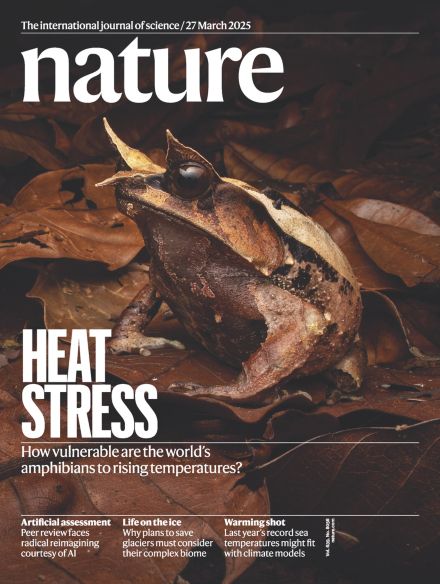
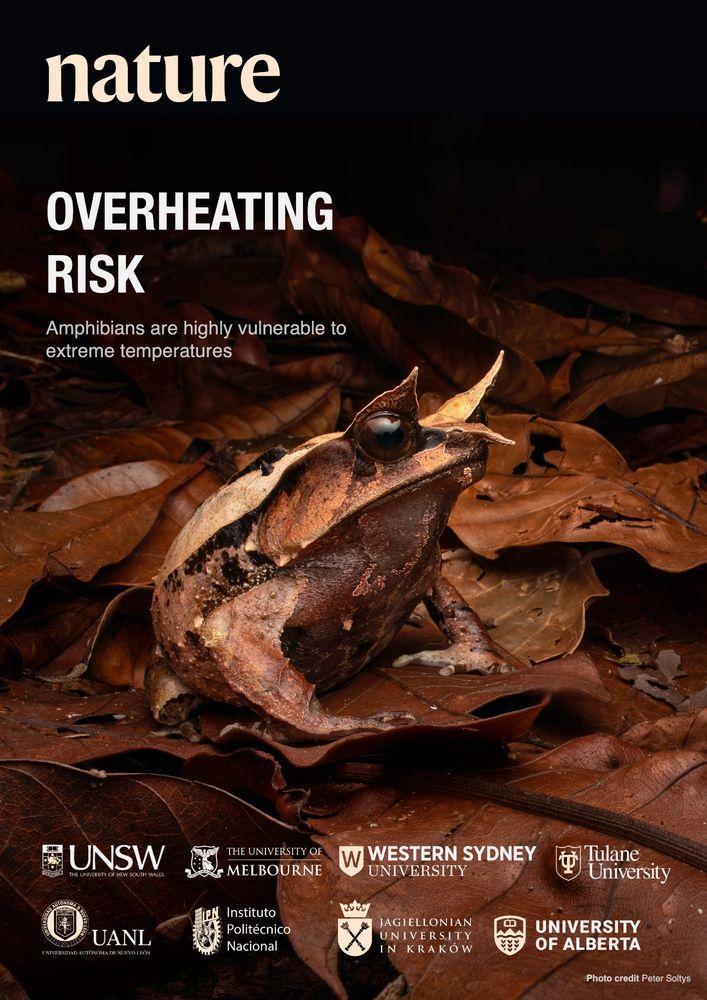
New paper in @nature.com led by @patricepottier.bsky.social! We demonstrated global vulnerability of amphibians to warming, threatening 10% of >5,000 species examined. How did we do it? See thread🧵
Paper: www.nature.com/articles/s41...
Paper: www.nature.com/articles/s41...
March 6, 2025 at 10:27 AM
New paper in @nature.com led by @patricepottier.bsky.social! We demonstrated global vulnerability of amphibians to warming, threatening 10% of >5,000 species examined. How did we do it? See thread🧵
Paper: www.nature.com/articles/s41...
Paper: www.nature.com/articles/s41...
Happy to see this out and congrats in particular to @patricepottier.bsky.social after leading such a huge effort! I think there are some really interesting findings here that challenge common ideas about the geography of warming risk and how we measure it

@nature.com has just published online our new paper!🎉🐸🌡️Lead by @patricepottier.bsky.social and supervised by myself and @itchyshin.bsky.social: in this massive research effort we overcome several common convictions related to the topics we studied. www.nature.com/articles/s41... Here are take-homes.
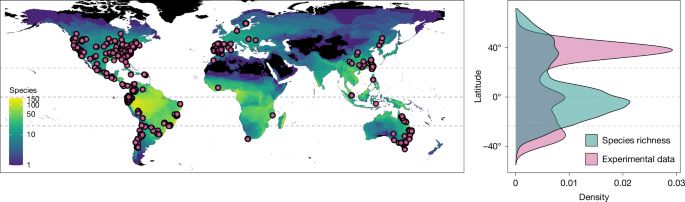
Vulnerability of amphibians to global warming - Nature
A 4 °C global temperature increase would push 7.5% of amphibian species beyond their physiological limits.
www.nature.com
March 6, 2025 at 5:26 AM
Happy to see this out and congrats in particular to @patricepottier.bsky.social after leading such a huge effort! I think there are some really interesting findings here that challenge common ideas about the geography of warming risk and how we measure it
Reposted by Alex Gunderson

Nature research paper: Evolution of temperature preference in flies of the genus Drosophila
https://go.nature.com/4i1VQn9
https://go.nature.com/4i1VQn9

Evolution of temperature preference in flies of the genus Drosophila - Nature
A study using flies of the genus Drosophila adapted to life in diverse thermal environments shows how evolution has shaped temperature preference by acting on both molecular heat receptors and thermosensory circuits in the flies.
go.nature.com
March 5, 2025 at 6:20 PM
Nature research paper: Evolution of temperature preference in flies of the genus Drosophila
https://go.nature.com/4i1VQn9
https://go.nature.com/4i1VQn9
Reposted by Alex Gunderson

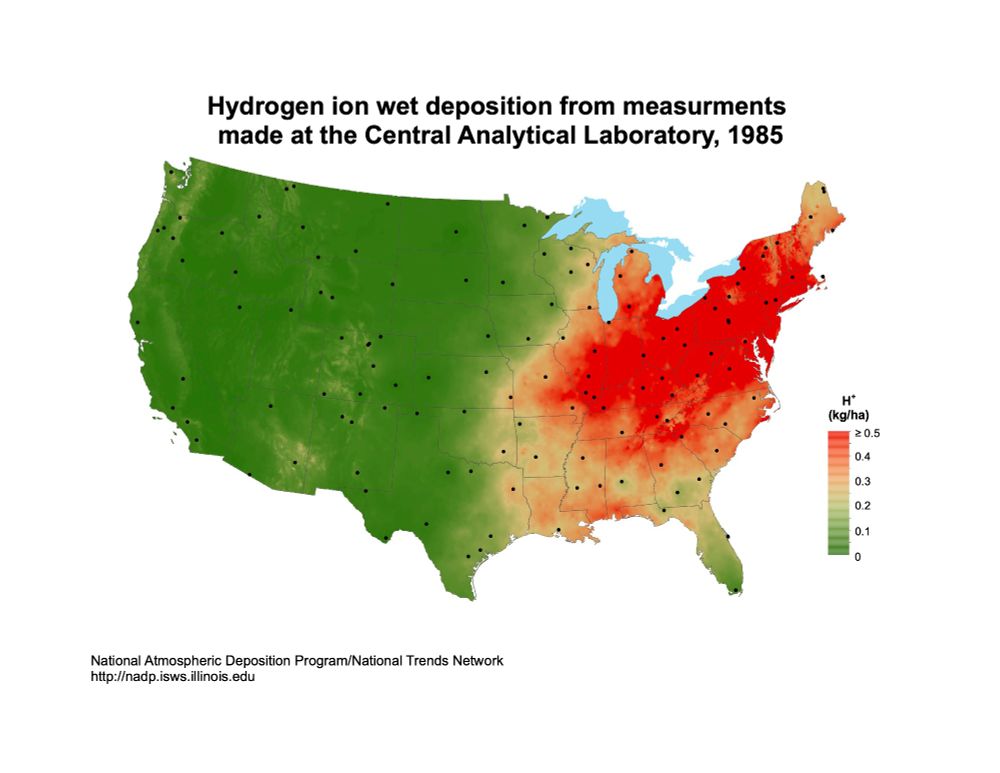
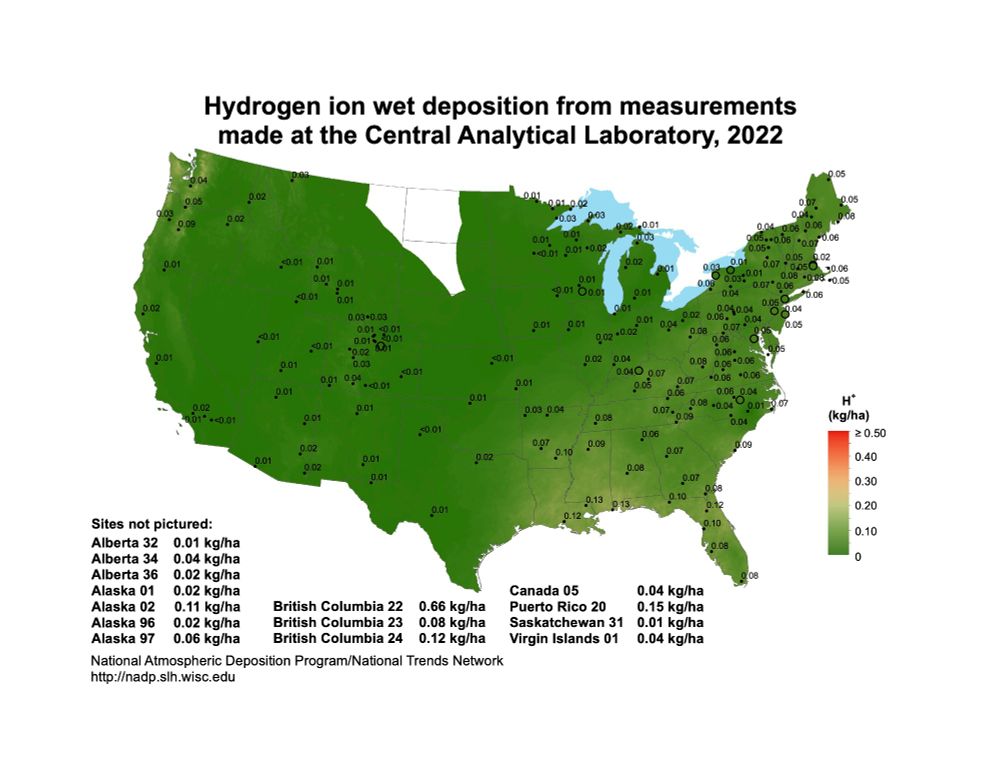
Another dataset I like is from the National Atmospheric Deposition Program, which has maps of the US that show we fixed the acid rain problem by implementing stricter emission controls on power plants.
nadp.slh.wisc.edu/maps-data/nt...
nadp.slh.wisc.edu/maps-data/nt...
February 22, 2025 at 3:20 PM
Another dataset I like is from the National Atmospheric Deposition Program, which has maps of the US that show we fixed the acid rain problem by implementing stricter emission controls on power plants.
nadp.slh.wisc.edu/maps-data/nt...
nadp.slh.wisc.edu/maps-data/nt...
Reposted by Alex Gunderson
Thanks to @jdrakephd.bsky.social for highlighting the importance of #amphibians in the services they provide to humans www.forbes.com/sites/johndr... #malaria #disease #frogs #tropical 🐸🧪🌎🦟
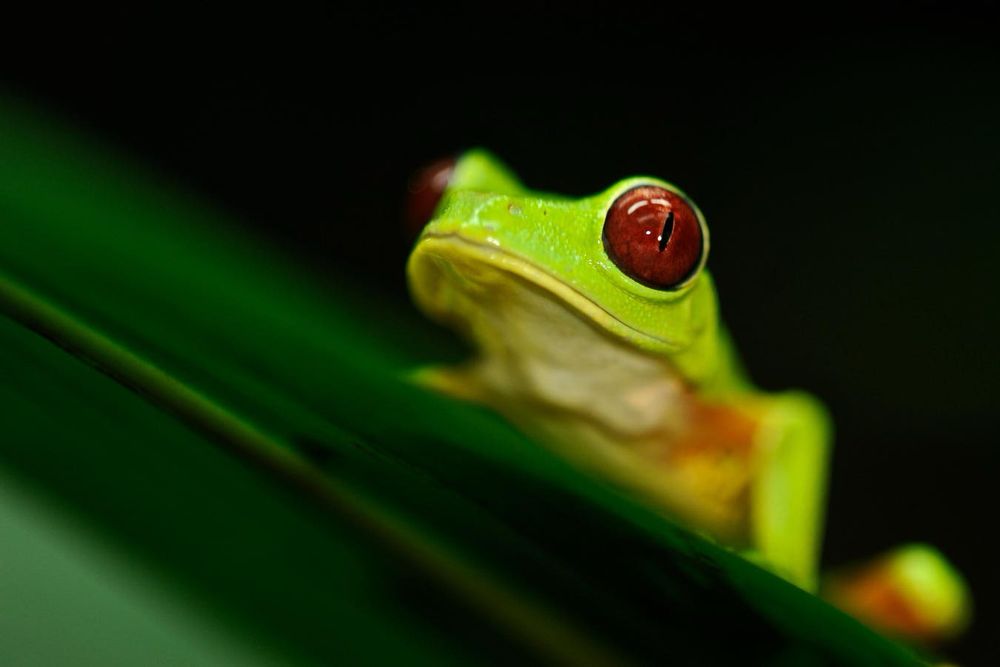
Amphibian Declines Increase Malaria In Costa Rica And Panama
New studies quantify how intact ecosystems improve human health
www.forbes.com
February 20, 2025 at 5:07 PM
Thanks to @jdrakephd.bsky.social for highlighting the importance of #amphibians in the services they provide to humans www.forbes.com/sites/johndr... #malaria #disease #frogs #tropical 🐸🧪🌎🦟
Reposted by Alex Gunderson

In case folks are interested in contacting their congresspeople about the NIH indirect cuts with some estimates of what they would mean for institutions in their state, here are some estimates based on published F&A rates and funding ... let me know if you want a particular state
February 8, 2025 at 2:14 PM
In case folks are interested in contacting their congresspeople about the NIH indirect cuts with some estimates of what they would mean for institutions in their state, here are some estimates based on published F&A rates and funding ... let me know if you want a particular state
Reposted by Alex Gunderson

SICB is back! Please follow the society's new BlueSky account: @sicb.bsky.social SICB recognizes that the scientific enterprise is only successful because of the people performing that science. Without those people, science and all of the political and economic strength that it provides, stops.
February 5, 2025 at 2:33 PM
SICB is back! Please follow the society's new BlueSky account: @sicb.bsky.social SICB recognizes that the scientific enterprise is only successful because of the people performing that science. Without those people, science and all of the political and economic strength that it provides, stops.
Reposted by Alex Gunderson

Louisiana folks - Sen. Cassidy may be wavering on RFKj.
Cassidy's office number in DC is (202) 224-5824 if you want to let him know what you think about that nomination.
Cassidy's office number in DC is (202) 224-5824 if you want to let him know what you think about that nomination.
January 29, 2025 at 6:58 PM
Louisiana folks - Sen. Cassidy may be wavering on RFKj.
Cassidy's office number in DC is (202) 224-5824 if you want to let him know what you think about that nomination.
Cassidy's office number in DC is (202) 224-5824 if you want to let him know what you think about that nomination.