


adam osth
@adamosth.bsky.social
Associate Professor at unimelb. Episodic memory, decision making, mathematical modeling. Friend to all cats. He/him.
Reposted by adam osth

I'm excited to announce that I had my first (co-authored) book published today! "The Rational Use of Cognitive Resources" with Falk Lieder and Tom Griffiths (@cocoscilab.bsky.social ). You can read it for free! (see thread)

February 18, 2026 at 1:05 AM
I'm excited to announce that I had my first (co-authored) book published today! "The Rational Use of Cognitive Resources" with Falk Lieder and Tom Griffiths (@cocoscilab.bsky.social ). You can read it for free! (see thread)
my band was featured in the new issue of Bad Batch Magazine, a rock magazine that focuses on the Melbourne music scene

February 18, 2026 at 2:17 AM
my band was featured in the new issue of Bad Batch Magazine, a rock magazine that focuses on the Melbourne music scene
Reposted by adam osth

I really need people outside of Seattle to know how much Krist Novoselic sucks
![A screenshot of a Facebook post by Krist Novoselić:
A new proposal would prohibit clearing encampments unless local government provides higher levels of accommodation for shelter. Our state's ruling party is attempting to codify what appears to be a lifestyle. There's no longer any expectation of personal accountability.
Quoted post from Cascade Party Washington:
WA legislature proposal out of touch with worsening chronic addiction homelessness - read now in The Summit (independent press of Cascade Party WA).
[Link with a preview image of a person lying face down on the street next to a dumpster]](https://cdn.bsky.app/img/feed_thumbnail/plain/did:plc:yfbs5wymp42eunwvyd57zsem/bafkreiapxbisw52e7xtxafnpnvonviqjfumlmhotqmqsgin7uteiy5qdn4@jpeg)
February 9, 2026 at 10:07 PM
I really need people outside of Seattle to know how much Krist Novoselic sucks
New prerint w/ my student Haomin Chen and collaborator Andrew Heathcote!
Accumulator models are well known for being able to address choice and RT. Joint accounts of confidence are much less common.
In this work, we explored 3 LBA models of confidence.
osf.io/preprints/ps...
Accumulator models are well known for being able to address choice and RT. Joint accounts of confidence are much less common.
In this work, we explored 3 LBA models of confidence.
osf.io/preprints/ps...
OSF
osf.io
January 29, 2026 at 5:21 AM
New prerint w/ my student Haomin Chen and collaborator Andrew Heathcote!
Accumulator models are well known for being able to address choice and RT. Joint accounts of confidence are much less common.
In this work, we explored 3 LBA models of confidence.
osf.io/preprints/ps...
Accumulator models are well known for being able to address choice and RT. Joint accounts of confidence are much less common.
In this work, we explored 3 LBA models of confidence.
osf.io/preprints/ps...
I have been really hurting over the news in Minnesota. I'm having a hard time finding the words for it even now.
In short, I'm finding it very hard to be optimistic, and I'm very scared things could get much worse
In short, I'm finding it very hard to be optimistic, and I'm very scared things could get much worse
January 26, 2026 at 10:57 PM
I have been really hurting over the news in Minnesota. I'm having a hard time finding the words for it even now.
In short, I'm finding it very hard to be optimistic, and I'm very scared things could get much worse
In short, I'm finding it very hard to be optimistic, and I'm very scared things could get much worse
Reposted by adam osth

I just created a series of seven deep-dive videos about AI, which I've posted to youtube and now here. 😊
Targeted to laypeople, they explore how LLMs work, what they can do, and what impacts they have on learning, well-being, disinformation, the workplace, the economy, and the environment.
Targeted to laypeople, they explore how LLMs work, what they can do, and what impacts they have on learning, well-being, disinformation, the workplace, the economy, and the environment.

Part 1: How do LLMs work?
YouTube video by Andrew Perfors
www.youtube.com
January 22, 2026 at 12:45 AM
I just created a series of seven deep-dive videos about AI, which I've posted to youtube and now here. 😊
Targeted to laypeople, they explore how LLMs work, what they can do, and what impacts they have on learning, well-being, disinformation, the workplace, the economy, and the environment.
Targeted to laypeople, they explore how LLMs work, what they can do, and what impacts they have on learning, well-being, disinformation, the workplace, the economy, and the environment.
As a memory researcher, I still find results that are really puzzling to understand or explain. Here's one by Henkel (2014) - taking a photo of something impairs your memory relative to passive viewing.
journals.sagepub.com/doi/full/10....
journals.sagepub.com/doi/full/10....

Sage Journals: Discover world-class research
Subscription and open access journals from Sage, the world's leading independent academic publisher.
journals.sagepub.com
January 23, 2026 at 12:46 AM
As a memory researcher, I still find results that are really puzzling to understand or explain. Here's one by Henkel (2014) - taking a photo of something impairs your memory relative to passive viewing.
journals.sagepub.com/doi/full/10....
journals.sagepub.com/doi/full/10....
to those in the US - is Dave’s hot chicken good?
December 28, 2025 at 9:35 PM
to those in the US - is Dave’s hot chicken good?
Really happy to announce that in 2026 I will be an Associate Editor at Psychological Review!
It’s my favorite journal so this is a huge honor!
It’s my favorite journal so this is a huge honor!
December 16, 2025 at 11:23 PM
Really happy to announce that in 2026 I will be an Associate Editor at Psychological Review!
It’s my favorite journal so this is a huge honor!
It’s my favorite journal so this is a huge honor!
New paper in Psych Review on a model of false recognition in Deese-Roediger-McDermott DRM task.
Not just recognition responses, but also associated RTs!
And not just the semantic task, but also the structural task - where words overlap in orthography/phonology!
A thread!
Not just recognition responses, but also associated RTs!
And not just the semantic task, but also the structural task - where words overlap in orthography/phonology!
A thread!
APA PsycNet
psycnet.apa.org
December 8, 2025 at 4:39 AM
New paper in Psych Review on a model of false recognition in Deese-Roediger-McDermott DRM task.
Not just recognition responses, but also associated RTs!
And not just the semantic task, but also the structural task - where words overlap in orthography/phonology!
A thread!
Not just recognition responses, but also associated RTs!
And not just the semantic task, but also the structural task - where words overlap in orthography/phonology!
A thread!
my band has a new single called "It's Called Fear" - here's a spotify link:
open.spotify.com/track/2nhuy0...
open.spotify.com/track/2nhuy0...

It's Called Fear
open.spotify.com
December 7, 2025 at 5:32 AM
my band has a new single called "It's Called Fear" - here's a spotify link:
open.spotify.com/track/2nhuy0...
open.spotify.com/track/2nhuy0...
my band just released a cover of "good luck babe" by Chappell Roan. we did a post punk version of it - it's as if Sonic Youth is playing it, complete with angular guitar stabs and disaffected vocals. not meant to be ironic at all - we love the original song!
open.spotify.com/track/6RrOEZ...
open.spotify.com/track/6RrOEZ...

Good Luck, Babe!
open.spotify.com
November 22, 2025 at 6:48 AM
my band just released a cover of "good luck babe" by Chappell Roan. we did a post punk version of it - it's as if Sonic Youth is playing it, complete with angular guitar stabs and disaffected vocals. not meant to be ironic at all - we love the original song!
open.spotify.com/track/6RrOEZ...
open.spotify.com/track/6RrOEZ...
This is doing the rounds at the moment and I find it a strange take. A thread
iai.tv/articles/mem...
iai.tv/articles/mem...

Memory is not stored in the brain
A philosophical critique of the neuroscientific “storage” metaphor, exploring why memories may not be physically stored in the brain and how this challenges materialist views of mind and consciousness...
iai.tv
November 19, 2025 at 6:04 AM
This is doing the rounds at the moment and I find it a strange take. A thread
iai.tv/articles/mem...
iai.tv/articles/mem...
Hollow Knight Silksong is amazing
November 13, 2025 at 7:04 AM
Hollow Knight Silksong is amazing
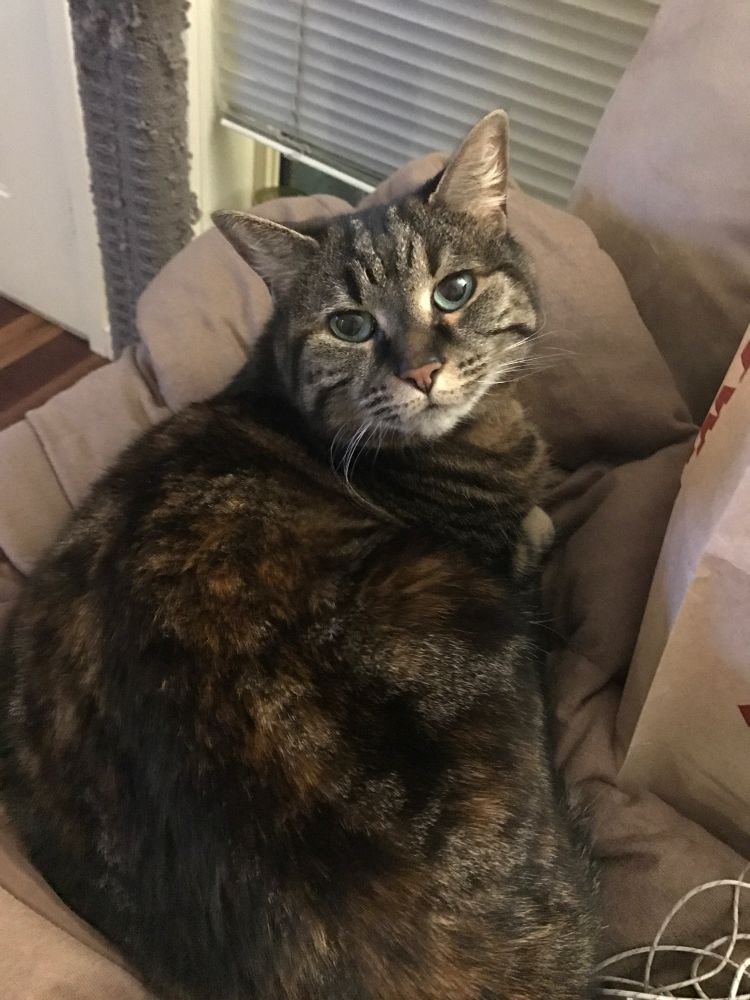
It’s been a tough time. Yesterday we took Mabel to the vet because she was having a hypo episode. We unexpectedly ended up having to say goodbye to her. We are devastated.
This is a photo from back in 2016 when I adopted her.
This is a photo from back in 2016 when I adopted her.
November 4, 2025 at 7:59 AM
It’s been a tough time. Yesterday we took Mabel to the vet because she was having a hypo episode. We unexpectedly ended up having to say goodbye to her. We are devastated.
This is a photo from back in 2016 when I adopted her.
This is a photo from back in 2016 when I adopted her.
I am a huge fan of Tim Robinson and I Think You Should Leave, but I’m not sure if I’m feeling The Chair Company yet
October 30, 2025 at 8:43 AM
I am a huge fan of Tim Robinson and I Think You Should Leave, but I’m not sure if I’m feeling The Chair Company yet
I just submitted a grant today. In preparing it, I went over the reviews I got for my submission for the same grant scheme last year.
Nearly every reviewer commented on my prior track record with grants. My question is - why is this so relevant to whether or not someone gets a grant?
Nearly every reviewer commented on my prior track record with grants. My question is - why is this so relevant to whether or not someone gets a grant?
October 30, 2025 at 4:55 AM
I just submitted a grant today. In preparing it, I went over the reviews I got for my submission for the same grant scheme last year.
Nearly every reviewer commented on my prior track record with grants. My question is - why is this so relevant to whether or not someone gets a grant?
Nearly every reviewer commented on my prior track record with grants. My question is - why is this so relevant to whether or not someone gets a grant?
Reposted by adam osth
people do not understand the movie Fight Club
October 28, 2025 at 12:21 AM
people do not understand the movie Fight Club
Hey memory folks! I got a question from a student I couldn't quite answer. I talked about consolidation, and how HM's loss of 3-5 years of recent memories led the field to believe that consolidation might take the same period of time.
A student asked - "why would it take so long?"
A student asked - "why would it take so long?"
October 30, 2025 at 12:39 AM
Hey memory folks! I got a question from a student I couldn't quite answer. I talked about consolidation, and how HM's loss of 3-5 years of recent memories led the field to believe that consolidation might take the same period of time.
A student asked - "why would it take so long?"
A student asked - "why would it take so long?"
this is not an Onion article

October 28, 2025 at 5:42 AM
this is not an Onion article
my partner and I finished Six Feet Under last night and… god.
Even though it was a rewatch, I haven’t been that moved by something in a long time.
Even though it was a rewatch, I haven’t been that moved by something in a long time.
September 21, 2025 at 1:27 AM
my partner and I finished Six Feet Under last night and… god.
Even though it was a rewatch, I haven’t been that moved by something in a long time.
Even though it was a rewatch, I haven’t been that moved by something in a long time.
my partner and I are watching Six Feet Under at the moment. it's a rewatch for me and the first for her.
saying it's still good is an understatement. it's incredible. I think it's even better on a rewatch
saying it's still good is an understatement. it's incredible. I think it's even better on a rewatch
September 19, 2025 at 1:08 AM
my partner and I are watching Six Feet Under at the moment. it's a rewatch for me and the first for her.
saying it's still good is an understatement. it's incredible. I think it's even better on a rewatch
saying it's still good is an understatement. it's incredible. I think it's even better on a rewatch
I have been terribly sick this week for about the third time this year. I seem to get hit much harder than most people, often getting really debilitating coughs and congestion even after the worst is over.
I might sound crazy but at this point I'm considering getting sinus surgery.
I might sound crazy but at this point I'm considering getting sinus surgery.
September 19, 2025 at 12:56 AM
I have been terribly sick this week for about the third time this year. I seem to get hit much harder than most people, often getting really debilitating coughs and congestion even after the worst is over.
I might sound crazy but at this point I'm considering getting sinus surgery.
I might sound crazy but at this point I'm considering getting sinus surgery.
had a real "pinch me" moment this week... my band's new single "shadow operator" made it on triple j unearthed's tops playlist - a best of new music for new and emerging artists in Australia! www.abc.net.au/triplej/prog...

Tops - triple j
The latest and greatest uploads to triplejunearthed.com.
www.abc.net.au
September 12, 2025 at 8:59 AM
had a real "pinch me" moment this week... my band's new single "shadow operator" made it on triple j unearthed's tops playlist - a best of new music for new and emerging artists in Australia! www.abc.net.au/triplej/prog...
my band has a new single called "Shadow Operator." we're proud of it. it might have my best guitar work yet.
I like to think it sounds like johnny marr playing for joy division - gloomy post punk with some jangle. also big hypnotic guitar solo at the end
snailgunband.bandcamp.com/track/shadow...
I like to think it sounds like johnny marr playing for joy division - gloomy post punk with some jangle. also big hypnotic guitar solo at the end
snailgunband.bandcamp.com/track/shadow...

Shadow Operator, by snailgun
track by snailgun
snailgunband.bandcamp.com
September 5, 2025 at 12:02 AM
my band has a new single called "Shadow Operator." we're proud of it. it might have my best guitar work yet.
I like to think it sounds like johnny marr playing for joy division - gloomy post punk with some jangle. also big hypnotic guitar solo at the end
snailgunband.bandcamp.com/track/shadow...
I like to think it sounds like johnny marr playing for joy division - gloomy post punk with some jangle. also big hypnotic guitar solo at the end
snailgunband.bandcamp.com/track/shadow...