
Unai Pascual
banner
upascual.bsky.social
Unai Pascual
@upascual.bsky.social

Ikerbasque Research Professor. Basque Centre for Climate Change (BC3). Chief Editor PLOS Sustainability & Transformation. PersOp 🌿

Environmental science 52%
Economics 18%

Basque Country πŸ˜‰

Reposted by Unai Pascual

EEUU no deja que nadie venda ni suministre petrΓ³leo ni ninguna otra materia energΓ©tica a Cuba.
Dicen que es el fracaso del socialismo.
Si se prohibiese de la misma manera el suministro a cualquier paΓ­s capitalista de la UE, ΒΏcΓ³mo se le llamarΓ­a?
Porque el fracaso del capitalismo ya estΓ‘ cogido.

Reposted by Unai Pascual

Ascienden a mΓ‘s de 72.000 los palestinos asesinados por ataques del EjΓ©rcito de Israel
Los asesinados en Gaza por Israel superan los 72.000
En mΓ‘s de tres meses de supuesto alto el fuego los bombardeos de Israel han causado daΓ±os y heridas a mΓ‘s de 1.500 gazatΓ­es.
www.publico.es
The 2023 IPBES report, authored by 86 international experts, is the most comprehensive assessment of invasive alien species ever conducted.

It offers clear & undeniable evidence of the growing global threat of biological invasions to ecosystems, economies, and human well being. #bioinvasions
Countries' carbon dioxide removal plans pose substantial threats to biodiversity, new research reveals.

Analysis by the scientists shows that up to 13% of global areas of high biodiversity importance are allocated for land-intensive CDR deployment. 🧡

Reposted by Unai Pascual

Trantsizio energetikoaren inguruko eztabaida eraikitzaile eta arduratsu bat behar dugu, ezberdin pentsatzen dutenen posizioak deskalifikatu gabe, eta demagogia merkerik gabe. Auzo lotsa.

Reposted by Unai Pascual

Gaur, urtarrilak 28, Lurraren Berotzearen Aurkako Ekintzaren Munduko Egunean, Stop Fosilak ekimena abiatu dugu. 🌍

Bizitzaren alde,
erregai fosilen arazoa erdigunean jarriz. 🌱

Trantsizio energetikoa
ez bada justua ez da azkarra izango, πŸ’š
ez bada azkarra ez da justua izango. ✊

www.stopfosilak.eus
Biodiversity isn’t only protected in parks and policy documents, it is defended on the ground by communities and social movements, often at great personal risk.⁠
⁠
Study by ICTA-UAB & IBEI shows that 40% of socio-environmental mobilizations take place in the world’s most important biodiversity areas

Klima-aldaketa eta giza eskubideak share.google/obMfVFtQw1tw...
Klima-aldaketa eta giza eskubideak
share.google

I know you will. In dark times it is more more important than ever to work together and forge strong collaboratios. As scientists we need to further develop cooperative ways to help each other.
IPBES @ipbes.net Β· Jan 8
β€œWe cannot withdraw from the fact that over 1 million species of plants and animals face extinction.”

IPBES remains committed to its mandate to provide the most credible science and evidence about biodiversity to all decision makers and actors.

β€” @davidobura.bsky.social , @ipbes.net Chair

Reposted by Unai Pascual

NEW by @drsimevans.carbonbrief.org for @carbonbrief.org

Analysis: World’s biggest historic polluter – the US – is pulling out of UN climate treaty

"the largest contribution to the Earth’s warming climate by far"

www.carbonbrief.org/analysis-wor...

Norwegiaren kasua interesgarria da, "sensu green".

Kontuz: Norwegiaren industria fosila (batez ere exportazioan oinarrituta), bere makroekonomiaren motorra da, eta beraz Norwegiarren EV erosmen ahalmenaren atzean dagoena. Iturria: www.norskpetroleum.no/en/economy/g...

Reposted by Unai Pascual

La comunidad cientΓ­fica en la interface ciencia-polΓ­tica tiene un papel crucial: hacer preguntas. Sobre todo aquellas cuya respuesta los decisores no saben que necesitan, o saben que no quieren saber.
AcΓ‘ artΓ­culo: journals.plos.org/sustainabili...
@upascual.bsky.social @imbivconicetunc.bsky.social
Three kinds of questions for scientists in intergovernmental policy
journals.plos.org
In this article, just out, I argue that scientists have a crucial role in the science-policy interface: keep making questions, especially those whose answers decision-makers don't know they want to know, or know they do not want to know.
Here's the link:
journals.plos.org/sustainabili...
Three kinds of questions for scientists in intergovernmental policy
journals.plos.org

Reposted by Rachael Garrett

Honoured to receive this ERC Synergy grant to work with these fantastic researchers!
Rob Marchant, Laura Pereira, Unai Pascual, and Thomas Hickler will use their ERC Synergy Grant to understand how nature and societies interact in and beyond mountain socioecological systems ⛰️

@rob-marchant.bsky.social @laurap18.bsky.social @upascual.bsky.social

πŸ‘‰ buff.ly/ZQhLp4h

#ERCSyG

Reposted by Dan Brockington

Towards a relational biodiversity economics (following the steps of ecological, feminist and other heterodox/critical economic thinking). Our new paper is out.
www.pnas.org/doi/10.1073/...
PNAS
Proceedings of the National Academy of Sciences (PNAS), a peer reviewed journal of the National Academy of Sciences (NAS) - an authoritative source of high-impact, original research that broadly spans...
www.pnas.org

Ez zen grabatu πŸ€—

Eskerrik asko gaur Zumaian hitzaldian izan zareten guztiei eta baita Piztu Komunitate Energetikoari gonbitea luzatzeagatik. Plazerra izan da Euskal Herrian behar dugun trantsizio energetikoaren ereduaren inguruan hainbat ideia partekatzea. piztu.eus/2025/09/13/c...
Unai Pascualen Hitzaldia: Karbonoaren tuneleko argiak piztuko al ditugu? -
piztu.eus

Reposted by Unai Pascual

What have been the trends in the study of Nature Contributions to People in the Southern Cone? The @CONATURAR Network tells us all about it in this brand new study:
www.sciencedirect.com/science/arti...
@imbivconicetunc.bsky.social @naturerecovery.bsky.social @upascual.bsky.social @ipbes.net
Valuations of nature and its contributions to people in South America’s Southern Cone: taking stock and looking forward
Sustainability sciences and policies are striving to achieve biodiversity conservation and social well-being. Academics and managers have developed co…
www.sciencedirect.com

Reposted by Unai Pascual

PLOS @plos.org Β· Jul 14
Environmental sustainability is often sidelined by narrow economic agendas focused on growth. PLOS Sustainability and Transformation champions transformative science that values diverse knowledge, collaboration and systemic change. Read more: journals.plos.org/sustainabili...

@upascual.bsky.social
A renewed meeting point to foster a sustainability transformation agenda
journals.plos.org

Reposted by Unai Pascual

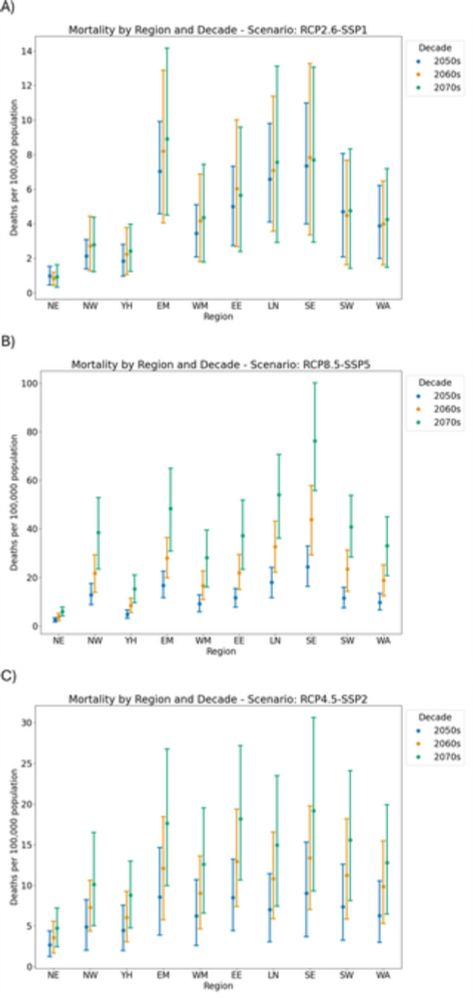
New research published in PLOS Climate suggests that extreme heat could lead to 30,000 deaths per year in England and Wales by the 2070s

journals.plos.org/climate/arti...

@drhelenmac.bsky.social @climateclare1.bsky.social
Projections of heat related mortality under combined climate and socioeconomic adaptation scenarios for England and Wales
This study projects heat-related mortality in England and Wales at Government region level under combined climate and socioeconomic scenarios, focusing on the implications of different pathways on ada...
journals.plos.org

Reposted by Unai Pascual

Read, and perhaps sign, this open letter against fascism. I was an early signer and support the message.

stopreturnfascism.org
Home - Open Letter Against the rise of Fascism in 2025
The 2025 letter has been signed by over 400 academics, including 31 Nobel Prize winners. Join them in defending democracy. Our goal The letter is a collective denunciation of the mounting threats to a...
stopreturnfascism.org
IPBES @ipbes.net Β· May 28
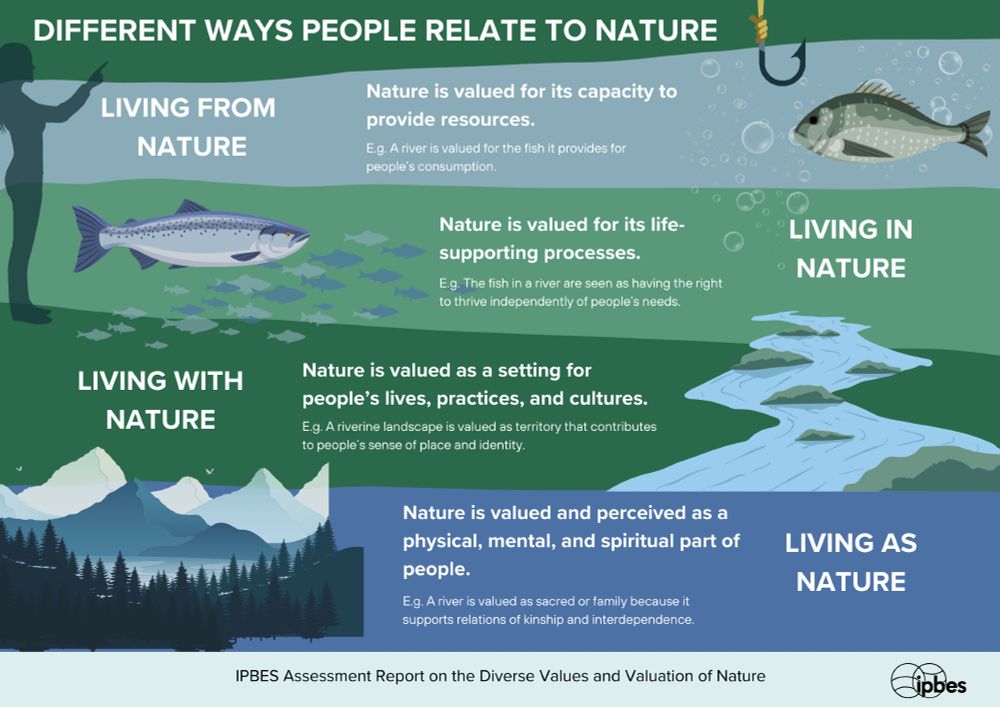
Different worldviews and knowledge systems
influence the ways people interact with and value nature. 🌿- IPBES #ValuesAssessment

All these values must be considered to effectively address the #biodiversity crisis. 🌍πŸ§ͺ

Read the Values Assessment Report: www.ipbes.net/the-values-a...
Why does a hegemonic discourse, in much of conservation science, policy and practice, persist nourishing the idea that poverty drives biodiversity loss? Here we suggest some answers. www.sciencedirect.com/science/arti...
Unveiling pervasive assumptions: moving beyond the poverty-biodiversity loss association in conservation
This paper reflects on the continued persistence of the idea in conservation research and practice that poverty drives biodiversity loss (the poverty-…
www.sciencedirect.com