
Christian List
banner
clist.bsky.social
Christian List
@clist.bsky.social

Professor of Philosophy and Decision Theory, LMU Munich. Co-Director of the Munich Center for Mathematical Philosophy. Account used for academic purposes. Further info at: https://christianlist.net/

Christian List is a German philosopher and political scientist who serves as professor of philosophy and decision theory at the Ludwig Maximilian University of Munich and co-director of the Munich Center for Mathematical Philosophy. He was previously professor of political science and philosophy at the London School of Economics. List's research interests relate to social choice theory, formal epistemology, political philosophy, and the philosophy of social science. .. more


Economics 28%
Computer science 17%

The manuscript of my @iai.tv opinion piece on why science as we know it can't explain consciousness is now also on Philpapers at: philpapers.org/archive/LISW...
Consciousness reveals there's no single objective world
<p><em>Does reality contain only physical things? Or could everything be conscious, as panpsychists claim? Philosopher Christian List argues it’s time to move beyond both sides of this debate. Conscio...
iai.tv

Another older paper presents an axiomatic characterization of plurality rule, generalizing May's theorem about majority voting. Interestingly, if the balloting format allows each voter to vote for more than one candidate, then approval voting, not plurality-rule, is supported by similar conditions.
Robert E. Goodin & Christian List, A conditional defense of plurality rule: generalizing May's theorem in a restricted informational environment - PhilPapers
May's theorem famously shows that, in social decisions between two options, simple majority rule uniquely satisfies four appealing conditions. Although this result is often cited in support of majorit...
philpapers.org

I'll be uploading on Philpapers the preprints/manuscripts of some older papers, for continuing green open access, beginning with this one: philpapers.org/rec/LISXWW
Christian List, What’s Wrong with the Consequence Argument: A Compatibilist Libertarian Response - PhilPapers
The most prominent argument for the incompatibility of free will and determinism is Peter van Inwagen’s consequence argument. I offer a new diagnosis of what is wrong with this argument. Proponents .....
philpapers.org

Reposted by Christian List

New on the Archive:

DeBrota, John B. and List, Christian (2026) A Heptalemma for Quantum Mechanics. [Preprint]

https://philsci-archive.pitt.edu/27977/
🔥 My book Conversations on Rational Choice is finally out: Conversation partners include Kenneth Arrow, Gary Becker, C. Bicchieri, D. Kahneman, P. Suppes, Christian List, Vernon Smith, Tom Schelling, L.A.Paul, C. Camerer, Martin Shubik, R. Kranton, and many others. www.cambridge.org/core/books/c...
Conversations on Rational Choice
Cambridge Core - Economic Thought, Philosophy and Methodology - Conversations on Rational Choice
www.cambridge.org

Reposted by Christian List

Newly published: "Interview with Christian List", in Catherine Herfeld (@cherfeld.bsky.social), Conversations on Rational Choice, @universitypress.cambridge.org, 2025, philpapers.org/archive/LISI...

What action-guiding judgments should we rely on in cases of moral uncertainty? We show that the problem of moral uncertainty resolution can be modelled as a belief-binarization problem: how to arrive at all-out (“accept/reject”) judgments on some propositions based on our credences in them.
Zeev Goldschmidt & Christian List, Moral uncertainty resolution as belief binarization: An impossibility result - PhilPapers
What action-guiding judgments should we rely on in cases of moral uncertainty, when we divide our credence among competing moral views and assign credences between 0 and 1 to propositions such ...
philpapers.org

Reposted by Brian Weatherson

We present a seven-pronged no-go result for quantum mechanics (QM). Seven initially plausible theses about physical reality are jointly inconsistent with QM, while any six are consistent. Different interpretations of QM can then be taxonomized in terms of which theses they retain and which not.
John B. DeBrota & Christian List, A Heptalemma for Quantum Mechanics - PhilPapers
We present a seven-pronged no-go result for quantum mechanics: a “heptalemma”. It shows that seven initially plausible theses about physical reality are jointly inconsistent with the predictions of qu...
philpapers.org

Reposted by Christian List

The 2026 application round for the MA in Logic and Philosophy of Science at @lmumuenchen.bsky.social is now open. Please help us spread the word. www.philosophie.lmu.de/en/study/deg...
Master in Logic and Philosophy of Science
Our Master (MA) program in Logic and Philosophy of Science was founded in October 2012. It is an international MA program of the Faculty of Philosophy, Philosophy of Science and Religious Studies at L...
www.philosophie.lmu.de

Reposted by Christian List

Reposted by Christian List

Logicism is the thesis that mathematics is reducible to logic and analytic truths. It has a long history, going back to Frege, Russell, and Whitehead, but it was subsequently rejected by others. In this recent paper, Hannes Leitgeb, Uri Nodelman, and Edward Zalta offer a new defence of logicism.
A DEFENSE OF LOGICISM | Bulletin of Symbolic Logic | Cambridge Core
A DEFENSE OF LOGICISM - Volume 31 Issue 1
doi.org

Here is a broader discussion of the parallels between corporate agency and AI. Both involve non-human goal-directed agents that affect the social world, often in high-stakes settings, and so they raise similar moral and regulatory challenges, which we must address for the sake of protecting humans.
Group Agency and Artificial Intelligence - Philosophy & Technology
The aim of this exploratory paper is to review an under-appreciated parallel between group agency and artificial intelligence. As both phenomena involve non-human goal-directed agents that can make a ...
link.springer.com

Reposted by Joanna Bryson

The criteria for free will in AI systems are similar to those for free will in corporate agents. The key question is whether the kinds of non-biological entities that increasingly play decision-making roles in society (whether corporate or AI) should be viewed as intentional agents with free will.
Do group agents have free will?
It is common to ascribe agency to some organized collectives, such as corporations, courts, and states, and to treat them as loci of responsibility, over and above their individual members. But sin...
www.tandfonline.com

Here is a repost of a talk on the picture of free will that lies in the background. Free will, I argue, requires intentional agency, alternative possibilities, and causal control. Free will is a multiply realizable capacity, which can occur not only in biological agents but also in artificial ones.
Does free will exist? | Christian List | TEDxTUM
YouTube video by TEDx Talks
www.youtube.com

Reposted by Joanna Bryson

To determine whether an AI system has free will, we shouldn't look for any mysterious property, ask if the system is unpredictable, or expect its algorithms to be indeterministic. We should ask: are there explanatory reasons to view the system as a choice-making agent with alternative possibilities?
Can AI systems have free will? - Synthese
While there has been much discussion of whether AI systems could function as moral agents or acquire sentience, there has been very little discussion of whether AI systems could have free will. I sket...
link.springer.com

Newly published: "Can AI systems have free will?", by Christian List, Synthese, 2025, link.springer.com/article/10.1...
Can AI systems have free will? - Synthese
While there has been much discussion of whether AI systems could function as moral agents or acquire sentience, there has been very little discussion of whether AI systems could have free will. I sket...
link.springer.com

Now forthcoming in Synthese: "Can AI systems have free will?", preprint available at: philsci-archive.pitt.edu/26166/3/Free...
Can AI systems have free will? - PhilSci-Archive
philsci-archive.pitt.edu

Reposted by Christian List

From why-why-why to global justice: LMU philosopher Laura Valentini asks fundamental questions about human coexistence. www.lmu.de/en/newsroom/...
From why-why-why to global justice
Political philosopher Laura Valentini asks fundamental questions about human coexistence. Now she is receiving the Princess Therese of Bavaria Prize.
www.lmu.de

Reposted by Christian List

Feeling what others feel: In a world battered by crises, what does empathy really mean? An interview with philosopher Monika Betzler on empathy and morality.
www.lmu.de/en/newsroom/...
Feeling what others feel
In a world battered by crises, what does empathy really mean? An interview with philosopher Monika Betzler on empathy and morality.
www.lmu.de

Reposted by Christian List

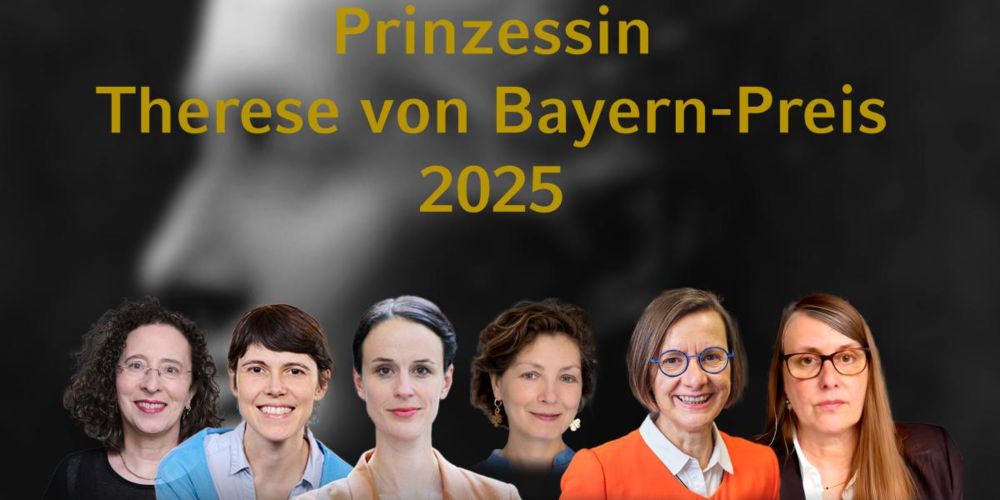
LMU philosophers Prof. Monika Betzler and Prof. Laura Valentini have each been awarded a Princess Therese of Bavaria Prize 2025. www.lmu.de/en/newsroom/...
Winners of Princess Therese of Bavaria Prize 2025
This year, the Princess Therese of Bavaria Foundation has recognized outstanding female researchers from the spheres of culture and the humanities at LMU.
www.lmu.de

Reposted by Christian List

At this year's MCMP Summer School, we had wonderful lectures by Professors Francesca Boccuni (San Raffaele), Hilary Greaves (Oxford), and Alyssa Ney (LMU). Many thanks to our speakers and especially to the fabulous participants from all over the world! www.mathsummer.philosophie.uni-muenchen.de

Reposted by Christian List

Any theory of consciousness can satisfy at most three of the following but not all four: (1) first-person realism ("there are 1st-person facts"), (2) non-solipsism ("there are other conscious minds"), (3) non-fragmentation ("the world is coherent") and (4) one world ("there is one world, not many").
A quadrilemma for theories of consciousness
Abstract. In this paper, I argue that no theory of consciousness can simultaneously respect four initially plausible metaphysical claims—namely ‘first-pers
academic.oup.com

Reposted by Christian List

Job-opening at LMU Munich: Assistant Professor in Metaphysics (fixed-term). Please help us spread the word. Further details at: job-portal.lmu.de/jobposting/b...

Reposted by Christian List

Is Life Fine Tuned to Physics or Is Physics Fine Tuned to Life? Don't miss the online panel discussion with Philip Goff @philipgoff.bsky.social @durham-university.bsky.social and Helen Meskhidze @bhi-harvard.bsky.social in our lecture series ‘The Fine-Tuned Universe’ on Tuesday, 13 May at 7pm (CET).

Reposted by Christian List

Just accepted:

‘The Impossibility of Non-manipulable Probability Aggregation’
– Franz Dietrich & Christian List

Abstract in alt text or read the full paper here:
www.journals.uchicago.edu/doi/10.1086/...

#philsci #philsky