



I was on campus today and had to take a picture of this poster. I don’t know why you wouldn’t at least choose a different place to break your title.

January 12, 2026 at 2:55 AM
I was on campus today and had to take a picture of this poster. I don’t know why you wouldn’t at least choose a different place to break your title.

🚀 A great way to kick off the new year. I’m happy to share a new paper from the #EClectic MSCA-DN project: “Autocatalytic Electrochemiluminescence”
Thanks to all the co-authors and collaborators
#EIC #MSCA #Electrochemiluminescence
onlinelibrary.wiley.com/doi/10.1002/...
Thanks to all the co-authors and collaborators
#EIC #MSCA #Electrochemiluminescence
onlinelibrary.wiley.com/doi/10.1002/...
onlinelibrary.wiley.com
January 2, 2026 at 11:33 AM
🚀 A great way to kick off the new year. I’m happy to share a new paper from the #EClectic MSCA-DN project: “Autocatalytic Electrochemiluminescence”
Thanks to all the co-authors and collaborators
#EIC #MSCA #Electrochemiluminescence
onlinelibrary.wiley.com/doi/10.1002/...
Thanks to all the co-authors and collaborators
#EIC #MSCA #Electrochemiluminescence
onlinelibrary.wiley.com/doi/10.1002/...
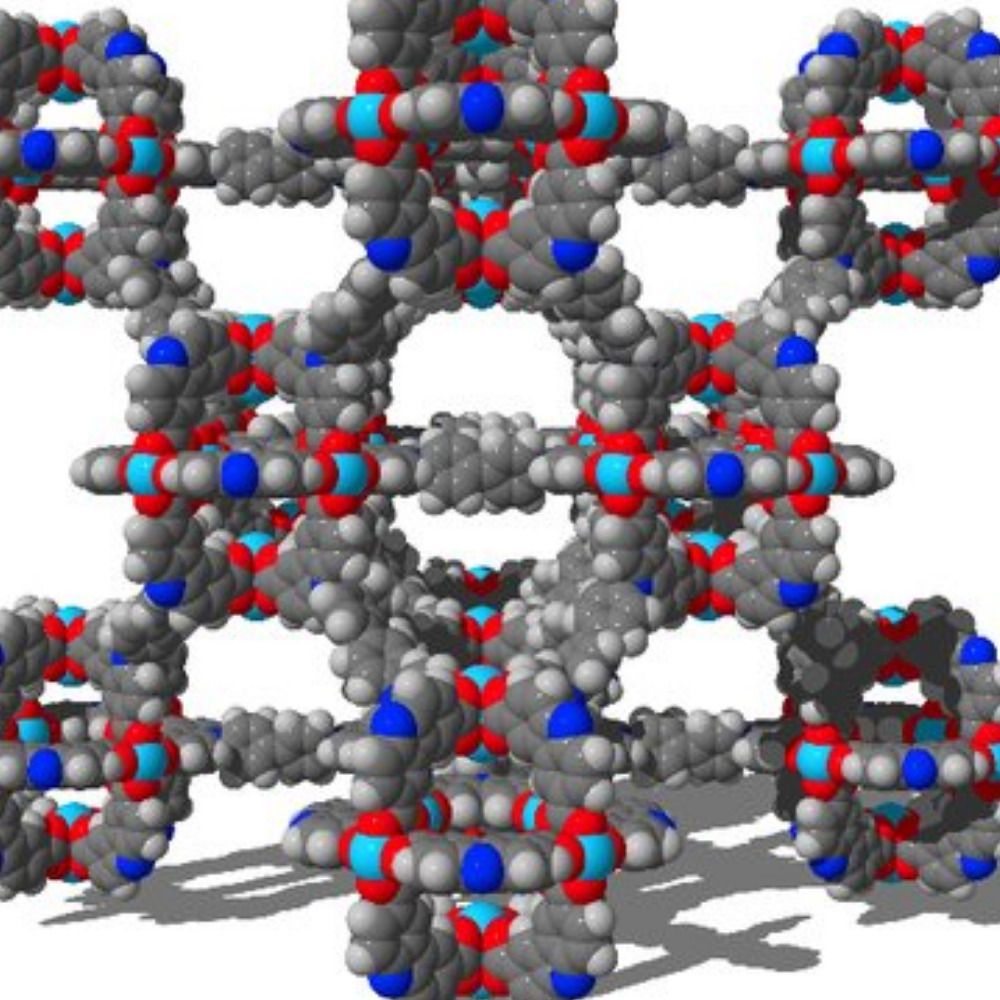
A New Method to Enhance Electrochemiluminescence of Imine-Based Covalent Organic Frameworks http://dx.doi.org/10.1021/jacs.5c15881
December 26, 2025 at 4:17 PM
A New Method to Enhance Electrochemiluminescence of Imine-Based Covalent Organic Frameworks http://dx.doi.org/10.1021/jacs.5c15881

Switching Cathodic/Anodic Electrochemiluminescence of Ru(bpy)32+ Precisely via Homogeneous Nickel Nanoparticles Crystal Facets Sites Modulated ORR/OER - Deng - 2025 - Exploration - Wiley Online Library onlinelibrary.wiley.com/doi/10.1002/...
onlinelibrary.wiley.com
December 22, 2025 at 1:04 PM
Switching Cathodic/Anodic Electrochemiluminescence of Ru(bpy)32+ Precisely via Homogeneous Nickel Nanoparticles Crystal Facets Sites Modulated ORR/OER - Deng - 2025 - Exploration - Wiley Online Library onlinelibrary.wiley.com/doi/10.1002/...
A multiple signal-amplified electrochemiluminescence biosensor for ultrasensitive detection of bladder cancer-associated circRNA in urine http://pubs.rsc.org/en/Content/ArticleLanding/2026/CC/D5CC05842B

December 9, 2025 at 12:19 PM
A multiple signal-amplified electrochemiluminescence biosensor for ultrasensitive detection of bladder cancer-associated circRNA in urine http://pubs.rsc.org/en/Content/ArticleLanding/2026/CC/D5CC05842B
Electrochemiluminescence Enhancement for the High‐Sensitivity Detection of Chlortetracycline Based on the Metal Single‐Atom–Filled Metal–Organic Framework https://chemistry-europe.onlinelibrary.wiley.com/doi/10.1002/slct.202504336?af=R
December 9, 2025 at 11:15 AM
Electrochemiluminescence Enhancement for the High‐Sensitivity Detection of Chlortetracycline Based on the Metal Single‐Atom–Filled Metal–Organic Framework https://chemistry-europe.onlinelibrary.wiley.com/doi/10.1002/slct.202504336?af=R

Featured #OnTheCover of issue 97!
"Directing the glow: 3D feeder geometries to enhance planar bipolar electrochemiluminescence" by Oisín Foley Doyle, Gordon G. Wallace, Zhilian Yue, Jun Chen, Stephen Beirne and Robert J. Forster
Read the #OpenAccess article here 👉 buff.ly/z5Uip8K
"Directing the glow: 3D feeder geometries to enhance planar bipolar electrochemiluminescence" by Oisín Foley Doyle, Gordon G. Wallace, Zhilian Yue, Jun Chen, Stephen Beirne and Robert J. Forster
Read the #OpenAccess article here 👉 buff.ly/z5Uip8K

December 3, 2025 at 10:00 AM
Featured #OnTheCover of issue 97!
"Directing the glow: 3D feeder geometries to enhance planar bipolar electrochemiluminescence" by Oisín Foley Doyle, Gordon G. Wallace, Zhilian Yue, Jun Chen, Stephen Beirne and Robert J. Forster
Read the #OpenAccess article here 👉 buff.ly/z5Uip8K
"Directing the glow: 3D feeder geometries to enhance planar bipolar electrochemiluminescence" by Oisín Foley Doyle, Gordon G. Wallace, Zhilian Yue, Jun Chen, Stephen Beirne and Robert J. Forster
Read the #OpenAccess article here 👉 buff.ly/z5Uip8K

#BCMaterials_Research |
‘Laser-Treated Screen-Printed Carbon Electrodes for Electrochemiluminescence imaging’ by Javier del Campo
and Guillermo Conejo with @unibo.it scientists, one of the 5 most-read papers at ‘Chemical & Biomedical Imaging’.
➡️Full article here! shorturl.at/YkvIW
#MaterialsScience
‘Laser-Treated Screen-Printed Carbon Electrodes for Electrochemiluminescence imaging’ by Javier del Campo
and Guillermo Conejo with @unibo.it scientists, one of the 5 most-read papers at ‘Chemical & Biomedical Imaging’.
➡️Full article here! shorturl.at/YkvIW
#MaterialsScience

November 24, 2025 at 9:40 AM
#BCMaterials_Research |
‘Laser-Treated Screen-Printed Carbon Electrodes for Electrochemiluminescence imaging’ by Javier del Campo
and Guillermo Conejo with @unibo.it scientists, one of the 5 most-read papers at ‘Chemical & Biomedical Imaging’.
➡️Full article here! shorturl.at/YkvIW
#MaterialsScience
‘Laser-Treated Screen-Printed Carbon Electrodes for Electrochemiluminescence imaging’ by Javier del Campo
and Guillermo Conejo with @unibo.it scientists, one of the 5 most-read papers at ‘Chemical & Biomedical Imaging’.
➡️Full article here! shorturl.at/YkvIW
#MaterialsScience

This research presents a novel ternary electrochemiluminescence (ECL) aptasensor for the detection of florfenicol (FF), a widely used antibiotic in animal husbandry.
November 8, 2025 at 2:04 AM
This research presents a novel ternary electrochemiluminescence (ECL) aptasensor for the detection of florfenicol (FF), a widely used antibiotic in animal husbandry.

Highly Efficient Coreactant-Free Electrochemiluminescence Sensing Platform Using Novel Microfabricated Multiplexed Entwined Spiral Microelectrodes for Point-of-Care Applications https://www.biorxiv.org/content/10.1101/2025.11.03.686208v1
November 4, 2025 at 7:46 PM
Highly Efficient Coreactant-Free Electrochemiluminescence Sensing Platform Using Novel Microfabricated Multiplexed Entwined Spiral Microelectrodes for Point-of-Care Applications https://www.biorxiv.org/content/10.1101/2025.11.03.686208v1
Covalent organic frameworks with synergistic linkages and functional groups boost electrochemiluminescence for sensitive detection of long non-coding RNA https://www.sciencedirect.com/science/article/pii/S1385894725109443
November 1, 2025 at 1:14 PM
Covalent organic frameworks with synergistic linkages and functional groups boost electrochemiluminescence for sensitive detection of long non-coding RNA https://www.sciencedirect.com/science/article/pii/S1385894725109443

Ultrasensitive Ion‐Imprinted Detection System with Pore‐Depended Electrochemiluminescence Mechanism for Accurate and Rapid Monitoring of Cesium in the Environment
Ultrasensitive Ion‐Imprinted Detection System with Pore‐Depended Electrochemiluminescence Mechanism for Accurate and Rapid Monitoring of Cesium in the Environment
This study focuses on the rapid and accurate determination of cesium, a key radioactive contaminant attracting global attention, by creating an ultrasensitive pore-dependent electrochemiluminescence detection system. It has been successfully applied in the determination of various kinds of environmental samples, exhibiting its significance in the fields of environment, ecology, and public health.
Abstract
There is growing global concern that cesium-137 poses a potential risk to the environment, ecology, and public health. For the first time, an ultrasensitive cesium detection system with a pore-dependent electrochemiluminescence mechanism is developed in this work for the accurate and rapid monitoring in the environment. A cesium-imprinted film is prepared on the electrode to obtain an electrochemiluminescence sensor with cesium-matched pores. Tri- n -propylamine (TPrA) can enter the cesium-matched pores and give an electrochemical oxidation process, while Ru(bpy) 3
2+ cannot. When cesium ions can selectively bind to the ─N═ group to occupy the pores, they block the oxidation process of TPrA in pores to quench the electrochemiluminescence signal of Ru(bpy) 3
2+ with an ultralow limit of detection (50 pg L −1 ). It is successfully employed to the environmental sample (salt water, fresh water, and different animals) determination and the cesium accumulation monitoring in aquatic animals, indicating its application in environmental and ecology research. A chip-type detection system is designed basing on this sensor to realize real-time detection. This work not only aids in environmental monitoring efforts but also contributes to the broader scientific understanding of cesium mobility behavior in aquatic environments, making it important for the fields of environment, ecology, and public health.
advanced.onlinelibrary.wiley.com
October 31, 2025 at 10:47 AM
Ultrasensitive Ion‐Imprinted Detection System with Pore‐Depended Electrochemiluminescence Mechanism for Accurate and Rapid Monitoring of Cesium in the Environment
Boosting Electrochemiluminescence of Carbon Nitrides via Molecular Capacitor‐Mediated Spatiotemporal Electron Coordination
Boosting Electrochemiluminescence of Carbon Nitrides via Molecular Capacitor‐Mediated Spatiotemporal Electron Coordination
Molecular capacitors are modified on carbon nitrides (CN) to dynamically regulate electron capture and accumulation in the defect states under different potentials. As a result, the electrochemiluminescence (ECL) efficiency increases by up to 100 times, owing to a new spatiotemporal coordination mechanism. It enables visual ECL testing of nitrite contaminants with significantly improved sensitivity and linear detection range.
Abstract
Carbon nitride (CN) enables non-toxicity, low cost, high quantum efficiency, and tunable spectrum. Nevertheless, there co-exists a timescale mismatch among kinetic steps of electrochemiluminescence (ECL) and a spatial competition of electrons between radiative recombination and interfacial redox reactions. Herein, a spatiotemporal coordination strategy is reported to enhance Φ
ECL of CN by molecular capacitor functionalization. Mechanism studies show the capacitor, consisting of N-vacancies and −C≡N terminal groups, dynamically regulates electron capture and accumulation. Interestingly, the spatial confinement of accumulated electrons in molecular capacitors effectively enhances the radiative recombination probability. Meanwhile, the accumulated electrons construct a new pathway for fast electron transport, and the relaxation of the accumulated electrons coordinates the electron transfer in bulk CN and redox reactions at the electrode surface on the µs-ms timescale, establishing temporal coordination across multiple time domains. As a result, the Φ
ECL of CN increases by up to 100 times, reaching 1480 times that of the standard Ru(bpy) 3 Cl 2 /K 2 S 2 O 8 system. Accordingly, compared to pristine CN, the as-developed ECL sensors using CN with molecular capacitor functionalization demonstrate significantly improved performance in the visual detection of nitrite ions (a typical environmental pollutant), for example, a 3600 fold lower detection limit and a 3-order of magnitude broader detection linear range.
advanced.onlinelibrary.wiley.com
October 30, 2025 at 11:31 AM
Boosting Electrochemiluminescence of Carbon Nitrides via Molecular Capacitor‐Mediated Spatiotemporal Electron Coordination
Electrochemiluminescence Resonance Energy Transfer Biosensor Based on Self-Enhanced Terbium-Based Metal–Organic Frameworks with Antenna Effect for Sensitive MicroRNA-155 Detection http://dx.doi.org/10.1021/acs.analchem.5c04977
October 29, 2025 at 2:14 PM
Electrochemiluminescence Resonance Energy Transfer Biosensor Based on Self-Enhanced Terbium-Based Metal–Organic Frameworks with Antenna Effect for Sensitive MicroRNA-155 Detection http://dx.doi.org/10.1021/acs.analchem.5c04977

Engineering a diagnostic platform based on a spatially resolved electrochemiluminescence immunoassay for low-plex biomarker detection at point-of-care: mild traumatic brain injury and cardiac applications.
#OpenAccess from Marc E. Pfeifer et al.
Read now: pubs.rsc.org/en/content/a...
#OpenAccess from Marc E. Pfeifer et al.
Read now: pubs.rsc.org/en/content/a...

October 27, 2025 at 1:21 PM
Engineering a diagnostic platform based on a spatially resolved electrochemiluminescence immunoassay for low-plex biomarker detection at point-of-care: mild traumatic brain injury and cardiac applications.
#OpenAccess from Marc E. Pfeifer et al.
Read now: pubs.rsc.org/en/content/a...
#OpenAccess from Marc E. Pfeifer et al.
Read now: pubs.rsc.org/en/content/a...
This study explores the design of high-performance aggregation-induced electrochemiluminescence (AIECL) materials.
October 11, 2025 at 12:43 AM
This study explores the design of high-performance aggregation-induced electrochemiluminescence (AIECL) materials.
Unlock the power of supramolecular coordination frameworks! Innovative π-bridge engineering and aggregation boost electrochemiluminescence efficiency, paving the way for next-gen lighting...
🧵 Thread below
Full analysis: https://helixbrief.com/article/d3c5c48e-6784-40a9-9645-7dc5d4b88fbf
🧵 Thread below
Full analysis: https://helixbrief.com/article/d3c5c48e-6784-40a9-9645-7dc5d4b88fbf
October 11, 2025 at 12:43 AM
Unlock the power of supramolecular coordination frameworks! Innovative π-bridge engineering and aggregation boost electrochemiluminescence efficiency, paving the way for next-gen lighting...
🧵 Thread below
Full analysis: https://helixbrief.com/article/d3c5c48e-6784-40a9-9645-7dc5d4b88fbf
🧵 Thread below
Full analysis: https://helixbrief.com/article/d3c5c48e-6784-40a9-9645-7dc5d4b88fbf
Rational Design of Bismuth-Based Metal–Organic Framework Electrochemiluminescence Sensing Platform: A Proactive Approach for Early Warning of Mycotoxin Contaminants http://dx.doi.org/10.1021/acs.analchem.5c04761
October 9, 2025 at 3:28 PM
Rational Design of Bismuth-Based Metal–Organic Framework Electrochemiluminescence Sensing Platform: A Proactive Approach for Early Warning of Mycotoxin Contaminants http://dx.doi.org/10.1021/acs.analchem.5c04761
Novel pyrene-based metal-organic framework nanosheets' metal ions directly serve as coreaction accelerators to boost their electrochemiluminescence performance for fabricating supersensitive biosensor https://www.sciencedirect.com/science/article/pii/S1385894725100375
October 6, 2025 at 6:13 PM
Novel pyrene-based metal-organic framework nanosheets' metal ions directly serve as coreaction accelerators to boost their electrochemiluminescence performance for fabricating supersensitive biosensor https://www.sciencedirect.com/science/article/pii/S1385894725100375
🚀 Thrilled to share our latest cover.
We merged #electrochemiluminescence (ECL) with stimuli-responsive dye to create a new smart biosensors. A huge congrats to the brilliant team! 👏
#J_A_C_S
#Covid #Biosensing
#ECLipse_eic
We merged #electrochemiluminescence (ECL) with stimuli-responsive dye to create a new smart biosensors. A huge congrats to the brilliant team! 👏
#J_A_C_S
#Covid #Biosensing
#ECLipse_eic

October 5, 2025 at 2:58 PM
🚀 Thrilled to share our latest cover.
We merged #electrochemiluminescence (ECL) with stimuli-responsive dye to create a new smart biosensors. A huge congrats to the brilliant team! 👏
#J_A_C_S
#Covid #Biosensing
#ECLipse_eic
We merged #electrochemiluminescence (ECL) with stimuli-responsive dye to create a new smart biosensors. A huge congrats to the brilliant team! 👏
#J_A_C_S
#Covid #Biosensing
#ECLipse_eic

Another cover from our latest issue of #JACS: "Stimuli-Responsive Luminophore Drives Mechanism Switch for Highly Efficient Electrochemiluminescence Immunosensing"
Read it here 🔗 buff.ly/44bN4g4
#ChemSky
Read it here 🔗 buff.ly/44bN4g4
#ChemSky

October 2, 2025 at 12:01 PM
Another cover from our latest issue of #JACS: "Stimuli-Responsive Luminophore Drives Mechanism Switch for Highly Efficient Electrochemiluminescence Immunosensing"
Read it here 🔗 buff.ly/44bN4g4
#ChemSky
Read it here 🔗 buff.ly/44bN4g4
#ChemSky
A Highly Sensitive Electrochemiluminescence Immunosensor Based on Ru(bpy)₃²⁺/PAMG Composite Carriers and Au-Fc-MOF Quenching Systems for Ultra-trace Detection of Carcinoembryonic Antigen http://pubs.rsc.org/en/Content/ArticleLanding/2025/AY/D5AY01289A
September 18, 2025 at 7:13 AM
A Highly Sensitive Electrochemiluminescence Immunosensor Based on Ru(bpy)₃²⁺/PAMG Composite Carriers and Au-Fc-MOF Quenching Systems for Ultra-trace Detection of Carcinoembryonic Antigen http://pubs.rsc.org/en/Content/ArticleLanding/2025/AY/D5AY01289A
Rigid-flexible equilibrium strategy boosting electrochemiluminescence of pyrene-based covalent organic framework for bioanalysis https://www.sciencedirect.com/science/article/pii/S138589472508920X
September 6, 2025 at 2:11 PM
Rigid-flexible equilibrium strategy boosting electrochemiluminescence of pyrene-based covalent organic framework for bioanalysis https://www.sciencedirect.com/science/article/pii/S138589472508920X
Synergistic Coupling of Antenna Effect and Schottky Junction in Tb-Doped Covalent Organic Framework for Enhanced Electrochemiluminescence Sening of Isobutyryl Fentanyl http://dx.doi.org/10.1021/acs.analchem.5c03193
September 5, 2025 at 1:18 PM
Synergistic Coupling of Antenna Effect and Schottky Junction in Tb-Doped Covalent Organic Framework for Enhanced Electrochemiluminescence Sening of Isobutyryl Fentanyl http://dx.doi.org/10.1021/acs.analchem.5c03193
Electrochemiluminescence Sensor for Uric Acid Based on Two-dimensional MOF Nanosheet-Modified Indium Tin Oxide Electrodes http://dx.doi.org/10.1021/acsanm.5c03012
August 20, 2025 at 2:16 PM
Electrochemiluminescence Sensor for Uric Acid Based on Two-dimensional MOF Nanosheet-Modified Indium Tin Oxide Electrodes http://dx.doi.org/10.1021/acsanm.5c03012