



Journal of the American Chemical Society (JACS)
@jacs.acspublications.org
Research, news, and information from the Journal of the American Chemical Society: pubs.acs.org/JACS
Pinned
We are now LIVE on #ChemSky – joining @pubs.acs.org, @acs.org, and @cenmag.bsky.social!
Follow us for the latest significant research from the world’s preeminent journal of chemistry and interfacing areas of science.
Learn more about JACS: buff.ly/efZCTEt
Follow us for the latest significant research from the world’s preeminent journal of chemistry and interfacing areas of science.
Learn more about JACS: buff.ly/efZCTEt
Reposted by Journal of the American Chemical Society (JACS)
Just out in @jacs.acspublications.org:
"Interplay of Redox Non-Innocence and Symmetry Breaking in a 4d Coordination Framework"
🧪We’ve made Mo(pyz)₂I₂, the 4d cousin of the Cr(pyz)₂X₂ family—with redox-active ligands, symmetry breaking, semiconducting transport, and strong magnetic interactions.
🔗👇
"Interplay of Redox Non-Innocence and Symmetry Breaking in a 4d Coordination Framework"
🧪We’ve made Mo(pyz)₂I₂, the 4d cousin of the Cr(pyz)₂X₂ family—with redox-active ligands, symmetry breaking, semiconducting transport, and strong magnetic interactions.
🔗👇

February 17, 2026 at 3:31 PM
Just out in @jacs.acspublications.org:
"Interplay of Redox Non-Innocence and Symmetry Breaking in a 4d Coordination Framework"
🧪We’ve made Mo(pyz)₂I₂, the 4d cousin of the Cr(pyz)₂X₂ family—with redox-active ligands, symmetry breaking, semiconducting transport, and strong magnetic interactions.
🔗👇
"Interplay of Redox Non-Innocence and Symmetry Breaking in a 4d Coordination Framework"
🧪We’ve made Mo(pyz)₂I₂, the 4d cousin of the Cr(pyz)₂X₂ family—with redox-active ligands, symmetry breaking, semiconducting transport, and strong magnetic interactions.
🔗👇
Reposted by Journal of the American Chemical Society (JACS)

Great paper by the groups of Pierre Stallforth, @hellmichgroup.bsky.social and @mlakemeyer.bsky.social of @uni-jena.de in @jacs.acspublications.org . Microbial DL-peptidases with an important role in predator defense.
pubs.acs.org/doi/10.1021/...
#ChemSky #ChemBio #Biochemistry #Bacteria #Microbes
pubs.acs.org/doi/10.1021/...
#ChemSky #ChemBio #Biochemistry #Bacteria #Microbes

Microbial dl-Peptidases Enable Predator Defense and Facilitate Structure Elucidation of Complex Natural Products
Peptidases are indispensable tools in biotechnology and chemical biology. However, the enzyme repertoire for the selective hydrolysis of dl-amide bonds in peptides is small. Here, we describe novel dl-peptidases that mediate complex microbial interactions. These enzymes, Lip3 and Lip7, convert lipopeptides into potent amoebicidal agents via selective dl-peptide bond cleavage. Using structural analyses and mutagenesis, we identified an unusual Ser–Lys–Lys–Tyr catalytic tetrad required for dl-specificity. Despite their high structural similarity, both enzymes show distinct substrate preferences: Lip3 acts primarily as a carboxypeptidase, removing a single C-terminal residue, while Lip7 excises a tripeptide. Although their substrate scopes are broad, they are highly specific with regard to their respective cutting sites. These features make these dl-peptidases powerful tools for elucidating the structure of complex peptide-based natural products, including tensin and WLIP. Overall, this work elucidates the molecular mechanisms of cooperative microbial defense and provides a new enzymatic toolbox for biocatalysis and natural product discovery.
pubs.acs.org
February 17, 2026 at 9:40 AM
Great paper by the groups of Pierre Stallforth, @hellmichgroup.bsky.social and @mlakemeyer.bsky.social of @uni-jena.de in @jacs.acspublications.org . Microbial DL-peptidases with an important role in predator defense.
pubs.acs.org/doi/10.1021/...
#ChemSky #ChemBio #Biochemistry #Bacteria #Microbes
pubs.acs.org/doi/10.1021/...
#ChemSky #ChemBio #Biochemistry #Bacteria #Microbes
Reposted by Journal of the American Chemical Society (JACS)
New paper in @jacs.acspublications.org 🎉:
A de novo designed unnatural base pair that exploits halogen bonding as pairing force in DNA for genetic alphabet expansion. 🧬 ⚗️
@unicologne.bsky.social
@chemunicologne.bsky.social
@breugstlab.bsky.social
pubs.acs.org/doi/abs/10.1...
A de novo designed unnatural base pair that exploits halogen bonding as pairing force in DNA for genetic alphabet expansion. 🧬 ⚗️
@unicologne.bsky.social
@chemunicologne.bsky.social
@breugstlab.bsky.social
pubs.acs.org/doi/abs/10.1...

Investigating Halogen Bonds as Pairing Force in an Artificial DNA Base Pair
The past decades have seen significant expansion of the nucleic acid space with the development of modified artificial base pairs based on natural nucleic acid analogues and even entirely new designed base pairs. This expansion has led to tremendous potential for applications such as site-specific labeling and structural investigations. However, natural nucleic acids rely strongly on hydrogen bonding as the attraction force, which has driven the development of artificial base pairs that adapt this mechanism. To achieve orthogonality with natural bases, unnatural base pairs with alternative attraction forces, such as hydrophobic interactions, have been developed which however can perturb duplex structures. Our work introduces a completely newly designed artificial base pair that leverages halogen bonding (R–Hal···) as a directional hydrogen bonding-like interaction. We report computational studies that led to the development of this novel unnatural base pair and its synthesis. Our results demonstrate the successful acceptance of a bulky iodinated nucleoside triphosphate by KlenTaq DNA polymerase, enabling the selective enzymatic synthesis of a DNA strand containing the dIIPO–doIPP base pair. Our work presents the first demonstration of a novel base pair with halogen bonding potential that is enzymatically incorporated into DNA.
pubs.acs.org
February 13, 2026 at 3:10 PM
New paper in @jacs.acspublications.org 🎉:
A de novo designed unnatural base pair that exploits halogen bonding as pairing force in DNA for genetic alphabet expansion. 🧬 ⚗️
@unicologne.bsky.social
@chemunicologne.bsky.social
@breugstlab.bsky.social
pubs.acs.org/doi/abs/10.1...
A de novo designed unnatural base pair that exploits halogen bonding as pairing force in DNA for genetic alphabet expansion. 🧬 ⚗️
@unicologne.bsky.social
@chemunicologne.bsky.social
@breugstlab.bsky.social
pubs.acs.org/doi/abs/10.1...
Reposted by Journal of the American Chemical Society (JACS)

Latest @jacs.acspublications.org a collab with Mastalerz grp @uniheidelberg.bsky.social showing how C3-symmetric TBTQ core affects chiral induction in LCs. Hydrazone > azobenzene with this core. Mixing these two with opposite chirality allows handedness inversion bit.ly/4qAtvYE #openaccess #chemsky

C3-Symmetric Photoresponsive Chiral Dopants Based on Tribenzotriquinacene
Doping cholesteric liquid crystals (CLCs) with photoresponsive chiral molecules is an effective strategy for devising responsive soft materials, as it allows for the phototuning of the noncovalent interactions in the CLCs, and hence, their helical pitch and optical properties. Here we describe the use of tribenzotriquinacene-based (TBTQ) hydrazone and azobenzene chiral dopants in the modulation of the helical pitch of the LC host, 5CB. The unique C3-symmetry of the TBTQ scaffold enhances the noncovalent interactions with the host and thus the chiral information transfer, resulting in helical twisting power (β) values as high as 147 μm–1. Notably, the TBTQ hydrazone exhibits an unusual deviation from trends observed so far in previous studies, resulting in larger β values for the Z isomer rather than the E one. Moreover, the overall β values for the hydrazone-based dopants are unexpectedly higher than those of the azobenzene dopants. These results indicate that the host/guest interactions are better when the photoswitchable chiral dopant is more rigid, as is the case with the H-bonded Z state of the hydrazone. The large β values and excellent miscibility of the hydrazone-based dopants in 5CB allowed us to design films that reflect visible structural color. The properties of the azobenzene-based dopants precluded their use in such applications. By codoping 5CB with hydrazone and azobenzene derivatives of opposite chirality, we demonstrated reversible handedness inversion upon photoswitching, providing a versatile soft material platform for reconfigurable photonic materials and colorimetric display technologies.
bit.ly
February 13, 2026 at 1:00 PM
Latest @jacs.acspublications.org a collab with Mastalerz grp @uniheidelberg.bsky.social showing how C3-symmetric TBTQ core affects chiral induction in LCs. Hydrazone > azobenzene with this core. Mixing these two with opposite chirality allows handedness inversion bit.ly/4qAtvYE #openaccess #chemsky
“Epitaxial Integration of Single-Crystalline 2D Bi2O2Se Semiconductor Film on Silicon " has appeared on the front cover of this week's issue of #JACS.
Explore the research behind the art: buff.ly/fFgr4X6
#ACS150
Explore the research behind the art: buff.ly/fFgr4X6
#ACS150

February 18, 2026 at 1:01 PM
“Epitaxial Integration of Single-Crystalline 2D Bi2O2Se Semiconductor Film on Silicon " has appeared on the front cover of this week's issue of #JACS.
Explore the research behind the art: buff.ly/fFgr4X6
#ACS150
Explore the research behind the art: buff.ly/fFgr4X6
#ACS150
"Stepwise Ligand-Exchange Strategy for the High-Yield Synthesis of Water-Soluble, Metal-Doped MAg24 Nanoclusters" has been featured in this week's issue of #JACS.
Explore the research behind the art: buff.ly/N06no33
#ACS150
Explore the research behind the art: buff.ly/N06no33
#ACS150

February 17, 2026 at 1:01 PM
"Stepwise Ligand-Exchange Strategy for the High-Yield Synthesis of Water-Soluble, Metal-Doped MAg24 Nanoclusters" has been featured in this week's issue of #JACS.
Explore the research behind the art: buff.ly/N06no33
#ACS150
Explore the research behind the art: buff.ly/N06no33
#ACS150
"Microbial dl-Peptidases Enable Predator Defense and Facilitate Structure Elucidation of Complex Natural Products" has been featured in this week's issue of #JACS.
Explore the research behind the art: buff.ly/OQGU8Qi
#ACS150
Explore the research behind the art: buff.ly/OQGU8Qi
#ACS150

February 16, 2026 at 1:01 PM
"Microbial dl-Peptidases Enable Predator Defense and Facilitate Structure Elucidation of Complex Natural Products" has been featured in this week's issue of #JACS.
Explore the research behind the art: buff.ly/OQGU8Qi
#ACS150
Explore the research behind the art: buff.ly/OQGU8Qi
#ACS150
"A Rational Design of Chiral Iron(III) Complexes for Photocatalytic Asymmetric Radical Cation (4 + 2) Cycloadditions and the Total Synthesis of (+)-Heitziamide A" has been featured in this week's issue of #JACS.
Explore the research behind the art: buff.ly/7D7fmsT
#ACS150
Explore the research behind the art: buff.ly/7D7fmsT
#ACS150

February 13, 2026 at 1:02 PM
"A Rational Design of Chiral Iron(III) Complexes for Photocatalytic Asymmetric Radical Cation (4 + 2) Cycloadditions and the Total Synthesis of (+)-Heitziamide A" has been featured in this week's issue of #JACS.
Explore the research behind the art: buff.ly/7D7fmsT
#ACS150
Explore the research behind the art: buff.ly/7D7fmsT
#ACS150
"Complementary Adsorption within Metal–Organic Frameworks for Ethylene Upgrading from Refinery Dry Gas" has been featured in this week's issue of #JACS.
Explore the research behind the art: buff.ly/i0Uth5K
#ACS150
Explore the research behind the art: buff.ly/i0Uth5K
#ACS150

February 12, 2026 at 1:01 PM
"Complementary Adsorption within Metal–Organic Frameworks for Ethylene Upgrading from Refinery Dry Gas" has been featured in this week's issue of #JACS.
Explore the research behind the art: buff.ly/i0Uth5K
#ACS150
Explore the research behind the art: buff.ly/i0Uth5K
#ACS150
“Heterointerface-Enabled Anti-Reverse-Current Electrodes for Alkaline Water Electrolyzers at 1000 mA cm–2" has appeared on the front cover of this week's issue of #JACS.
Explore the research behind the art: buff.ly/h2fztmJ
#ACS150
Explore the research behind the art: buff.ly/h2fztmJ
#ACS150

February 11, 2026 at 1:01 PM
“Heterointerface-Enabled Anti-Reverse-Current Electrodes for Alkaline Water Electrolyzers at 1000 mA cm–2" has appeared on the front cover of this week's issue of #JACS.
Explore the research behind the art: buff.ly/h2fztmJ
#ACS150
Explore the research behind the art: buff.ly/h2fztmJ
#ACS150
"Encapsulation of 211At(Ø)+ into a Nanoscale Covalent Organic Framework Prevents Deastatination In Vivo" has been featured in the latest issue of #JACS.
Explore the research behind the art: buff.ly/1dBUL7d
#ACS150
Explore the research behind the art: buff.ly/1dBUL7d
#ACS150

February 10, 2026 at 1:02 PM
"Encapsulation of 211At(Ø)+ into a Nanoscale Covalent Organic Framework Prevents Deastatination In Vivo" has been featured in the latest issue of #JACS.
Explore the research behind the art: buff.ly/1dBUL7d
#ACS150
Explore the research behind the art: buff.ly/1dBUL7d
#ACS150
"Electrochemically Tuned Crystal Tectonics in Crack-Resistant Textured Oxide Cathode Films for Electrochemical Energy Storage" has been featured in the latest issue of #JACS.
Explore the research behind the art: buff.ly/zhaeh8U
#ACS150
Explore the research behind the art: buff.ly/zhaeh8U
#ACS150

February 9, 2026 at 1:01 PM
"Electrochemically Tuned Crystal Tectonics in Crack-Resistant Textured Oxide Cathode Films for Electrochemical Energy Storage" has been featured in the latest issue of #JACS.
Explore the research behind the art: buff.ly/zhaeh8U
#ACS150
Explore the research behind the art: buff.ly/zhaeh8U
#ACS150
"Chemical Synthesis of Native ADP-Ribosylated Oligonucleotides Enables Analysis of DNA ADP-Ribosylation Hydrolase Specificity" has been featured in this week's issue of #JACS.
Explore the research behind the art: buff.ly/ctvAwEM
#ACS150
Explore the research behind the art: buff.ly/ctvAwEM
#ACS150

February 8, 2026 at 1:00 PM
"Chemical Synthesis of Native ADP-Ribosylated Oligonucleotides Enables Analysis of DNA ADP-Ribosylation Hydrolase Specificity" has been featured in this week's issue of #JACS.
Explore the research behind the art: buff.ly/ctvAwEM
#ACS150
Explore the research behind the art: buff.ly/ctvAwEM
#ACS150
"Potent Racemic Antimicrobial Polypeptides Uncovered by a Stereochemical Series of Cationic d/l Backbones" has been featured in this week's issue of #JACS.
Explore the research behind the art: buff.ly/WTImUPV
#ACS150
Explore the research behind the art: buff.ly/WTImUPV
#ACS150

February 7, 2026 at 1:00 PM
"Potent Racemic Antimicrobial Polypeptides Uncovered by a Stereochemical Series of Cationic d/l Backbones" has been featured in this week's issue of #JACS.
Explore the research behind the art: buff.ly/WTImUPV
#ACS150
Explore the research behind the art: buff.ly/WTImUPV
#ACS150
“Zeolite-Encapsulated Ir Single Atom Catalysts Toward Efficient and Stable Propane Dehydrogenation" has appeared on the front cover of this week's issue of #JACS.
Explore the research behind the art: buff.ly/LOS3g2m
#ACS150
Explore the research behind the art: buff.ly/LOS3g2m
#ACS150

February 6, 2026 at 1:00 PM
“Zeolite-Encapsulated Ir Single Atom Catalysts Toward Efficient and Stable Propane Dehydrogenation" has appeared on the front cover of this week's issue of #JACS.
Explore the research behind the art: buff.ly/LOS3g2m
#ACS150
Explore the research behind the art: buff.ly/LOS3g2m
#ACS150
Upcoming: ACS150 JACS Symposium Series: IACS Kolkata
📍 Kolkata, India
📅 1 July
Celebrating 150 years of ACS and chemical discovery with an exciting full day of cutting-edge science in Elevating the Future of Macromolecular Materials.
Space is limited, apply to attend today: buff.ly/aIPPDpA
📍 Kolkata, India
📅 1 July
Celebrating 150 years of ACS and chemical discovery with an exciting full day of cutting-edge science in Elevating the Future of Macromolecular Materials.
Space is limited, apply to attend today: buff.ly/aIPPDpA

February 5, 2026 at 3:01 AM
Upcoming: ACS150 JACS Symposium Series: IACS Kolkata
📍 Kolkata, India
📅 1 July
Celebrating 150 years of ACS and chemical discovery with an exciting full day of cutting-edge science in Elevating the Future of Macromolecular Materials.
Space is limited, apply to attend today: buff.ly/aIPPDpA
📍 Kolkata, India
📅 1 July
Celebrating 150 years of ACS and chemical discovery with an exciting full day of cutting-edge science in Elevating the Future of Macromolecular Materials.
Space is limited, apply to attend today: buff.ly/aIPPDpA
‘Polyacid-Protonated Covalent Organic Frameworks Enable Stable and Efficient Photothermal Textiles' has been featured in the latest issue of #JACS.
Explore the research behind the art: buff.ly/CIZCPa2
#ACS150
Explore the research behind the art: buff.ly/CIZCPa2
#ACS150

February 3, 2026 at 1:01 PM
‘Polyacid-Protonated Covalent Organic Frameworks Enable Stable and Efficient Photothermal Textiles' has been featured in the latest issue of #JACS.
Explore the research behind the art: buff.ly/CIZCPa2
#ACS150
Explore the research behind the art: buff.ly/CIZCPa2
#ACS150
‘Am I Still IL? Evolution of CdS Nanocrystals from Inorganic Ligand Exchange' has been featured in the latest issue of #JACS.
Explore the research behind the art: buff.ly/VUfcm8R
#ACS150
Explore the research behind the art: buff.ly/VUfcm8R
#ACS150

February 2, 2026 at 1:02 PM
‘Am I Still IL? Evolution of CdS Nanocrystals from Inorganic Ligand Exchange' has been featured in the latest issue of #JACS.
Explore the research behind the art: buff.ly/VUfcm8R
#ACS150
Explore the research behind the art: buff.ly/VUfcm8R
#ACS150
‘Directionally Aligned “Mechanical Balance” Design Enables Near-Frictionless Li+ Transport in Polymer Electrolytes' has been featured in this week's issue of #JACS.
Explore the research behind the art: buff.ly/tSU95oo
#ACS150
Explore the research behind the art: buff.ly/tSU95oo
#ACS150

January 30, 2026 at 1:01 PM
‘Directionally Aligned “Mechanical Balance” Design Enables Near-Frictionless Li+ Transport in Polymer Electrolytes' has been featured in this week's issue of #JACS.
Explore the research behind the art: buff.ly/tSU95oo
#ACS150
Explore the research behind the art: buff.ly/tSU95oo
#ACS150
‘Dual Cation/Anion Binding in Crown Ether-Based Coordination Cages' has been featured in this week's issue of #JACS.
Explore the research behind the art: buff.ly/2kUsQBn
#ACS150
Explore the research behind the art: buff.ly/2kUsQBn
#ACS150

January 29, 2026 at 1:01 PM
‘Dual Cation/Anion Binding in Crown Ether-Based Coordination Cages' has been featured in this week's issue of #JACS.
Explore the research behind the art: buff.ly/2kUsQBn
#ACS150
Explore the research behind the art: buff.ly/2kUsQBn
#ACS150
‘Rational Design and Dynamic Ru Exsolution Enables Active Heterostructures Surpassing Pt for Alkaline Hydrogen Evolution' features on the front cover of #JACS' new issue.
Explore the research behind the art: buff.ly/3bBlA4k
#ACS150
Explore the research behind the art: buff.ly/3bBlA4k
#ACS150

January 28, 2026 at 1:00 PM
‘Rational Design and Dynamic Ru Exsolution Enables Active Heterostructures Surpassing Pt for Alkaline Hydrogen Evolution' features on the front cover of #JACS' new issue.
Explore the research behind the art: buff.ly/3bBlA4k
#ACS150
Explore the research behind the art: buff.ly/3bBlA4k
#ACS150
‘Organoplatinum(II) Type II Immunogenic Cell Death Inducers Target Protein Tyrosine Phosphatase 1B to Drive Immunogenicity' has been featured in the latest issue of #JACS.
Explore the research behind the art: buff.ly/hAbZaC6
#ACS150
Explore the research behind the art: buff.ly/hAbZaC6
#ACS150

January 27, 2026 at 1:01 PM
‘Organoplatinum(II) Type II Immunogenic Cell Death Inducers Target Protein Tyrosine Phosphatase 1B to Drive Immunogenicity' has been featured in the latest issue of #JACS.
Explore the research behind the art: buff.ly/hAbZaC6
#ACS150
Explore the research behind the art: buff.ly/hAbZaC6
#ACS150
Reposted by Journal of the American Chemical Society (JACS)

Expanded boraporphyrinoids with redox switchable magnetic (anti)aromaticity and strong near-infrared absorption have been reported in @jacs.acspublications.org.
Antiaromatic CSD Entry IWANUT becomes aromatic upon twofold reduction.
🔗 dx.doi.org/10.5517/ccdc...
#FeaturedStructureFriday #ChemSky
Antiaromatic CSD Entry IWANUT becomes aromatic upon twofold reduction.
🔗 dx.doi.org/10.5517/ccdc...
#FeaturedStructureFriday #ChemSky
January 23, 2026 at 4:15 PM
Expanded boraporphyrinoids with redox switchable magnetic (anti)aromaticity and strong near-infrared absorption have been reported in @jacs.acspublications.org.
Antiaromatic CSD Entry IWANUT becomes aromatic upon twofold reduction.
🔗 dx.doi.org/10.5517/ccdc...
#FeaturedStructureFriday #ChemSky
Antiaromatic CSD Entry IWANUT becomes aromatic upon twofold reduction.
🔗 dx.doi.org/10.5517/ccdc...
#FeaturedStructureFriday #ChemSky
Reposted by Journal of the American Chemical Society (JACS)
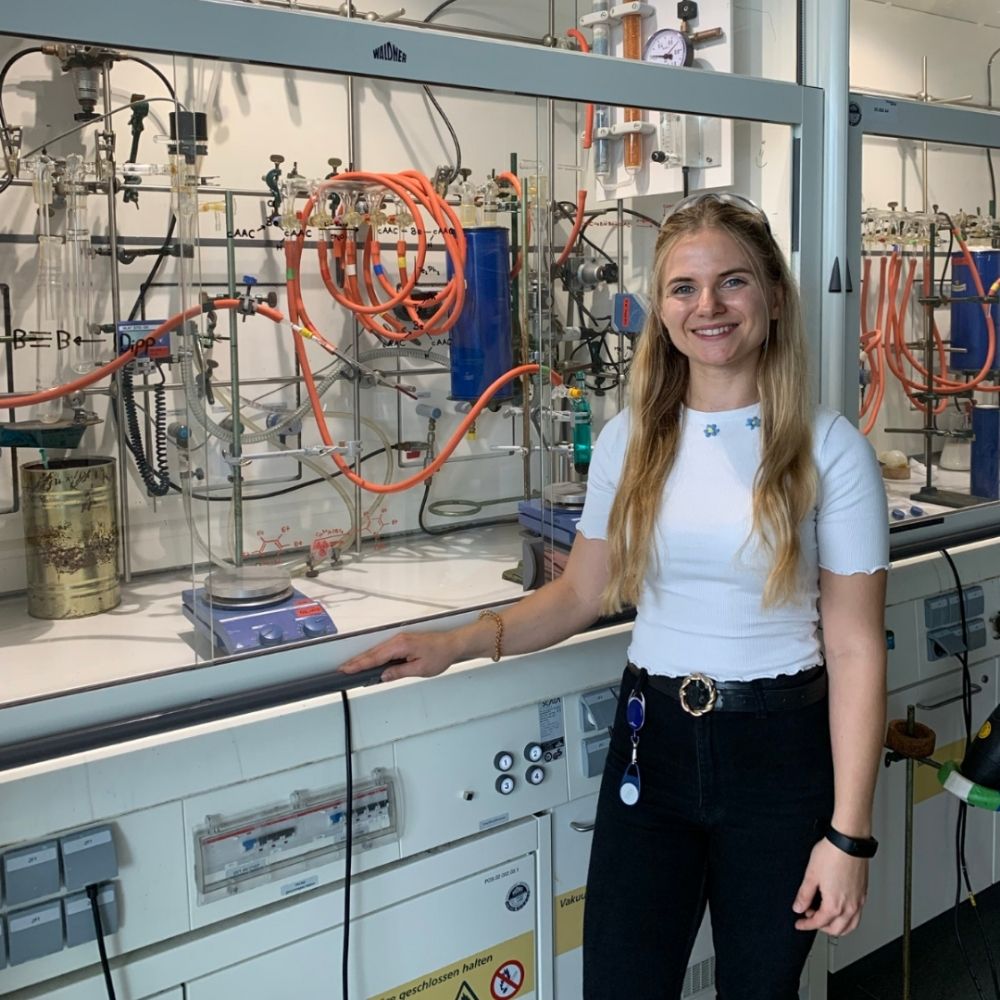
I am really excited that one of my favourite projects, which I worked on with the Hierlmeier Lab, has now been published in @jacs.acspublications.org.
pubs.acs.org/doi/full/10....
pubs.acs.org/doi/full/10....

Controlling Reductive Elimination Pathways in Ti(IV) Pincer Complexes: Concerted versus Radical Mechanisms via Ligand Design
Oxidatively induced reductive elimination (OIRE) is a powerful strategy for the formation of carbon–carbon bonds and has been widely employed in late transition metal catalysis. In contrast, early tra...
pubs.acs.org
January 26, 2026 at 10:32 PM
I am really excited that one of my favourite projects, which I worked on with the Hierlmeier Lab, has now been published in @jacs.acspublications.org.
pubs.acs.org/doi/full/10....
pubs.acs.org/doi/full/10....
‘Single-Layer Silica Nanosheets with In-Plane Porosity Enable High-Performance Nanolaminate Membranes for Organic Solvent Nanofiltration' has been featured in the latest issue of #JACS.
Explore the research behind the art: buff.ly/ujbKHbs
#ACS150
Explore the research behind the art: buff.ly/ujbKHbs
#ACS150

January 26, 2026 at 1:02 PM
‘Single-Layer Silica Nanosheets with In-Plane Porosity Enable High-Performance Nanolaminate Membranes for Organic Solvent Nanofiltration' has been featured in the latest issue of #JACS.
Explore the research behind the art: buff.ly/ujbKHbs
#ACS150
Explore the research behind the art: buff.ly/ujbKHbs
#ACS150