


Zahra M Dhanerawala
@zahramd.bsky.social
MD-PhD candidate @ WashU in the Han lab. AHA predoc fellow ❤️🧠. Previously, Simmons College and Princeton Neuro.
Reposted by Zahra M Dhanerawala

For black-capped chickadees, looking out at a location activates the same place cells as actually being there, a study from Columbia University shows.
By @martajhill.bsky.social
#neuroskyence
www.thetransmitter.org/hippocampus/...
By @martajhill.bsky.social
#neuroskyence
www.thetransmitter.org/hippocampus/...
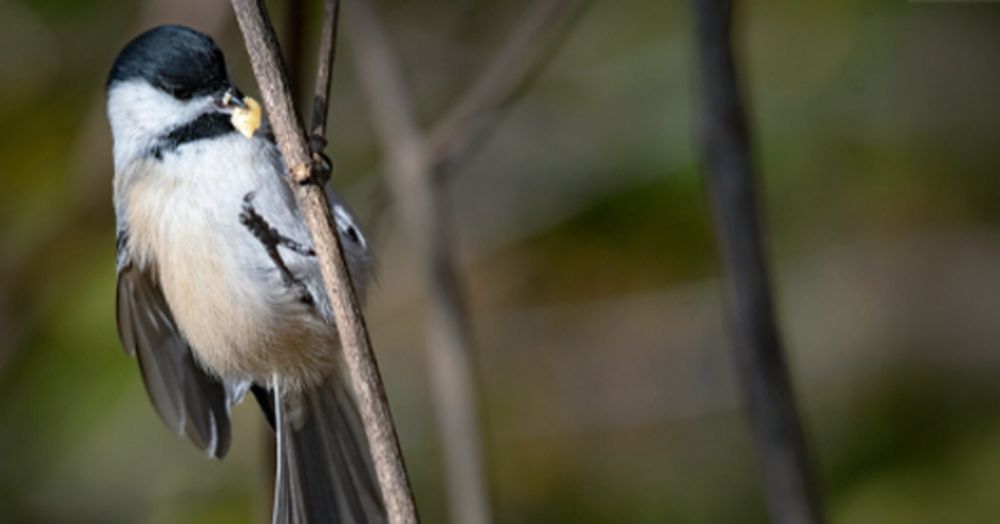
Gazing from afar activates place cells in chickadees
The results help explain how the hippocampus can recall information about a place without an animal physically revisiting it.
www.thetransmitter.org
June 13, 2025 at 12:05 PM
For black-capped chickadees, looking out at a location activates the same place cells as actually being there, a study from Columbia University shows.
By @martajhill.bsky.social
#neuroskyence
www.thetransmitter.org/hippocampus/...
By @martajhill.bsky.social
#neuroskyence
www.thetransmitter.org/hippocampus/...
Reposted by Zahra M Dhanerawala



April 2, 2025 at 2:40 PM
Reposted by Zahra M Dhanerawala
Two dueling sets of hypothalamic neurons—one that responds to isolation and one to reunion—help maintain a mouse's social homeostasis, a new study reveals.
By @avaskham.bsky.social
#neuroskyence
www.thetransmitter.org/social-behav...
By @avaskham.bsky.social
#neuroskyence
www.thetransmitter.org/social-behav...
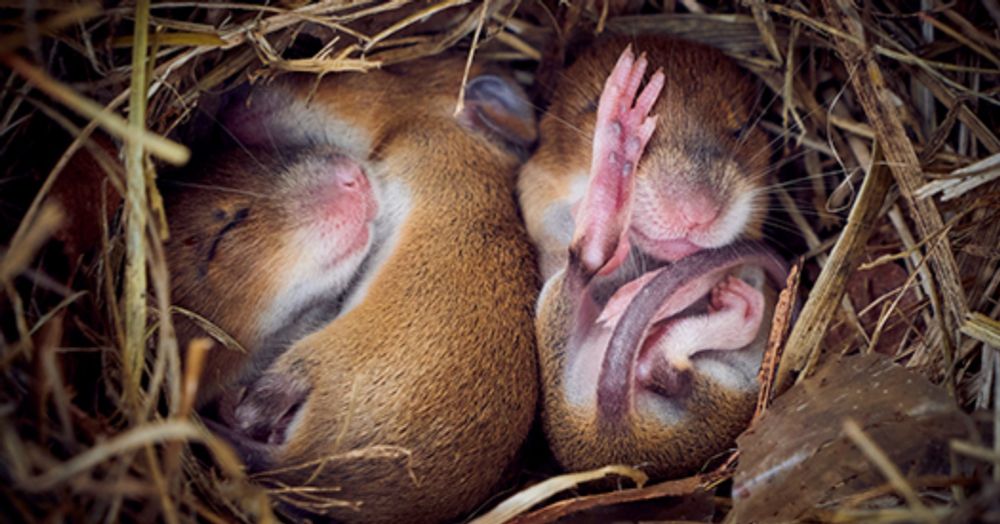
Soft touch quells loneliness in mice
Touch modulates one of two dueling types of hypothalamic neurons that, thermostat-like, balance an animal’s drive for social interaction.
www.thetransmitter.org
February 26, 2025 at 4:11 PM
Two dueling sets of hypothalamic neurons—one that responds to isolation and one to reunion—help maintain a mouse's social homeostasis, a new study reveals.
By @avaskham.bsky.social
#neuroskyence
www.thetransmitter.org/social-behav...
By @avaskham.bsky.social
#neuroskyence
www.thetransmitter.org/social-behav...
Reposted by Zahra M Dhanerawala
My dissertation work with @kmlab.bsky.social is officially published in #Jneurosci !
www.jneurosci.org/content/44/4...
TL;DR summary: The cerebellum can modulate several types of CA1 inhibitory interneurons, including object-responsive, run-active, & rest-active cells.
Read on to learn more: 🧵
www.jneurosci.org/content/44/4...
TL;DR summary: The cerebellum can modulate several types of CA1 inhibitory interneurons, including object-responsive, run-active, & rest-active cells.
Read on to learn more: 🧵

Distinct Functional Classes of CA1 Hippocampal Interneurons Are Modulated by Cerebellar Stimulation in a Coordinated Manner
There is mounting evidence that the cerebellum impacts hippocampal functioning, but the impact of the cerebellum on hippocampal interneurons remains obscure. Using miniscopes in freely behaving male a...
www.jneurosci.org
December 5, 2024 at 2:42 PM
My dissertation work with @kmlab.bsky.social is officially published in #Jneurosci !
www.jneurosci.org/content/44/4...
TL;DR summary: The cerebellum can modulate several types of CA1 inhibitory interneurons, including object-responsive, run-active, & rest-active cells.
Read on to learn more: 🧵
www.jneurosci.org/content/44/4...
TL;DR summary: The cerebellum can modulate several types of CA1 inhibitory interneurons, including object-responsive, run-active, & rest-active cells.
Read on to learn more: 🧵
Reposted by Zahra M Dhanerawala

Honored that a piece I wrote made it to NYTimes. It’s about how my mom’s stroke changed my connection to time, science, and nature. What a privilege to honor my mom in Modern Love.
Below is a gift link. Let me know your thoughts 🙏🏼
www.nytimes.com/2024/12/20/s...
Below is a gift link. Let me know your thoughts 🙏🏼
www.nytimes.com/2024/12/20/s...

Grief Makes Us Time Travelers (Gift Article)
A neuroscientist studying memory, I used to believe time was linear. Then my mother had a stroke.
www.nytimes.com
December 20, 2024 at 3:04 PM
Honored that a piece I wrote made it to NYTimes. It’s about how my mom’s stroke changed my connection to time, science, and nature. What a privilege to honor my mom in Modern Love.
Below is a gift link. Let me know your thoughts 🙏🏼
www.nytimes.com/2024/12/20/s...
Below is a gift link. Let me know your thoughts 🙏🏼
www.nytimes.com/2024/12/20/s...
Reposted by Zahra M Dhanerawala

Early days, but it looks like our authors don't think we need an impact factor either! Submissions are strong in numbers and high quality since the Clarivate/WoS announcement. We should not let a multibillion dollar company dictate how science is evaluated!

Following the news that eLife will not receive an Impact Factor in 2025, we’ve shared an update on how our model is doing since we were first placed “on hold” by Web of Science, and what we’re up to now. Find out more.
https://buff.ly/3ATRAFT
https://buff.ly/3ATRAFT

The eLife Model: An update on progress following changes in Web of Science indexing status
Following the decision that eLife will not receive an Impact Factor in 2025, we share an update on how our model is doing since we were first placed “on hold” by Web of Science, and what we’re up to…
buff.ly
November 20, 2024 at 5:51 PM
Early days, but it looks like our authors don't think we need an impact factor either! Submissions are strong in numbers and high quality since the Clarivate/WoS announcement. We should not let a multibillion dollar company dictate how science is evaluated!
Reposted by Zahra M Dhanerawala
A stunning finding from human cortex: SST inhibitory neurons lost first in Alzheimer's... even earlier than excitatory neurons.
Thanks to NIH BRAIN (BICCN, BICAN), @alleninstitute.bsky.social and a huge team of investigators (50+ NIH awards), well done for 🧠 science!
doi.org/10.1038/s415...
Thanks to NIH BRAIN (BICCN, BICAN), @alleninstitute.bsky.social and a huge team of investigators (50+ NIH awards), well done for 🧠 science!
doi.org/10.1038/s415...

November 19, 2024 at 1:57 AM
A stunning finding from human cortex: SST inhibitory neurons lost first in Alzheimer's... even earlier than excitatory neurons.
Thanks to NIH BRAIN (BICCN, BICAN), @alleninstitute.bsky.social and a huge team of investigators (50+ NIH awards), well done for 🧠 science!
doi.org/10.1038/s415...
Thanks to NIH BRAIN (BICCN, BICAN), @alleninstitute.bsky.social and a huge team of investigators (50+ NIH awards), well done for 🧠 science!
doi.org/10.1038/s415...