




Karen Lebek
@waterkaren.bsky.social
I explore water extreme events — floods and droughts — and how they reshape our landscapes and lives | Postdoctoral researcher and science communicator @ Uni Potsdam | PhD in water security
However, people remained food insecure two months after the flood, and signs of malnutrition, stress, and respiratory issues like coughing had worsened. #FoodInsecurity #Malnutrition #BoliviaFlood
Learn more here: doi.org/10.1002/ajhb...
Learn more here: doi.org/10.1002/ajhb...

When the flood passes, does health return? A short panel examining water and food insecurity, nutrition, and disease after an extreme flood in lowland Bolivia
Objectives Flooding is the most frequent extreme-weather disaster and disproportionately burdens marginalized populations. This article examines how food and water insecurity, blood pressure (BP), n...
doi.org
April 29, 2025 at 7:03 PM
However, people remained food insecure two months after the flood, and signs of malnutrition, stress, and respiratory issues like coughing had worsened. #FoodInsecurity #Malnutrition #BoliviaFlood
Learn more here: doi.org/10.1002/ajhb...
Learn more here: doi.org/10.1002/ajhb...
Right after the 2014 flood event, people in Tsimane’ had reported worsened water quality, contamination fear, standing water and access issues - they were highly water insecure. Two months later, the situation had improved and water insecurity had dropped. (see pubmed.ncbi.nlm.nih.gov/29253721/)

Household water insecurity after a historic flood: Diarrhea and dehydration in the Bolivian Amazon - PubMed
While 884 million people worldwide lack access to clean water, millions live in flood-prone regions. Unexpected flooding increases risk of diarrheal diseases and is expected to occur with increased fr...
pubmed.ncbi.nlm.nih.gov
April 29, 2025 at 7:03 PM
Right after the 2014 flood event, people in Tsimane’ had reported worsened water quality, contamination fear, standing water and access issues - they were highly water insecure. Two months later, the situation had improved and water insecurity had dropped. (see pubmed.ncbi.nlm.nih.gov/29253721/)
Within two months after the flood event, availability and diversity of food had declined, not only because households lost stored food, but also due to destroyed crops and the loss of both domestic and wild animals. #FoodSecurity #BoliviaFlood
April 29, 2025 at 7:03 PM
Within two months after the flood event, availability and diversity of food had declined, not only because households lost stored food, but also due to destroyed crops and the loss of both domestic and wild animals. #FoodSecurity #BoliviaFlood
Dr Ugur Öztürk, NatRiskChange alumnus now working at GFZ Potsdam, presented his work on process-based modeling, the human role in landslide hazards, and how to consider the future. He introduced an integrated risk concept that includes dynamic societal risk drivers.
3/5
3/5

November 14, 2023 at 11:14 AM
Dr Ugur Öztürk, NatRiskChange alumnus now working at GFZ Potsdam, presented his work on process-based modeling, the human role in landslide hazards, and how to consider the future. He introduced an integrated risk concept that includes dynamic societal risk drivers.
3/5
3/5
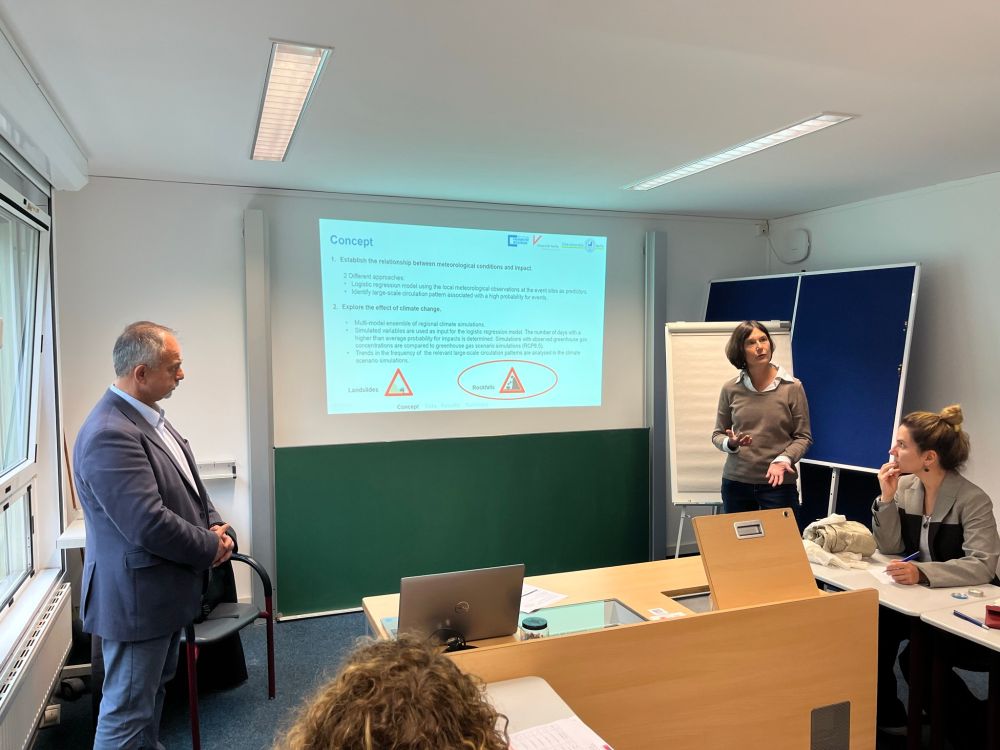
Dr Katrin Nissen, from FU Berlin, spoke about meteorological drivers of rockfalls. She showed that the probability for rockfalls decreases with climate change. Precipitation, moisture pre-conditions and freeze-thawing were the predictors for rockfall probability in the logistic regression model.
2/5
2/5
November 14, 2023 at 11:11 AM
Dr Katrin Nissen, from FU Berlin, spoke about meteorological drivers of rockfalls. She showed that the probability for rockfalls decreases with climate change. Precipitation, moisture pre-conditions and freeze-thawing were the predictors for rockfall probability in the logistic regression model.
2/5
2/5
@earth-science.bsky.social please could you add us to your feed? 🌍🙏
November 9, 2023 at 7:18 AM
@earth-science.bsky.social please could you add us to your feed? 🌍🙏