


Inna Vorobei
@vorobei-inna.bsky.social
PhD linguist turned science journalist. Sharing the wonder of science & the mystery of languages.
The Voynich Manuscript is one of the greatest mysteries in history.
A 15th-century book, written in an unknown script, filled with strange plants—and a text that has defeated cryptographers, linguists, and even AI.
It seems @michaelgreshko.bsky.social may have come closer than anyone before🧵
A 15th-century book, written in an unknown script, filled with strange plants—and a text that has defeated cryptographers, linguists, and even AI.
It seems @michaelgreshko.bsky.social may have come closer than anyone before🧵
December 22, 2025 at 8:13 PM
The Voynich Manuscript is one of the greatest mysteries in history.
A 15th-century book, written in an unknown script, filled with strange plants—and a text that has defeated cryptographers, linguists, and even AI.
It seems @michaelgreshko.bsky.social may have come closer than anyone before🧵
A 15th-century book, written in an unknown script, filled with strange plants—and a text that has defeated cryptographers, linguists, and even AI.
It seems @michaelgreshko.bsky.social may have come closer than anyone before🧵
Рукопись Войнича — одна из самых загадочных книг в истории.
XV век, неизвестный алфавит, странные растения и текст, который не смогли расшифровать ни криптографы, ни лингвисты, ни ИИ.
Но, кажется, @michaelgreshko.bsky.social ближе всех подобрался к разгадке🧵
www.tandfonline.com/doi/full/10....
XV век, неизвестный алфавит, странные растения и текст, который не смогли расшифровать ни криптографы, ни лингвисты, ни ИИ.
Но, кажется, @michaelgreshko.bsky.social ближе всех подобрался к разгадке🧵
www.tandfonline.com/doi/full/10....
www.tandfonline.com
December 22, 2025 at 7:56 PM
Рукопись Войнича — одна из самых загадочных книг в истории.
XV век, неизвестный алфавит, странные растения и текст, который не смогли расшифровать ни криптографы, ни лингвисты, ни ИИ.
Но, кажется, @michaelgreshko.bsky.social ближе всех подобрался к разгадке🧵
www.tandfonline.com/doi/full/10....
XV век, неизвестный алфавит, странные растения и текст, который не смогли расшифровать ни криптографы, ни лингвисты, ни ИИ.
Но, кажется, @michaelgreshko.bsky.social ближе всех подобрался к разгадке🧵
www.tandfonline.com/doi/full/10....
Do AI Chatbots Really Help Us Learn Languages? A Breakdown of 30 Studies
1️⃣
AI chatbots for language learning — hype or real value?
Researchers analyzed 30 studies (2020–2024).
And the results turned out to be far more serious than what ads promise.
👇
doi.org/10.1016/j.am...
1️⃣
AI chatbots for language learning — hype or real value?
Researchers analyzed 30 studies (2020–2024).
And the results turned out to be far more serious than what ads promise.
👇
doi.org/10.1016/j.am...

December 6, 2025 at 3:13 PM
Do AI Chatbots Really Help Us Learn Languages? A Breakdown of 30 Studies
1️⃣
AI chatbots for language learning — hype or real value?
Researchers analyzed 30 studies (2020–2024).
And the results turned out to be far more serious than what ads promise.
👇
doi.org/10.1016/j.am...
1️⃣
AI chatbots for language learning — hype or real value?
Researchers analyzed 30 studies (2020–2024).
And the results turned out to be far more serious than what ads promise.
👇
doi.org/10.1016/j.am...
Чат-боты для изучения языков — хайп или реальная польза?
Учёные проанализировали 30 исследований (2020–2024).
И выводы оказались куда серьёзнее, чем реклама в соцсетях.
👇
doi.org/10.1016/j.am...
Учёные проанализировали 30 исследований (2020–2024).
И выводы оказались куда серьёзнее, чем реклама в соцсетях.
👇
doi.org/10.1016/j.am...
December 6, 2025 at 3:09 PM
Чат-боты для изучения языков — хайп или реальная польза?
Учёные проанализировали 30 исследований (2020–2024).
И выводы оказались куда серьёзнее, чем реклама в соцсетях.
👇
doi.org/10.1016/j.am...
Учёные проанализировали 30 исследований (2020–2024).
И выводы оказались куда серьёзнее, чем реклама в соцсетях.
👇
doi.org/10.1016/j.am...
What or Who are we actually talking to when we write to ChatGPT? 🤖💬
1️⃣When we open a chat and type: “Hi, ChatGPT,” — what are we really writing to?
And what is replying to us? Who is on the other side? 👀
An algorithm? A model? A server?
Or… something else?
1️⃣When we open a chat and type: “Hi, ChatGPT,” — what are we really writing to?
And what is replying to us? Who is on the other side? 👀
An algorithm? A model? A server?
Or… something else?

November 30, 2025 at 3:44 PM
What or Who are we actually talking to when we write to ChatGPT? 🤖💬
1️⃣When we open a chat and type: “Hi, ChatGPT,” — what are we really writing to?
And what is replying to us? Who is on the other side? 👀
An algorithm? A model? A server?
Or… something else?
1️⃣When we open a chat and type: “Hi, ChatGPT,” — what are we really writing to?
And what is replying to us? Who is on the other side? 👀
An algorithm? A model? A server?
Or… something else?
С кем мы на самом деле разговариваем, когда пишем ChatGPT? 🤖💬
1️⃣Когда мы открываем чат и пишем: «Привет, ChatGPT», — кому мы в реальности пишем?
И что нам отвечает? Кто там вообще на той стороне? 👀
Алгоритм? Модель? Сервер? Или… что-то другое?
philarchive.org/archive/CHAW...
1️⃣Когда мы открываем чат и пишем: «Привет, ChatGPT», — кому мы в реальности пишем?
И что нам отвечает? Кто там вообще на той стороне? 👀
Алгоритм? Модель? Сервер? Или… что-то другое?
philarchive.org/archive/CHAW...
philarchive.org
November 30, 2025 at 3:28 PM
С кем мы на самом деле разговариваем, когда пишем ChatGPT? 🤖💬
1️⃣Когда мы открываем чат и пишем: «Привет, ChatGPT», — кому мы в реальности пишем?
И что нам отвечает? Кто там вообще на той стороне? 👀
Алгоритм? Модель? Сервер? Или… что-то другое?
philarchive.org/archive/CHAW...
1️⃣Когда мы открываем чат и пишем: «Привет, ChatGPT», — кому мы в реальности пишем?
И что нам отвечает? Кто там вообще на той стороне? 👀
Алгоритм? Модель? Сервер? Или… что-то другое?
philarchive.org/archive/CHAW...
Sperm Whales and Their Almost-Human Speech
1️⃣Sperm whale communication is far more complex than we thought.
And here’s the wild part — it actually sounds surprisingly close to human speech.
Yes, really.
Researchers from the CETI project just found vowel-like features in whale clicks. 🐋🔊
1️⃣Sperm whale communication is far more complex than we thought.
And here’s the wild part — it actually sounds surprisingly close to human speech.
Yes, really.
Researchers from the CETI project just found vowel-like features in whale clicks. 🐋🔊

November 27, 2025 at 2:50 PM
Sperm Whales and Their Almost-Human Speech
1️⃣Sperm whale communication is far more complex than we thought.
And here’s the wild part — it actually sounds surprisingly close to human speech.
Yes, really.
Researchers from the CETI project just found vowel-like features in whale clicks. 🐋🔊
1️⃣Sperm whale communication is far more complex than we thought.
And here’s the wild part — it actually sounds surprisingly close to human speech.
Yes, really.
Researchers from the CETI project just found vowel-like features in whale clicks. 🐋🔊
1️⃣
Коммуникация кашалотов оказалась куда сложнее, чем мы думали.
И самое удивительное — она звучит намного ближе к человеческой речи.
Исследователи проекта CETI нашли в щелчках китов… аналог гласных. 🐋🔊
Коммуникация кашалотов оказалась куда сложнее, чем мы думали.
И самое удивительное — она звучит намного ближе к человеческой речи.
Исследователи проекта CETI нашли в щелчках китов… аналог гласных. 🐋🔊
November 27, 2025 at 2:37 PM
1️⃣
Коммуникация кашалотов оказалась куда сложнее, чем мы думали.
И самое удивительное — она звучит намного ближе к человеческой речи.
Исследователи проекта CETI нашли в щелчках китов… аналог гласных. 🐋🔊
Коммуникация кашалотов оказалась куда сложнее, чем мы думали.
И самое удивительное — она звучит намного ближе к человеческой речи.
Исследователи проекта CETI нашли в щелчках китов… аналог гласных. 🐋🔊
Reposted by Inna Vorobei

🧠 This paper is a part of my first brain project, and I had a lot of fun working on it with the amazing @gretatuckute.bsky.social, @alexanderfung.bsky.social, Ashley Malkin, and @evfedorenko.bsky.social!
Paper link: arxiv.org/abs/2508.11536
Code+data: github.com/ryskina/conc...
Paper link: arxiv.org/abs/2508.11536
Code+data: github.com/ryskina/conc...

Language models align with brain regions that represent concepts across modalities
Cognitive science and neuroscience have long faced the challenge of disentangling representations of language from representations of conceptual meaning. As the same problem arises in today's language...
arxiv.org
October 4, 2025 at 2:15 AM
🧠 This paper is a part of my first brain project, and I had a lot of fun working on it with the amazing @gretatuckute.bsky.social, @alexanderfung.bsky.social, Ashley Malkin, and @evfedorenko.bsky.social!
Paper link: arxiv.org/abs/2508.11536
Code+data: github.com/ryskina/conc...
Paper link: arxiv.org/abs/2508.11536
Code+data: github.com/ryskina/conc...
Reposted by Inna Vorobei

📣 New preprint from the Braga Lab! 📣
The ventral visual stream for reading converges on the transmodal language network
Congrats to Dr. Joe Salvo for this epic set of results
Big Q: What brain systems support the translation of writing to concepts and meaning?
Thread 🧵 ⬇️
The ventral visual stream for reading converges on the transmodal language network
Congrats to Dr. Joe Salvo for this epic set of results
Big Q: What brain systems support the translation of writing to concepts and meaning?
Thread 🧵 ⬇️

October 7, 2025 at 9:51 PM
📣 New preprint from the Braga Lab! 📣
The ventral visual stream for reading converges on the transmodal language network
Congrats to Dr. Joe Salvo for this epic set of results
Big Q: What brain systems support the translation of writing to concepts and meaning?
Thread 🧵 ⬇️
The ventral visual stream for reading converges on the transmodal language network
Congrats to Dr. Joe Salvo for this epic set of results
Big Q: What brain systems support the translation of writing to concepts and meaning?
Thread 🧵 ⬇️
🧵 1. Что, если устойчивость к свинцу подарила нам язык?
Новое исследование в Science Advances предполагает: воздействие свинца миллионы лет назад могло повлиять на эволюцию мозга и языка у древних людей.
www.science.org/doi/10.1126/...
Новое исследование в Science Advances предполагает: воздействие свинца миллионы лет назад могло повлиять на эволюцию мозга и языка у древних людей.
www.science.org/doi/10.1126/...

Impact of intermittent lead exposure on hominid brain evolution
Lead exposure, as influenced by NOVA1 expression, affected brain function in multiple hominid species.
www.science.org
October 17, 2025 at 11:53 AM
🧵 1. Что, если устойчивость к свинцу подарила нам язык?
Новое исследование в Science Advances предполагает: воздействие свинца миллионы лет назад могло повлиять на эволюцию мозга и языка у древних людей.
www.science.org/doi/10.1126/...
Новое исследование в Science Advances предполагает: воздействие свинца миллионы лет назад могло повлиять на эволюцию мозга и языка у древних людей.
www.science.org/doi/10.1126/...
🧵 1. What if resistance to lead gave us language?
A new study in Science Advances suggests that exposure to lead millions of years ago may have shaped the evolution of the human brain and language.
www.science.org/doi/10.1126/...
A new study in Science Advances suggests that exposure to lead millions of years ago may have shaped the evolution of the human brain and language.
www.science.org/doi/10.1126/...
Impact of intermittent lead exposure on hominid brain evolution
Lead exposure, as influenced by NOVA1 expression, affected brain function in multiple hominid species.
www.science.org
October 17, 2025 at 11:50 AM
🧵 1. What if resistance to lead gave us language?
A new study in Science Advances suggests that exposure to lead millions of years ago may have shaped the evolution of the human brain and language.
www.science.org/doi/10.1126/...
A new study in Science Advances suggests that exposure to lead millions of years ago may have shaped the evolution of the human brain and language.
www.science.org/doi/10.1126/...
🧵 What Makes Us Truly Human? (Thread)
1️⃣
What really sets humans apart from animals?
Language? Consciousness? Self-awareness?
According to a new scientific paper — something deeper:
Our ability to tell stories.
👇
www.frontiersin.org/journals/psy...
1️⃣
What really sets humans apart from animals?
Language? Consciousness? Self-awareness?
According to a new scientific paper — something deeper:
Our ability to tell stories.
👇
www.frontiersin.org/journals/psy...

Frontiers | Bridging consciousness to our narrative brain: evolutionary insights
Introduction There is a long tradition of (attempts at) bridging language and consciousness. Both are human-specific traits, even with precursors in other sp...
www.frontiersin.org
October 9, 2025 at 3:59 PM
🧵 What Makes Us Truly Human? (Thread)
1️⃣
What really sets humans apart from animals?
Language? Consciousness? Self-awareness?
According to a new scientific paper — something deeper:
Our ability to tell stories.
👇
www.frontiersin.org/journals/psy...
1️⃣
What really sets humans apart from animals?
Language? Consciousness? Self-awareness?
According to a new scientific paper — something deeper:
Our ability to tell stories.
👇
www.frontiersin.org/journals/psy...
What does hate speech do to our brains? 🧠
Spoiler: it rewires our brains — and not in a good way.
Thread on a new study 👇
www.nature.com/articles/s41...
Spoiler: it rewires our brains — and not in a good way.
Thread on a new study 👇
www.nature.com/articles/s41...

Exposure to hate speech deteriorates neurocognitive mechanisms of the ability to understand others’ pain - Scientific Reports
Scientific Reports - Exposure to hate speech deteriorates neurocognitive mechanisms of the ability to understand others’ pain
www.nature.com
September 30, 2025 at 5:33 PM
What does hate speech do to our brains? 🧠
Spoiler: it rewires our brains — and not in a good way.
Thread on a new study 👇
www.nature.com/articles/s41...
Spoiler: it rewires our brains — and not in a good way.
Thread on a new study 👇
www.nature.com/articles/s41...
Что делает язык ненависти с нашим мозгом? 🧠
Спойлер: он перепрошивает наш мозг. И не самым лучшим образом
Тред о новом исследовании👇
www.nature.com/articles/s41...
Спойлер: он перепрошивает наш мозг. И не самым лучшим образом
Тред о новом исследовании👇
www.nature.com/articles/s41...
Exposure to hate speech deteriorates neurocognitive mechanisms of the ability to understand others’ pain - Scientific Reports
Scientific Reports - Exposure to hate speech deteriorates neurocognitive mechanisms of the ability to understand others’ pain
www.nature.com
September 30, 2025 at 5:29 PM
Что делает язык ненависти с нашим мозгом? 🧠
Спойлер: он перепрошивает наш мозг. И не самым лучшим образом
Тред о новом исследовании👇
www.nature.com/articles/s41...
Спойлер: он перепрошивает наш мозг. И не самым лучшим образом
Тред о новом исследовании👇
www.nature.com/articles/s41...
What language did the Huns speak? 🤔
You won’t believe it!
They stormed into Europe in the 4th century, terrified the Roman Empire, and made Attila a legend.
But who were they really — and what language did they use?
#History #Linguistics
You won’t believe it!
They stormed into Europe in the 4th century, terrified the Roman Empire, and made Attila a legend.
But who were they really — and what language did they use?
#History #Linguistics
September 22, 2025 at 9:05 AM
What language did the Huns speak? 🤔
You won’t believe it!
They stormed into Europe in the 4th century, terrified the Roman Empire, and made Attila a legend.
But who were they really — and what language did they use?
#History #Linguistics
You won’t believe it!
They stormed into Europe in the 4th century, terrified the Roman Empire, and made Attila a legend.
But who were they really — and what language did they use?
#History #Linguistics
На каком языке говорили гунны? Вы не поверите!
Гунны появились в Европе в IV веке, навели ужас на Римскую империю и сделали Аттилу легендой.
Но кем они были — и на каком языке говорили?
Гунны появились в Европе в IV веке, навели ужас на Римскую империю и сделали Аттилу легендой.
Но кем они были — и на каком языке говорили?
onlinelibrary.wiley.com
September 22, 2025 at 8:58 AM
На каком языке говорили гунны? Вы не поверите!
Гунны появились в Европе в IV веке, навели ужас на Римскую империю и сделали Аттилу легендой.
Но кем они были — и на каком языке говорили?
Гунны появились в Европе в IV веке, навели ужас на Римскую империю и сделали Аттилу легендой.
Но кем они были — и на каком языке говорили?
🧵 What happens to languages when peoples meet?
🌍 Spoiler: they start borrowing not just words, but structure.
👇
🌍 Spoiler: they start borrowing not just words, but structure.
👇
September 17, 2025 at 8:26 AM
🧵 What happens to languages when peoples meet?
🌍 Spoiler: they start borrowing not just words, but structure.
👇
🌍 Spoiler: they start borrowing not just words, but structure.
👇
🧵 Что происходит с языками, когда встречаются народы?
🌍 Спойлер: они начинают заимствовать друг у друга даже структуру, а не только слова.
🌍 Спойлер: они начинают заимствовать друг у друга даже структуру, а не только слова.
September 17, 2025 at 8:23 AM
🧵 Что происходит с языками, когда встречаются народы?
🌍 Спойлер: они начинают заимствовать друг у друга даже структуру, а не только слова.
🌍 Спойлер: они начинают заимствовать друг у друга даже структуру, а не только слова.
🧬 How ancient DNA explains the origins of Finnish and Hungarian languages?
A new genetic study sheds light on the origins of Uralic languages — like Finnish, Estonian, Hungarian — and even the mysterious Yeniseian family, now spoken only by the Kets in Siberia.
A new genetic study sheds light on the origins of Uralic languages — like Finnish, Estonian, Hungarian — and even the mysterious Yeniseian family, now spoken only by the Kets in Siberia.

July 22, 2025 at 11:19 AM
🧬 How ancient DNA explains the origins of Finnish and Hungarian languages?
A new genetic study sheds light on the origins of Uralic languages — like Finnish, Estonian, Hungarian — and even the mysterious Yeniseian family, now spoken only by the Kets in Siberia.
A new genetic study sheds light on the origins of Uralic languages — like Finnish, Estonian, Hungarian — and even the mysterious Yeniseian family, now spoken only by the Kets in Siberia.
Reposted by Inna Vorobei

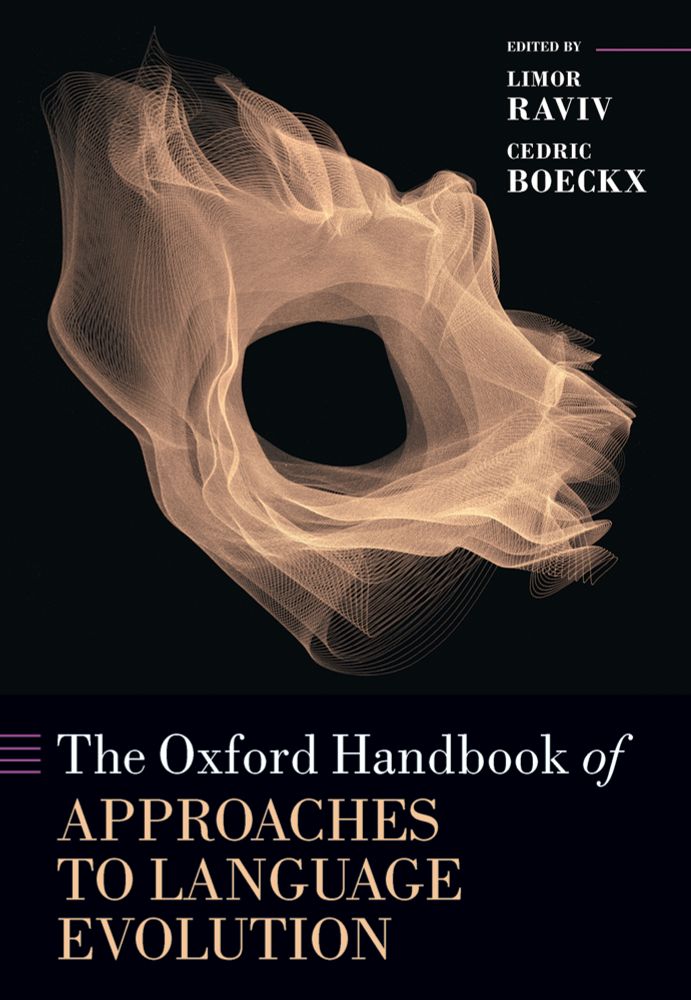
Delighted to announce the publication of a collaborative effort, co-led by @limorraviv.bsky.social @mpi-nl.bsky.social, showcasing the ways in which researchers have made language evolution an empirical issue: A handbook of experimental approaches to the fascinating problem of language evolution 🧪
May 27, 2025 at 5:56 AM
Delighted to announce the publication of a collaborative effort, co-led by @limorraviv.bsky.social @mpi-nl.bsky.social, showcasing the ways in which researchers have made language evolution an empirical issue: A handbook of experimental approaches to the fascinating problem of language evolution 🧪
🧬 Как древняя ДНК объясняет, откуда пришли финский и венгерский языки? 👇
Новое генетическое исследование проливает свет на происхождение уральских языков — например, финского, эстонского, венгерского и даже енисейского (на нём сегодня говорят только кеты).
Новое генетическое исследование проливает свет на происхождение уральских языков — например, финского, эстонского, венгерского и даже енисейского (на нём сегодня говорят только кеты).
July 22, 2025 at 11:06 AM
🧬 Как древняя ДНК объясняет, откуда пришли финский и венгерский языки? 👇
Новое генетическое исследование проливает свет на происхождение уральских языков — например, финского, эстонского, венгерского и даже енисейского (на нём сегодня говорят только кеты).
Новое генетическое исследование проливает свет на происхождение уральских языков — например, финского, эстонского, венгерского и даже енисейского (на нём сегодня говорят только кеты).
Did you know ancient Assyrians felt happiness in their liver, not their heart? 🤯
Recent research mapped emotions in Neo-Assyrian texts (934–612 BCE), revealing how they linked feelings to body parts.
Anger? In the feet.
Love? In the knees. 🦵💖
www.cell.com/iscience/ful...
Recent research mapped emotions in Neo-Assyrian texts (934–612 BCE), revealing how they linked feelings to body parts.
Anger? In the feet.
Love? In the knees. 🦵💖
www.cell.com/iscience/ful...

December 10, 2024 at 3:52 PM
Did you know ancient Assyrians felt happiness in their liver, not their heart? 🤯
Recent research mapped emotions in Neo-Assyrian texts (934–612 BCE), revealing how they linked feelings to body parts.
Anger? In the feet.
Love? In the knees. 🦵💖
www.cell.com/iscience/ful...
Recent research mapped emotions in Neo-Assyrian texts (934–612 BCE), revealing how they linked feelings to body parts.
Anger? In the feet.
Love? In the knees. 🦵💖
www.cell.com/iscience/ful...
Знаете ли вы, что древние ассирийцы ощущали счастье в печени, а не в сердце? 🤯 Недавнее исследование показало, как в текстах Новоассирийской империи (934–612 гг. до н.э.) эмоции связывались с частями тела.
Гнев? В стопах.🦶
Любовь? В коленях. 🦵💖
Credit: www.cell.com/iscience/ful...
Гнев? В стопах.🦶
Любовь? В коленях. 🦵💖
Credit: www.cell.com/iscience/ful...
December 10, 2024 at 3:50 PM
Знаете ли вы, что древние ассирийцы ощущали счастье в печени, а не в сердце? 🤯 Недавнее исследование показало, как в текстах Новоассирийской империи (934–612 гг. до н.э.) эмоции связывались с частями тела.
Гнев? В стопах.🦶
Любовь? В коленях. 🦵💖
Credit: www.cell.com/iscience/ful...
Гнев? В стопах.🦶
Любовь? В коленях. 🦵💖
Credit: www.cell.com/iscience/ful...
Reposted by Inna Vorobei

An impressive thread on how brain changes depending on the age of onset of a disorder

Today's ENIGMA Summit compared over 20 brain disorders in tens of thousands of people scanned with MRI, and suggests that:
1. brain disorders that hit very early, before birth (e.g. those due to genomic copy number variants such as genetic deletions) tend to affect cortical surface area, often ..🧵👇
1. brain disorders that hit very early, before birth (e.g. those due to genomic copy number variants such as genetic deletions) tend to affect cortical surface area, often ..🧵👇

December 6, 2024 at 9:11 AM
An impressive thread on how brain changes depending on the age of onset of a disorder