



Veronica (Stafford) Williamson
@veronica-98.bsky.social
Graduate Student @ Princeton Chemistry
M. Chang Lab
NSF Graduate Research Fellow
Stanford '20
M. Chang Lab
NSF Graduate Research Fellow
Stanford '20
Reposted by Veronica (Stafford) Williamson
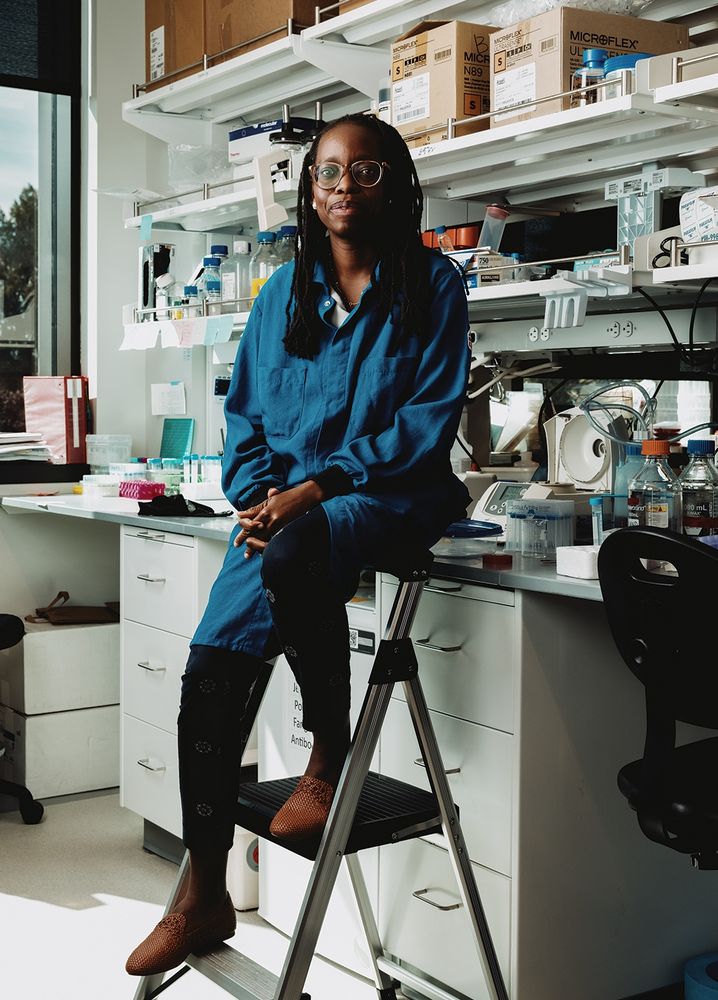
Prof. Laura Dassama (Stanford Chem) is developing a small-molecule therapy for sickle cell disease that removes BCL11A, restoring fetal hemoglobin without gene editing. Her goal is a simpler, more affordable sickle cell therapy. brnw.ch/21wXP8k
November 26, 2025 at 9:10 PM
Prof. Laura Dassama (Stanford Chem) is developing a small-molecule therapy for sickle cell disease that removes BCL11A, restoring fetal hemoglobin without gene editing. Her goal is a simpler, more affordable sickle cell therapy. brnw.ch/21wXP8k
Reposted by Veronica (Stafford) Williamson

Institute Scholar Laura Dassama @lmkdassama.bsky.social is working on a new strategy to treat the painful blood disorder sickle cell disease with the goal of creating more effective and accessible therapies: stanmed.stanford.edu/innovations-...

Innovations to help chronically ill people thrive
Stanford Medicine experts are developing innovative approaches to preventing, diagnosing and treating chronic diseases so people can live healthier lives.
stanmed.stanford.edu
November 21, 2025 at 11:58 PM
Institute Scholar Laura Dassama @lmkdassama.bsky.social is working on a new strategy to treat the painful blood disorder sickle cell disease with the goal of creating more effective and accessible therapies: stanmed.stanford.edu/innovations-...
Congratulations to my talented colleagues!
Congratulations to former student Eli and the team on their new paper in Nature Chemical Biology! Here they show that the difference in radical rebound of FeII/aKG halogenases is uniquely controlled by the switching of the metal ligand bond axes! Take a look: www.nature.com/articles/s41...

Dynamic metal coordination controls chemoselectivity in a radical halogenase - Nature Chemical Biology
Radical FeII/α-ketoglutarate-dependent halogenases are powerful biocatalysts for C–H functionalization. Here, the authors reveal the mechanistic basis for chemoselectivity in a lysine halogenase.
www.nature.com
November 21, 2025 at 5:31 PM
Congratulations to my talented colleagues!
very cool work! convergent evolution with a mysterious cause...

🍄 #Psilocybe & #Inocybe magic mushrooms use completely different enzymes to make #psilocybin as a team from @leibniz-hki.de and @uni-jena.de have discovered.
🗞️ Press release: shorturl.at/imyW2
🔎 Original paper: doi.org/10.1002/anie...
@angewandtechemie.bsky.social
@microverse.bsky.social
@dfg.de
🗞️ Press release: shorturl.at/imyW2
🔎 Original paper: doi.org/10.1002/anie...
@angewandtechemie.bsky.social
@microverse.bsky.social
@dfg.de


October 15, 2025 at 2:04 PM
very cool work! convergent evolution with a mysterious cause...
Reposted by Veronica (Stafford) Williamson

Amie Fornah Sankoh makes coatings from plants
This Dow chemist is working on biobased alternatives to the industry’s traditional fossil fuel–derived chemicals.
#DisabledInSTEM #NDEAM cen.acs.org/materials/co...
This Dow chemist is working on biobased alternatives to the industry’s traditional fossil fuel–derived chemicals.
#DisabledInSTEM #NDEAM cen.acs.org/materials/co...

Amie Fornah Sankoh makes coatings from plants
This Dow chemist is working on biobased alternatives to the industry’s traditional fossil fuel–derived chemicals
cen.acs.org
October 13, 2025 at 7:48 PM
Amie Fornah Sankoh makes coatings from plants
This Dow chemist is working on biobased alternatives to the industry’s traditional fossil fuel–derived chemicals.
#DisabledInSTEM #NDEAM cen.acs.org/materials/co...
This Dow chemist is working on biobased alternatives to the industry’s traditional fossil fuel–derived chemicals.
#DisabledInSTEM #NDEAM cen.acs.org/materials/co...
Found this interesting new archived paper from Tüysüz, Preiner & Martin surrounding the origin and evolution of metabolism at hydrothermal vents and beyond arxiv.org/pdf/2510.08410
Ever wondered how something as complex as cellular metabolism could spontaneously evolve?
Ever wondered how something as complex as cellular metabolism could spontaneously evolve?
arxiv.org
October 14, 2025 at 1:57 AM
Found this interesting new archived paper from Tüysüz, Preiner & Martin surrounding the origin and evolution of metabolism at hydrothermal vents and beyond arxiv.org/pdf/2510.08410
Ever wondered how something as complex as cellular metabolism could spontaneously evolve?
Ever wondered how something as complex as cellular metabolism could spontaneously evolve?
Reposted by Veronica (Stafford) Williamson

Congratulations to 2025 #MacFellow William Tarpeh! The Stanford chemical engineer is working on sustainable and practical solutions to treat wastewater and recover valuable mineral resources.
🗞️: stanford.io/3IZIBqF
🗞️: stanford.io/3IZIBqF

October 8, 2025 at 6:46 PM
Congratulations to 2025 #MacFellow William Tarpeh! The Stanford chemical engineer is working on sustainable and practical solutions to treat wastewater and recover valuable mineral resources.
🗞️: stanford.io/3IZIBqF
🗞️: stanford.io/3IZIBqF
Reposted by Veronica (Stafford) Williamson

NSF today released instructions for the next round of applicants to its Graduate Research Fellowship Program. A key group—second-year Ph.D. students—is no longer eligible, and students who are still able to apply will face an unusually narrow timeframe. https://scim.ag/3KlQkQk

‘Completely shattered.’ Changes to NSF’s graduate student fellowship spur outcry
The announcement comes months later than usual, leaving many would-be applicants stranded
www.science.org
September 26, 2025 at 11:09 PM
NSF today released instructions for the next round of applicants to its Graduate Research Fellowship Program. A key group—second-year Ph.D. students—is no longer eligible, and students who are still able to apply will face an unusually narrow timeframe. https://scim.ag/3KlQkQk
Reposted by Veronica (Stafford) Williamson
U.S. court orders NIH to restore killed grants to California researchers. https://scim.ag/46xy9hY

U.S. court orders NIH to restore killed grants to California researchers
Judge says district court is proper forum to protest mass grant terminations
scim.ag
September 24, 2025 at 3:50 PM
U.S. court orders NIH to restore killed grants to California researchers. https://scim.ag/46xy9hY
Reposted by Veronica (Stafford) Williamson

Deep-mining the archaeal proteome for antibiotics
News & Views by Rafael Laso-Pérez
@gecko1990.bsky.social @delafuentelab.bsky.social
Read it here: rdcu.be/eHNwa
News & Views by Rafael Laso-Pérez
@gecko1990.bsky.social @delafuentelab.bsky.social
Read it here: rdcu.be/eHNwa

Deep-mining the archaeal proteome for antibiotics
Nature Microbiology - A deep-learning algorithm unravels a collection of archaeasins, peptides from the archaeal proteome with potential antimicrobial activity and implications for the development...
rdcu.be
September 23, 2025 at 12:29 PM
Deep-mining the archaeal proteome for antibiotics
News & Views by Rafael Laso-Pérez
@gecko1990.bsky.social @delafuentelab.bsky.social
Read it here: rdcu.be/eHNwa
News & Views by Rafael Laso-Pérez
@gecko1990.bsky.social @delafuentelab.bsky.social
Read it here: rdcu.be/eHNwa
Reposted by Veronica (Stafford) Williamson
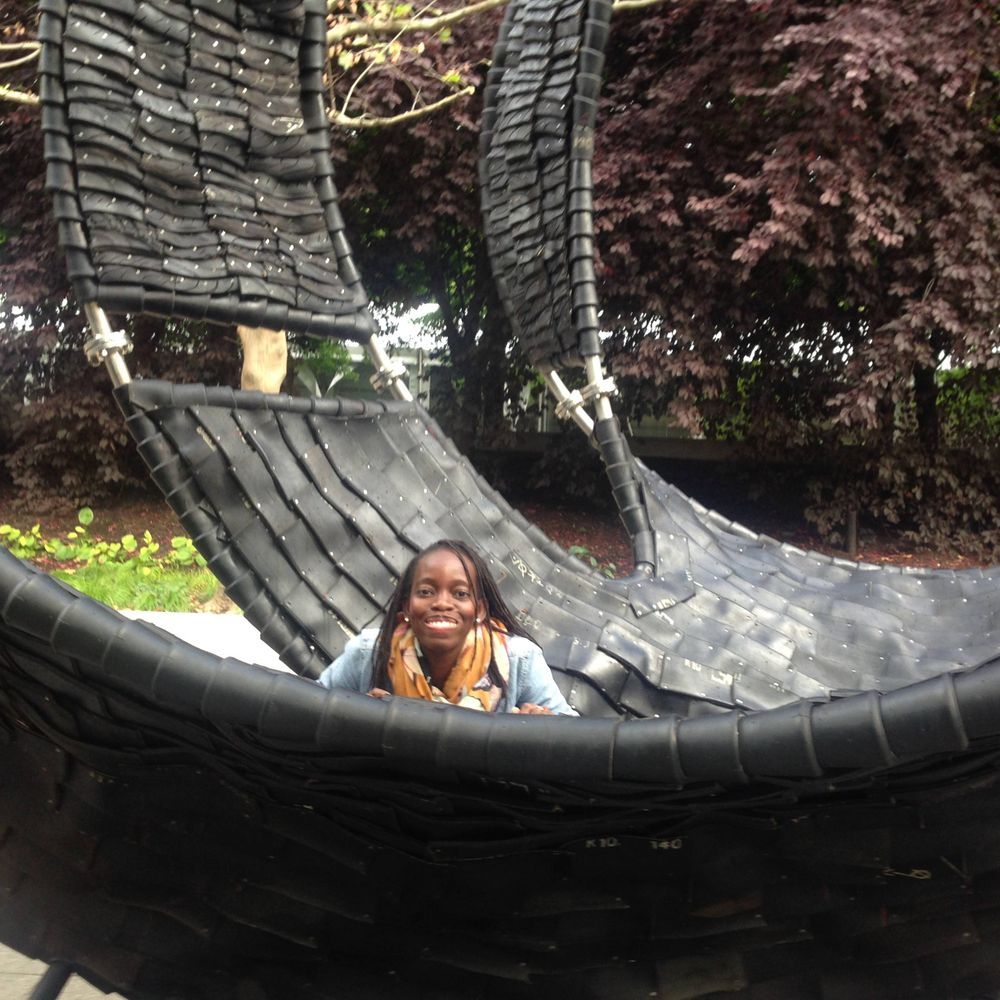
@jonathanccc-chem.bsky.social's predictor for discovering lipid interacting proteins is now in press - congratulations to all the authors!. We are delighted that SLiPP has spurred so many new research directions in the lab and nucleated many collaborations! pubs.acs.org/doi/10.1021/...
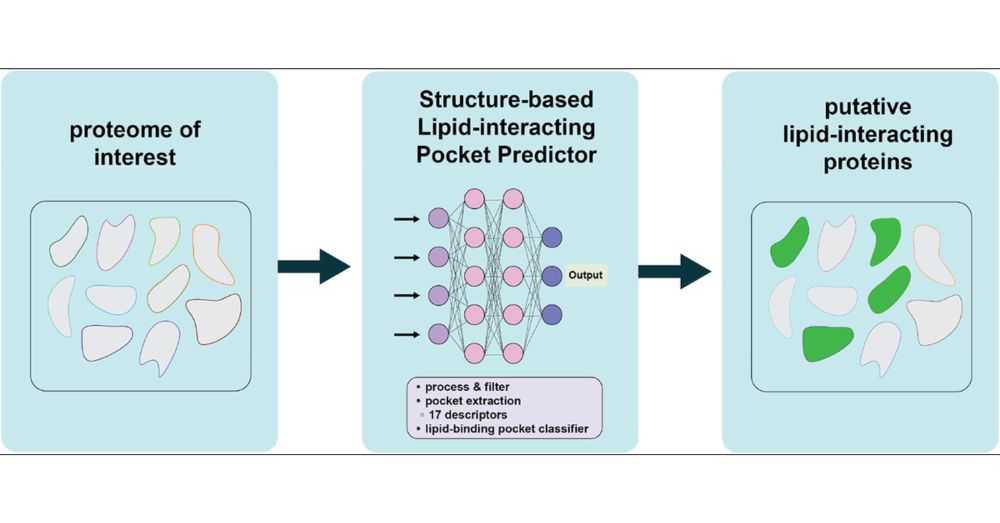
A Machine Learning Model for the Proteome-Wide Prediction of Lipid-Interacting Proteins
Lipids are essential metabolites that play critical roles in multiple cellular pathways. Like many primary metabolites, mutations that disrupt lipid synthesis can be lethal. Proteins involved in lipid...
pubs.acs.org
September 6, 2025 at 11:25 PM
@jonathanccc-chem.bsky.social's predictor for discovering lipid interacting proteins is now in press - congratulations to all the authors!. We are delighted that SLiPP has spurred so many new research directions in the lab and nucleated many collaborations! pubs.acs.org/doi/10.1021/...