


@vavvet.bsky.social
Reposted

Has WWT evaluated the pros and cons of feeding free-living wild waterbirds at Martin Mere in the light of the high level of circulation of highly pathogenic avian influenza virus in wild waterbirds in Europe this autumn? efsa.onlinelibrary.wiley.com/doi/pdf/10.2...

January 2, 2026 at 10:07 AM
Has WWT evaluated the pros and cons of feeding free-living wild waterbirds at Martin Mere in the light of the high level of circulation of highly pathogenic avian influenza virus in wild waterbirds in Europe this autumn? efsa.onlinelibrary.wiley.com/doi/pdf/10.2...
Reposted
Recommendation from EFSA: “Artificial feeding of wild birds, particularly of cranes and swans, should be avoided during high-risk periods [of avian influenza] to reduce the level of crowding of these species.” I would be concerned about shelducks, too. efsa.onlinelibrary.wiley.com/doi/pdf/10.2...
Avian Influenza Warning Map
app.bto.org
January 1, 2026 at 11:05 PM
Recommendation from EFSA: “Artificial feeding of wild birds, particularly of cranes and swans, should be avoided during high-risk periods [of avian influenza] to reduce the level of crowding of these species.” I would be concerned about shelducks, too. efsa.onlinelibrary.wiley.com/doi/pdf/10.2...
Reposted

Yes, we want to reduce the amount of antibiotics that are used in animals, but we need to get past sound bites, easy metrics and made-up numbers, and focus on changes that will improve antimicrobial resistance and animal health.
www.wormsandgermsblog.com/2025/12/arti...
5/5
www.wormsandgermsblog.com/2025/12/arti...
5/5

Antibiotic use in animals…when more might be better
OK, that headline might get some people worked up, but hopefully they’ll read the whole post before firing off an email. Antimicrobial resistance (AMR) is
www.wormsandgermsblog.com
December 19, 2025 at 9:21 PM
Yes, we want to reduce the amount of antibiotics that are used in animals, but we need to get past sound bites, easy metrics and made-up numbers, and focus on changes that will improve antimicrobial resistance and animal health.
www.wormsandgermsblog.com/2025/12/arti...
5/5
www.wormsandgermsblog.com/2025/12/arti...
5/5
Reposted
CLSI breakpoints haven't been revised, but this paper suggests we need to interpret things differently. That adds confusion but keeping up with changes like this improves patient care.
2/2
www.wormsandgermsblog.com/2025/12/arti...
2/2
www.wormsandgermsblog.com/2025/12/arti...

Antibiotics in cats: a need to review more breakpoints
Change is tough. Repeated changes can be tougher when it takes a lot to get anything implemented and understood. But…change is also good if it advances
www.wormsandgermsblog.com
December 12, 2025 at 3:06 PM
CLSI breakpoints haven't been revised, but this paper suggests we need to interpret things differently. That adds confusion but keeping up with changes like this improves patient care.
2/2
www.wormsandgermsblog.com/2025/12/arti...
2/2
www.wormsandgermsblog.com/2025/12/arti...
Reposted
If you are interested in more detailed background information about the emergence and worldwide spread of highly pathogenic avian influenza H5N1, here is an open access video of a lecture I gave for the University of Sydney. m.youtube.com/watch?v=ImFD...
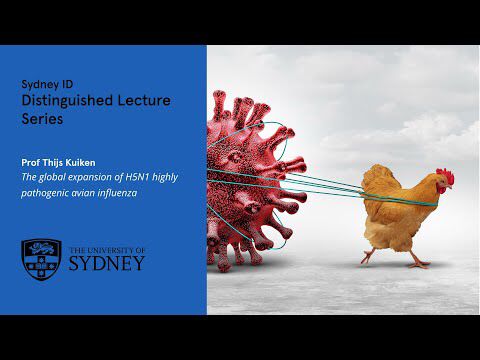
The global expansion of H5N1 highly pathogenic avian influenza - Prof Thijs Kuiken
YouTube video by Sydney Infectious Diseases Institute
m.youtube.com
December 7, 2025 at 6:04 AM
If you are interested in more detailed background information about the emergence and worldwide spread of highly pathogenic avian influenza H5N1, here is an open access video of a lecture I gave for the University of Sydney. m.youtube.com/watch?v=ImFD...
Reposted
8 kittens died, with one confirmed as H5N1. Suspected source is eating wild birds that their mother caught (but a series of infections from bird -> mother -> kitten presumably can't be ruled out.
2/2
www.wormsandgermsblog.com/2025/12/arti...
2/2
www.wormsandgermsblog.com/2025/12/arti...

H5N1 updates: peacock exemption, and more sick cats
It’s nice to be able to talk about H5N1 flu and not have to discuss ostriches, but unfortunately ,we still have things to talk about. First up,
www.wormsandgermsblog.com
December 3, 2025 at 5:07 AM
8 kittens died, with one confirmed as H5N1. Suspected source is eating wild birds that their mother caught (but a series of infections from bird -> mother -> kitten presumably can't be ruled out.
2/2
www.wormsandgermsblog.com/2025/12/arti...
2/2
www.wormsandgermsblog.com/2025/12/arti...
Reposted
We placed 120 defrosted day-old chicks as a model for a small carcass in a variety of habitats in southwestern Germany.
The most important vertebrate scavengers were the Red Fox, the Common Buzzard, the European Magpie (Pica pica) and the Domestic Cat. link.springer.com/article/10.1...
The most important vertebrate scavengers were the Red Fox, the Common Buzzard, the European Magpie (Pica pica) and the Domestic Cat. link.springer.com/article/10.1...
f.as
December 2, 2025 at 7:45 PM
We placed 120 defrosted day-old chicks as a model for a small carcass in a variety of habitats in southwestern Germany.
The most important vertebrate scavengers were the Red Fox, the Common Buzzard, the European Magpie (Pica pica) and the Domestic Cat. link.springer.com/article/10.1...
The most important vertebrate scavengers were the Red Fox, the Common Buzzard, the European Magpie (Pica pica) and the Domestic Cat. link.springer.com/article/10.1...