


Thomas Jung
@thomasjung.bsky.social
Head of Climate Dynamics and Vice-Director at AWI | Professor for Physics of the Climate System at University of Bremen | Interested in: Climate physics, climate change, kilometre-scale modelling, storylines, climate AI
Reposted by Thomas Jung

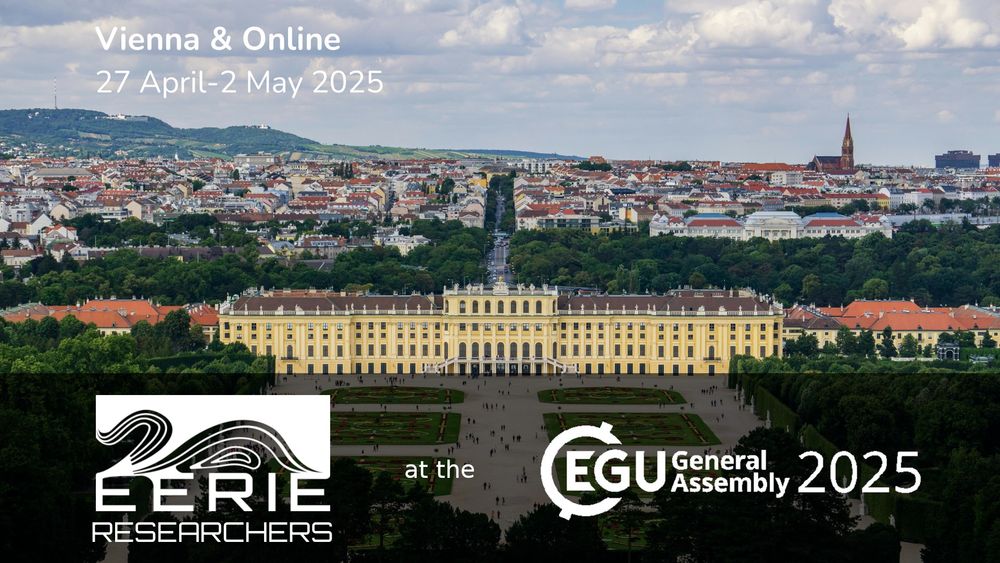
🌐 It's the EGU time of the year again!
The @egu.eu General Assembly 2025 will feature an extensive participation by #EERIEproject researchers. We’ve put together all the sessions in which they’ll participate and the posters they’ll have displayed.
Read below! ⤵️
eerie-project.eu/news/2025/04...
The @egu.eu General Assembly 2025 will feature an extensive participation by #EERIEproject researchers. We’ve put together all the sessions in which they’ll participate and the posters they’ll have displayed.
Read below! ⤵️
eerie-project.eu/news/2025/04...
April 28, 2025 at 8:53 AM
🌐 It's the EGU time of the year again!
The @egu.eu General Assembly 2025 will feature an extensive participation by #EERIEproject researchers. We’ve put together all the sessions in which they’ll participate and the posters they’ll have displayed.
Read below! ⤵️
eerie-project.eu/news/2025/04...
The @egu.eu General Assembly 2025 will feature an extensive participation by #EERIEproject researchers. We’ve put together all the sessions in which they’ll participate and the posters they’ll have displayed.
Read below! ⤵️
eerie-project.eu/news/2025/04...
Reposted by Thomas Jung
💼 Looking for a #job? We're #hiring!
The @awi.de is seeking to employ a skilled and motivated Scientist with expertise in Python programming and a solid background in oceanic, atmospheric or climate dynamics.
➡️ Check all the details on our website: eerie-project.eu/job-applicat...
The @awi.de is seeking to employ a skilled and motivated Scientist with expertise in Python programming and a solid background in oceanic, atmospheric or climate dynamics.
➡️ Check all the details on our website: eerie-project.eu/job-applicat...
April 4, 2025 at 8:14 AM
💼 Looking for a #job? We're #hiring!
The @awi.de is seeking to employ a skilled and motivated Scientist with expertise in Python programming and a solid background in oceanic, atmospheric or climate dynamics.
➡️ Check all the details on our website: eerie-project.eu/job-applicat...
The @awi.de is seeking to employ a skilled and motivated Scientist with expertise in Python programming and a solid background in oceanic, atmospheric or climate dynamics.
➡️ Check all the details on our website: eerie-project.eu/job-applicat...
Reposted by Thomas Jung

How will interaction with geophysical data evolve in the age of AI? 🤖🌍
In our latest preprint, we explore this question - not just conceptually, but with a hands-on prototype using the PANGAEA archive. Check it out!
arxiv.org/abs/2503.05854
In our latest preprint, we explore this question - not just conceptually, but with a hands-on prototype using the PANGAEA archive. Check it out!
arxiv.org/abs/2503.05854

Accelerating Earth Science Discovery via Multi-Agent LLM Systems
This Perspective explores the transformative potential of Multi-Agent Systems (MAS) powered by Large Language Models (LLMs) in the geosciences. Users of geoscientific data repositories face challenges...
arxiv.org
March 11, 2025 at 8:32 AM
How will interaction with geophysical data evolve in the age of AI? 🤖🌍
In our latest preprint, we explore this question - not just conceptually, but with a hands-on prototype using the PANGAEA archive. Check it out!
arxiv.org/abs/2503.05854
In our latest preprint, we explore this question - not just conceptually, but with a hands-on prototype using the PANGAEA archive. Check it out!
arxiv.org/abs/2503.05854
Reposted by Thomas Jung
🚨 Last chance to submit your application! 🚨
🌊 Scientist in High-Resolution Sea Ice Modeling
🔗 jobs.awi.de/Vacancies/19...
🧠 Scientist in AI-based Emulation for High-Resolution Sea Ice Modeling
🔗 jobs.awi.de/Vacancies/19...
Please share! 🧪❄️🌍 #ScienceJobs #SeaIce #AI
🌊 Scientist in High-Resolution Sea Ice Modeling
🔗 jobs.awi.de/Vacancies/19...
🧠 Scientist in AI-based Emulation for High-Resolution Sea Ice Modeling
🔗 jobs.awi.de/Vacancies/19...
Please share! 🧪❄️🌍 #ScienceJobs #SeaIce #AI
February 27, 2025 at 7:36 AM
🚨 Last chance to submit your application! 🚨
🌊 Scientist in High-Resolution Sea Ice Modeling
🔗 jobs.awi.de/Vacancies/19...
🧠 Scientist in AI-based Emulation for High-Resolution Sea Ice Modeling
🔗 jobs.awi.de/Vacancies/19...
Please share! 🧪❄️🌍 #ScienceJobs #SeaIce #AI
🌊 Scientist in High-Resolution Sea Ice Modeling
🔗 jobs.awi.de/Vacancies/19...
🧠 Scientist in AI-based Emulation for High-Resolution Sea Ice Modeling
🔗 jobs.awi.de/Vacancies/19...
Please share! 🧪❄️🌍 #ScienceJobs #SeaIce #AI
Reposted by Thomas Jung

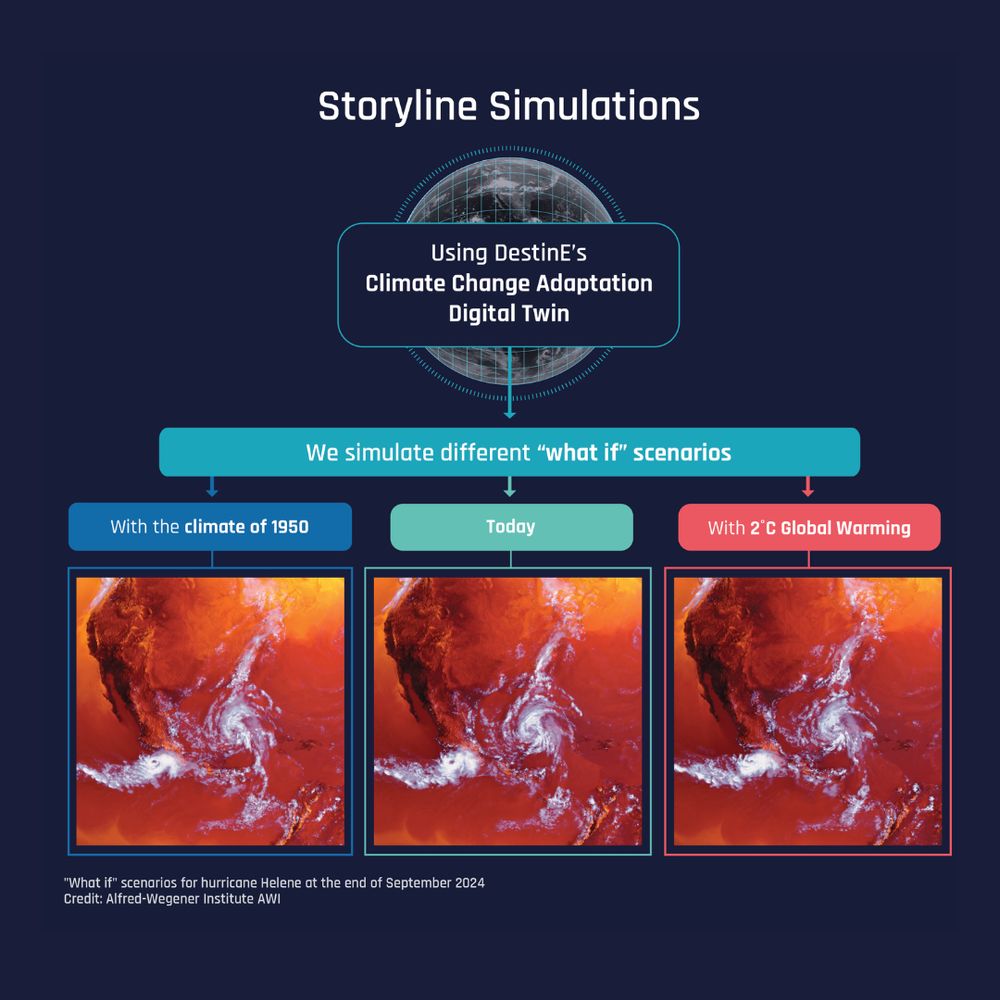
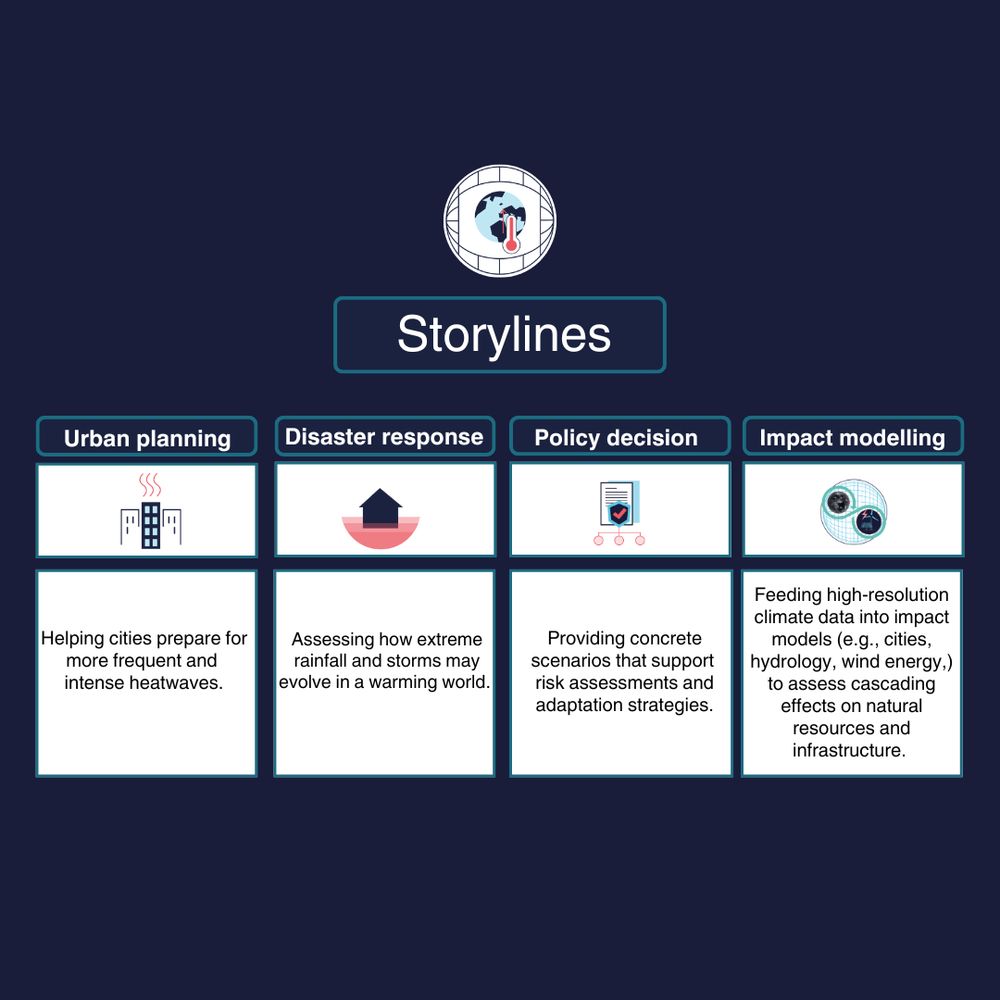
🌍🌐 What if we could replay recent extreme weather under different climate conditions? With storyline simulations in the EU’s #DestinE initiative, scientists are reconstructing past, present, and future extreme weather to help us adapt to climate change. Learn more ➡️ destine.ecmwf.int/news/replayi...
February 24, 2025 at 9:52 AM
🌍🌐 What if we could replay recent extreme weather under different climate conditions? With storyline simulations in the EU’s #DestinE initiative, scientists are reconstructing past, present, and future extreme weather to help us adapt to climate change. Learn more ➡️ destine.ecmwf.int/news/replayi...
Reposted by Thomas Jung
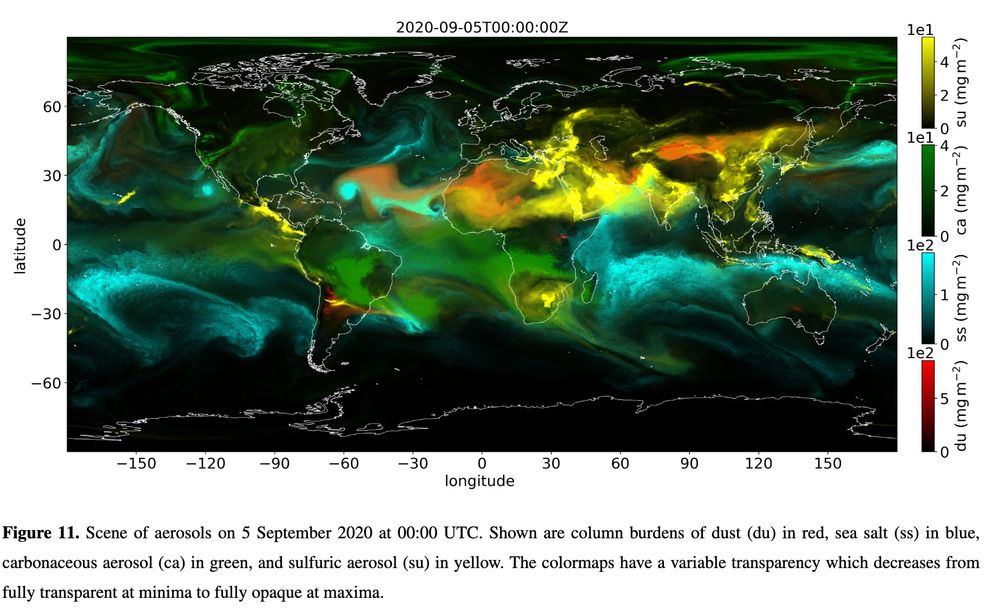
Preprint summarizing the first results from the nextGEMS project, which prepares several coupled models to run at kilometer scale: egusphere.copernicus.org/preprints/20... 🧪
February 19, 2025 at 10:49 AM
Preprint summarizing the first results from the nextGEMS project, which prepares several coupled models to run at kilometer scale: egusphere.copernicus.org/preprints/20... 🧪
Happy to share our latest paper, which summarizes the key outcomes of the Year of Polar Prediction (YOPP)—a decade-long international effort (2013–2022) led by the WMO’s World Weather Research Programme.
Read the full paper here: journals.ametsoc.org/view/journal...
Read the full paper here: journals.ametsoc.org/view/journal...
journals.ametsoc.org
February 12, 2025 at 10:19 AM
Happy to share our latest paper, which summarizes the key outcomes of the Year of Polar Prediction (YOPP)—a decade-long international effort (2013–2022) led by the WMO’s World Weather Research Programme.
Read the full paper here: journals.ametsoc.org/view/journal...
Read the full paper here: journals.ametsoc.org/view/journal...
Reposted by Thomas Jung
🚨 Job Alert! 🚨
Our team is hiring for the @terradt.bsky.social project.
🌊 Scientist in High-Resolution Sea Ice Modeling
🔗 jobs.awi.de/Vacancies/19...
🧠 Scientist in AI-based Emulation for High-Resolution Sea Ice Modeling
🔗 jobs.awi.de/Vacancies/19...
Please share! 🧪❄️🌍 #ScienceJobs #SeaIce #AI
Our team is hiring for the @terradt.bsky.social project.
🌊 Scientist in High-Resolution Sea Ice Modeling
🔗 jobs.awi.de/Vacancies/19...
🧠 Scientist in AI-based Emulation for High-Resolution Sea Ice Modeling
🔗 jobs.awi.de/Vacancies/19...
Please share! 🧪❄️🌍 #ScienceJobs #SeaIce #AI
February 4, 2025 at 9:50 AM
🚨 Job Alert! 🚨
Our team is hiring for the @terradt.bsky.social project.
🌊 Scientist in High-Resolution Sea Ice Modeling
🔗 jobs.awi.de/Vacancies/19...
🧠 Scientist in AI-based Emulation for High-Resolution Sea Ice Modeling
🔗 jobs.awi.de/Vacancies/19...
Please share! 🧪❄️🌍 #ScienceJobs #SeaIce #AI
Our team is hiring for the @terradt.bsky.social project.
🌊 Scientist in High-Resolution Sea Ice Modeling
🔗 jobs.awi.de/Vacancies/19...
🧠 Scientist in AI-based Emulation for High-Resolution Sea Ice Modeling
🔗 jobs.awi.de/Vacancies/19...
Please share! 🧪❄️🌍 #ScienceJobs #SeaIce #AI
Reposted by Thomas Jung
Thanks to the Swiss knives purchased during our time in #Zürich🇨🇭 for the #EERIE25 General Assembly, we've managed to slice and squeeze a three-day meeting into a 4-minute video summary 📹
▶️ Whether you attended or not, this you should not miss! www.youtube.com/watch?v=DezJ...
▶️ Whether you attended or not, this you should not miss! www.youtube.com/watch?v=DezJ...
#EERIE25 General Assembly summary
YouTube video by EERIE Project
www.youtube.com
January 24, 2025 at 10:38 AM
Thanks to the Swiss knives purchased during our time in #Zürich🇨🇭 for the #EERIE25 General Assembly, we've managed to slice and squeeze a three-day meeting into a 4-minute video summary 📹
▶️ Whether you attended or not, this you should not miss! www.youtube.com/watch?v=DezJ...
▶️ Whether you attended or not, this you should not miss! www.youtube.com/watch?v=DezJ...
Reposted by Thomas Jung
This is the description of our km-scale coupled climate model configuration. A lot of details in a thread from @trackow.bsky.social 🧪
Our article is out in @eurogeosciences.bsky.social's GMD journal, on global multi-year kilometre-scale modelling with @ecmwf.bsky.social’s IFS coupled to FESOM2.5 (finer than 5km).
See the paper here: doi.org/10.5194/gmd-...
This is what we found: (🧵1/n)
See the paper here: doi.org/10.5194/gmd-...
This is what we found: (🧵1/n)

Multi-year simulations at kilometre scale with the Integrated Forecasting System coupled to FESOM2.5 and NEMOv3.4
Abstract. We report on the first multi-year kilometre-scale global coupled simulations using ECMWF's Integrated Forecasting System (IFS) coupled to both the NEMO and FESOM ocean–sea ice models, as par...
doi.org
January 13, 2025 at 9:00 AM
This is the description of our km-scale coupled climate model configuration. A lot of details in a thread from @trackow.bsky.social 🧪
New webpage gives a concise overview of the Destination Earth (DestinE) digital twin on Climate Change Adaptation (Climate DT) and its functionalities, models, simulations and how to access data via the DestinE Platform.
destine.ecmwf.int/climate-chan...
destine.ecmwf.int/climate-chan...
Climate Change Adaptation Digital Twin
destine.ecmwf.int
December 18, 2024 at 12:16 PM
New webpage gives a concise overview of the Destination Earth (DestinE) digital twin on Climate Change Adaptation (Climate DT) and its functionalities, models, simulations and how to access data via the DestinE Platform.
destine.ecmwf.int/climate-chan...
destine.ecmwf.int/climate-chan...
Reposted by Thomas Jung

December 16, 2024 at 11:31 AM
Reposted by Thomas Jung

Our work will also be (remotely) presented at #AGU24 !
agu.confex.com/agu/agu24/me...
Dec 11, 01:30pm - 02:30pm (Central Time)
Dec 12, 07:30am - 08:30am (Central Time)
agu.confex.com/agu/agu24/me...
Dec 11, 01:30pm - 02:30pm (Central Time)
Dec 12, 07:30am - 08:30am (Central Time)
December 10, 2024 at 10:35 AM
Our work will also be (remotely) presented at #AGU24 !
agu.confex.com/agu/agu24/me...
Dec 11, 01:30pm - 02:30pm (Central Time)
Dec 12, 07:30am - 08:30am (Central Time)
agu.confex.com/agu/agu24/me...
Dec 11, 01:30pm - 02:30pm (Central Time)
Dec 12, 07:30am - 08:30am (Central Time)
Looking forward to present our recent storyline work on extreme hydological events in fall 2024

🌪️ Tales from the Storm at #AGU24!
Check out our km-scale storyline simulations of Hurricane Helene and other 2024 extremes.
📢 @thomasjung.bsky.social will present: How storyline simulations answer “what if” questions.
📅 Tue, 10 Dec 2024📍NH22B, 202 A
✨ Learn more: doi.org/10.22541/ess...
Check out our km-scale storyline simulations of Hurricane Helene and other 2024 extremes.
📢 @thomasjung.bsky.social will present: How storyline simulations answer “what if” questions.
📅 Tue, 10 Dec 2024📍NH22B, 202 A
✨ Learn more: doi.org/10.22541/ess...
December 10, 2024 at 10:50 AM
Looking forward to present our recent storyline work on extreme hydological events in fall 2024
Reposted by Thomas Jung
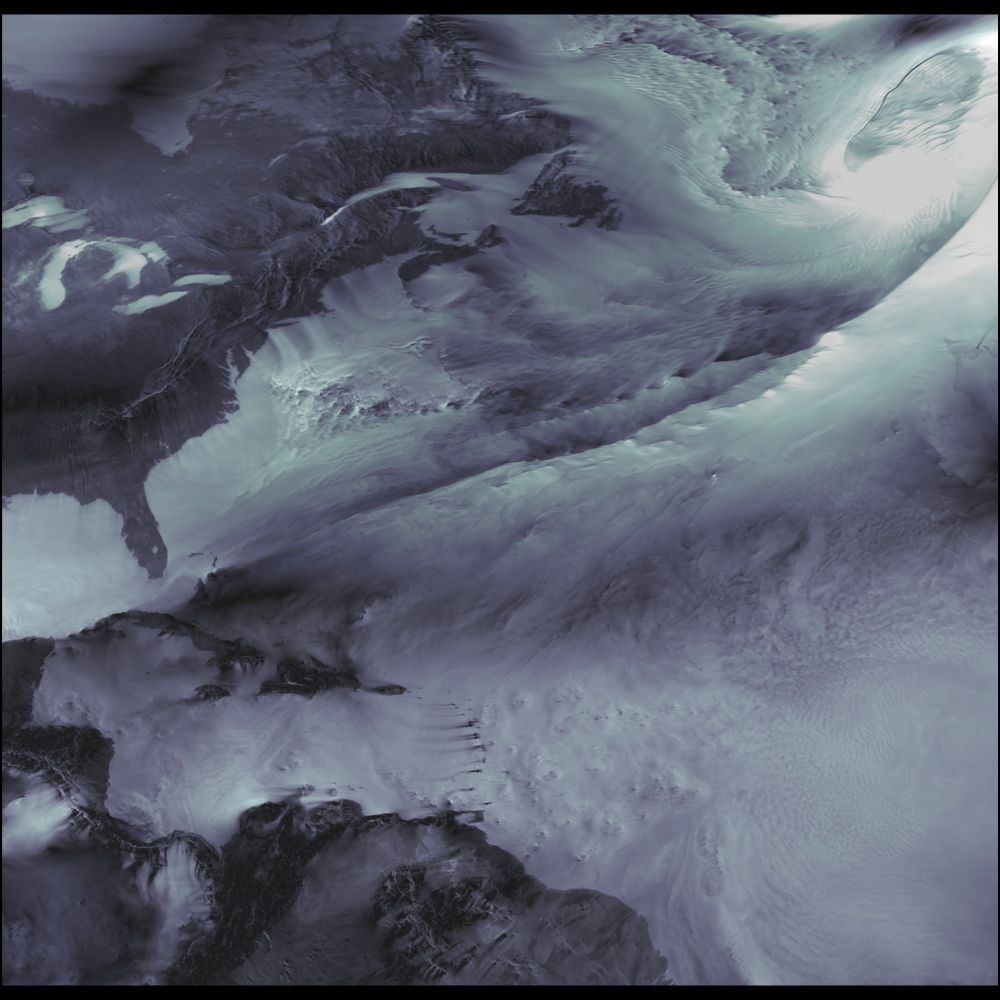
Wind over the Atlantic from a 5 km resolution model. Different surface types interact with wind in unique ways, which is why the continents are distinctly visible in the wind field. 🧪
Model: IFS-FESOM | U component of the wind | Project: nextGEMS | Simulations: @trackow.bsky.social
#SciArt
Model: IFS-FESOM | U component of the wind | Project: nextGEMS | Simulations: @trackow.bsky.social
#SciArt
December 5, 2024 at 10:26 AM
Wind over the Atlantic from a 5 km resolution model. Different surface types interact with wind in unique ways, which is why the continents are distinctly visible in the wind field. 🧪
Model: IFS-FESOM | U component of the wind | Project: nextGEMS | Simulations: @trackow.bsky.social
#SciArt
Model: IFS-FESOM | U component of the wind | Project: nextGEMS | Simulations: @trackow.bsky.social
#SciArt
In 2023, global mean temperature approached 1.5K above pre-industrial levels, with our study suggesting that a record-low planetary albedo—driven by declining low-cloud cover—helps explain the unexplained portion of the warming beyond (expected) anthropogenic influences and El Niño.
We have a new paper out in @science.org today, led by Helge Goessling from #AWI:
The recent global temperature surge in 2023 was intensified by a record-low planetary #albedo
👉 doi.org/10.1126/scie... @thomasjung.bsky.social @ecmwf.bsky.social
This is what we found (🧵1/8)
The recent global temperature surge in 2023 was intensified by a record-low planetary #albedo
👉 doi.org/10.1126/scie... @thomasjung.bsky.social @ecmwf.bsky.social
This is what we found (🧵1/8)

Recent global temperature surge intensified by record-low planetary albedo
In 2023, the global mean temperature soared to almost 1.5K above the pre-industrial level, surpassing the previous record by about 0.17K. Previous best-guess estimates of known drivers including anthr...
doi.org
December 5, 2024 at 8:40 PM
In 2023, global mean temperature approached 1.5K above pre-industrial levels, with our study suggesting that a record-low planetary albedo—driven by declining low-cloud cover—helps explain the unexplained portion of the warming beyond (expected) anthropogenic influences and El Niño.
Reposted by Thomas Jung
This is joint work with many colleagues from @ecmwf.bsky.social, including @clessig.bsky.social @xpedruzo.bsky.social @jesper.drams.ch
@fpappenberger.bsky.social,and #AWI colleagues
@oceanographer.bsky.social @thomasjung.bsky.social
Read more on it here destine.ecmwf.int/news/ai-base...
(7/7)
@fpappenberger.bsky.social,and #AWI colleagues
@oceanographer.bsky.social @thomasjung.bsky.social
Read more on it here destine.ecmwf.int/news/ai-base...
(7/7)
AI-based weather models: promising future supporting climate science
AI-based weather models have made transformational progress in the last years. Find out more in a preprint paper co-authored by ECMWF and AWI.
destine.ecmwf.int
December 2, 2024 at 9:37 AM
This is joint work with many colleagues from @ecmwf.bsky.social, including @clessig.bsky.social @xpedruzo.bsky.social @jesper.drams.ch
@fpappenberger.bsky.social,and #AWI colleagues
@oceanographer.bsky.social @thomasjung.bsky.social
Read more on it here destine.ecmwf.int/news/ai-base...
(7/7)
@fpappenberger.bsky.social,and #AWI colleagues
@oceanographer.bsky.social @thomasjung.bsky.social
Read more on it here destine.ecmwf.int/news/ai-base...
(7/7)
Reposted by Thomas Jung
🚨 Freshwater bottleneck in the Arctic? 🌊
A Beaufort Gyre freshwater release shifts to a buffer zone near Greenland, delaying Arctic freshwater flow to the North Atlantic. Implications for ocean stratification, salinity anomalies, & AMOC?
Read in Nature Geoscience: www.nature.com/articles/s41...
A Beaufort Gyre freshwater release shifts to a buffer zone near Greenland, delaying Arctic freshwater flow to the North Atlantic. Implications for ocean stratification, salinity anomalies, & AMOC?
Read in Nature Geoscience: www.nature.com/articles/s41...
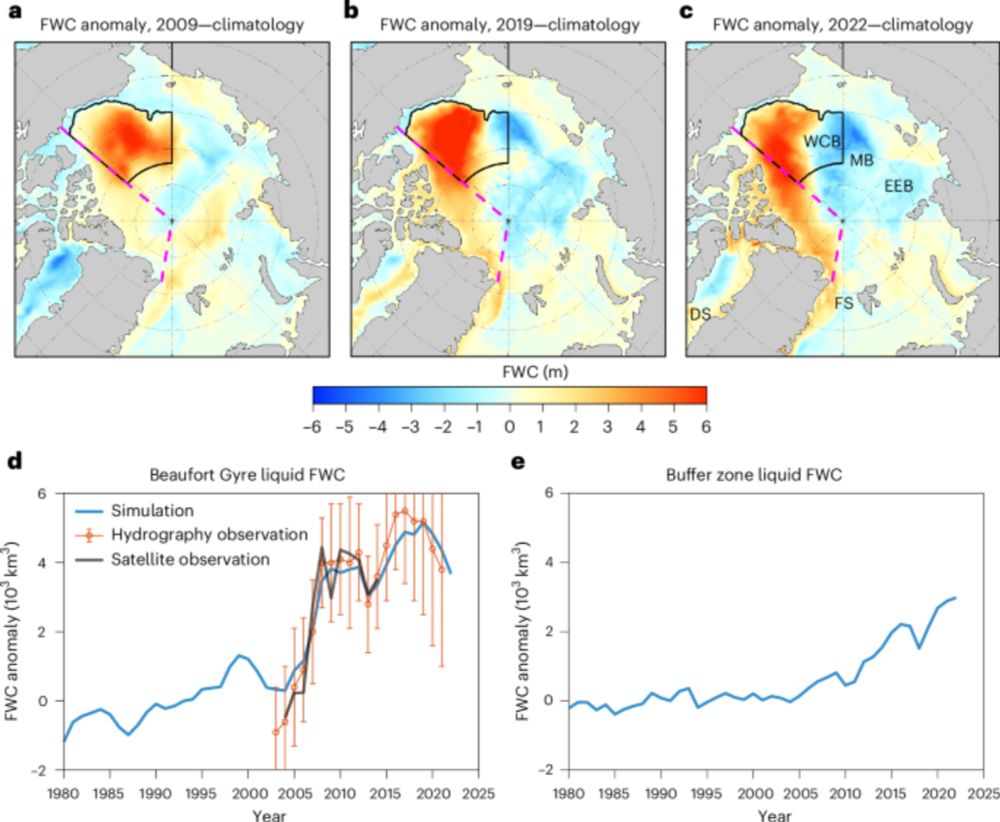
Arctic freshwater anomaly transiting to the North Atlantic delayed within a buffer zone - Nature Geoscience
Freshwater being released from the Beaufort Gyre is accumulating in an Arctic Ocean buffer zone before it can reach the North Atlantic, according to an analysis of satellite observation and modelling.
www.nature.com
November 23, 2024 at 11:04 AM
🚨 Freshwater bottleneck in the Arctic? 🌊
A Beaufort Gyre freshwater release shifts to a buffer zone near Greenland, delaying Arctic freshwater flow to the North Atlantic. Implications for ocean stratification, salinity anomalies, & AMOC?
Read in Nature Geoscience: www.nature.com/articles/s41...
A Beaufort Gyre freshwater release shifts to a buffer zone near Greenland, delaying Arctic freshwater flow to the North Atlantic. Implications for ocean stratification, salinity anomalies, & AMOC?
Read in Nature Geoscience: www.nature.com/articles/s41...
Reposted by Thomas Jung
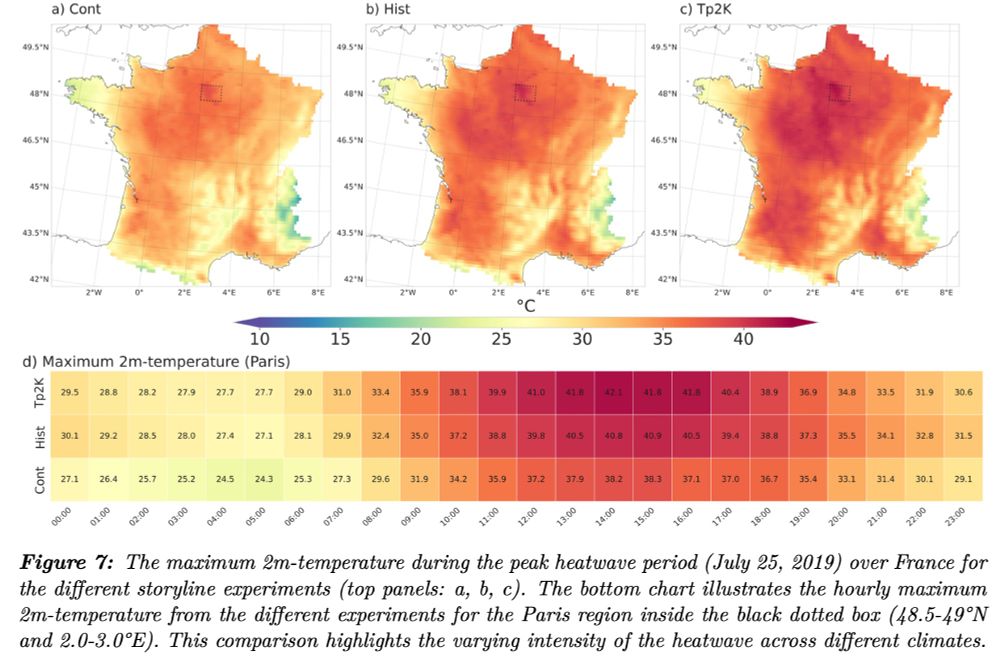
The storyline approach isn’t new, but for the first time, we’re using it with 10km resolution! 🌍 See how extreme events might have looked in the past, without climate change, and how they could unfold in a +2°C future. Check out our work led by Amal John: essopenarchive.org/users/852952...
November 25, 2024 at 12:05 PM
The storyline approach isn’t new, but for the first time, we’re using it with 10km resolution! 🌍 See how extreme events might have looked in the past, without climate change, and how they could unfold in a +2°C future. Check out our work led by Amal John: essopenarchive.org/users/852952...
Reposted by Thomas Jung
November 29, 2024 at 8:19 AM
New class of model bugs detected: resolution-dependent bugs emerge as we transition to kilometer-scale climate models, revealing issues hidden in lower resolutions. Preprint available, thanks to work in the EU projects nextGEMS and @eerie-project.bsky.social. doi.org/10.5194/egus...

A case for open communication of bugs in climate models, made with ICON version 2024.01
Abstract. Climate models are not just numerical representations of scientific knowledge, they are also human-written software programs. As such, they contain coding mistakes, which may look mundane, b...
doi.org
November 29, 2024 at 2:22 PM
New class of model bugs detected: resolution-dependent bugs emerge as we transition to kilometer-scale climate models, revealing issues hidden in lower resolutions. Preprint available, thanks to work in the EU projects nextGEMS and @eerie-project.bsky.social. doi.org/10.5194/egus...
Reposted by Thomas Jung
Inaugural first #BlueSky post, re-sharing our latest paper!
Still on the front page of Communications Earth & Environment 👇
doi.org/10.1038/s432...
Still on the front page of Communications Earth & Environment 👇
doi.org/10.1038/s432...

A paper in Communications Earth & Environment presents an automated system that unveils the climate change signal of the day in near-real-time storylines. The system suggests that storm Boris deposited about 9% more rain due to human-induced warming. go.nature.com/3ClX3Wq 🧪

November 26, 2024 at 7:24 AM
Inaugural first #BlueSky post, re-sharing our latest paper!
Still on the front page of Communications Earth & Environment 👇
doi.org/10.1038/s432...
Still on the front page of Communications Earth & Environment 👇
doi.org/10.1038/s432...