




SNIFS Rocket
@snifs-rocket.bsky.social
Account for the SNIFS sounding rocket, built by LASP @ CU Boulder. Run by the SNIFS team
Launch info
When: Friday, July 18th 1pm MDT / 3pm EDT
Location: White Sands Missile Range
Livestream video: https://video.ibm.com/wstf-wsmr (starts 30 min before)
Launch info
When: Friday, July 18th 1pm MDT / 3pm EDT
Location: White Sands Missile Range
Livestream video: https://video.ibm.com/wstf-wsmr (starts 30 min before)
Pinned
SNIFS Rocket
@snifs-rocket.bsky.social
· Jul 10
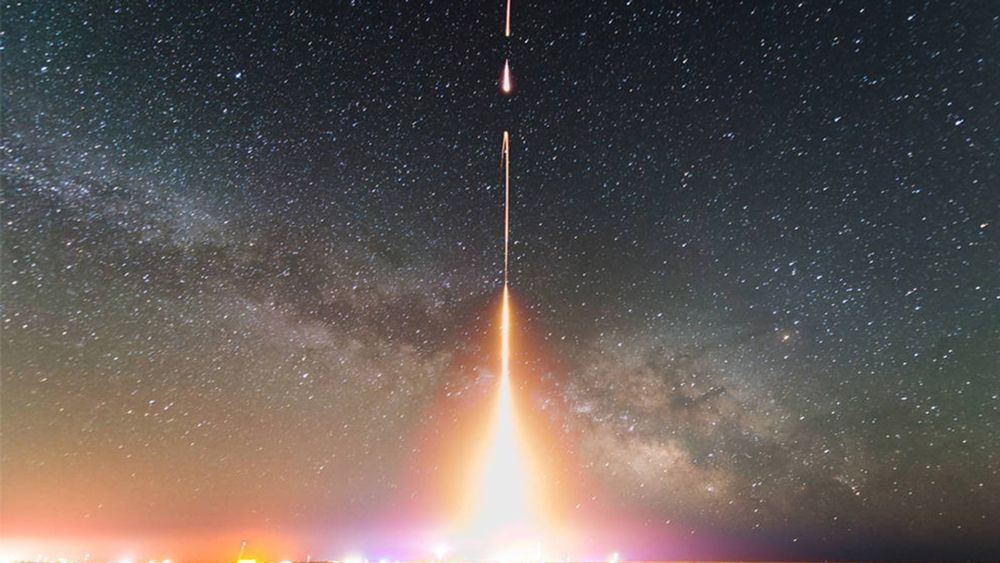
SNIFS
The Solar eruptioN Integral Field Spectrograph (SNIFS) sounding rocket is designed to break new ground by using a unique set of capabilities to probe the most vexingly complex region of the solar atmo...
lasp.colorado.edu
We are the Solar eruptioN Integral Field Spectrograph (SNIFS), a @laspatcu.bsky.social sounding rocket mission!
You can read more about us here: lasp.colorado.edu/missions/sni...
and here:
www.proquest.com/openview/805...
Watch this account for more updates as we get ready for launch!
You can read more about us here: lasp.colorado.edu/missions/sni...
and here:
www.proquest.com/openview/805...
Watch this account for more updates as we get ready for launch!
Payload was recovered, and looks in good shape (plus some extra mud)! We are going to pack things up and will be driving it back to Boulder soon, where the work of offloading the data and examining it will start.
July 18, 2025 at 10:09 PM
Payload was recovered, and looks in good shape (plus some extra mud)! We are going to pack things up and will be driving it back to Boulder soon, where the work of offloading the data and examining it will start.
Payload on the ground. Starting recovery now.
July 18, 2025 at 7:18 PM
Payload on the ground. Starting recovery now.
Good flight! We were on target, and have seen suggestion of capturing good data. Chute has deployed, will be landing soon.
July 18, 2025 at 7:12 PM
Good flight! We were on target, and have seen suggestion of capturing good data. Chute has deployed, will be landing soon.
Good launch! We are on our decent and will be landing shortly.
July 18, 2025 at 7:08 PM
Good launch! We are on our decent and will be landing shortly.
Stream is now live!
video.ibm.com/wstf-wsmr
video.ibm.com/wstf-wsmr

WSTF-WSMR Launch Channel
WSTF-WSMR Launch Channel
video.ibm.com
July 18, 2025 at 6:31 PM
Stream is now live!
video.ibm.com/wstf-wsmr
video.ibm.com/wstf-wsmr
T-00:54:00
We have armed the rocket and raised it to vertical. Cooling has started, and we are now running vertical tests.
We have armed the rocket and raised it to vertical. Cooling has started, and we are now running vertical tests.
July 18, 2025 at 6:06 PM
T-00:54:00
We have armed the rocket and raised it to vertical. Cooling has started, and we are now running vertical tests.
We have armed the rocket and raised it to vertical. Cooling has started, and we are now running vertical tests.
T-02:05:00
At this time we have stopped and detached our vacuum pump and powered down the payload so the rocket can be armed. The payload will now hold vacuum unassisted until launch.
At this time we have stopped and detached our vacuum pump and powered down the payload so the rocket can be armed. The payload will now hold vacuum unassisted until launch.
July 18, 2025 at 4:56 PM
T-02:05:00
At this time we have stopped and detached our vacuum pump and powered down the payload so the rocket can be armed. The payload will now hold vacuum unassisted until launch.
At this time we have stopped and detached our vacuum pump and powered down the payload so the rocket can be armed. The payload will now hold vacuum unassisted until launch.
More news about SNIFS!
science.nasa.gov/science-rese...
science.nasa.gov/science-rese...
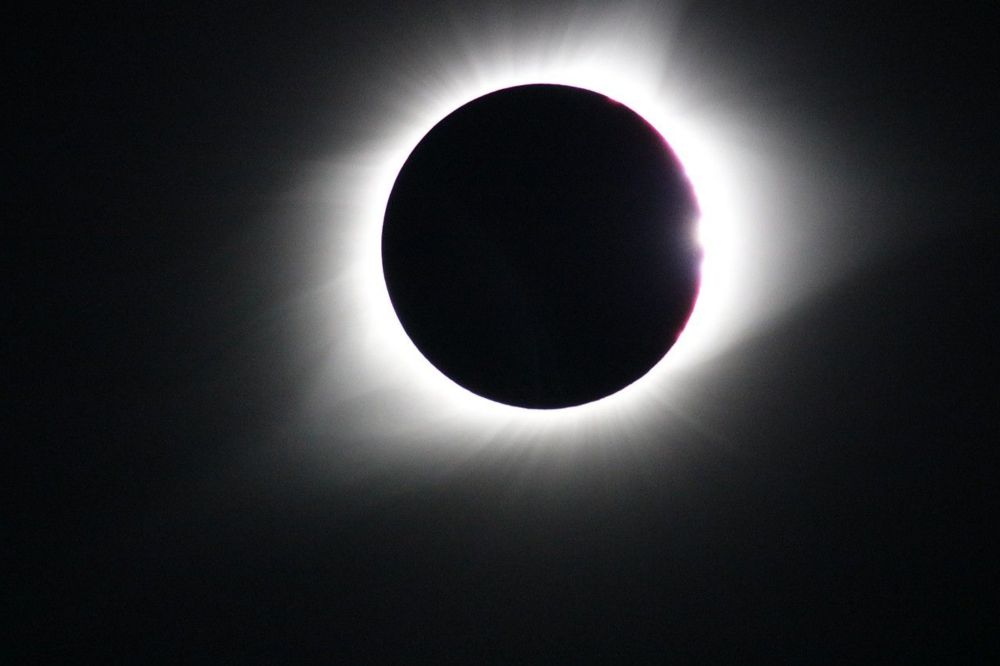
NASA to Launch SNIFS, Sun's Next Trailblazing Spectator - NASA Science
July will see the launch of the groundbreaking Solar EruptioN Integral Field Spectrograph mission, or SNIFS. Delivered to space via a Black Brant IX sounding rocket, SNIFS will explore the energy and ...
science.nasa.gov
July 18, 2025 at 3:09 PM
More news about SNIFS!
science.nasa.gov/science-rese...
science.nasa.gov/science-rese...
Horizontal checks complete! We are at T-04:20:00. Next up, we will detach the vacuum pump from the payload and start preliminary arming of the rocket.
July 18, 2025 at 2:40 PM
Horizontal checks complete! We are at T-04:20:00. Next up, we will detach the vacuum pump from the payload and start preliminary arming of the rocket.
Launch day! We are at T-04:45:00 and on track for our 1PM launch. Right now we are running through checks that will continue up until launch, making sure all our systems are functional.
July 18, 2025 at 2:15 PM
Launch day! We are at T-04:45:00 and on track for our 1PM launch. Right now we are running through checks that will continue up until launch, making sure all our systems are functional.
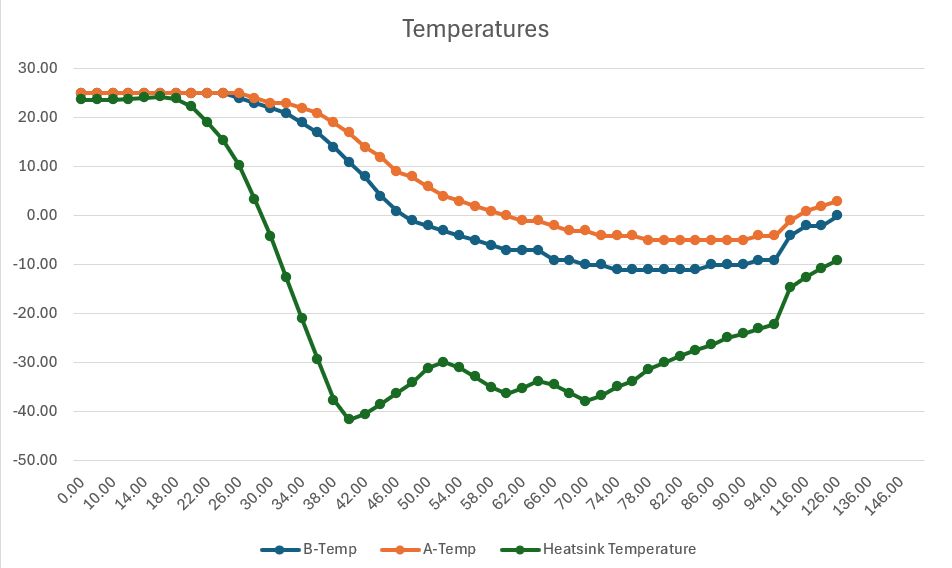
Data from today's cooling test. Along the y-axis is temperature (in degrees C) and the x-axis is time (in minutes) counting up from the start of the test. The heatsink (green) which is directly cooled by the liquid nitrogen cools quickly, while the two detectors (blue and orange) cool slower. (1/3)
July 17, 2025 at 8:05 PM
Data from today's cooling test. Along the y-axis is temperature (in degrees C) and the x-axis is time (in minutes) counting up from the start of the test. The heatsink (green) which is directly cooled by the liquid nitrogen cools quickly, while the two detectors (blue and orange) cool slower. (1/3)
We have successfully completed horizontal and vertical checks, running through 12 minute countdowns with the rocket horizontal, before raising the rail to vertical and running another count. As part of these checks, we also tested our cooling system, tracking our temperature responses.
July 17, 2025 at 4:55 PM
We have successfully completed horizontal and vertical checks, running through 12 minute countdowns with the rocket horizontal, before raising the rail to vertical and running another count. As part of these checks, we also tested our cooling system, tracking our temperature responses.
SNIFS is in the news!
Daily Camera, Boulder CO: www.dailycamera.com/2025/07/17/n...
Longmont Times Call, Longmont CO: www.timescall.com/2025/07/17/n...
The Indian Express, India: indianexpress.com/article/tech...
Daily Camera, Boulder CO: www.dailycamera.com/2025/07/17/n...
Longmont Times Call, Longmont CO: www.timescall.com/2025/07/17/n...
The Indian Express, India: indianexpress.com/article/tech...
July 17, 2025 at 2:36 PM
SNIFS is in the news!
Daily Camera, Boulder CO: www.dailycamera.com/2025/07/17/n...
Longmont Times Call, Longmont CO: www.timescall.com/2025/07/17/n...
The Indian Express, India: indianexpress.com/article/tech...
Daily Camera, Boulder CO: www.dailycamera.com/2025/07/17/n...
Longmont Times Call, Longmont CO: www.timescall.com/2025/07/17/n...
The Indian Express, India: indianexpress.com/article/tech...
Day two of pre-launch testing! We are going to run through the countdown again to make sure everything is ready for launch tomorrow!
July 17, 2025 at 2:35 PM
Day two of pre-launch testing! We are going to run through the countdown again to make sure everything is ready for launch tomorrow!
Testing continues out at white sands. We just raised the launch rail and rocket up to vertical for the first time in preparation for a dry run. During this run, we will walk through the pre-launch sequence and simulate launch to make sure all systems are go.
July 16, 2025 at 6:03 PM
Testing continues out at white sands. We just raised the launch rail and rocket up to vertical for the first time in preparation for a dry run. During this run, we will walk through the pre-launch sequence and simulate launch to make sure all systems are go.
We are on the launch rail! This morning we drove the payload down and attached it to the rail and two stage rocket that will launch us into space in just a few days. Right now the rail is horizontal, and will remain that way as we run tests to make sure everything is working as expected.
July 15, 2025 at 8:03 PM
We are on the launch rail! This morning we drove the payload down and attached it to the rail and two stage rocket that will launch us into space in just a few days. Right now the rail is horizontal, and will remain that way as we run tests to make sure everything is working as expected.
We recently completed a sequence test. During these tests, we simulate #launch and the actions leading up to it. We start at T-720 seconds, and count down, performing all the tasks we would during the real flight, such as checking we are receiving data and telemetry and sending commands. (1/2)
July 13, 2025 at 2:00 AM
We recently completed a sequence test. During these tests, we simulate #launch and the actions leading up to it. We start at T-720 seconds, and count down, performing all the tasks we would during the real flight, such as checking we are receiving data and telemetry and sending commands. (1/2)
While our it's not in our #science requirements that we need to see a solar flare, we'd certainly take the opportunity to observe one if it happened during our flight, since they have a potential to affect space weather around Earth.
#Solar #RocketLaunch #Heliophysics #Space #Sun
#Solar #RocketLaunch #Heliophysics #Space #Sun
July 12, 2025 at 4:59 PM
While our it's not in our #science requirements that we need to see a solar flare, we'd certainly take the opportunity to observe one if it happened during our flight, since they have a potential to affect space weather around Earth.
#Solar #RocketLaunch #Heliophysics #Space #Sun
#Solar #RocketLaunch #Heliophysics #Space #Sun
We just finished a successful cooling test! To reduce the noise of our detectors, and thus capture the best quality data, we cool them down to below -5 degrees C before launch.
With the payload at vacuum to prevent ice buildup, we flow liquid nitrogen through a metal heat sink.
With the payload at vacuum to prevent ice buildup, we flow liquid nitrogen through a metal heat sink.
July 11, 2025 at 10:38 PM
We just finished a successful cooling test! To reduce the noise of our detectors, and thus capture the best quality data, we cool them down to below -5 degrees C before launch.
With the payload at vacuum to prevent ice buildup, we flow liquid nitrogen through a metal heat sink.
With the payload at vacuum to prevent ice buildup, we flow liquid nitrogen through a metal heat sink.
A close up look at our primary mirror, the first optical element in the SNIFS instrument. At 11 inches in diameter, it is the largest of our optics.
Located above it, the light baffle is inscribed with the names of those who have contributed to the project.
Located above it, the light baffle is inscribed with the names of those who have contributed to the project.

July 11, 2025 at 9:29 PM
A close up look at our primary mirror, the first optical element in the SNIFS instrument. At 11 inches in diameter, it is the largest of our optics.
Located above it, the light baffle is inscribed with the names of those who have contributed to the project.
Located above it, the light baffle is inscribed with the names of those who have contributed to the project.
What's in an instrument?
Here's a picture of the SNIFS instrument, with the cylindrical outer walls removed for access.
The left half is the telescope section. It contains the primary mirror (just to the left of the purple strap), the secondary mirror (the square at the end of the long ribbed 1/n
Here's a picture of the SNIFS instrument, with the cylindrical outer walls removed for access.
The left half is the telescope section. It contains the primary mirror (just to the left of the purple strap), the secondary mirror (the square at the end of the long ribbed 1/n

July 11, 2025 at 5:10 PM
What's in an instrument?
Here's a picture of the SNIFS instrument, with the cylindrical outer walls removed for access.
The left half is the telescope section. It contains the primary mirror (just to the left of the purple strap), the secondary mirror (the square at the end of the long ribbed 1/n
Here's a picture of the SNIFS instrument, with the cylindrical outer walls removed for access.
The left half is the telescope section. It contains the primary mirror (just to the left of the purple strap), the secondary mirror (the square at the end of the long ribbed 1/n
"What's going on?" you may ask
SNIFS is a sounding rocket payload to look at the Sun using a new design of spectrograph. Integral Field Spectrographs (IFSs) record a cube of data. 2 spatial dimensions (x&y) & a spectral dimension (wavelength). We can record this data 10x faster than existing UV IFSs
SNIFS is a sounding rocket payload to look at the Sun using a new design of spectrograph. Integral Field Spectrographs (IFSs) record a cube of data. 2 spatial dimensions (x&y) & a spectral dimension (wavelength). We can record this data 10x faster than existing UV IFSs
July 11, 2025 at 5:01 PM
"What's going on?" you may ask
SNIFS is a sounding rocket payload to look at the Sun using a new design of spectrograph. Integral Field Spectrographs (IFSs) record a cube of data. 2 spatial dimensions (x&y) & a spectral dimension (wavelength). We can record this data 10x faster than existing UV IFSs
SNIFS is a sounding rocket payload to look at the Sun using a new design of spectrograph. Integral Field Spectrographs (IFSs) record a cube of data. 2 spatial dimensions (x&y) & a spectral dimension (wavelength). We can record this data 10x faster than existing UV IFSs
We are the Solar eruptioN Integral Field Spectrograph (SNIFS), a @laspatcu.bsky.social sounding rocket mission!
You can read more about us here: lasp.colorado.edu/missions/sni...
and here:
www.proquest.com/openview/805...
Watch this account for more updates as we get ready for launch!
You can read more about us here: lasp.colorado.edu/missions/sni...
and here:
www.proquest.com/openview/805...
Watch this account for more updates as we get ready for launch!
SNIFS
The Solar eruptioN Integral Field Spectrograph (SNIFS) sounding rocket is designed to break new ground by using a unique set of capabilities to probe the most vexingly complex region of the solar atmo...
lasp.colorado.edu
July 10, 2025 at 9:49 PM
We are the Solar eruptioN Integral Field Spectrograph (SNIFS), a @laspatcu.bsky.social sounding rocket mission!
You can read more about us here: lasp.colorado.edu/missions/sni...
and here:
www.proquest.com/openview/805...
Watch this account for more updates as we get ready for launch!
You can read more about us here: lasp.colorado.edu/missions/sni...
and here:
www.proquest.com/openview/805...
Watch this account for more updates as we get ready for launch!