



Bryan Savage
@sneezingdog.bsky.social
dog-lover, astrophotography/astronomy, left of center, old philosophy student, proponent of reason, foe of disinformation, horrified by Trump and MAGA, Slava Ukraini, retired attorney, one simple question: what's your evidence for that?
Too many periods. That trick works for 3 words max. More than that and it’s just silly.
November 12, 2025 at 5:39 PM
Too many periods. That trick works for 3 words max. More than that and it’s just silly.
digital eclipse photos


June 28, 2025 at 1:40 PM
digital eclipse photos


Doppler images: Blue light is moving toward you (light is compressed toward the blue end of the spectrum). Red light is light moving away from you (light is stretched toward the red end of the spectrum). The sun rotates from left to right (east to west) in the scans.
June 27, 2025 at 4:27 AM
Doppler images: Blue light is moving toward you (light is compressed toward the blue end of the spectrum). Red light is light moving away from you (light is stretched toward the red end of the spectrum). The sun rotates from left to right (east to west) in the scans.
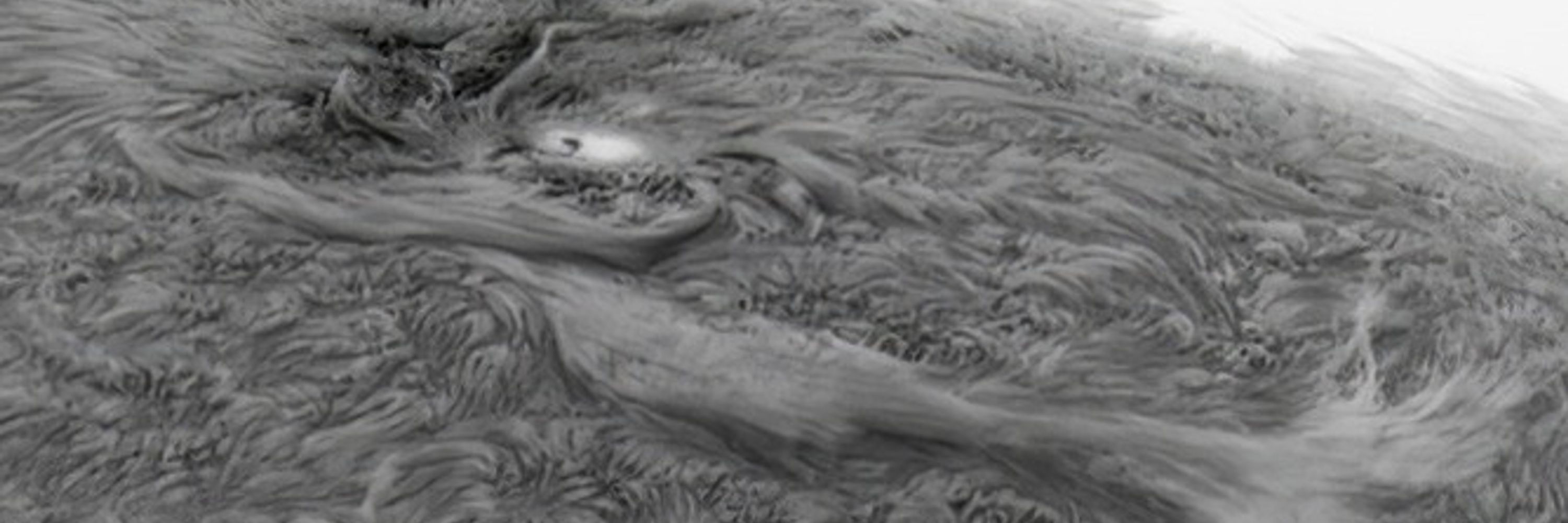
The bright, white areas around the sunspots are plages. They exist in the chromosphere above the surface of the sun (photosphere). They are caused by very strong magnetic fields which lower the surrounding gas pressure and allow you to see deeper, hotter areas of the sun.
June 27, 2025 at 4:26 AM
The bright, white areas around the sunspots are plages. They exist in the chromosphere above the surface of the sun (photosphere). They are caused by very strong magnetic fields which lower the surrounding gas pressure and allow you to see deeper, hotter areas of the sun.
The dark spots on the sun are sun spots. They appear dark because they are cooler than surrounding areas. They are cooler because of intense magnetic fields which suppress the convective movement of plasma to the surface of the sun and thereby reduce the movement of heat to the surface.
June 27, 2025 at 4:26 AM
The dark spots on the sun are sun spots. They appear dark because they are cooler than surrounding areas. They are cooler because of intense magnetic fields which suppress the convective movement of plasma to the surface of the sun and thereby reduce the movement of heat to the surface.
The dark structures that seem to stand on the limb of the sun are prominences. They are plasma shaped by magnetic fields around them. When viewed against the body of the sun, they are called filaments. These structures are highlighted in the inverse photo.
June 27, 2025 at 4:25 AM
The dark structures that seem to stand on the limb of the sun are prominences. They are plasma shaped by magnetic fields around them. When viewed against the body of the sun, they are called filaments. These structures are highlighted in the inverse photo.
Context: These scans were taken in hydrogen alpha light at the red end of the visible spectrum. When a hydrogen electron moves from the third highest energy level to the second highest, it loses energy and by emitting photo at the 656.28 nm wavelength.
June 27, 2025 at 4:21 AM
Context: These scans were taken in hydrogen alpha light at the red end of the visible spectrum. When a hydrogen electron moves from the third highest energy level to the second highest, it loses energy and by emitting photo at the 656.28 nm wavelength.
Doppler images: Blue light is moving toward you (light is compressed toward the blue end of the spectrum). Red light is light moving away from you (light is stretched toward the red end of the spectrum). The sun rotates from left to right (east to west) in the scans.
May 8, 2025 at 10:31 PM
Doppler images: Blue light is moving toward you (light is compressed toward the blue end of the spectrum). Red light is light moving away from you (light is stretched toward the red end of the spectrum). The sun rotates from left to right (east to west) in the scans.
4. The bright, white areas around the sunspots are plages. They exist in the chromosphere above the surface of the sun (photosphere). They are caused by very strong magnetic fields which lower the surrounding gas pressure and allow you to see deeper, hotter areas of the sun.
May 8, 2025 at 10:29 PM
4. The bright, white areas around the sunspots are plages. They exist in the chromosphere above the surface of the sun (photosphere). They are caused by very strong magnetic fields which lower the surrounding gas pressure and allow you to see deeper, hotter areas of the sun.
3. The dark spots on the sun are sun spots. They appear dark because they are cooler than surrounding areas. They are cooler because of intense magnetic fields which suppress the convective movement of plasma to the surface of the sun and thereby reduce the movement of heat to the surface.
May 8, 2025 at 10:29 PM
3. The dark spots on the sun are sun spots. They appear dark because they are cooler than surrounding areas. They are cooler because of intense magnetic fields which suppress the convective movement of plasma to the surface of the sun and thereby reduce the movement of heat to the surface.
2. When a prominence is viewed against the surface of the sun, it is called a filament and appears as a dark ribbon-like structure. The inverse photo is especially good at highlighting these structures, which appear white.
May 8, 2025 at 10:28 PM
2. When a prominence is viewed against the surface of the sun, it is called a filament and appears as a dark ribbon-like structure. The inverse photo is especially good at highlighting these structures, which appear white.
1. The dark structures that seem to stand on the limb of the sun are prominences. They are plasma shaped by magnetic fields around them.
May 8, 2025 at 10:28 PM
1. The dark structures that seem to stand on the limb of the sun are prominences. They are plasma shaped by magnetic fields around them.
Context: The sun is a giant ball of magnetic plasma, and can be viewed in different wavelengths of light. These scans were taken in hydrogen alpha light (656.28 nm). Hydrogen alpha is the light emitted by an electron as it moves from the third highest energy level to the second highest.
May 8, 2025 at 10:06 PM
Context: The sun is a giant ball of magnetic plasma, and can be viewed in different wavelengths of light. These scans were taken in hydrogen alpha light (656.28 nm). Hydrogen alpha is the light emitted by an electron as it moves from the third highest energy level to the second highest.