




Lars Kaleschke
@seaice.det.social.ap.brid.gy
Physicist. Climate, sea ice, earth observation @awi
[bridged from https://det.social/@seaice on the fediverse by https://fed.brid.gy/ ]
[bridged from https://det.social/@seaice on the fediverse by https://fed.brid.gy/ ]
The EGU has this week launched a new publication, Earth Observation (EO), an open-access, two-stage journal with open and public peer review, following the model of other EGU journals, published by Copernicus Publications […]
Original post on det.social
det.social
January 20, 2026 at 4:03 PM
The EGU has this week launched a new publication, Earth Observation (EO), an open-access, two-stage journal with open and public peer review, following the model of other EGU journals, published by Copernicus Publications […]
🇨🇦 🇦🇹 🇱🇻 🇵🇱 🇩🇰 🇨🇭 🇫🇮 🇬🇷 🇪🇪 🇫🇷 🇳🇱 🇸🇪 🇧🇪 🇩🇪 🇷🇴 🇪🇸 🇮🇹 🇵🇹 🇬🇧 🇨🇿 🇳🇴 🇭🇺 🇸🇮
Welcome to #bremen! #cm25
Livestream starts at 13:30 https://watch.esa.int/two/ 🤞
Welcome to #bremen! #cm25
Livestream starts at 13:30 https://watch.esa.int/two/ 🤞

November 26, 2025 at 11:21 AM
🇨🇦 🇦🇹 🇱🇻 🇵🇱 🇩🇰 🇨🇭 🇫🇮 🇬🇷 🇪🇪 🇫🇷 🇳🇱 🇸🇪 🇧🇪 🇩🇪 🇷🇴 🇪🇸 🇮🇹 🇵🇹 🇬🇧 🇨🇿 🇳🇴 🇭🇺 🇸🇮
Welcome to #bremen! #cm25
Livestream starts at 13:30 https://watch.esa.int/two/ 🤞
Welcome to #bremen! #cm25
Livestream starts at 13:30 https://watch.esa.int/two/ 🤞
Yet so many organizations still rely on proprietary tools like Jira, Confluence, and others.
Why not use European open alternatives like openDesk, OpenProject, or XWiki?
Has anyone here tried migrating away?
#digitalsovereignty #opensource #collaborationtools #opendesk #openproject #xwiki
Why not use European open alternatives like openDesk, OpenProject, or XWiki?
Has anyone here tried migrating away?
#digitalsovereignty #opensource #collaborationtools #opendesk #openproject #xwiki
November 6, 2025 at 9:50 AM
Yet so many organizations still rely on proprietary tools like Jira, Confluence, and others.
Why not use European open alternatives like openDesk, OpenProject, or XWiki?
Has anyone here tried migrating away?
#digitalsovereignty #opensource #collaborationtools #opendesk #openproject #xwiki
Why not use European open alternatives like openDesk, OpenProject, or XWiki?
Has anyone here tried migrating away?
#digitalsovereignty #opensource #collaborationtools #opendesk #openproject #xwiki
Reposted by Lars Kaleschke

I missed the only meeting I was really looking forward to (the only science one) today because USA are still on daylight saving time, but Europe already changed the clock 😭
October 28, 2025 at 4:23 PM
I missed the only meeting I was really looking forward to (the only science one) today because USA are still on daylight saving time, but Europe already changed the clock 😭
New paper:
Itkin, P. and Liston, G. E.: Combining observational data and numerical models to obtain a seamless high-temporal-resolution seasonal cycle of snow and ice mass balance at the MOSAiC Central Observatory, The Cryosphere, 19, 5111–5133, https://doi.org/10.5194/tc-19-5111-2025, 2025.
Itkin, P. and Liston, G. E.: Combining observational data and numerical models to obtain a seamless high-temporal-resolution seasonal cycle of snow and ice mass balance at the MOSAiC Central Observatory, The Cryosphere, 19, 5111–5133, https://doi.org/10.5194/tc-19-5111-2025, 2025.

Combining observational data and numerical models to obtain a seamless high-temporal-resolution seasonal cycle of snow and ice mass balance at the MOSAiC Central Observatory
Abstract. Multidisciplinary drifting Observatory for the Study of Arctic Climate (MOSAiC) observations span an entire annual cycle of Arctic snow and sea ice cover. However, the measurements of atmospheric and ocean forcing, as well as distributed measurements of snow and ice properties, were occasionally interrupted for logistical reasons. The most prolonged interruption happened during the onset of the summer melt season. Here we introduce and apply a novel data–model fusion system that can assimilate relevant observational data in a collection of modeling tools (SnowModel-LG and HIGHTSI) to provide continuous high-temporal-resolution (3-hourly) time series of snow and sea ice parameters over the entire annual cycle. We used this system to analyze differences between the three main ice types found in the MOSAiC Central Observatory: relatively deformed second-year ice, second-year ice with extensive smooth refrozen melt pond surfaces, and first-year ice. Since SnowModel-LG and HIGHTSI were used in a 1-D configuration, we used a sea ice dynamics term D to parameterize the redistribution of snow to newly created ridges and leads. D correlated highly with the sea ice deformation (R2 = 59 %, N=33) in the vicinity of the observatory, and deformation appears to explain as much as 15 % of all winter snow water equivalent. In addition, we show, in separate simulations for level ice, that snow bedforms with thin snow in the bedform troughs largely control the ice growth. Here, the mean snow depth minus 1 standard deviation was required to simulate realistic sea ice thickness using HIGHTSI; we surmise that this accounts for the control of relatively thin snow on local ice growth. Despite different initial sea ice thickness and freeze-up dates, the sea ice thickness of level ice across all ice types became similar by early winter. Our simulations suggest that the mean (spatially distributed) MOSAiC snowmelt onset began in late May but was interrupted by a snowfall event and was delayed by 3 weeks until mid- June. The level ice started to melt in the last week of June. Depending on the sea ice topography, the ice was snow-free by late June and early July.
tc.copernicus.org
October 27, 2025 at 8:08 PM
New paper:
Itkin, P. and Liston, G. E.: Combining observational data and numerical models to obtain a seamless high-temporal-resolution seasonal cycle of snow and ice mass balance at the MOSAiC Central Observatory, The Cryosphere, 19, 5111–5133, https://doi.org/10.5194/tc-19-5111-2025, 2025.
Itkin, P. and Liston, G. E.: Combining observational data and numerical models to obtain a seamless high-temporal-resolution seasonal cycle of snow and ice mass balance at the MOSAiC Central Observatory, The Cryosphere, 19, 5111–5133, https://doi.org/10.5194/tc-19-5111-2025, 2025.
Operational processing of the Level-4 (L4) CryoSat-2/Sentinel-3/SMOS (CS3SMOS) sea ice thickness product has been started for the Arctic 2025/26 winter season. The product version has seen a major upgrade from v206 to v300.
#arctic #climate […]
[Original post on det.social]
#arctic #climate […]
[Original post on det.social]

October 23, 2025 at 4:17 PM
Operational processing of the Level-4 (L4) CryoSat-2/Sentinel-3/SMOS (CS3SMOS) sea ice thickness product has been started for the Arctic 2025/26 winter season. The product version has seen a major upgrade from v206 to v300.
#arctic #climate […]
[Original post on det.social]
#arctic #climate […]
[Original post on det.social]
Reposted by Lars Kaleschke
The Vantor company (formerly Maxar) used one of their Worldview satellites to capture a picture of the NASA-ISRO SAR (NISAR) satellite in orbit. The large radar reflector (12 meters or 38 feet wide) has a mesh surface that appears gold and the solar panels on […]
[Original post on mastodon.social]
[Original post on mastodon.social]

October 17, 2025 at 8:13 PM
The Vantor company (formerly Maxar) used one of their Worldview satellites to capture a picture of the NASA-ISRO SAR (NISAR) satellite in orbit. The large radar reflector (12 meters or 38 feet wide) has a mesh surface that appears gold and the solar panels on […]
[Original post on mastodon.social]
[Original post on mastodon.social]
Operational processing and dissemination of the Level 3 SMOS Sea Ice Thickness product have resumed for the winter season 2025/26.
Unfortunately, RFI-induced data gaps continue to affect the #Barents–Kara sector of the #arctic #ocean
https://doi.org/10.57780/sm1-5ebe10b
Unfortunately, RFI-induced data gaps continue to affect the #Barents–Kara sector of the #arctic #ocean
https://doi.org/10.57780/sm1-5ebe10b

October 17, 2025 at 1:36 PM
Operational processing and dissemination of the Level 3 SMOS Sea Ice Thickness product have resumed for the winter season 2025/26.
Unfortunately, RFI-induced data gaps continue to affect the #Barents–Kara sector of the #arctic #ocean
https://doi.org/10.57780/sm1-5ebe10b
Unfortunately, RFI-induced data gaps continue to affect the #Barents–Kara sector of the #arctic #ocean
https://doi.org/10.57780/sm1-5ebe10b

Reposted by Lars Kaleschke

Anyone want to read (or review) our latest paper on #seaice #DataAssimilation?
It has just appeared in preprint here https://egusphere.copernicus.org/preprints/2025/egusphere-2025-3991/
Get it while it's (not) hot
It has just appeared in preprint here https://egusphere.copernicus.org/preprints/2025/egusphere-2025-3991/
Get it while it's (not) hot

Sea ice data assimilation in ORAS6
Abstract. Accurate weather and climate forecasting relies heavily on the precise modeling of sea ice, a critical component of the Earth's climate system. Sea ice influences global weather patterns, ocean circulation, and the exchange of heat and moisture between the atmosphere and oceans. Initialisation of the sea ice component of global coupled models relies on data assimilation techniques to incorporate information from observations to constrain the system. This study focuses on the development of sea ice data assimilation for ECMWF’s latest Ocean Reanalysis System 6 (ORAS6) that includes a multicategory sea ice model. The research addresses the challenge of appropriately distributing sea ice concentration increments across various thickness categories in the model. Here, we show that using a simple proportional increment splitting method improves the accuracy of sea ice concentration analyses compared to previous approaches. Our findings indicate that adding an additional sea ice-sea water temperature balance brings further performance benefits. These results suggest that the choice of increment distribution strategy significantly impacts the accuracy of sea ice representation in reanalysis systems. The system presented here will form the basis of ECMWF's data assimilation system for numerical weather prediction, as well as the next generation coupled reanalyses.
egusphere.copernicus.org
September 22, 2025 at 8:37 AM
Anyone want to read (or review) our latest paper on #seaice #DataAssimilation?
It has just appeared in preprint here https://egusphere.copernicus.org/preprints/2025/egusphere-2025-3991/
Get it while it's (not) hot
It has just appeared in preprint here https://egusphere.copernicus.org/preprints/2025/egusphere-2025-3991/
Get it while it's (not) hot
Just published:
Zeising, O., Hattermann, T., Kaleschke, L., Berger, S., Boebel, O., Drews, R., Ershadi, M. R., Fromm, T., Pattyn, F., Steinhage, D., and Eisen, O.: Enhanced basal melting in winter and spring: seasonal ice–ocean interactions at the Ekström Ice Shelf, East Antarctica, The […]
Zeising, O., Hattermann, T., Kaleschke, L., Berger, S., Boebel, O., Drews, R., Ershadi, M. R., Fromm, T., Pattyn, F., Steinhage, D., and Eisen, O.: Enhanced basal melting in winter and spring: seasonal ice–ocean interactions at the Ekström Ice Shelf, East Antarctica, The […]
Original post on det.social
det.social
August 6, 2025 at 6:18 AM
Just published:
Zeising, O., Hattermann, T., Kaleschke, L., Berger, S., Boebel, O., Drews, R., Ershadi, M. R., Fromm, T., Pattyn, F., Steinhage, D., and Eisen, O.: Enhanced basal melting in winter and spring: seasonal ice–ocean interactions at the Ekström Ice Shelf, East Antarctica, The […]
Zeising, O., Hattermann, T., Kaleschke, L., Berger, S., Boebel, O., Drews, R., Ershadi, M. R., Fromm, T., Pattyn, F., Steinhage, D., and Eisen, O.: Enhanced basal melting in winter and spring: seasonal ice–ocean interactions at the Ekström Ice Shelf, East Antarctica, The […]
Reposted by Lars Kaleschke
Well it turns out we have 3 open positions that I should tell you about:
- #Assimilation of #GNSS-R to improve the land surface (in the same team as me)
- Assimilation of #CIMR in the coupled system looking at the ocean (we've already started preparing for the sea ice part; on the #esa #dantex […]
- #Assimilation of #GNSS-R to improve the land surface (in the same team as me)
- Assimilation of #CIMR in the coupled system looking at the ocean (we've already started preparing for the sea ice part; on the #esa #dantex […]
Original post on fediscience.org
fediscience.org
May 3, 2025 at 12:43 PM
Well it turns out we have 3 open positions that I should tell you about:
- #Assimilation of #GNSS-R to improve the land surface (in the same team as me)
- Assimilation of #CIMR in the coupled system looking at the ocean (we've already started preparing for the sea ice part; on the #esa #dantex […]
- #Assimilation of #GNSS-R to improve the land surface (in the same team as me)
- Assimilation of #CIMR in the coupled system looking at the ocean (we've already started preparing for the sea ice part; on the #esa #dantex […]
Reposted by Lars Kaleschke
No, covid did not reach me that online conferences are just not working. It taught me that 2/3rds of all conferences could be fully online (though one still needs to think about best structure for them and not just transplant them without any adaptation) - and the remaining third needs to focus […]
Original post on mastodon.social
mastodon.social
March 22, 2025 at 1:53 PM
No, covid did not reach me that online conferences are just not working. It taught me that 2/3rds of all conferences could be fully online (though one still needs to think about best structure for them and not just transplant them without any adaptation) - and the remaining third needs to focus […]
Reposted by Lars Kaleschke
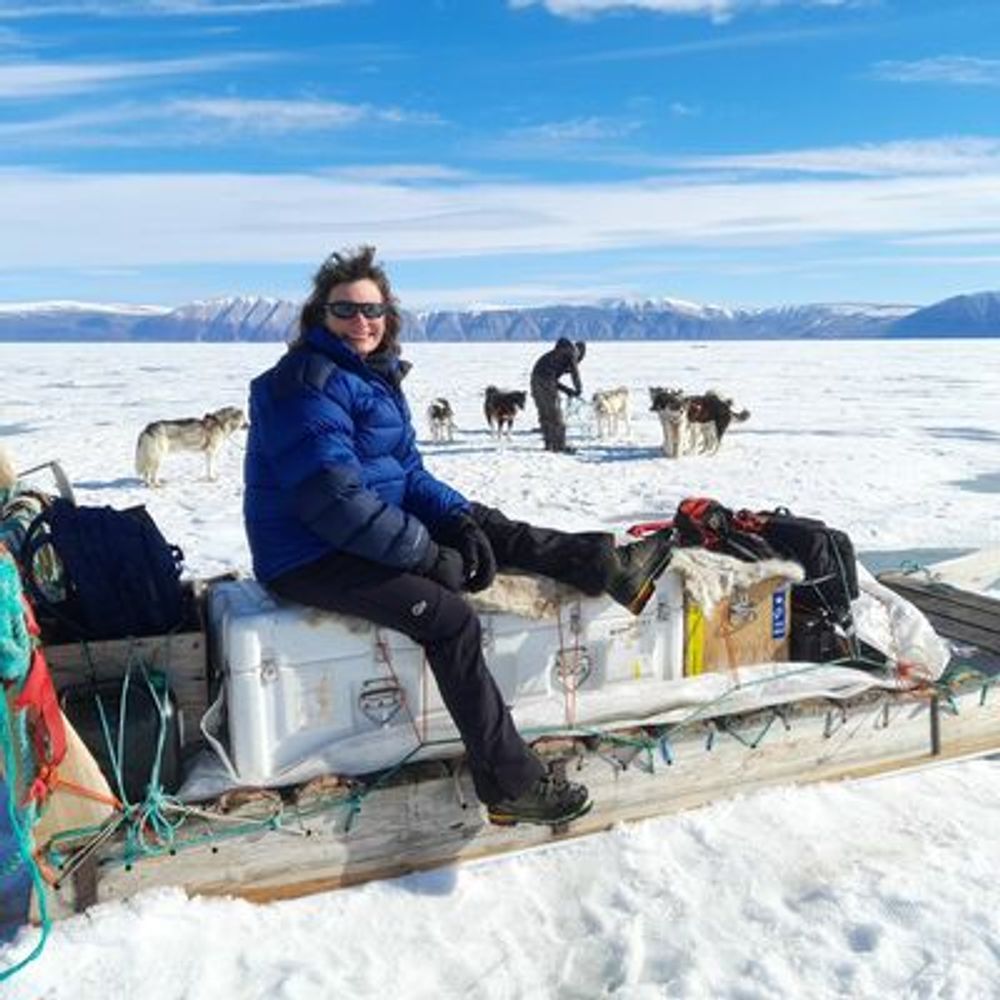
We extended the deadline to register for #dass2025 slightly, tomorrow 27th Feb is your last chance to register for next week's Danish Antarctic Science Seminar - it covers all disciplines working in Antarctica from Danish affiliated institutes, with focus on #antarcticainsync this year for […]
Original post on fediscience.org
fediscience.org
February 26, 2025 at 9:17 PM
We extended the deadline to register for #dass2025 slightly, tomorrow 27th Feb is your last chance to register for next week's Danish Antarctic Science Seminar - it covers all disciplines working in Antarctica from Danish affiliated institutes, with focus on #antarcticainsync this year for […]