



Christian Meesters
@rupdecat.fediscience.org.ap.brid.gy
PhD in Biophysics, Postdoc in Genetic Epidemiology, Detour in Industry, Currently: Computational Scientist (Life Science Support) HPC (NHR, University of […]
🌉 bridged from https://fediscience.org/@rupdecat on the fediverse by https://fed.brid.gy/
🌉 bridged from https://fediscience.org/@rupdecat on the fediverse by https://fed.brid.gy/
Reposted by Christian Meesters
December 2025 WikiPathways release: 840 edits by 8 contributors and 9 new pathways. Accessible via #webservices, #rstats, #PathVisio and #Cytoscape.
https://www.wikipathways.org/#download
#bioinformatics #elixirnl
https://www.wikipathways.org/#download
#bioinformatics #elixirnl


December 21, 2025 at 9:33 AM
December 2025 WikiPathways release: 840 edits by 8 contributors and 9 new pathways. Accessible via #webservices, #rstats, #PathVisio and #Cytoscape.
https://www.wikipathways.org/#download
#bioinformatics #elixirnl
https://www.wikipathways.org/#download
#bioinformatics #elixirnl
Reposted by Christian Meesters

SNF (Switzerland) restrictions proposed: only 1 research grant per PI (plus maybe one coop), only 1 proposal per year.
🔥 Hot take (since I'm not at all operating like this currently): I actually think this might be a good idea? It would curb some of the biggest "research mills", where one PI […]
🔥 Hot take (since I'm not at all operating like this currently): I actually think this might be a good idea? It would curb some of the biggest "research mills", where one PI […]
Original post on fediscience.org
fediscience.org
December 18, 2025 at 12:37 PM
SNF (Switzerland) restrictions proposed: only 1 research grant per PI (plus maybe one coop), only 1 proposal per year.
🔥 Hot take (since I'm not at all operating like this currently): I actually think this might be a good idea? It would curb some of the biggest "research mills", where one PI […]
🔥 Hot take (since I'm not at all operating like this currently): I actually think this might be a good idea? It would curb some of the biggest "research mills", where one PI […]
Reposted by Christian Meesters

Hey, academic employers. Thirteen minutes apart, I just received two PDFs. One is the proofs of my own forthcoming paper in Praehistorische Zeitschrift, one of the highest-ranked German journals in my discipline. The other is a manuscript I'm reviewing for the highest-ranked English journal. I […]
Original post on archaeo.social
archaeo.social
December 18, 2025 at 3:18 PM
Hey, academic employers. Thirteen minutes apart, I just received two PDFs. One is the proofs of my own forthcoming paper in Praehistorische Zeitschrift, one of the highest-ranked German journals in my discipline. The other is a manuscript I'm reviewing for the highest-ranked English journal. I […]
Reposted by Christian Meesters

Als je iets voor de vierde keer doet, wordt het een traditie: de eindejaarsvragen. Welke vragen over de Oudheid zou u beantwoord willen zien? Ik probeer rond oudejaarsdag de antwoorden te geven.
https://mainzerbeobachter.com/2025/12/17/vragen-rond-de-jaarwisseling-2025/
RT = ❤️
https://mainzerbeobachter.com/2025/12/17/vragen-rond-de-jaarwisseling-2025/
RT = ❤️

December 17, 2025 at 7:11 AM
Als je iets voor de vierde keer doet, wordt het een traditie: de eindejaarsvragen. Welke vragen over de Oudheid zou u beantwoord willen zien? Ik probeer rond oudejaarsdag de antwoorden te geven.
https://mainzerbeobachter.com/2025/12/17/vragen-rond-de-jaarwisseling-2025/
RT = ❤️
https://mainzerbeobachter.com/2025/12/17/vragen-rond-de-jaarwisseling-2025/
RT = ❤️
Reposted by Christian Meesters

[Post-doc job ad in Edinburgh]
📢 #ScienceJobs Really interesting #researchdata analytics post-doc with Thanasis Tsanas, https://www.darth-group.com, analysing #sleep and circadian data for mental health research.
This is part of the Wellcome-funded AMBIENT-BD project that our BioRDM also works […]
📢 #ScienceJobs Really interesting #researchdata analytics post-doc with Thanasis Tsanas, https://www.darth-group.com, analysing #sleep and circadian data for mental health research.
This is part of the Wellcome-funded AMBIENT-BD project that our BioRDM also works […]
Original post on fediscience.org
fediscience.org
December 16, 2025 at 12:20 PM
[Post-doc job ad in Edinburgh]
📢 #ScienceJobs Really interesting #researchdata analytics post-doc with Thanasis Tsanas, https://www.darth-group.com, analysing #sleep and circadian data for mental health research.
This is part of the Wellcome-funded AMBIENT-BD project that our BioRDM also works […]
📢 #ScienceJobs Really interesting #researchdata analytics post-doc with Thanasis Tsanas, https://www.darth-group.com, analysing #sleep and circadian data for mental health research.
This is part of the Wellcome-funded AMBIENT-BD project that our BioRDM also works […]
Reposted by Christian Meesters

RE: https://social.heise.de/@heiseonlineenglish/115725340534744039
In any kind of normal timeline this would have been stopped by regulators. Instead we let a single company become the sole gatekeeper for everything in #hpc .
In any kind of normal timeline this would have been stopped by regulators. Instead we let a single company become the sole gatekeeper for everything in #hpc .
social.heise.de
December 15, 2025 at 8:49 PM
RE: https://social.heise.de/@heiseonlineenglish/115725340534744039
In any kind of normal timeline this would have been stopped by regulators. Instead we let a single company become the sole gatekeeper for everything in #hpc .
In any kind of normal timeline this would have been stopped by regulators. Instead we let a single company become the sole gatekeeper for everything in #hpc .
The last blog post I wrote was about Life Science Support on HPC clusters. Honestly? It was more of a rant. Not a good blog post.
So, someone suggested I delete it, which I did. It took me a long time to recover. Now, I have re-written this blog post. I think it is better. I weighted every […]
So, someone suggested I delete it, which I did. It took me a long time to recover. Now, I have re-written this blog post. I think it is better. I weighted every […]
Original post on fediscience.org
fediscience.org
December 15, 2025 at 4:15 PM
The last blog post I wrote was about Life Science Support on HPC clusters. Honestly? It was more of a rant. Not a good blog post.
So, someone suggested I delete it, which I did. It took me a long time to recover. Now, I have re-written this blog post. I think it is better. I weighted every […]
So, someone suggested I delete it, which I did. It took me a long time to recover. Now, I have re-written this blog post. I think it is better. I weighted every […]
Reposted by Christian Meesters

RE: https://masto.canadiancivil.com/@paige/115718239051943653
Echoing this critical advice, especially to #science organizations. If you are a science organization on Bluesky and you want to expand your audience to the open, federated social web, just follow this bridge account. Then I --- an […]
Echoing this critical advice, especially to #science organizations. If you are a science organization on Bluesky and you want to expand your audience to the open, federated social web, just follow this bridge account. Then I --- an […]
December 14, 2025 at 2:06 PM
RE: https://masto.canadiancivil.com/@paige/115718239051943653
Echoing this critical advice, especially to #science organizations. If you are a science organization on Bluesky and you want to expand your audience to the open, federated social web, just follow this bridge account. Then I --- an […]
Echoing this critical advice, especially to #science organizations. If you are a science organization on Bluesky and you want to expand your audience to the open, federated social web, just follow this bridge account. Then I --- an […]
Just did some queries using NCBI's `dataset` utility program.
It only worked 1 time in a dozen or so trials.
If NCBI is getting instable, for whatever reason, is there an EU alternative?
The commands were like
`datasets download genome accession {params.accession} --include genome`
So, even […]
It only worked 1 time in a dozen or so trials.
If NCBI is getting instable, for whatever reason, is there an EU alternative?
The commands were like
`datasets download genome accession {params.accession} --include genome`
So, even […]
Original post on fediscience.org
fediscience.org
December 12, 2025 at 12:06 PM
Just did some queries using NCBI's `dataset` utility program.
It only worked 1 time in a dozen or so trials.
If NCBI is getting instable, for whatever reason, is there an EU alternative?
The commands were like
`datasets download genome accession {params.accession} --include genome`
So, even […]
It only worked 1 time in a dozen or so trials.
If NCBI is getting instable, for whatever reason, is there an EU alternative?
The commands were like
`datasets download genome accession {params.accession} --include genome`
So, even […]

RE: https://mastodon.social/@digiresacademy/115702812560956273
I attended the dry-run of this course* recently and it was pretty mind-blowing - I'd seen before how #pixi can be used for python packaging but this course introduced me to a few new example use cases:
- Reproducible data analysis […]
I attended the dry-run of this course* recently and it was pretty mind-blowing - I'd seen before how #pixi can be used for python packaging but this course introduced me to a few new example use cases:
- Reproducible data analysis […]
Original post on social.coop
social.coop
December 12, 2025 at 11:26 AM
Reposted by Christian Meesters

Trump-Regime: Wir werden die freiheitlichen Regierungen in der EU bekämpfen und rechtsextremistische Parteien unterstützen! ☠️
Alexander Dobrindt, NRW, Hessen, Bayern, BaWü: Lasst uns doch einfach die sensibelsten Daten der Bürger*innen genau von den Typen verwalten, die bei Trump am Tisch sitzen! 🤗
Alexander Dobrindt, NRW, Hessen, Bayern, BaWü: Lasst uns doch einfach die sensibelsten Daten der Bürger*innen genau von den Typen verwalten, die bei Trump am Tisch sitzen! 🤗
December 9, 2025 at 5:53 PM
Trump-Regime: Wir werden die freiheitlichen Regierungen in der EU bekämpfen und rechtsextremistische Parteien unterstützen! ☠️
Alexander Dobrindt, NRW, Hessen, Bayern, BaWü: Lasst uns doch einfach die sensibelsten Daten der Bürger*innen genau von den Typen verwalten, die bei Trump am Tisch sitzen! 🤗
Alexander Dobrindt, NRW, Hessen, Bayern, BaWü: Lasst uns doch einfach die sensibelsten Daten der Bürger*innen genau von den Typen verwalten, die bei Trump am Tisch sitzen! 🤗
Reposted by Christian Meesters

The package manager in GitHub Actions might be the worst package manager in use today: https://nesbitt.io/2025/12/06/github-actions-package-manager.html
GitHub Actions Has a Package Manager, and It Might Be the Worst
After putting together ecosyste-ms/package-manager-resolvers, I started wondering what dependency resolution algorithm GitHub Actions uses. When you write `uses: actions/checkout@v4` in a workflow file, you’re declaring a dependency. GitHub resolves it, downloads it, and executes it. That’s package management. So I went spelunking into the runner codebase to see how it works. What I found was concerning.
Package managers are a critical part of software supply chain security. The industry has spent years hardening them after incidents like left-pad, event-stream, and countless others. Lockfiles, integrity hashes, and dependency visibility aren’t optional extras. They’re the baseline. GitHub Actions ignores all of it.
Compared to mature package ecosystems:
Feature | npm | Cargo | NuGet | Bundler | Go | Actions
---|---|---|---|---|---|---
Lockfile | ✓ | ✓ | ✓ | ✓ | ✓ | ✗
Transitive pinning | ✓ | ✓ | ✓ | ✓ | ✓ | ✗
Integrity hashes | ✓ | ✓ | ✓ | ✓ | ✓ | ✗
Dependency tree visibility | ✓ | ✓ | ✓ | ✓ | ✓ | ✗
Resolution specification | ✓ | ✓ | ✓ | ✓ | ✓ | ✗
The core problem is the lack of a lockfile. Every other package manager figured this out decades ago: you declare loose constraints in a manifest, the resolver picks specific versions, and the lockfile records exactly what was chosen. GitHub Actions has no equivalent. Every run re-resolves from your workflow file, and the results can change without any modification to your code.
Research from USENIX Security 2022 analyzed over 200,000 repositories and found that 99.7% execute externally developed Actions, 97% use Actions from unverified creators, and 18% run Actions with missing security updates. The researchers identified four fundamental security properties that CI/CD systems need: admittance control, execution control, code control, and access to secrets. GitHub Actions fails to provide adequate tooling for any of them. A follow-up study using static taint analysis found code injection vulnerabilities in over 4,300 workflows across 2.7 million analyzed. Nearly every GitHub Actions user is running third-party code with no verification, no lockfile, and no visibility into what that code depends on.
**Mutable versions.** When you pin to `actions/checkout@v4`, that tag can move. The maintainer can push a new commit and retag. Your workflow changes silently. A lockfile would record the SHA that `@v4` resolved to, giving you reproducibility while keeping version tags readable. Instead, you have to choose: readable tags with no stability, or unreadable SHAs with no automated update path.
GitHub has added mitigations. Immutable releases lock a release’s git tag after publication. Organizations can enforce SHA pinning as a policy. You can limit workflows to actions from verified creators. These help, but they only address the top-level dependency. They do nothing for transitive dependencies, which is the primary attack vector.
**Invisible transitive dependencies.** SHA pinning doesn’t solve this. Composite actions resolve their own dependencies, but you can’t see or control what they pull in. When you pin an action to a SHA, you only lock the outer file. If it internally pulls `some-helper@v1` with a mutable tag, your workflow is still vulnerable. You have zero visibility into this. A lockfile would record the entire resolved tree, making transitive dependencies visible and pinnable. Research on JavaScript Actions found that 54% contain at least one security weakness, with most vulnerabilities coming from indirect dependencies. The tj-actions/changed-files incident showed how this plays out in practice: a compromised action updated its transitive dependencies to exfiltrate secrets. With a lockfile, the unexpected transitive change would have been visible in a diff.
**No integrity verification.** npm records `integrity` hashes in the lockfile. Cargo records checksums in `Cargo.lock`. When you install, the package manager verifies the download matches what was recorded. Actions has nothing. You trust GitHub to give you the right code for a SHA. A lockfile with integrity hashes would let you verify that what you’re running matches what you resolved.
**Re-runs aren’t reproducible.** GitHub staff have confirmed this explicitly: “if the workflow uses some actions at a version, if that version was force pushed/updated, we will be fetching the latest version there.” A failed job re-run can silently get different code than the original run. Cache interaction makes it worse: caches only save on successful jobs, so a re-run after a force-push gets different code _and_ has to rebuild the cache. Two sources of non-determinism compounding. A lockfile would make re-runs deterministic: same lockfile, same code, every time.
**No dependency tree visibility.** npm has `npm ls`. Cargo has `cargo tree`. You can inspect your full dependency graph, find duplicates, trace how a transitive dependency got pulled in. Actions gives you nothing. You can’t see what your workflow actually depends on without manually reading every composite action’s source. A lockfile would be a complete manifest of your dependency tree.
**Undocumented resolution semantics.** Every package manager documents how dependency resolution works. npm has a spec. Cargo has a spec. Actions resolution is undocumented. The runner source is public, and the entire “resolution algorithm” is in ActionManager.cs. Here’s a simplified version of what it does:
// Simplified from actions/runner ActionManager.cs
async Task PrepareActionsAsync(steps) {
// Start fresh every time - no caching
DeleteDirectory("_work/_actions");
await PrepareActionsRecursiveAsync(steps, depth: 0);
}
async Task PrepareActionsRecursiveAsync(actions, depth) {
if (depth > 10)
throw new Exception("Composite action depth exceeded max depth 10");
foreach (var action in actions) {
// Resolution happens on GitHub's server - opaque to us
var downloadInfo = await GetDownloadInfoFromGitHub(action.Reference);
// Download and extract - no integrity verification
var tarball = await Download(downloadInfo.TarballUrl);
Extract(tarball, $"_actions/{action.Owner}/{action.Repo}/{downloadInfo.Sha}");
// If composite, recurse into its dependencies
var actionYml = Parse($"_actions/{action.Owner}/{action.Repo}/{downloadInfo.Sha}/action.yml");
if (actionYml.Type == "composite") {
// These nested actions may use mutable tags - we have no control
await PrepareActionsRecursiveAsync(actionYml.Steps, depth + 1);
}
}
}
That’s it. No version constraints, no deduplication (the same action referenced twice gets downloaded twice), no integrity checks. The tarball URL comes from GitHub’s API, and you trust them to return the right content for the SHA. A lockfile wouldn’t fix the missing spec, but it would at least give you a concrete record of what resolution produced.
Even setting lockfiles aside, Actions has other issues that proper package managers solved long ago.
**No registry.** Actions live in git repositories. There’s no central index, no security scanning, no malware detection, no typosquatting prevention. A real registry can flag malicious packages, store immutable copies independent of the source, and provide a single point for security response. The Marketplace exists but it’s a thin layer over repository search. Without a registry, there’s nowhere for immutable metadata to live. If an action’s source repository disappears or gets compromised, there’s no fallback.
**Shared mutable environment.** Actions aren’t sandboxed from each other. Two actions calling `setup-node` with different versions mutate the same `$PATH`. The outcome depends on execution order, not any deterministic resolution.
**No offline support.** Actions are pulled from GitHub on every run. There’s no offline installation mode, no vendoring mechanism, no way to run without network access. Other package managers let you vendor dependencies or set up private mirrors. With Actions, if GitHub is down, your CI is down.
**The namespace is GitHub usernames.** Anyone who creates a GitHub account owns that namespace for actions. Account takeovers and typosquatting are possible. When a popular action maintainer’s account gets compromised, attackers can push malicious code and retag. A lockfile with integrity hashes wouldn’t prevent account takeovers, but it would detect when the code changes unexpectedly. The hash mismatch would fail the build instead of silently running attacker-controlled code. Another option would be something like Go’s checksum database, a transparent log of known-good hashes that catches when the same version suddenly has different contents.
### How Did We Get Here?
The Actions runner is forked from Azure DevOps, designed for enterprises with controlled internal task libraries where you trust your pipeline tasks. GitHub bolted a public marketplace onto that foundation without rethinking the trust model. The addition of composite actions and reusable workflows created a dependency system, but the implementation ignored lessons from package management: lockfiles, integrity verification, transitive pinning, dependency visibility.
This matters beyond CI/CD. Trusted publishing is being rolled out across package registries: PyPI, npm, RubyGems, and others now let you publish packages directly from GitHub Actions using OIDC tokens instead of long-lived secrets. OIDC removes one class of attacks (stolen credentials) but amplifies another: the supply chain security of these registries now depends entirely on GitHub Actions, a system that lacks the lockfile and integrity controls these registries themselves require. A compromise in your workflow’s action dependencies can lead to malicious packages on registries with better security practices than the system they’re trusting to publish.
Other CI systems have done better. GitLab CI added an `integrity` keyword in version 17.9 that lets you specify a SHA256 hash for remote includes. If the hash doesn’t match, the pipeline fails. Their documentation explicitly warns that including remote configs “is similar to pulling a third-party dependency” and recommends pinning to full commit SHAs. GitLab recognized the problem and shipped integrity verification. GitHub closed the feature request.
GitHub’s design choices don’t just affect GitHub users. Forgejo Actions maintains compatibility with GitHub Actions, which means projects migrating to Codeberg for ethical reasons inherit the same broken CI architecture. The Forgejo maintainers openly acknowledge the problems, with contributors calling GitHub Actions’ ecosystem “terribly designed and executed.” But they’re stuck maintaining compatibility with it. Codeberg mirrors common actions to reduce GitHub dependency, but the fundamental issues are baked into the model itself. GitHub’s design flaws are spreading to the alternatives.
GitHub issue #2195 requested lockfile support. It was closed as “not planned” in 2022. Palo Alto’s “Unpinnable Actions” research documented how even SHA-pinned actions can have unpinnable transitive dependencies.
Dependabot can update action versions, which helps. Some teams vendor actions into their own repos. zizmor is excellent at scanning workflows and finding security issues. But these are workarounds for a system that lacks the basics.
The fix is a lockfile. Record resolved SHAs for every action reference, including transitives. Add integrity hashes. Make the dependency tree inspectable. GitHub closed the request three years ago and hasn’t revisited it.
* * *
**Further reading:**
* Characterizing the Security of GitHub CI Workflows - Koishybayev et al., USENIX Security 2022
* ARGUS: A Framework for Staged Static Taint Analysis of GitHub Workflows and Actions - Muralee et al., USENIX Security 2023
* New GitHub Action supply chain attack: reviewdog/action-setup - Wiz Research, 2025
* Unpinnable Actions: How Malicious Code Can Sneak into Your GitHub Actions Workflows
* GitHub Actions Worm: Compromising GitHub Repositories Through the Actions Dependency Tree
* setup-python: Action can be compromised via mutable dependency
nesbitt.io
December 6, 2025 at 1:21 PM
The package manager in GitHub Actions might be the worst package manager in use today: https://nesbitt.io/2025/12/06/github-actions-package-manager.html
Reposted by Christian Meesters

Good day all! Upcoming episode of Fireside Fedi!
The #livestream will be on: https://stream.firesidefedi.live
Special Guest: @hfalcke
#Prof. #astrophysics, columnist D/NL, #bestseller #author 'Lim Dunkeln/Light in the Darkness/Licht in de […]
[Original post on social.firesidefedi.live]
The #livestream will be on: https://stream.firesidefedi.live
Special Guest: @hfalcke
#Prof. #astrophysics, columnist D/NL, #bestseller #author 'Lim Dunkeln/Light in the Darkness/Licht in de […]
[Original post on social.firesidefedi.live]

December 8, 2025 at 8:43 PM
Good day all! Upcoming episode of Fireside Fedi!
The #livestream will be on: https://stream.firesidefedi.live
Special Guest: @hfalcke
#Prof. #astrophysics, columnist D/NL, #bestseller #author 'Lim Dunkeln/Light in the Darkness/Licht in de […]
[Original post on social.firesidefedi.live]
The #livestream will be on: https://stream.firesidefedi.live
Special Guest: @hfalcke
#Prof. #astrophysics, columnist D/NL, #bestseller #author 'Lim Dunkeln/Light in the Darkness/Licht in de […]
[Original post on social.firesidefedi.live]
Reposted by Christian Meesters

Je suis ravie de vous annoncer la sortie de la première édition de la newsletter #scienceouverte de l’Université de Lorraine ! 🚀
Chaque trimestre, la newsletter vous offrira un panorama complet des actualités, réflexions et ressources liées à la science ouverte sur le site lorrain : politiques […]
Chaque trimestre, la newsletter vous offrira un panorama complet des actualités, réflexions et ressources liées à la science ouverte sur le site lorrain : politiques […]
Original post on social.sciences.re
social.sciences.re
December 8, 2025 at 1:19 PM
Je suis ravie de vous annoncer la sortie de la première édition de la newsletter #scienceouverte de l’Université de Lorraine ! 🚀
Chaque trimestre, la newsletter vous offrira un panorama complet des actualités, réflexions et ressources liées à la science ouverte sur le site lorrain : politiques […]
Chaque trimestre, la newsletter vous offrira un panorama complet des actualités, réflexions et ressources liées à la science ouverte sur le site lorrain : politiques […]
RE: https://fediscience.org/@snakemake/115684609969502897
This was a yolo-release, I'm afraid: I am starting to dislike multicluster setups at #Slurm - the code base leaves something to be desired in terms of error messages and configuration flexibility. 😅
This was a yolo-release, I'm afraid: I am starting to dislike multicluster setups at #Slurm - the code base leaves something to be desired in terms of error messages and configuration flexibility. 😅
fediscience.org
December 8, 2025 at 3:21 PM
RE: https://fediscience.org/@snakemake/115684609969502897
This was a yolo-release, I'm afraid: I am starting to dislike multicluster setups at #Slurm - the code base leaves something to be desired in terms of error messages and configuration flexibility. 😅
This was a yolo-release, I'm afraid: I am starting to dislike multicluster setups at #Slurm - the code base leaves something to be desired in terms of error messages and configuration flexibility. 😅
Reposted by Christian Meesters

My latest cartoon for @newscientist.com

December 7, 2025 at 8:56 AM
My latest cartoon for @newscientist.com
Reposted by Christian Meesters

Nieuwe veiligheidsstrategie VS is 'frontale aanval op Europa' https://nos.nl/l/2593354
Lees pagina 25-27:
https://www.whitehouse.gov/wp-content/uploads/2025/12/2025-National-Security-Strategy.pdf
Lees pagina 25-27:
https://www.whitehouse.gov/wp-content/uploads/2025/12/2025-National-Security-Strategy.pdf

Nieuwe veiligheidsstrategie VS is 'frontale aanval op Europa'
"De groeiende invloed van patriottistische Europese partijen is een bron van groot optimisme." Het Witte Huis doelt daarmee op radicaalrechtse partijen zoals de AfD in Duitsland.
nos.nl
December 6, 2025 at 8:04 AM
Nieuwe veiligheidsstrategie VS is 'frontale aanval op Europa' https://nos.nl/l/2593354
Lees pagina 25-27:
https://www.whitehouse.gov/wp-content/uploads/2025/12/2025-National-Security-Strategy.pdf
Lees pagina 25-27:
https://www.whitehouse.gov/wp-content/uploads/2025/12/2025-National-Security-Strategy.pdf
@egonw a few days ago, I updated bumped the #bioconda package of r-wikipathways to v1.30 . Thank you for this wonderful package!
Today, after quite some tinkering, I managed to overly differential expression results. This is not stable code, yet. The […]
[Original post on fediscience.org]
Today, after quite some tinkering, I managed to overly differential expression results. This is not stable code, yet. The […]
[Original post on fediscience.org]

December 5, 2025 at 6:10 PM
@egonw a few days ago, I updated bumped the #bioconda package of r-wikipathways to v1.30 . Thank you for this wonderful package!
Today, after quite some tinkering, I managed to overly differential expression results. This is not stable code, yet. The […]
[Original post on fediscience.org]
Today, after quite some tinkering, I managed to overly differential expression results. This is not stable code, yet. The […]
[Original post on fediscience.org]
Reposted by Christian Meesters

RE: https://indieweb.social/@bonfire/115650131177527914
Plus que neuf jours pour trouver les quelques 574 € afin de poser la première pierre de Bonfire, fondation de Open Science Network, le premier réseau fédéré pour la communication scientifique, sous le contrôle des communautés scientifiques […]
Plus que neuf jours pour trouver les quelques 574 € afin de poser la première pierre de Bonfire, fondation de Open Science Network, le premier réseau fédéré pour la communication scientifique, sous le contrôle des communautés scientifiques […]
December 5, 2025 at 3:30 PM
RE: https://indieweb.social/@bonfire/115650131177527914
Plus que neuf jours pour trouver les quelques 574 € afin de poser la première pierre de Bonfire, fondation de Open Science Network, le premier réseau fédéré pour la communication scientifique, sous le contrôle des communautés scientifiques […]
Plus que neuf jours pour trouver les quelques 574 € afin de poser la première pierre de Bonfire, fondation de Open Science Network, le premier réseau fédéré pour la communication scientifique, sous le contrôle des communautés scientifiques […]
Reposted by Christian Meesters
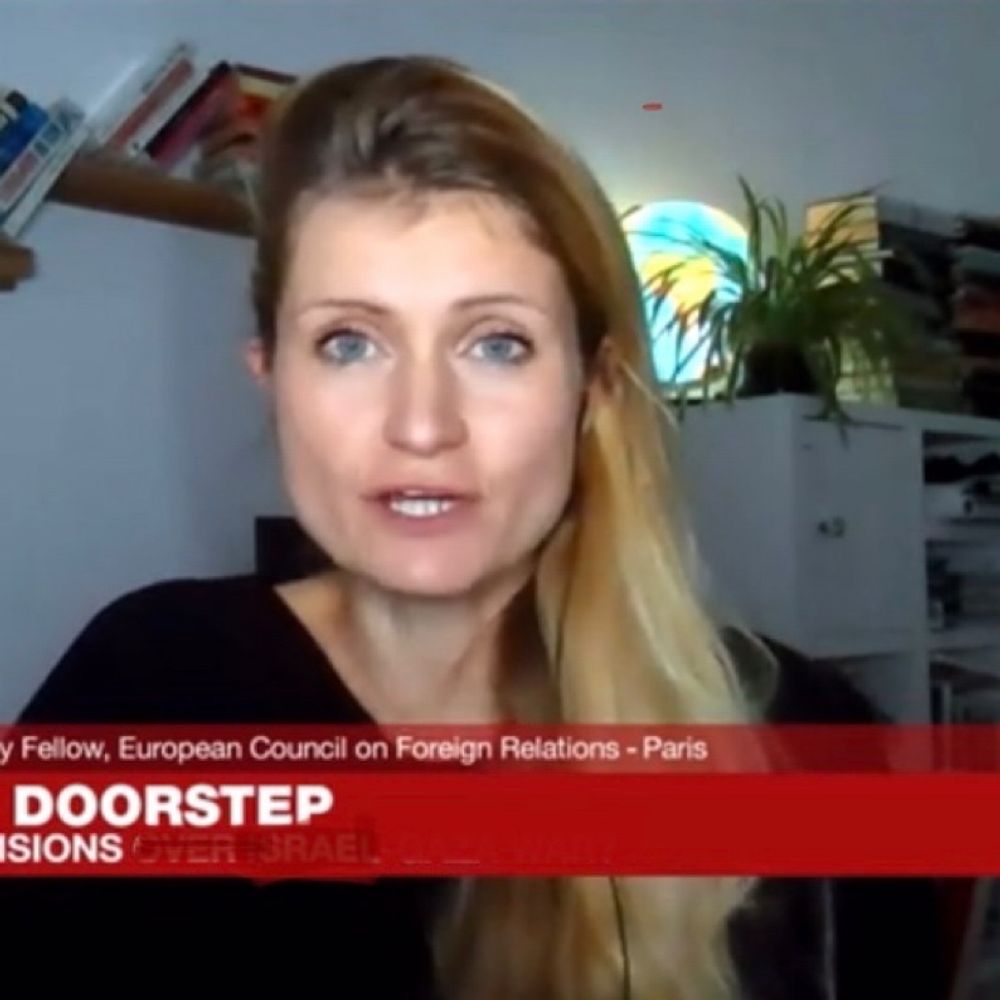
What struck me most on Europe wasn’t the focus on value, freedom of speech etc - again, very similar to Vance’s Munich speech - but how activist it is. This is about directly trying to influence what is going on in Europe:

December 5, 2025 at 10:17 AM
What struck me most on Europe wasn’t the focus on value, freedom of speech etc - again, very similar to Vance’s Munich speech - but how activist it is. This is about directly trying to influence what is going on in Europe:
I share this sentiment @nanopub
https://w3id.org/np/RAiFdv4D_zW85xY3e00XaxetTe2FQSt3nYzbuONj5TJ6M
Just, I don't think replying with another #nanopub is the way to go in a discussion. Right? And then: perhaps it is a good idea for space No.27 to work on an action plan? 😉
https://w3id.org/np/RAiFdv4D_zW85xY3e00XaxetTe2FQSt3nYzbuONj5TJ6M
Just, I don't think replying with another #nanopub is the way to go in a discussion. Right? And then: perhaps it is a good idea for space No.27 to work on an action plan? 😉
Nanopublication RAiFdv4D_zW85xY3e00XaxetTe2FQSt3nYzbuONj5TJ6M - Nanopub Registry
registry.knowledgepixels.com
December 5, 2025 at 1:40 PM
I share this sentiment @nanopub
https://w3id.org/np/RAiFdv4D_zW85xY3e00XaxetTe2FQSt3nYzbuONj5TJ6M
Just, I don't think replying with another #nanopub is the way to go in a discussion. Right? And then: perhaps it is a good idea for space No.27 to work on an action plan? 😉
https://w3id.org/np/RAiFdv4D_zW85xY3e00XaxetTe2FQSt3nYzbuONj5TJ6M
Just, I don't think replying with another #nanopub is the way to go in a discussion. Right? And then: perhaps it is a good idea for space No.27 to work on an action plan? 😉
Reposted by Christian Meesters

We moeten nu – allereerst aan onszelf – toegeven dat ons onderwijs in de afgelopen tien jaar echt verslechterd is. En dat nog veel meer verslechteringen dreigen […]
Original post on mstdn.social
mstdn.social
December 5, 2025 at 8:52 AM
We moeten nu – allereerst aan onszelf – toegeven dat ons onderwijs in de afgelopen tien jaar echt verslechterd is. En dat nog veel meer verslechteringen dreigen […]
Reposted by Christian Meesters

RE: https://social.edu.nl/@tgx_um/115645028833529913
on Monday we have a go/no-go and we really want to go
So, are you considering sign up before Sunday evening!
#ontologies #linkeddata #sparql
on Monday we have a go/no-go and we really want to go
So, are you considering sign up before Sunday evening!
#ontologies #linkeddata #sparql

🚀 BioSB course "Knowledge Graphs in the Life Sciences” 🚀
Don't miss this exciting opportunity for Life Sciences researchers and data enthusiasts. In just 9 weeks, BioSB will host this course: https://www.dtls.nl/courses/knowledge-graphs-in-the-life-sciences-2026/
📅 January 5–9, 2025
🗺️ […]
Don't miss this exciting opportunity for Life Sciences researchers and data enthusiasts. In just 9 weeks, BioSB will host this course: https://www.dtls.nl/courses/knowledge-graphs-in-the-life-sciences-2026/
📅 January 5–9, 2025
🗺️ […]
Original post on social.edu.nl
social.edu.nl
December 4, 2025 at 3:29 PM
RE: https://social.edu.nl/@tgx_um/115645028833529913
on Monday we have a go/no-go and we really want to go
So, are you considering sign up before Sunday evening!
#ontologies #linkeddata #sparql
on Monday we have a go/no-go and we really want to go
So, are you considering sign up before Sunday evening!
#ontologies #linkeddata #sparql
Reposted by Christian Meesters

Every astronomer who complains about satellite streaks has heard the same response from techbro-types: "Why don't you just put all your telescopes in space?"
There are an incredibly large number of reasons why that is totally not going to work. But here's another from Borloff et al "Satellite […]
There are an incredibly large number of reasons why that is totally not going to work. But here's another from Borloff et al "Satellite […]
Original post on mastodon.social
mastodon.social
December 3, 2025 at 9:11 PM
Every astronomer who complains about satellite streaks has heard the same response from techbro-types: "Why don't you just put all your telescopes in space?"
There are an incredibly large number of reasons why that is totally not going to work. But here's another from Borloff et al "Satellite […]
There are an incredibly large number of reasons why that is totally not going to work. But here's another from Borloff et al "Satellite […]