




Rubén Vezzoni
@rubenvezzoni.bsky.social
Political economy of green transitions at Uni Helsinki / energy policy, global commodities, post-growth economics, agroecology, and all that jazz
Almost half of the 59 MEPs disclosing secondary jobs work on files that appear directly related to their side jobs.
"The vast majority of them decided there was no need to declare a conflict of interest"
www.ft.com/content/0466...
"The vast majority of them decided there was no need to declare a conflict of interest"
www.ft.com/content/0466...

October 13, 2025 at 8:11 AM
Almost half of the 59 MEPs disclosing secondary jobs work on files that appear directly related to their side jobs.
"The vast majority of them decided there was no need to declare a conflict of interest"
www.ft.com/content/0466...
"The vast majority of them decided there was no need to declare a conflict of interest"
www.ft.com/content/0466...
Make Russian gas dependence Great Again?
🇺🇸🇩🇪🇷🇺
'Nord Stream 2’s shareholder — Gazprom — argued that the new Trump administration, as well as the German election in February 2025, “presumably can have significant consequences on the circumstances of Nord Stream 2”'.
www.ft.com/content/dc9c...
🇺🇸🇩🇪🇷🇺
'Nord Stream 2’s shareholder — Gazprom — argued that the new Trump administration, as well as the German election in February 2025, “presumably can have significant consequences on the circumstances of Nord Stream 2”'.
www.ft.com/content/dc9c...

March 3, 2025 at 8:08 AM
Make Russian gas dependence Great Again?
🇺🇸🇩🇪🇷🇺
'Nord Stream 2’s shareholder — Gazprom — argued that the new Trump administration, as well as the German election in February 2025, “presumably can have significant consequences on the circumstances of Nord Stream 2”'.
www.ft.com/content/dc9c...
🇺🇸🇩🇪🇷🇺
'Nord Stream 2’s shareholder — Gazprom — argued that the new Trump administration, as well as the German election in February 2025, “presumably can have significant consequences on the circumstances of Nord Stream 2”'.
www.ft.com/content/dc9c...
8/8
If agrivoltaics are meant to address global environmental impact, the type of agriculture funded by #agpv income should not be a secondary concern. To avoid undesirable lock-ins and cost-shifting, solar power deployment should be planned strategically – beyond the profit motive.
If agrivoltaics are meant to address global environmental impact, the type of agriculture funded by #agpv income should not be a secondary concern. To avoid undesirable lock-ins and cost-shifting, solar power deployment should be planned strategically – beyond the profit motive.

February 1, 2025 at 12:21 PM
8/8
If agrivoltaics are meant to address global environmental impact, the type of agriculture funded by #agpv income should not be a secondary concern. To avoid undesirable lock-ins and cost-shifting, solar power deployment should be planned strategically – beyond the profit motive.
If agrivoltaics are meant to address global environmental impact, the type of agriculture funded by #agpv income should not be a secondary concern. To avoid undesirable lock-ins and cost-shifting, solar power deployment should be planned strategically – beyond the profit motive.
7/8
So are #agrivoltaics really a “win-win solution”?
So are #agrivoltaics really a “win-win solution”?

February 1, 2025 at 12:21 PM
7/8
So are #agrivoltaics really a “win-win solution”?
So are #agrivoltaics really a “win-win solution”?
6/8
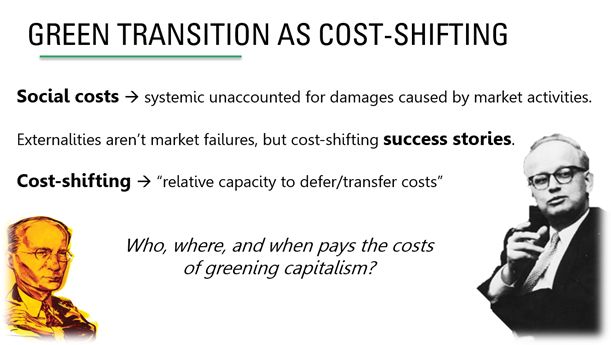
These dynamics are analysed using Kapp’s theory of social costs, thus reframing ongoing green transitions as (at least partly) an exercise in cost-shifting.
These dynamics are analysed using Kapp’s theory of social costs, thus reframing ongoing green transitions as (at least partly) an exercise in cost-shifting.
February 1, 2025 at 12:21 PM
6/8
These dynamics are analysed using Kapp’s theory of social costs, thus reframing ongoing green transitions as (at least partly) an exercise in cost-shifting.
These dynamics are analysed using Kapp’s theory of social costs, thus reframing ongoing green transitions as (at least partly) an exercise in cost-shifting.
5/8
And also to identify what countries are first movers and under what political and economic constraints.
And also to identify what countries are first movers and under what political and economic constraints.

February 1, 2025 at 12:21 PM
5/8
And also to identify what countries are first movers and under what political and economic constraints.
And also to identify what countries are first movers and under what political and economic constraints.
4/8
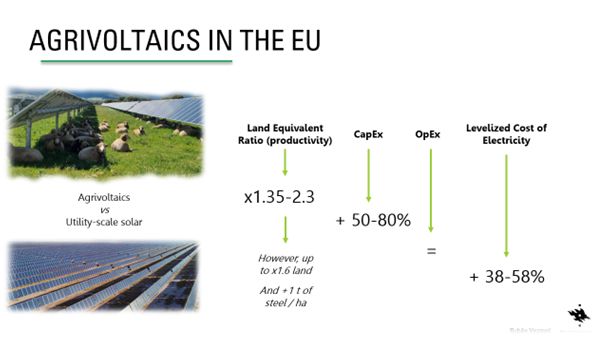
The EU serves as a case study to assess these pros and cons empirically…
The EU serves as a case study to assess these pros and cons empirically…
February 1, 2025 at 12:21 PM
4/8
The EU serves as a case study to assess these pros and cons empirically…
The EU serves as a case study to assess these pros and cons empirically…
3/8
Compared to open-field agriculture and GM-PV, #agpv offer clear advantages (e.g., dual land use, reduced evapotranspiration, crop shelter, income diversification), although these remain highly context-dependent.
Compared to open-field agriculture and GM-PV, #agpv offer clear advantages (e.g., dual land use, reduced evapotranspiration, crop shelter, income diversification), although these remain highly context-dependent.

February 1, 2025 at 12:21 PM
3/8
Compared to open-field agriculture and GM-PV, #agpv offer clear advantages (e.g., dual land use, reduced evapotranspiration, crop shelter, income diversification), although these remain highly context-dependent.
Compared to open-field agriculture and GM-PV, #agpv offer clear advantages (e.g., dual land use, reduced evapotranspiration, crop shelter, income diversification), although these remain highly context-dependent.
2/8
Which kind of farming practices actually benefit from #agpv systems? And when do they reinforce, rather than challenge, dominant policy paradigms?
This article unpacks the interplay of the energy and agricultural transitions as a complex set of trade-offs behind alleged win–win solutions.
Which kind of farming practices actually benefit from #agpv systems? And when do they reinforce, rather than challenge, dominant policy paradigms?
This article unpacks the interplay of the energy and agricultural transitions as a complex set of trade-offs behind alleged win–win solutions.

February 1, 2025 at 12:21 PM
2/8
Which kind of farming practices actually benefit from #agpv systems? And when do they reinforce, rather than challenge, dominant policy paradigms?
This article unpacks the interplay of the energy and agricultural transitions as a complex set of trade-offs behind alleged win–win solutions.
Which kind of farming practices actually benefit from #agpv systems? And when do they reinforce, rather than challenge, dominant policy paradigms?
This article unpacks the interplay of the energy and agricultural transitions as a complex set of trade-offs behind alleged win–win solutions.
1/8
#Agrivoltaics are often presented as a “win-win solution”, but what’s the catch?
A visual summary of my latest article on how low-carbon energy intersects with state policy, land use, rent, electricity markets, and other political-economic processes.
link.springer.com/article/10.1...
🌍🔌💡
#Agrivoltaics are often presented as a “win-win solution”, but what’s the catch?
A visual summary of my latest article on how low-carbon energy intersects with state policy, land use, rent, electricity markets, and other political-economic processes.
link.springer.com/article/10.1...
🌍🔌💡

February 1, 2025 at 12:21 PM
1/8
#Agrivoltaics are often presented as a “win-win solution”, but what’s the catch?
A visual summary of my latest article on how low-carbon energy intersects with state policy, land use, rent, electricity markets, and other political-economic processes.
link.springer.com/article/10.1...
🌍🔌💡
#Agrivoltaics are often presented as a “win-win solution”, but what’s the catch?
A visual summary of my latest article on how low-carbon energy intersects with state policy, land use, rent, electricity markets, and other political-economic processes.
link.springer.com/article/10.1...
🌍🔌💡
5/7
Many of these projects are in the Global South, and all of them primarily focus on hydrogen exports to the Global North.
🌎The spatial distribution of added value and price differentials in international trade betrays a world economy that still relies on post-colonial core-periphery relations.
Many of these projects are in the Global South, and all of them primarily focus on hydrogen exports to the Global North.
🌎The spatial distribution of added value and price differentials in international trade betrays a world economy that still relies on post-colonial core-periphery relations.

December 22, 2024 at 9:25 AM
5/7
Many of these projects are in the Global South, and all of them primarily focus on hydrogen exports to the Global North.
🌎The spatial distribution of added value and price differentials in international trade betrays a world economy that still relies on post-colonial core-periphery relations.
Many of these projects are in the Global South, and all of them primarily focus on hydrogen exports to the Global North.
🌎The spatial distribution of added value and price differentials in international trade betrays a world economy that still relies on post-colonial core-periphery relations.
4/7
📉(3) installed electrolyser capacity is getting smaller compared to what originally announced and it isn’t always matched by low-carbon energy sources.
📉(3) installed electrolyser capacity is getting smaller compared to what originally announced and it isn’t always matched by low-carbon energy sources.

December 22, 2024 at 9:25 AM
4/7
📉(3) installed electrolyser capacity is getting smaller compared to what originally announced and it isn’t always matched by low-carbon energy sources.
📉(3) installed electrolyser capacity is getting smaller compared to what originally announced and it isn’t always matched by low-carbon energy sources.
2/7
🕵️🏽Hydrogen’s dirty secret?
🛢️Nearly all of it is derived from fossil fuels, and largely consumed by the petrochemical industry.
⛽️Electrolysers are currently built alongside oil refineries, ports, and in the middle of the desert – thus begetting the question:
Image
🕵️🏽Hydrogen’s dirty secret?
🛢️Nearly all of it is derived from fossil fuels, and largely consumed by the petrochemical industry.
⛽️Electrolysers are currently built alongside oil refineries, ports, and in the middle of the desert – thus begetting the question:
Image

December 22, 2024 at 9:25 AM
2/7
🕵️🏽Hydrogen’s dirty secret?
🛢️Nearly all of it is derived from fossil fuels, and largely consumed by the petrochemical industry.
⛽️Electrolysers are currently built alongside oil refineries, ports, and in the middle of the desert – thus begetting the question:
Image
🕵️🏽Hydrogen’s dirty secret?
🛢️Nearly all of it is derived from fossil fuels, and largely consumed by the petrochemical industry.
⛽️Electrolysers are currently built alongside oil refineries, ports, and in the middle of the desert – thus begetting the question:
Image
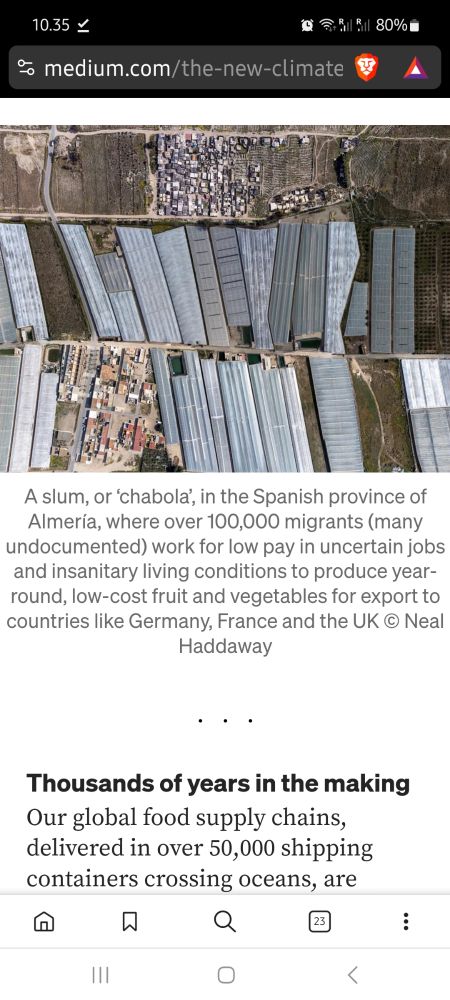
In the pic below: "food imperialism" at play within the EU itself. A brilliant piece by @nealhaddaway.bsky.social.
December 6, 2024 at 9:38 AM
In the pic below: "food imperialism" at play within the EU itself. A brilliant piece by @nealhaddaway.bsky.social.
Jusr heard the new ad by BP, now sponsoring the @financialtimes.com podcast.
A new carrot and stick approach to #greenwashing their way out of this mess.
#climatesky 🧪
#climatecrisis 🌏
🔌💡
A new carrot and stick approach to #greenwashing their way out of this mess.
#climatesky 🧪
#climatecrisis 🌏
🔌💡

May 20, 2024 at 6:31 AM
Jusr heard the new ad by BP, now sponsoring the @financialtimes.com podcast.
A new carrot and stick approach to #greenwashing their way out of this mess.
#climatesky 🧪
#climatecrisis 🌏
🔌💡
A new carrot and stick approach to #greenwashing their way out of this mess.
#climatesky 🧪
#climatecrisis 🌏
🔌💡
FT graph on the solar PV price drop:

April 2, 2024 at 2:03 PM
FT graph on the solar PV price drop: