


Sara Rosa-Téllez
@rosa-tellez.bsky.social
Pinned
Sara Rosa-Téllez
@rosa-tellez.bsky.social
· Oct 16

Happy to share I am joining the Department of Biochemistry and Molecular Biology at the University of Valencia as an assistant professor. Can't wait to get started on this new chapter. Exciting times ahead! 🧬🫛🧪🔬🎓
Reposted by Sara Rosa-Téllez

Attending #CellBio2025? Have questions about publishing with Biology Open @biologyopen.bsky.social or our Fast & Fair peer review initiative? Meet Editor-in-Chief @danielgorelick.bsky.social on Tuesday, 9 December, 12:00 -13:00 pm at booth 1232.

December 8, 2025 at 3:04 PM
Attending #CellBio2025? Have questions about publishing with Biology Open @biologyopen.bsky.social or our Fast & Fair peer review initiative? Meet Editor-in-Chief @danielgorelick.bsky.social on Tuesday, 9 December, 12:00 -13:00 pm at booth 1232.
Happy to share our last work (Doghri et al. 2025) focused on the effect of climate change in two Brassica olereacea genotypes.
www.sciencedirect.com/science/arti...
www.sciencedirect.com/science/arti...

Increasing temperatures and CO2 impact on primary and specialized metabolism of Brassica species
Rising atmospheric CO2 levels are driving climate change, increasing temperatures, and impacting plant metabolism. In this study, we analyzed the effe…
www.sciencedirect.com
November 7, 2025 at 6:01 AM
Happy to share our last work (Doghri et al. 2025) focused on the effect of climate change in two Brassica olereacea genotypes.
www.sciencedirect.com/science/arti...
www.sciencedirect.com/science/arti...
Reposted by Sara Rosa-Téllez

Plant scientists at the MSU Plant Resilience Institute, including @rheelab.bsky.social, stand ready to meet the challenge of improving global food security. Read more about how MSU is working to build climate-resilient crops: msutoday.msu.edu/news/2025/10...
#SpartansWill #PlantResilience
#SpartansWill #PlantResilience

October 20, 2025 at 2:17 PM
Plant scientists at the MSU Plant Resilience Institute, including @rheelab.bsky.social, stand ready to meet the challenge of improving global food security. Read more about how MSU is working to build climate-resilient crops: msutoday.msu.edu/news/2025/10...
#SpartansWill #PlantResilience
#SpartansWill #PlantResilience
Happy to share I am joining the Department of Biochemistry and Molecular Biology at the University of Valencia as an assistant professor. Can't wait to get started on this new chapter. Exciting times ahead! 🧬🫛🧪🔬🎓
October 16, 2025 at 6:47 AM
Happy to share I am joining the Department of Biochemistry and Molecular Biology at the University of Valencia as an assistant professor. Can't wait to get started on this new chapter. Exciting times ahead! 🧬🫛🧪🔬🎓
Reposted by Sara Rosa-Téllez
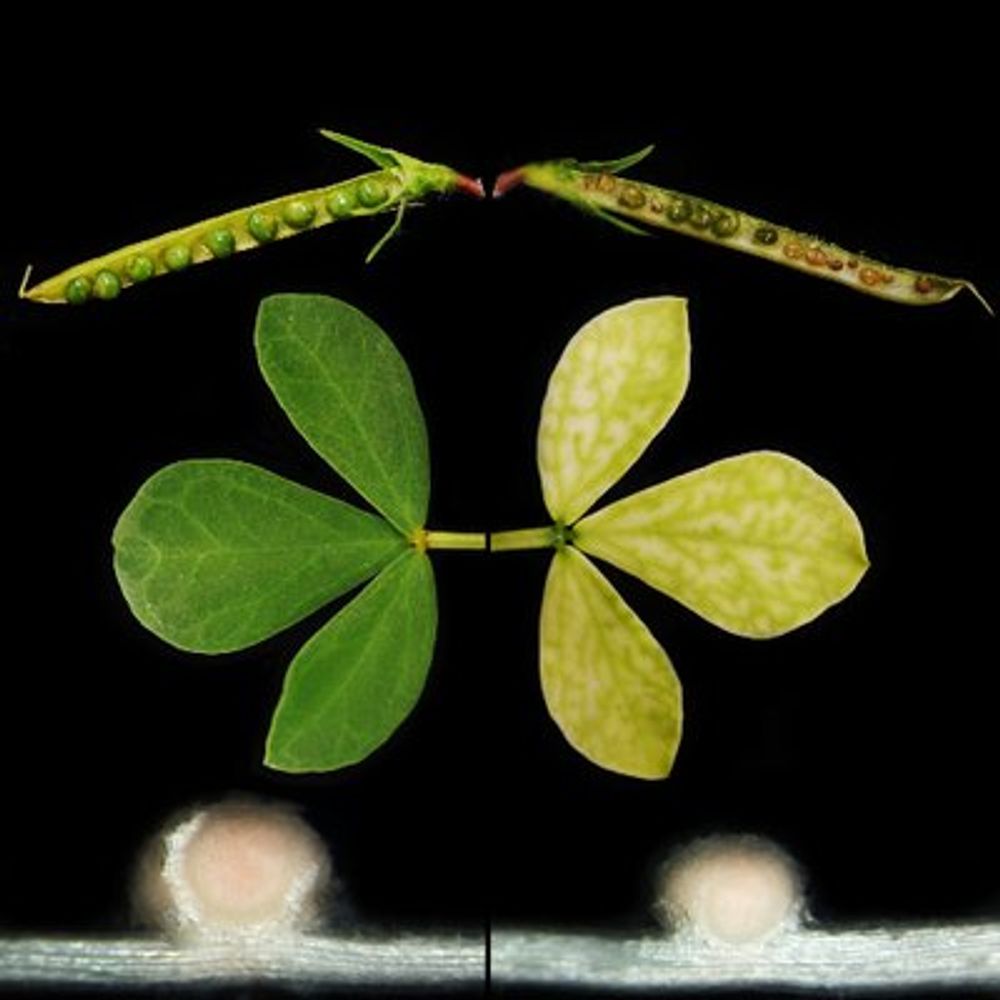
An old dog with new tricks—the value of photorespiration as a central metabolic hub with implications for environmental acclimation (Stefan Timm, Hu Sun, Martin Hagemann, Wei Huang, Alisdair R Fernie) doi.org/10.1093/plph... #PlantScience

An old dog with new tricks—the value of photorespiration as a central metabolic hub with implications for environmental acclimation
Abstract. Photorespiration serves as a metabolic repair system that safeguards photosynthetic carbon fixation in photoautotrophic organisms thriving in tod
doi.org
September 11, 2025 at 4:07 AM
An old dog with new tricks—the value of photorespiration as a central metabolic hub with implications for environmental acclimation (Stefan Timm, Hu Sun, Martin Hagemann, Wei Huang, Alisdair R Fernie) doi.org/10.1093/plph... #PlantScience
Excellent research!! nature.com/articles/s4147… Metabolic flux analyses corroborating the interconnection of photorespiration with C1 metabolism! This finding takes a significant step forward from our previous work (doi.org/10.1093/plcell�#plantSciencet#Photorespirationpiration
https://nature.com/articles/s4147…
September 4, 2025 at 12:33 PM
Excellent research!! nature.com/articles/s4147… Metabolic flux analyses corroborating the interconnection of photorespiration with C1 metabolism! This finding takes a significant step forward from our previous work (doi.org/10.1093/plcell�#plantSciencet#Photorespirationpiration

First time I ever spotted a peanut plant(Arachis hypogaea).Although often considered a dry seed,it is actually a legume that grows underground and forms symbiotic relationships with Bradyrhizobium.Its ability to fix nitrogen makes it a crop that promotes sustainable agriculture and healthy nutrition

August 6, 2025 at 9:52 PM
First time I ever spotted a peanut plant(Arachis hypogaea).Although often considered a dry seed,it is actually a legume that grows underground and forms symbiotic relationships with Bradyrhizobium.Its ability to fix nitrogen makes it a crop that promotes sustainable agriculture and healthy nutrition
An incredible researcher and mentor. Always supportive and insightful.
x.com/Rosa_Tellez_...
x.com/Rosa_Tellez_...

Sara Rosa-Téllez on X: "An incredible researcher and mentor. Always supportive and insightful." / X
An incredible researcher and mentor. Always supportive and insightful.
x.com
July 15, 2025 at 9:04 PM
An incredible researcher and mentor. Always supportive and insightful.
x.com/Rosa_Tellez_...
x.com/Rosa_Tellez_...
Ready for the Iberian plant biology congress 🚀🌱

July 1, 2025 at 2:15 PM
Ready for the Iberian plant biology congress 🚀🌱
Legumes in nature: Garbancillo del diablo (Erophaca baetica). I photographed this fascinating legume in Dec 2023 in a visit to my hometown, Cortes de la Frontera (Sierra de Grazalema).
My father told me that goats and sheep never eat it! It contains alkaloids that cause neurological disturbances.
My father told me that goats and sheep never eat it! It contains alkaloids that cause neurological disturbances.

June 1, 2025 at 5:05 PM
Legumes in nature: Garbancillo del diablo (Erophaca baetica). I photographed this fascinating legume in Dec 2023 in a visit to my hometown, Cortes de la Frontera (Sierra de Grazalema).
My father told me that goats and sheep never eat it! It contains alkaloids that cause neurological disturbances.
My father told me that goats and sheep never eat it! It contains alkaloids that cause neurological disturbances.
Reposted by Sara Rosa-Téllez
Plant glutamyl-tRNA reductases coordinate plant and rhizobial heme biosynthesis in nitrogen-fixing nodules | The Plant Cell | Oxford Academic

Plant glutamyl-tRNA reductases coordinate plant and rhizobial heme biosynthesis in nitrogen-fixing nodules
Heme is biosynthesized in legume root nodules to meet the demand for leghemoglobins (Lbs) and other heme-binding proteins. However, the main source of nodule heme remains unknown. Both the plant host and rhizobia possess a complete heme biosynthetic pathway, differing slightly in the production of 5-aminolevulinic acid (ALA), a key regulatory step catalyzed by glutamyl-tRNA reductase (GluTR) in the plant and by HemA in the rhizobia. Transcriptomic analysis revealed that many plant heme biosynthetic genes, including GluTR2 but not GluTR1, are upregulated in nodules compared to roots, whereas expression of related rhizobial genes, including both HemA1 and HemA2, is generally inhibited under symbiotic conditions compared to free-living conditions. Knockout of Lotus japonicus GluTR2, but not of HemA1 and HemA2, led to a significant decrease (∼50%) in nodule heme content. The stable heterozygous mutant of GluTR1 or transient knockdown of GluTR1 exhibited a ∼20% reduction in nodule heme content. Overexpression of Fluorescent in blue light (FLU), a feedback inhibitor of GluTR activity, caused a much greater reduction in nodule heme content (∼75%) and an increased level of apo-Lb and, in combination with the hemA1 hemA2 mutant, a drastic inhibition of nitrogenase activity (>90%). This study provides genetic evidence supporting a major role of plant GluTRs in coordinating heme biosynthesis between the two symbionts by supplying heme to assemble with cytoplasmic apo-Lbs and by providing ALA for heme synthesis in the bacteroids.
academic.oup.com
May 31, 2025 at 1:53 AM
Plant glutamyl-tRNA reductases coordinate plant and rhizobial heme biosynthesis in nitrogen-fixing nodules | The Plant Cell | Oxford Academic
Saturday at the lab, but happy to see that our university just got a vibrant makeover! 😛

May 17, 2025 at 8:36 AM
Saturday at the lab, but happy to see that our university just got a vibrant makeover! 😛
Legumes in Nature!Calicotome villosa is a Mediterranean legume adapted to arid ecosystems and fire! Its seeds have physical dormancy (waterproof coat),broken only by wildfires or scarification.In Andalucía, it's called "erguén", shepherds knew after wildfires it regrow more nutritious for livestock.

April 25, 2025 at 7:45 AM
Legumes in Nature!Calicotome villosa is a Mediterranean legume adapted to arid ecosystems and fire! Its seeds have physical dormancy (waterproof coat),broken only by wildfires or scarification.In Andalucía, it's called "erguén", shepherds knew after wildfires it regrow more nutritious for livestock.
When you meet a phenotype like this, statistics goes out the window. Some patterns mock the numbers 😁#legumes #Lotus japonicus #PlantBiology #PlantScience

April 13, 2025 at 8:03 AM
When you meet a phenotype like this, statistics goes out the window. Some patterns mock the numbers 😁#legumes #Lotus japonicus #PlantBiology #PlantScience
Legumes in nature: Medicago polymorpha (Toothed Medick) Native from Mediterranean basin. Produces pods that can self-bury by twisting and untwisting with changes in humidity, helping seeds drill into the soil. It forms a symbiotic relationship with Sinorhizobium medicae, which can fix nitrogen.

April 6, 2025 at 5:50 PM
Legumes in nature: Medicago polymorpha (Toothed Medick) Native from Mediterranean basin. Produces pods that can self-bury by twisting and untwisting with changes in humidity, helping seeds drill into the soil. It forms a symbiotic relationship with Sinorhizobium medicae, which can fix nitrogen.
"Life is fickle… but resilience is relentless"

February 8, 2025 at 4:50 PM
"Life is fickle… but resilience is relentless"
News about our latest publication in which we use the Metabolic engineering of serine/glycine network to increase the nutritional value of crops🧪 🧬 🦠 🌿🌾🌱
www.uv.es/uvweb/uv-new...
www.uv.es/uvweb/uv-new...

Metabolic engineering to increase the nutritional value of crops
A research team from the Institute of Biotechnology and Biomedicine (BIOTECMED) of the University of Valencia (UV) has successfully developed plants with enhanced nutritional value by increasing the l...
www.uv.es
January 28, 2025 at 5:22 PM
News about our latest publication in which we use the Metabolic engineering of serine/glycine network to increase the nutritional value of crops🧪 🧬 🦠 🌿🌾🌱
www.uv.es/uvweb/uv-new...
www.uv.es/uvweb/uv-new...
Photorespiration: Wasteful or useful?Nature doesn’t waste, it adapts. #PlantScience #Photorespiration
plantae.org/photorespira...
plantae.org/photorespira...

Photorespiration: Wasteful or useful? | Plantae
Rosa-Téllez et al. explore the role of glycine flux regulation by photorespiration in maintaining nitrogen, carbon, and sulfur balance in plants. https://doi.org/10.1093/plcell/
plantae.org
December 24, 2024 at 8:32 AM
Photorespiration: Wasteful or useful?Nature doesn’t waste, it adapts. #PlantScience #Photorespiration
plantae.org/photorespira...
plantae.org/photorespira...
Reposted by Sara Rosa-Téllez
December 6, 2024 at 7:08 AM
Just published!Building on our previous work on the serine-glycine-one carbon metabolic network (Rosa-Téllez et al.2024),we’ve now engineered this network to boost nitrogen in crops #PlantScience #ClimateResilience #MetabolicEngineering #SustainableAgriculture onlinelibrary.wiley.com/doi/10.1111/...

Metabolic engineering of the serine/glycine network as a means to improve the nitrogen content of crops
In plants, L-serine (Ser) biosynthesis occurs through various pathways and is highly dependent on the atmospheric CO2 concentration, especially in C3 species, due to the association of the Glycolate ....
onlinelibrary.wiley.com
November 16, 2024 at 12:00 PM
Just published!Building on our previous work on the serine-glycine-one carbon metabolic network (Rosa-Téllez et al.2024),we’ve now engineered this network to boost nitrogen in crops #PlantScience #ClimateResilience #MetabolicEngineering #SustainableAgriculture onlinelibrary.wiley.com/doi/10.1111/...
Emerging climate scenarios are introducing significant challenges to global food security 🌱
www.science.org/doi/10.1126/...
www.science.org/doi/10.1126/...

Climate change exacerbates the environmental impacts of agriculture
Agriculture’s global environmental impacts are widely expected to continue expanding, driven by population and economic growth and dietary changes. This Review highlights climate change as an addition...
www.science.org
November 16, 2024 at 10:17 AM
Emerging climate scenarios are introducing significant challenges to global food security 🌱
www.science.org/doi/10.1126/...
www.science.org/doi/10.1126/...