


Deanna Stanley
@psychsafety1.bsky.social
Healthy software come from healthy teams. And healthy teams are psychologically safe. And psychological safety isn't an on/off switch, it builds on itself. Join me on the journey!
They speak up — not to criticize, but to clarify.They name the tension in the room, reflect what others are afraid to say, and hold up the mirror with care.
Truth Tellers don’t weaponize honesty. They humanize it.They make it safe to be real, even when it’s hard.
Truth Tellers don’t weaponize honesty. They humanize it.They make it safe to be real, even when it’s hard.

December 9, 2025 at 2:09 PM
They speak up — not to criticize, but to clarify.They name the tension in the room, reflect what others are afraid to say, and hold up the mirror with care.
Truth Tellers don’t weaponize honesty. They humanize it.They make it safe to be real, even when it’s hard.
Truth Tellers don’t weaponize honesty. They humanize it.They make it safe to be real, even when it’s hard.
I’m grateful for every teammate who shows up with care.The ones who check in quietly, steady the ship, spark ideas, and hold space when it’s hard.
Last week I talked about Bridge Builders, Quiet Powerhouses, and Cheerleaders. This week I finish up with 4 other types of teammates.
Last week I talked about Bridge Builders, Quiet Powerhouses, and Cheerleaders. This week I finish up with 4 other types of teammates.

December 8, 2025 at 2:05 PM
I’m grateful for every teammate who shows up with care.The ones who check in quietly, steady the ship, spark ideas, and hold space when it’s hard.
Last week I talked about Bridge Builders, Quiet Powerhouses, and Cheerleaders. This week I finish up with 4 other types of teammates.
Last week I talked about Bridge Builders, Quiet Powerhouses, and Cheerleaders. This week I finish up with 4 other types of teammates.
We'll come back next week with more team members to celebrate! Join me then!
#PsychologicalSafety #TeamCulture #InclusiveLeadership #CareInAction #LeadershipInEveryRole
#PsychologicalSafety #TeamCulture #InclusiveLeadership #CareInAction #LeadershipInEveryRole

December 5, 2025 at 2:17 PM
We'll come back next week with more team members to celebrate! Join me then!
#PsychologicalSafety #TeamCulture #InclusiveLeadership #CareInAction #LeadershipInEveryRole
#PsychologicalSafety #TeamCulture #InclusiveLeadership #CareInAction #LeadershipInEveryRole
They celebrate the wins — big and small.They shout out teammates, amplify quiet voices, and remind us that progress deserves praise.
Cheerleaders aren’t just loud. They’re intentional.They know that recognition builds momentum, and joy builds trust.
Cheerleaders aren’t just loud. They’re intentional.They know that recognition builds momentum, and joy builds trust.

December 4, 2025 at 2:26 PM
They celebrate the wins — big and small.They shout out teammates, amplify quiet voices, and remind us that progress deserves praise.
Cheerleaders aren’t just loud. They’re intentional.They know that recognition builds momentum, and joy builds trust.
Cheerleaders aren’t just loud. They’re intentional.They know that recognition builds momentum, and joy builds trust.
They don’t chase applause. They chase clarity.
Quiet Powerhouses are the ones who hold the lightbulb while others cheer. They think deeply, act calmly, and bring steady brilliance to every challenge. You might not hear them first — but you’ll feel their impact in every solution that works.
Quiet Powerhouses are the ones who hold the lightbulb while others cheer. They think deeply, act calmly, and bring steady brilliance to every challenge. You might not hear them first — but you’ll feel their impact in every solution that works.

December 3, 2025 at 2:33 PM
They don’t chase applause. They chase clarity.
Quiet Powerhouses are the ones who hold the lightbulb while others cheer. They think deeply, act calmly, and bring steady brilliance to every challenge. You might not hear them first — but you’ll feel their impact in every solution that works.
Quiet Powerhouses are the ones who hold the lightbulb while others cheer. They think deeply, act calmly, and bring steady brilliance to every challenge. You might not hear them first — but you’ll feel their impact in every solution that works.
The Bridge Builders
They connect people across silos, roles, and differences — not with authority, but with trust.
Bridge Builders are the ones who say, “Let’s talk,” when tensions rise. They loop in the quiet voices, translate between teams, and make sure no one’s left out of the conversation.
They connect people across silos, roles, and differences — not with authority, but with trust.
Bridge Builders are the ones who say, “Let’s talk,” when tensions rise. They loop in the quiet voices, translate between teams, and make sure no one’s left out of the conversation.

December 2, 2025 at 1:59 PM
The Bridge Builders
They connect people across silos, roles, and differences — not with authority, but with trust.
Bridge Builders are the ones who say, “Let’s talk,” when tensions rise. They loop in the quiet voices, translate between teams, and make sure no one’s left out of the conversation.
They connect people across silos, roles, and differences — not with authority, but with trust.
Bridge Builders are the ones who say, “Let’s talk,” when tensions rise. They loop in the quiet voices, translate between teams, and make sure no one’s left out of the conversation.
This series is a thank-you — to the bridge builders, truth tellers, empathy anchors, cheerleaders, and steady hands who make teams feel human.
Because culture isn’t built by one person.It’s built by all of us, moment by moment.
#Gratitude #TeamCulture #PsychologicalSafety #InclusiveLeadership
Because culture isn’t built by one person.It’s built by all of us, moment by moment.
#Gratitude #TeamCulture #PsychologicalSafety #InclusiveLeadership
December 1, 2025 at 1:56 PM
This series is a thank-you — to the bridge builders, truth tellers, empathy anchors, cheerleaders, and steady hands who make teams feel human.
Because culture isn’t built by one person.It’s built by all of us, moment by moment.
#Gratitude #TeamCulture #PsychologicalSafety #InclusiveLeadership
Because culture isn’t built by one person.It’s built by all of us, moment by moment.
#Gratitude #TeamCulture #PsychologicalSafety #InclusiveLeadership
Small wins build trust.Small wins shape culture.Small wins deserve celebration.
This carousel is a call to notice, name, and honor the quiet victories that often go unseen — but never unfelt.
Which small win will you spotlight this week?
This carousel is a call to notice, name, and honor the quiet victories that often go unseen — but never unfelt.
Which small win will you spotlight this week?

November 16, 2025 at 7:42 PM
Small wins build trust.Small wins shape culture.Small wins deserve celebration.
This carousel is a call to notice, name, and honor the quiet victories that often go unseen — but never unfelt.
Which small win will you spotlight this week?
This carousel is a call to notice, name, and honor the quiet victories that often go unseen — but never unfelt.
Which small win will you spotlight this week?
“I gave myself permission to rest.”
Rest isn’t weakness. It’s wisdom.
In cultures that reward hustle, choosing to pause can feel radical. But it’s one of the most courageous acts of self-leadership.
Leaders: Model it. Normalize it. Protect it.
What helped you recharge this week?
Rest isn’t weakness. It’s wisdom.
In cultures that reward hustle, choosing to pause can feel radical. But it’s one of the most courageous acts of self-leadership.
Leaders: Model it. Normalize it. Protect it.
What helped you recharge this week?

November 15, 2025 at 3:29 PM
“I gave myself permission to rest.”
Rest isn’t weakness. It’s wisdom.
In cultures that reward hustle, choosing to pause can feel radical. But it’s one of the most courageous acts of self-leadership.
Leaders: Model it. Normalize it. Protect it.
What helped you recharge this week?
Rest isn’t weakness. It’s wisdom.
In cultures that reward hustle, choosing to pause can feel radical. But it’s one of the most courageous acts of self-leadership.
Leaders: Model it. Normalize it. Protect it.
What helped you recharge this week?
“I showed up for someone today.”
Peer support is one of the most powerful — and often invisible — forces in team culture.
Whether it’s a check-in, a shared laugh, or a quiet “I’ve got you,” these moments build trust.
Leaders: Don’t just look for performance. Look for presence.
Peer support is one of the most powerful — and often invisible — forces in team culture.
Whether it’s a check-in, a shared laugh, or a quiet “I’ve got you,” these moments build trust.
Leaders: Don’t just look for performance. Look for presence.

November 14, 2025 at 2:17 PM
“I showed up for someone today.”
Peer support is one of the most powerful — and often invisible — forces in team culture.
Whether it’s a check-in, a shared laugh, or a quiet “I’ve got you,” these moments build trust.
Leaders: Don’t just look for performance. Look for presence.
Peer support is one of the most powerful — and often invisible — forces in team culture.
Whether it’s a check-in, a shared laugh, or a quiet “I’ve got you,” these moments build trust.
Leaders: Don’t just look for performance. Look for presence.
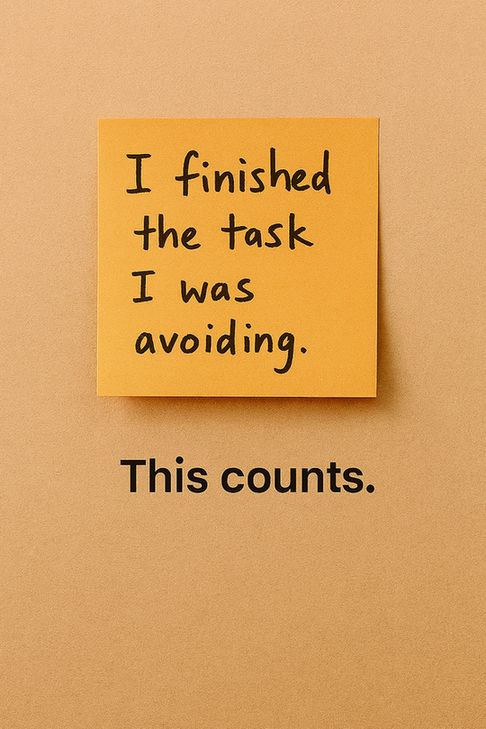
“I finished the task I was avoiding.”
That’s not procrastination ending — that’s courage showing up.
We often dismiss these moments as trivial. But they’re powerful indicators of resilience, emotional regulation, and self-leadership.
Leaders: Celebrate the effort, not just the outcome.
That’s not procrastination ending — that’s courage showing up.
We often dismiss these moments as trivial. But they’re powerful indicators of resilience, emotional regulation, and self-leadership.
Leaders: Celebrate the effort, not just the outcome.
November 13, 2025 at 2:13 PM
“I finished the task I was avoiding.”
That’s not procrastination ending — that’s courage showing up.
We often dismiss these moments as trivial. But they’re powerful indicators of resilience, emotional regulation, and self-leadership.
Leaders: Celebrate the effort, not just the outcome.
That’s not procrastination ending — that’s courage showing up.
We often dismiss these moments as trivial. But they’re powerful indicators of resilience, emotional regulation, and self-leadership.
Leaders: Celebrate the effort, not just the outcome.
“I kept going.”
Not every win is loud.
Some are quiet, steady, and deeply personal.
Persistence deserves recognition — especially when the work is invisible, emotional, or slow.
Leaders: Don’t wait for 100%. Celebrate the 80.
Who kept going this week, even when it was hard?
Not every win is loud.
Some are quiet, steady, and deeply personal.
Persistence deserves recognition — especially when the work is invisible, emotional, or slow.
Leaders: Don’t wait for 100%. Celebrate the 80.
Who kept going this week, even when it was hard?

November 12, 2025 at 2:04 PM
“I kept going.”
Not every win is loud.
Some are quiet, steady, and deeply personal.
Persistence deserves recognition — especially when the work is invisible, emotional, or slow.
Leaders: Don’t wait for 100%. Celebrate the 80.
Who kept going this week, even when it was hard?
Not every win is loud.
Some are quiet, steady, and deeply personal.
Persistence deserves recognition — especially when the work is invisible, emotional, or slow.
Leaders: Don’t wait for 100%. Celebrate the 80.
Who kept going this week, even when it was hard?
“I asked for help today.”
That’s not small. That’s brave.
In cultures that reward independence and speed, asking for help can feel risky. But it’s one of the most powerful micro-moments of trust we have.
Leaders: When someone reaches out, pause and recognize it.
That’s not small. That’s brave.
In cultures that reward independence and speed, asking for help can feel risky. But it’s one of the most powerful micro-moments of trust we have.
Leaders: When someone reaches out, pause and recognize it.

November 11, 2025 at 1:47 PM
“I asked for help today.”
That’s not small. That’s brave.
In cultures that reward independence and speed, asking for help can feel risky. But it’s one of the most powerful micro-moments of trust we have.
Leaders: When someone reaches out, pause and recognize it.
That’s not small. That’s brave.
In cultures that reward independence and speed, asking for help can feel risky. But it’s one of the most powerful micro-moments of trust we have.
Leaders: When someone reaches out, pause and recognize it.
It’s too easy to miss the small wins.
That moment you spoke up.
Finished a task you’ve been avoiding.
Supported a teammate.
Took a breath before diving back in.
These are wins.
They build trust, momentum, and culture.
Leaders: Recognition doesn’t need a budget. It needs attention.
That moment you spoke up.
Finished a task you’ve been avoiding.
Supported a teammate.
Took a breath before diving back in.
These are wins.
They build trust, momentum, and culture.
Leaders: Recognition doesn’t need a budget. It needs attention.

November 10, 2025 at 2:42 PM
It’s too easy to miss the small wins.
That moment you spoke up.
Finished a task you’ve been avoiding.
Supported a teammate.
Took a breath before diving back in.
These are wins.
They build trust, momentum, and culture.
Leaders: Recognition doesn’t need a budget. It needs attention.
That moment you spoke up.
Finished a task you’ve been avoiding.
Supported a teammate.
Took a breath before diving back in.
These are wins.
They build trust, momentum, and culture.
Leaders: Recognition doesn’t need a budget. It needs attention.
You can’t rebuild trust with strategy alone. You rebuild it with presence.
When teams are demoralized, the first step isn’t fixing — it’s seeing.
Seeing the silence.Seeing the fatigue.Seeing the humanity behind the performance.
Which moment from the series resonated most with you?
When teams are demoralized, the first step isn’t fixing — it’s seeing.
Seeing the silence.Seeing the fatigue.Seeing the humanity behind the performance.
Which moment from the series resonated most with you?

November 9, 2025 at 8:15 PM
You can’t rebuild trust with strategy alone. You rebuild it with presence.
When teams are demoralized, the first step isn’t fixing — it’s seeing.
Seeing the silence.Seeing the fatigue.Seeing the humanity behind the performance.
Which moment from the series resonated most with you?
When teams are demoralized, the first step isn’t fixing — it’s seeing.
Seeing the silence.Seeing the fatigue.Seeing the humanity behind the performance.
Which moment from the series resonated most with you?
Demoralized teams don’t need more pressure. They need more permission.
When a leader asks, “What would make this week feel lighter?” — it’s not just a question.It’s an invitation.
To name what’s heavy.To shift what’s possible.To feel seen.
When a leader asks, “What would make this week feel lighter?” — it’s not just a question.It’s an invitation.
To name what’s heavy.To shift what’s possible.To feel seen.

November 7, 2025 at 2:11 PM
Demoralized teams don’t need more pressure. They need more permission.
When a leader asks, “What would make this week feel lighter?” — it’s not just a question.It’s an invitation.
To name what’s heavy.To shift what’s possible.To feel seen.
When a leader asks, “What would make this week feel lighter?” — it’s not just a question.It’s an invitation.
To name what’s heavy.To shift what’s possible.To feel seen.
Sometimes the most powerful leadership moment isn’t a strategy. It’s a sentence.
“You don’t have to pretend today.”
When someone’s running on fumes, this kind of micro-moment can restore trust, energy, and hope.
“You don’t have to pretend today.”
When someone’s running on fumes, this kind of micro-moment can restore trust, energy, and hope.

November 6, 2025 at 2:01 PM
Sometimes the most powerful leadership moment isn’t a strategy. It’s a sentence.
“You don’t have to pretend today.”
When someone’s running on fumes, this kind of micro-moment can restore trust, energy, and hope.
“You don’t have to pretend today.”
When someone’s running on fumes, this kind of micro-moment can restore trust, energy, and hope.
Demoralization doesn’t always look dramatic. Sometimes, it’s just… quiet.
The silence in meetings.The camera-off fatigue.The “I’m fine” that isn’t.
These are the micro-signals of emotional exhaustion — often missed, often misunderstood.
Because healing starts with being seen.
The silence in meetings.The camera-off fatigue.The “I’m fine” that isn’t.
These are the micro-signals of emotional exhaustion — often missed, often misunderstood.
Because healing starts with being seen.

November 5, 2025 at 3:03 PM
Demoralization doesn’t always look dramatic. Sometimes, it’s just… quiet.
The silence in meetings.The camera-off fatigue.The “I’m fine” that isn’t.
These are the micro-signals of emotional exhaustion — often missed, often misunderstood.
Because healing starts with being seen.
The silence in meetings.The camera-off fatigue.The “I’m fine” that isn’t.
These are the micro-signals of emotional exhaustion — often missed, often misunderstood.
Because healing starts with being seen.
Demoralization isn’t just about low energy. It’s about lost meaning.
After layoffs, broken trust, or burnout, people don’t just disengage — they grieve.
The silence in meetings. The camera-off fatigue. The “I’m fine” that isn’t.
After layoffs, broken trust, or burnout, people don’t just disengage — they grieve.
The silence in meetings. The camera-off fatigue. The “I’m fine” that isn’t.

November 4, 2025 at 2:15 PM
Demoralization isn’t just about low energy. It’s about lost meaning.
After layoffs, broken trust, or burnout, people don’t just disengage — they grieve.
The silence in meetings. The camera-off fatigue. The “I’m fine” that isn’t.
After layoffs, broken trust, or burnout, people don’t just disengage — they grieve.
The silence in meetings. The camera-off fatigue. The “I’m fine” that isn’t.
Demoralization isn’t laziness. It’s emotional exhaustion.
After layoffs, broken trust, or relentless pressure, people don’t just lose motivation — they lose meaning.
The Reboot Series is for every team that’s been running on fumes.
After layoffs, broken trust, or relentless pressure, people don’t just lose motivation — they lose meaning.
The Reboot Series is for every team that’s been running on fumes.

November 3, 2025 at 2:30 PM
Demoralization isn’t laziness. It’s emotional exhaustion.
After layoffs, broken trust, or relentless pressure, people don’t just lose motivation — they lose meaning.
The Reboot Series is for every team that’s been running on fumes.
After layoffs, broken trust, or relentless pressure, people don’t just lose motivation — they lose meaning.
The Reboot Series is for every team that’s been running on fumes.
Let’s name it. Let’s honor it. Let’s keep healing — together.
I've been checking in on people more. We're having group lunches. I text those who left and offer support.
What’s one small step you’ve taken?
I've been checking in on people more. We're having group lunches. I text those who left and offer support.
What’s one small step you’ve taken?

November 1, 2025 at 3:45 PM
Let’s name it. Let’s honor it. Let’s keep healing — together.
I've been checking in on people more. We're having group lunches. I text those who left and offer support.
What’s one small step you’ve taken?
I've been checking in on people more. We're having group lunches. I text those who left and offer support.
What’s one small step you’ve taken?
You didn’t have to fix it. You just had to say it out loud. That’s leadership. That’s healing.
Admit your sorrow and fear. Let people understand that these feeling are normal. Give everyone time to heal.
Admit your sorrow and fear. Let people understand that these feeling are normal. Give everyone time to heal.

October 31, 2025 at 1:04 PM
You didn’t have to fix it. You just had to say it out loud. That’s leadership. That’s healing.
Admit your sorrow and fear. Let people understand that these feeling are normal. Give everyone time to heal.
Admit your sorrow and fear. Let people understand that these feeling are normal. Give everyone time to heal.
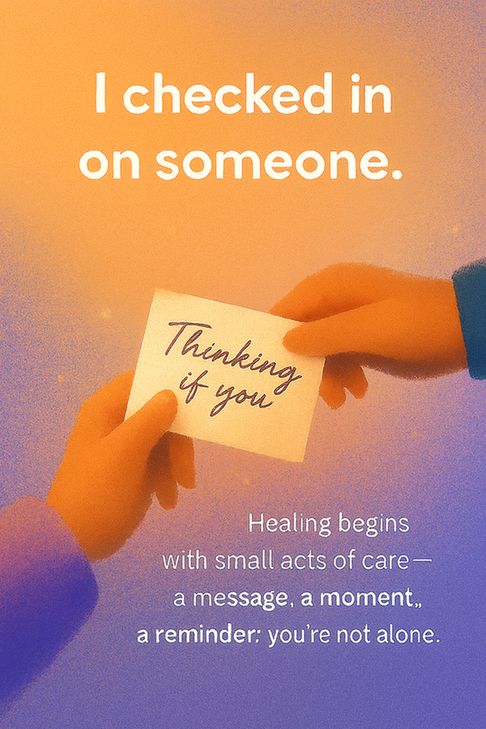
Healing begins with small acts of care — a message, a moment, a reminder: you’re not alone.
This applies to people who remain and those who left. When my company laid off people, some of the laid off started a weekly support group. Internally, my department is focusing on rebuilding our connections
This applies to people who remain and those who left. When my company laid off people, some of the laid off started a weekly support group. Internally, my department is focusing on rebuilding our connections
October 30, 2025 at 1:31 PM
Healing begins with small acts of care — a message, a moment, a reminder: you’re not alone.
This applies to people who remain and those who left. When my company laid off people, some of the laid off started a weekly support group. Internally, my department is focusing on rebuilding our connections
This applies to people who remain and those who left. When my company laid off people, some of the laid off started a weekly support group. Internally, my department is focusing on rebuilding our connections
Survivor’s guilt is real. Staying doesn’t mean you’re unscathed. It means you’re still carrying weight.
You may feel unproductive and dispirited. You may be fearful of being next. This is normal.
You may feel unproductive and dispirited. You may be fearful of being next. This is normal.

October 29, 2025 at 1:15 PM
Survivor’s guilt is real. Staying doesn’t mean you’re unscathed. It means you’re still carrying weight.
You may feel unproductive and dispirited. You may be fearful of being next. This is normal.
You may feel unproductive and dispirited. You may be fearful of being next. This is normal.
Grief shows up in unexpected ways — a quiet Slack channel, an empty desk, a memory that stings. It can hit at any time, even when you think you've recovered. Be kind to yourself.

October 28, 2025 at 1:45 PM
Grief shows up in unexpected ways — a quiet Slack channel, an empty desk, a memory that stings. It can hit at any time, even when you think you've recovered. Be kind to yourself.