




Ocean. Now!
@oceannow.bsky.social
🌊 The time to save the ocean is Now! We’re a Berlin-based NGO on a mission to restore ocean health.
#BanMicrofibers #UnderOurSkin #OceanConservation
#BanMicrofibers #UnderOurSkin #OceanConservation
Reposted by Ocean. Now!
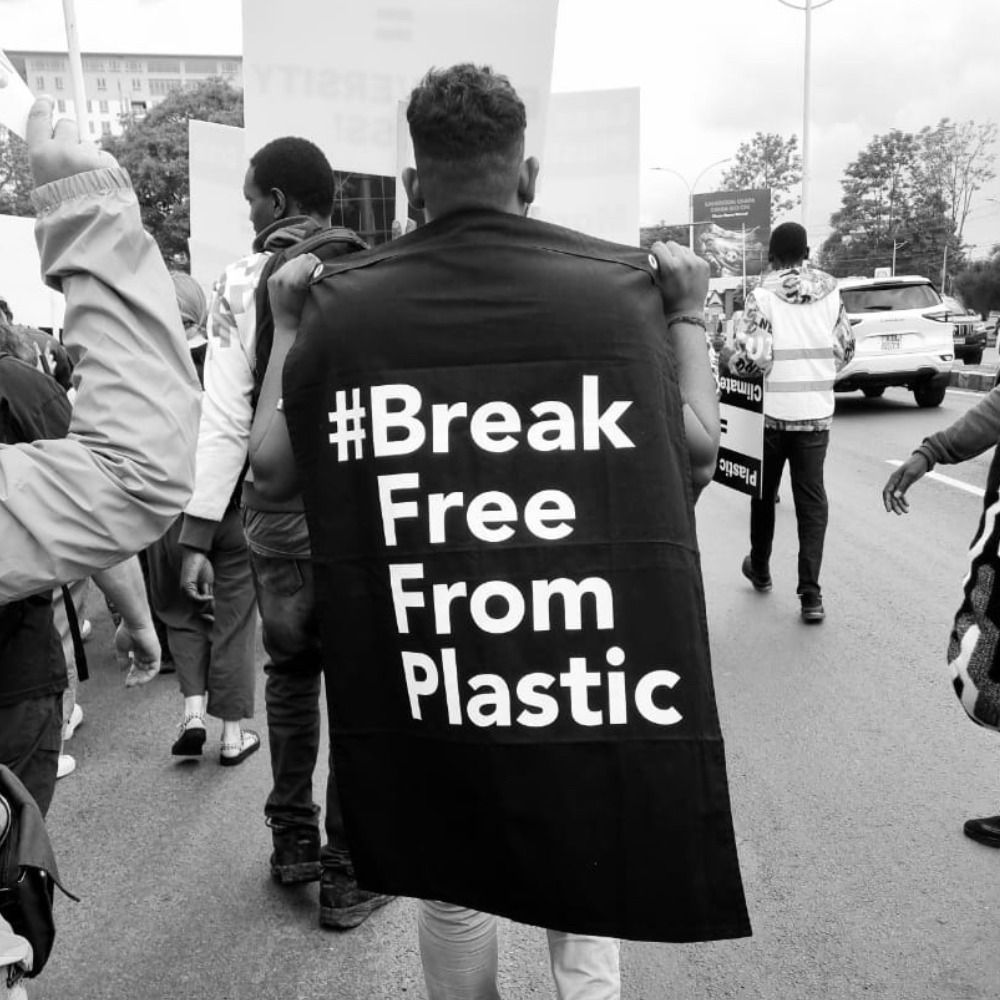
At #UNEA7, #BreakFreeFromPlastic members urged world leaders to act on the plastic crisis. The action seeks to highlight the interconnected nature of plastics and other environmental crises.
Follow @breakfreefromplastic.org for more updates.
Photos by @jameswakibia
#UNEA7
Follow @breakfreefromplastic.org for more updates.
Photos by @jameswakibia
#UNEA7


December 5, 2025 at 6:17 AM
At #UNEA7, #BreakFreeFromPlastic members urged world leaders to act on the plastic crisis. The action seeks to highlight the interconnected nature of plastics and other environmental crises.
Follow @breakfreefromplastic.org for more updates.
Photos by @jameswakibia
#UNEA7
Follow @breakfreefromplastic.org for more updates.
Photos by @jameswakibia
#UNEA7
(1/3) 🌍 It’s World Pollution Prevention Day today, and in Portrait No. 9, David Kabu has a message for us all: “Keep our water safe and clean.”


December 2, 2025 at 2:51 PM
(1/3) 🌍 It’s World Pollution Prevention Day today, and in Portrait No. 9, David Kabu has a message for us all: “Keep our water safe and clean.”
1/5 We say NO to the madness of Black Friday. The world buys millions of new clothing items…and this overflow eventually ends up far from where it was purchased. 🛍️
🎽 Textile waste from the Kantamanto Market, for example, is transported to various dumpsites such as
🎽 Textile waste from the Kantamanto Market, for example, is transported to various dumpsites such as
November 28, 2025 at 3:45 PM
1/5 We say NO to the madness of Black Friday. The world buys millions of new clothing items…and this overflow eventually ends up far from where it was purchased. 🛍️
🎽 Textile waste from the Kantamanto Market, for example, is transported to various dumpsites such as
🎽 Textile waste from the Kantamanto Market, for example, is transported to various dumpsites such as
Porträt Nr. 8: „Water is a human right.“ – Jonathan David


November 26, 2025 at 2:12 PM
Porträt Nr. 8: „Water is a human right.“ – Jonathan David
(1/4) 💙 An innovative alternative to fashion to 'dye' for! Toxicants are often used to color polyester fabrics. This includes:
😰 Carcinogenic azo dyes
🔵 Possible carcinogen Disperse Blue 1, allergenic Disperse Blues 106 & 124
☢️ Skin-sensitizer Orange 3
🫁 Sensitizer p-Phenylenediamine (PPD).
😰 Carcinogenic azo dyes
🔵 Possible carcinogen Disperse Blue 1, allergenic Disperse Blues 106 & 124
☢️ Skin-sensitizer Orange 3
🫁 Sensitizer p-Phenylenediamine (PPD).
November 25, 2025 at 11:18 AM
(1/4) 💙 An innovative alternative to fashion to 'dye' for! Toxicants are often used to color polyester fabrics. This includes:
😰 Carcinogenic azo dyes
🔵 Possible carcinogen Disperse Blue 1, allergenic Disperse Blues 106 & 124
☢️ Skin-sensitizer Orange 3
🫁 Sensitizer p-Phenylenediamine (PPD).
😰 Carcinogenic azo dyes
🔵 Possible carcinogen Disperse Blue 1, allergenic Disperse Blues 106 & 124
☢️ Skin-sensitizer Orange 3
🫁 Sensitizer p-Phenylenediamine (PPD).
(1/4) 📸 Portrait #7: "Stop waste disposal" – David Kabu
This portrait, taken by one of the participants of our children’s ocean photo workshop, "shout out loud – stop the flood of plastics" in Ghana, is their personal message to the world's decision-makers.
This portrait, taken by one of the participants of our children’s ocean photo workshop, "shout out loud – stop the flood of plastics" in Ghana, is their personal message to the world's decision-makers.

November 21, 2025 at 3:12 PM
(1/4) 📸 Portrait #7: "Stop waste disposal" – David Kabu
This portrait, taken by one of the participants of our children’s ocean photo workshop, "shout out loud – stop the flood of plastics" in Ghana, is their personal message to the world's decision-makers.
This portrait, taken by one of the participants of our children’s ocean photo workshop, "shout out loud – stop the flood of plastics" in Ghana, is their personal message to the world's decision-makers.
#FashionWasteColonialism is when wealthy countries dump their unwanted clothes onto places like Accra’s Kantamanto Market. Low-quality and synthetic fast-fashion sheds microplastic fibers, that don’t biodegrade –becoming another community’s burden.
November 20, 2025 at 3:17 PM
#FashionWasteColonialism is when wealthy countries dump their unwanted clothes onto places like Accra’s Kantamanto Market. Low-quality and synthetic fast-fashion sheds microplastic fibers, that don’t biodegrade –becoming another community’s burden.
1/4 Porträt Nr. 6: „Plastik verschmutzt die Ökosysteme, es muss verringert werden.“ – Majeel Mustapha
Laut Schätzungen landen jedes Jahr 11 Millionen Tonnen Plastik im Meer. Für viele Kinder in Ghana, ist dieser Müll Alltag, er gefährdet ihre Gesundheit, dabei können sie nichts
Laut Schätzungen landen jedes Jahr 11 Millionen Tonnen Plastik im Meer. Für viele Kinder in Ghana, ist dieser Müll Alltag, er gefährdet ihre Gesundheit, dabei können sie nichts


November 15, 2025 at 9:02 AM
1/4 Porträt Nr. 6: „Plastik verschmutzt die Ökosysteme, es muss verringert werden.“ – Majeel Mustapha
Laut Schätzungen landen jedes Jahr 11 Millionen Tonnen Plastik im Meer. Für viele Kinder in Ghana, ist dieser Müll Alltag, er gefährdet ihre Gesundheit, dabei können sie nichts
Laut Schätzungen landen jedes Jahr 11 Millionen Tonnen Plastik im Meer. Für viele Kinder in Ghana, ist dieser Müll Alltag, er gefährdet ihre Gesundheit, dabei können sie nichts
Reposted by Ocean. Now!
After almost a decade of serving the #BreakFreeFromPlastic movement as its Global Coordinator, Von goes back to his roots in local campaigning as he leads Oceana’s Philippine team.
Read more 👇
www.breakfreefromplastic.org/2025/11/13/r...
#activism
Read more 👇
www.breakfreefromplastic.org/2025/11/13/r...
#activism


November 14, 2025 at 5:00 AM
After almost a decade of serving the #BreakFreeFromPlastic movement as its Global Coordinator, Von goes back to his roots in local campaigning as he leads Oceana’s Philippine team.
Read more 👇
www.breakfreefromplastic.org/2025/11/13/r...
#activism
Read more 👇
www.breakfreefromplastic.org/2025/11/13/r...
#activism
(1/4) 💸 Waste colonialism costs local sellers and traders 💸
In the first of our interviews on the catastrophic impact of the “fashion trade” between high-income and low-income countries, we hear from Zaria, a secondhand clothing seller at Kantamanto Market in Accra, Ghana.
In the first of our interviews on the catastrophic impact of the “fashion trade” between high-income and low-income countries, we hear from Zaria, a secondhand clothing seller at Kantamanto Market in Accra, Ghana.
November 13, 2025 at 3:07 PM
(1/4) 💸 Waste colonialism costs local sellers and traders 💸
In the first of our interviews on the catastrophic impact of the “fashion trade” between high-income and low-income countries, we hear from Zaria, a secondhand clothing seller at Kantamanto Market in Accra, Ghana.
In the first of our interviews on the catastrophic impact of the “fashion trade” between high-income and low-income countries, we hear from Zaria, a secondhand clothing seller at Kantamanto Market in Accra, Ghana.
1/5 👆🏿Was hier passiert ist Modekolonialismus. Wir haben mit locals vor Ort gesprochen und die Eindrücke waren herzzerreißend. 💔
Agbobloshie ist ein Epizentrum für Textilmüll in Accra, Ghana. Es grenzt an ein Slumgebiet namens Old Fadama. Textilien, die nicht verkauft werden
Agbobloshie ist ein Epizentrum für Textilmüll in Accra, Ghana. Es grenzt an ein Slumgebiet namens Old Fadama. Textilien, die nicht verkauft werden

November 11, 2025 at 9:41 AM
1/5 👆🏿Was hier passiert ist Modekolonialismus. Wir haben mit locals vor Ort gesprochen und die Eindrücke waren herzzerreißend. 💔
Agbobloshie ist ein Epizentrum für Textilmüll in Accra, Ghana. Es grenzt an ein Slumgebiet namens Old Fadama. Textilien, die nicht verkauft werden
Agbobloshie ist ein Epizentrum für Textilmüll in Accra, Ghana. Es grenzt an ein Slumgebiet namens Old Fadama. Textilien, die nicht verkauft werden
1/5 Portrait #5: "Stop waste disposal in our environment" – Martha Oduro Kofi Oduro
This portrait is from our children's ocean photo workshop "shout out loud – stop the flood of plastics" in Ghana. Participants photographed each other and added personal messages to decision-makers in industry +
This portrait is from our children's ocean photo workshop "shout out loud – stop the flood of plastics" in Ghana. Participants photographed each other and added personal messages to decision-makers in industry +

November 8, 2025 at 2:11 PM
1/5 Portrait #5: "Stop waste disposal in our environment" – Martha Oduro Kofi Oduro
This portrait is from our children's ocean photo workshop "shout out loud – stop the flood of plastics" in Ghana. Participants photographed each other and added personal messages to decision-makers in industry +
This portrait is from our children's ocean photo workshop "shout out loud – stop the flood of plastics" in Ghana. Participants photographed each other and added personal messages to decision-makers in industry +
1/3 In our fourth theme, "Fashion Waste Colonialism," we’ll explore the harmful effects of the fashion waste trade from economically wealthier countries to low-income countries. 🌎
The EU exports approximately 1.4 to 1.7 million tons of used clothes and textiles annually, mostly
The EU exports approximately 1.4 to 1.7 million tons of used clothes and textiles annually, mostly
November 6, 2025 at 8:45 AM
1/3 In our fourth theme, "Fashion Waste Colonialism," we’ll explore the harmful effects of the fashion waste trade from economically wealthier countries to low-income countries. 🌎
The EU exports approximately 1.4 to 1.7 million tons of used clothes and textiles annually, mostly
The EU exports approximately 1.4 to 1.7 million tons of used clothes and textiles annually, mostly
(1/2) 🦈 Basking sharks are very gentle giants, but they face growing threats from boat collisions, fishing, pollution, and climate change.
So how can we help them? 👇
So how can we help them? 👇
November 3, 2025 at 9:16 AM
(1/2) 🦈 Basking sharks are very gentle giants, but they face growing threats from boat collisions, fishing, pollution, and climate change.
So how can we help them? 👇
So how can we help them? 👇
1/3 How does CCAMLR - the Commission for the Conservation of Antarctic Marine Living Resources -relate to the 30x30 goal? 🇦🇶
CCAMLR is the forum governing conservation and fisheries in the Southern Ocean. By designating Marine Protected Areas (#MPAs) covering 25%
CCAMLR is the forum governing conservation and fisheries in the Southern Ocean. By designating Marine Protected Areas (#MPAs) covering 25%
October 29, 2025 at 12:03 AM
1/3 How does CCAMLR - the Commission for the Conservation of Antarctic Marine Living Resources -relate to the 30x30 goal? 🇦🇶
CCAMLR is the forum governing conservation and fisheries in the Southern Ocean. By designating Marine Protected Areas (#MPAs) covering 25%
CCAMLR is the forum governing conservation and fisheries in the Southern Ocean. By designating Marine Protected Areas (#MPAs) covering 25%
1/5 Kommende Woche verhandeln 27 Vertragsstaaten darüber, inwiefern das Südpolarmeer und seine Lebewesen 🐋 🐧 🦐 🦭 🐟 🦈 🦑 geschützt werden sollen: #CCAMLR - die Kommission zur Erhaltung der lebenden Meeresschätze der Antarktis - trifft sich jährlich in Hobart, Australien.
October 26, 2025 at 5:09 AM
1/5 Kommende Woche verhandeln 27 Vertragsstaaten darüber, inwiefern das Südpolarmeer und seine Lebewesen 🐋 🐧 🦐 🦭 🐟 🦈 🦑 geschützt werden sollen: #CCAMLR - die Kommission zur Erhaltung der lebenden Meeresschätze der Antarktis - trifft sich jährlich in Hobart, Australien.
🐬 Today we’re celebrating freshwater dolphins 🥳 Unlike their ocean relatives, freshwater dolphins have adapted to life in rivers. Their secret skill…

October 24, 2025 at 9:33 AM
🐬 Today we’re celebrating freshwater dolphins 🥳 Unlike their ocean relatives, freshwater dolphins have adapted to life in rivers. Their secret skill…
(1/3) 👗 Microplastics in Fashion
Miranda Wilson (badminton player & founder of BadmintONEarth), what will it take to reduce microfiber pollution?
🎤 Miranda: ‘It's not only up to consumers, change has to happen within the companies and their production.’
Miranda Wilson (badminton player & founder of BadmintONEarth), what will it take to reduce microfiber pollution?
🎤 Miranda: ‘It's not only up to consumers, change has to happen within the companies and their production.’
October 23, 2025 at 5:54 PM
(1/3) 👗 Microplastics in Fashion
Miranda Wilson (badminton player & founder of BadmintONEarth), what will it take to reduce microfiber pollution?
🎤 Miranda: ‘It's not only up to consumers, change has to happen within the companies and their production.’
Miranda Wilson (badminton player & founder of BadmintONEarth), what will it take to reduce microfiber pollution?
🎤 Miranda: ‘It's not only up to consumers, change has to happen within the companies and their production.’
Reposted by Ocean. Now!
#UnderOurSkin - Microplastics in Fashion - Portrait 19 is of Miranda Wilson, German national badminton team player, and founder of the sustainability network and climate action project BadmintONEarth.

October 23, 2025 at 9:06 AM
#UnderOurSkin - Microplastics in Fashion - Portrait 19 is of Miranda Wilson, German national badminton team player, and founder of the sustainability network and climate action project BadmintONEarth.
#UnderOurSkin - Microplastics in Fashion - Portrait 19 is of Miranda Wilson, German national badminton team player, and founder of the sustainability network and climate action project BadmintONEarth.
October 23, 2025 at 9:06 AM
#UnderOurSkin - Microplastics in Fashion - Portrait 19 is of Miranda Wilson, German national badminton team player, and founder of the sustainability network and climate action project BadmintONEarth.
Sema Gedik – Gründerin 'AUF AUGENHOEHE' – ist die Protagonistin des #18ten Portraits unserer Kampagne #UnderOurSkin.
October 17, 2025 at 3:08 PM
Sema Gedik – Gründerin 'AUF AUGENHOEHE' – ist die Protagonistin des #18ten Portraits unserer Kampagne #UnderOurSkin.
#UnderOurSkin - Mikroplastik in der Mode - Portrait #18 unserer Kampagne zeigt Sema Gedik – Gründerin ‘Auf Augenhöhe’ – die sich gezielt für Inklusion und Diversität in der Modewelt einsetzt.

October 17, 2025 at 8:28 AM
#UnderOurSkin - Mikroplastik in der Mode - Portrait #18 unserer Kampagne zeigt Sema Gedik – Gründerin ‘Auf Augenhöhe’ – die sich gezielt für Inklusion und Diversität in der Modewelt einsetzt.
#UnderOurSkin #17
Julia Ochs – Fotografin, Aktivistin, Gründerin Ocean Gallery, was braucht es, um die Mikrofaserverschmutzung zu reduzieren?
Julia: “Um die Verschmutzung durch Mikrofasern zu reduzieren, brauchen wir eine striktere Regulierung der Industrie und müssen unseren Überkonsum beenden.”
Julia Ochs – Fotografin, Aktivistin, Gründerin Ocean Gallery, was braucht es, um die Mikrofaserverschmutzung zu reduzieren?
Julia: “Um die Verschmutzung durch Mikrofasern zu reduzieren, brauchen wir eine striktere Regulierung der Industrie und müssen unseren Überkonsum beenden.”
October 15, 2025 at 2:22 PM
#UnderOurSkin #17
Julia Ochs – Fotografin, Aktivistin, Gründerin Ocean Gallery, was braucht es, um die Mikrofaserverschmutzung zu reduzieren?
Julia: “Um die Verschmutzung durch Mikrofasern zu reduzieren, brauchen wir eine striktere Regulierung der Industrie und müssen unseren Überkonsum beenden.”
Julia Ochs – Fotografin, Aktivistin, Gründerin Ocean Gallery, was braucht es, um die Mikrofaserverschmutzung zu reduzieren?
Julia: “Um die Verschmutzung durch Mikrofasern zu reduzieren, brauchen wir eine striktere Regulierung der Industrie und müssen unseren Überkonsum beenden.”
Portrait #17 der #UnderOurSkin Kampagne zeigt Julia Ochs – Fotografin, Aktivistin, Gründerin Ocean Gallery.

October 15, 2025 at 8:01 AM
Portrait #17 der #UnderOurSkin Kampagne zeigt Julia Ochs – Fotografin, Aktivistin, Gründerin Ocean Gallery.
1/5 Porträt Nr. 4: „Bitte haltet unsere Umwelt sauber“ – Jennifer Ashitey Kweku Nii, Dede Stella Rolland Collins, Martha Oduro Kofi Oduro
Dieses Portrait stammt unserem Kinder Ozean Foto Workshop „shout out loud – stoppt die Plastikflut“ in Ghana. Die Teilnehmer:innen
Dieses Portrait stammt unserem Kinder Ozean Foto Workshop „shout out loud – stoppt die Plastikflut“ in Ghana. Die Teilnehmer:innen

October 14, 2025 at 10:53 AM
1/5 Porträt Nr. 4: „Bitte haltet unsere Umwelt sauber“ – Jennifer Ashitey Kweku Nii, Dede Stella Rolland Collins, Martha Oduro Kofi Oduro
Dieses Portrait stammt unserem Kinder Ozean Foto Workshop „shout out loud – stoppt die Plastikflut“ in Ghana. Die Teilnehmer:innen
Dieses Portrait stammt unserem Kinder Ozean Foto Workshop „shout out loud – stoppt die Plastikflut“ in Ghana. Die Teilnehmer:innen