




NSF Center for Synthetic Organic Electrochemistry
@nsf-csoe.bsky.social
The NSF-funded Center for Synthetic Organic Electrochemistry aims to enable the adoption of electrochemical methods for organic synthesis.
csoe.mst.edu
csoe.mst.edu
Reposted by NSF Center for Synthetic Organic Electrochemistry

Reminiscing about Chem Night at the museum!
Read about the event and why we value community engagement here at U Chem.
www.chemistry.utah.edu/history/chem...
Read about the event and why we value community engagement here at U Chem.
www.chemistry.utah.edu/history/chem...
October 10, 2025 at 7:12 PM
Reminiscing about Chem Night at the museum!
Read about the event and why we value community engagement here at U Chem.
www.chemistry.utah.edu/history/chem...
Read about the event and why we value community engagement here at U Chem.
www.chemistry.utah.edu/history/chem...
Reposted by NSF Center for Synthetic Organic Electrochemistry

Check out our new @jacs.acspublications.org paper on #Electrosynthesis of Agrochemicals via #AC-Driven Selective, Continuous Dehalogenation @utahchemistry.bsky.social ! Great
@nsf-csoe.bsky.social Teamwork and collaboration with @yaoyang-cornell.bsky.social and PNNL!
pubs.acs.org/doi/full/10....
@nsf-csoe.bsky.social Teamwork and collaboration with @yaoyang-cornell.bsky.social and PNNL!
pubs.acs.org/doi/full/10....

Electrosynthesis of Agrochemicals via Alternating-Current-Driven Selective, Continuous Dehalogenation
Dehalogenation is a critical transformation in chemical synthesis but remains limited by catalyst deactivation and low selectivity in industrial processes. Here, we report an alternating current (AC) ...
pubs.acs.org
September 30, 2025 at 3:20 PM
Check out our new @jacs.acspublications.org paper on #Electrosynthesis of Agrochemicals via #AC-Driven Selective, Continuous Dehalogenation @utahchemistry.bsky.social ! Great
@nsf-csoe.bsky.social Teamwork and collaboration with @yaoyang-cornell.bsky.social and PNNL!
pubs.acs.org/doi/full/10....
@nsf-csoe.bsky.social Teamwork and collaboration with @yaoyang-cornell.bsky.social and PNNL!
pubs.acs.org/doi/full/10....
Reposted by NSF Center for Synthetic Organic Electrochemistry
The University of Utah has a long and distinguished history in electrochemistry - and on July 25-26, the Chemistry Department hosted the first Utah Electrochemistry Symposium (UTES)!
Read more about the event:
www.chemistry.utah.edu/history/chem...
Read more about the event:
www.chemistry.utah.edu/history/chem...
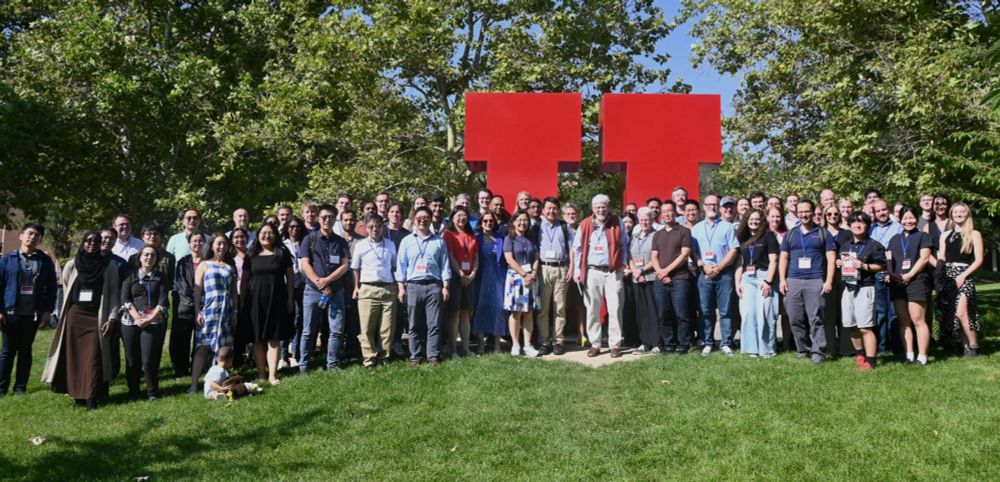
Chemistry Department Hosts First Utah Electrochemistry Symposium - Department of Chemistry
Profs. Henry White, Shelley Minteer, and Long Luo hosted the first Utah Electrochemistry Symposium (UTES) on July 25–26, 2025, at the University of Utah’s Department...
www.chemistry.utah.edu
August 21, 2025 at 3:43 PM
The University of Utah has a long and distinguished history in electrochemistry - and on July 25-26, the Chemistry Department hosted the first Utah Electrochemistry Symposium (UTES)!
Read more about the event:
www.chemistry.utah.edu/history/chem...
Read more about the event:
www.chemistry.utah.edu/history/chem...
Reposted by NSF Center for Synthetic Organic Electrochemistry

Molecular structures made from crocheting yarn were on display at the Chemistry Crochet Social Hour sponsored by the @nsf-csoe.bsky.social, where attendees had a chance to make their own creations. cen.acs.org/acs-news/acs...
#ACSFall2025 #chemsky
#ACSFall2025 #chemsky


August 21, 2025 at 3:24 PM
Molecular structures made from crocheting yarn were on display at the Chemistry Crochet Social Hour sponsored by the @nsf-csoe.bsky.social, where attendees had a chance to make their own creations. cen.acs.org/acs-news/acs...
#ACSFall2025 #chemsky
#ACSFall2025 #chemsky
Reposted by NSF Center for Synthetic Organic Electrochemistry
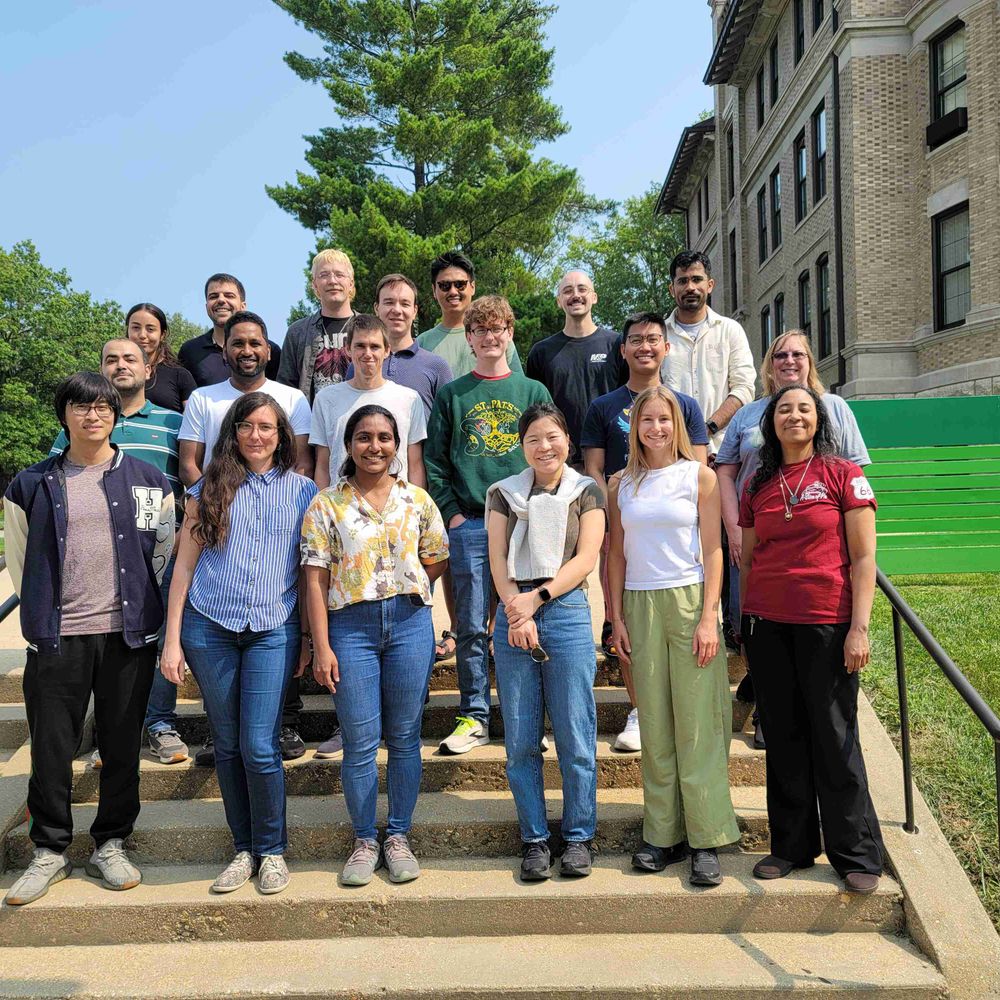
CSOE is super excited to be renewed!!! Missouri S&T awarded five-year $19.8 million grant to lead Center for Chemical Innovation news.mst.edu/2025/08/miss...

Missouri S&T awarded five-year $19.8 million grant to lead Center for Chemical Innovation
Missouri S&T has been awarded a $19.8 million collaborative agreement to renew the National Science Foundation’s Center for Synthetic Organic Electrochemistry. This chemical innovation center will be ...
news.mst.edu
August 14, 2025 at 5:09 PM
CSOE is super excited to be renewed!!! Missouri S&T awarded five-year $19.8 million grant to lead Center for Chemical Innovation news.mst.edu/2025/08/miss...
Collaborative publication in @nature.com out of Song Lin and Yue Qi's groups! @songlin1.bsky.social #NSFfunded

Nature research paper: Dynamic kinetic resolution of phosphines with chiral supporting electrolytes
go.nature.com/4m2ZD5i
go.nature.com/4m2ZD5i

Dynamic kinetic resolution of phosphines with chiral supporting electrolytes - Nature
Using a dynamic-kinetic-resolution strategy and chiral phosphate salts as supporting electrolytes, racemic trivalent phosphines can be oxidized to afford enantioenriched phosphine oxides.
go.nature.com
August 6, 2025 at 7:24 PM
Collaborative publication in @nature.com out of Song Lin and Yue Qi's groups! @songlin1.bsky.social #NSFfunded
Reposted by NSF Center for Synthetic Organic Electrochemistry
Check out our new work published @J_A_C_S ! We answer the question, "How to control the product selectivity in a reaction consisting of two consecutive irreversible echem steps by #AC electrolysis?" pubs.acs.org/doi/10.1021/...
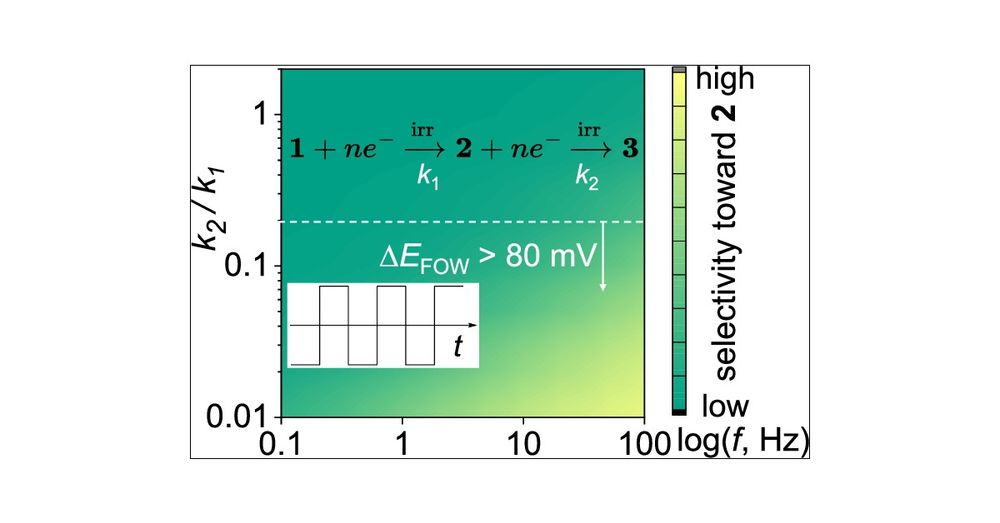
Origin of Selectivity in Alternating Current-Enabled Partial Reduction of (Hetero)Arenes: A Case Study of Two Consecutive Irreversible Electrochemical Steps
Herein, we investigate the origin of selectivity in the alternating current (AC)-enabled partial reduction of (hetero)arenes to cyclic alkenes. Reduction of (hetero)arenes can be considered as a reaction involving two consecutive irreversible electrochemical steps: the first generates the desired cyclic alkene, while the second leads to its undesired overreduction. Conventional constant current or voltage (DC) electrolysis results in poor selectivity toward the partial reduction products, originating from overreduction and base-induced decomposition of the desired product. Fast-scan cyclic voltammetry shows that the rate constant for the first reduction (k1) exceeds that of the second one (k2). Finite element simulations based on this experimental finding semiquantitatively capture the frequency-dependent selectivity observed in AC electrolysis experiments (i.e., increasing the AC frequency enhances selectivity). The results further reveal that AC electrolysis mitigates the low selectivity by only collecting the products at the initial stage of the reduction reaction, which is mostly under a kinetically controlled regime. We then extend the finite element model and introduce ΔEFOW, the foot-of-the-wave potential difference between cyclic voltammograms of substrate and partial reduction product, as an accessible proxy for k2/k1. A ΔEFOW > 80 mV predicts synthetically useful selectivity (>30%) toward the partial reduction product below 100 Hz.
pubs.acs.org
July 21, 2025 at 1:42 PM
Check out our new work published @J_A_C_S ! We answer the question, "How to control the product selectivity in a reaction consisting of two consecutive irreversible echem steps by #AC electrolysis?" pubs.acs.org/doi/10.1021/...
Congratulations, Mike!
Michael Pence, Chemistry postdoc advised by Dr. Shelly Minteer and Dr. Long Luo, recently received the prestigious 2025 NSF Mathematical and Physical Sciences Ascending Postdoctoral Research Fellowship (NSF MPS-Ascend)! Read more:
www.chemistry.utah.edu/awards/postd...
www.chemistry.utah.edu/awards/postd...

Postdoc Mike Pence Awarded NSF Research Fellowship - Department of Chemistry
Dr. Michael Pence, a University of Utah Chemistry postdoc co-advised by Professor Shelley Minteer and Professor Long Luo, recently received the prestigious 2025 NSF Mathematical and...
www.chemistry.utah.edu
August 5, 2025 at 4:40 PM
Congratulations, Mike!
Reposted by NSF Center for Synthetic Organic Electrochemistry
Curious about what some of our postdocs work on here at U Chem? Read our Q&A with Hugo and Lokesh from Scott Anderson's lab:
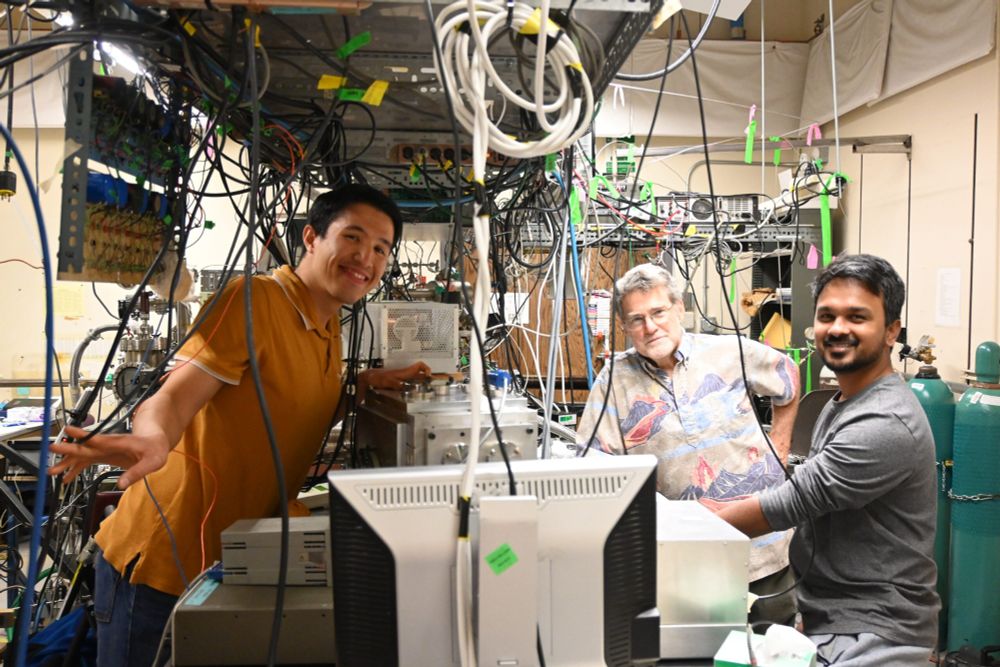
Meet Anderson’s Lab Postdocs: Q&A with Lokesh and Hugo - Department of Chemistry
We interviewed two postdoctoral fellows, Hugo Samayoa Ovied, and Lokesh Saravanan, to gain insights into what life is like as a postdoc here at U...
www.chemistry.utah.edu
May 2, 2025 at 7:41 PM
Curious about what some of our postdocs work on here at U Chem? Read our Q&A with Hugo and Lokesh from Scott Anderson's lab: