



Nima Talaei Kamalabadi
@nimatalaei.bsky.social
PhD student in Neuroscience at Western University • Hippocampus, Neuroimaging & Machine learning
Reposted by Nima Talaei Kamalabadi

This paper shows that some human "gestalt" style visual processing can emerge in purely feedforward deep nets with the right inductive biases and fine-tuning:
journals.plos.org/ploscompbiol...
🧠📈 🧪 #NeuroAI
journals.plos.org/ploscompbiol...
🧠📈 🧪 #NeuroAI

A feedforward mechanism for human-like contour integration
Author summary A central challenge in vision science is understanding how the visual system links fragmented local features into coherent object representations. One foundational process supporting th...
journals.plos.org
August 26, 2025 at 5:42 PM
This paper shows that some human "gestalt" style visual processing can emerge in purely feedforward deep nets with the right inductive biases and fine-tuning:
journals.plos.org/ploscompbiol...
🧠📈 🧪 #NeuroAI
journals.plos.org/ploscompbiol...
🧠📈 🧪 #NeuroAI
Reposted by Nima Talaei Kamalabadi
Thrilled to see our TinyRNN paper in @nature! We show how tiny RNNs predict choices of individual subjects accurately while staying fully interpretable. This approach can transform how we model cognitive processes in both healthy and disordered decisions. doi.org/10.1038/s415...
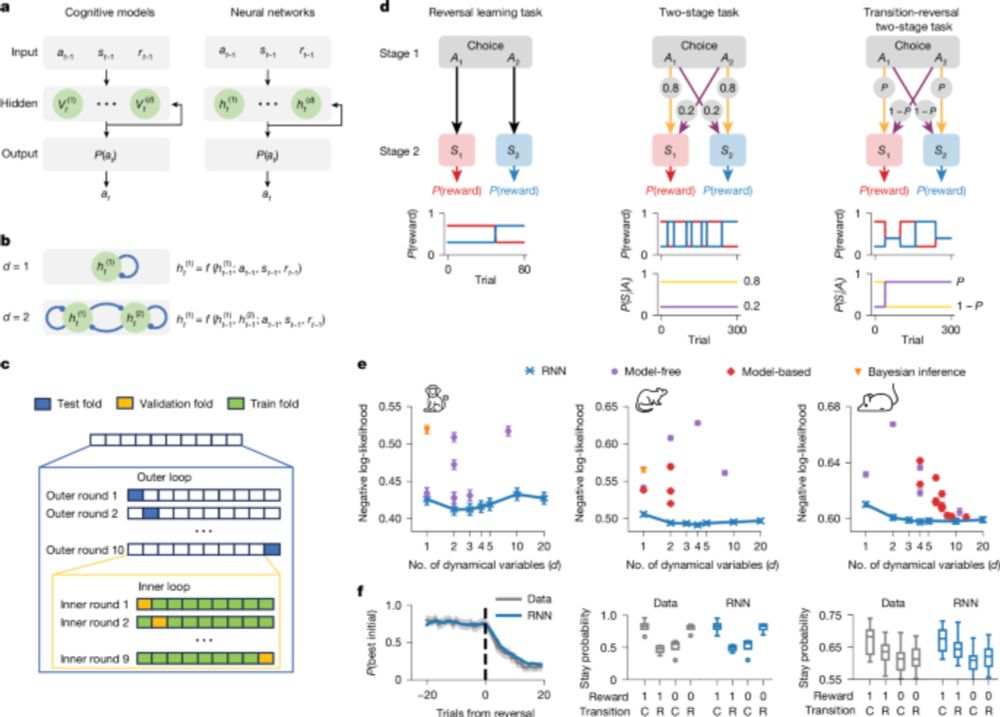
Discovering cognitive strategies with tiny recurrent neural networks - Nature
Modelling biological decision-making with tiny recurrent neural networks enables more accurate predictions of animal choices than classical cognitive models and offers insights into the underlying cog...
doi.org
July 2, 2025 at 7:03 PM
Thrilled to see our TinyRNN paper in @nature! We show how tiny RNNs predict choices of individual subjects accurately while staying fully interpretable. This approach can transform how we model cognitive processes in both healthy and disordered decisions. doi.org/10.1038/s415...
Reposted by Nima Talaei Kamalabadi
1/ Okay, one thing that has been revealed to me from the replies to this is that many people don't know (or refuse to recognize) the following fact:
The unts in ANN are actually not a terrible approximation of how real neurons work!
A tiny 🧵.
🧠📈 #NeuroAI #MLSky
The unts in ANN are actually not a terrible approximation of how real neurons work!
A tiny 🧵.
🧠📈 #NeuroAI #MLSky
Why does anyone have any issue with this?
I've seen people suggesting it's problematic, that neuroscientists won't like it, and so on.
But, I literally don't see why this is problematic...
I've seen people suggesting it's problematic, that neuroscientists won't like it, and so on.
But, I literally don't see why this is problematic...
This would be funny if it weren't sad...
Coming from the "giants" of AI.
Or maybe this was posted out of context? Please clarify.
I can't process this...
Coming from the "giants" of AI.
Or maybe this was posted out of context? Please clarify.
I can't process this...
December 16, 2024 at 8:03 PM
Reposted by Nima Talaei Kamalabadi
Okay, this is very cool: evidence from Peter Jonas' group that human CA3 follows a different logic of synaptic connectivity than rodent CA3, focussing more on sparser, but highly reliable synapses.
www.cell.com/cell/fulltex...
CC @dlevenstein.bsky.social & @repromancer.bsky.social
#neuroscience 🧪
www.cell.com/cell/fulltex...
CC @dlevenstein.bsky.social & @repromancer.bsky.social
#neuroscience 🧪
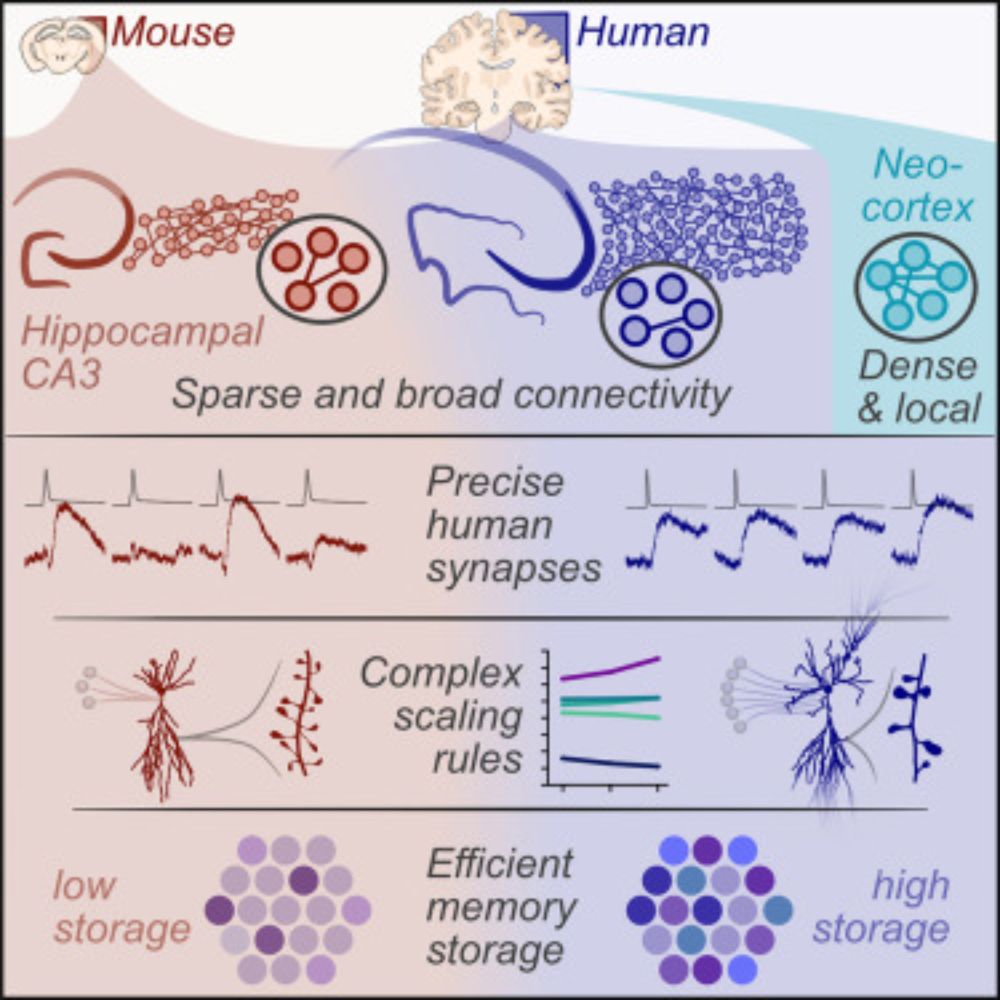
Human hippocampal CA3 uses specific functional connectivity rules for efficient associative memory
Human hippocampal CA3 networks use sparse and broad synaptic connectivity, and their
recurrent synapses employ reliability, precision, and long integration times to enhance
memory capacity. Thus, the ...
www.cell.com
January 23, 2025 at 9:38 PM
Okay, this is very cool: evidence from Peter Jonas' group that human CA3 follows a different logic of synaptic connectivity than rodent CA3, focussing more on sparser, but highly reliable synapses.
www.cell.com/cell/fulltex...
CC @dlevenstein.bsky.social & @repromancer.bsky.social
#neuroscience 🧪
www.cell.com/cell/fulltex...
CC @dlevenstein.bsky.social & @repromancer.bsky.social
#neuroscience 🧪
Reposted by Nima Talaei Kamalabadi
Today's Nobel lecture by John Hopfield is brilliant and moving. Fascinating to hear how hard he worked at finding the right problem. And how he arrived at that fateful discovery that got many of us into neuroscience. (And how it was useful that PNAS was unreviewed!)
www.youtube.com/live/lPIVl5e...
www.youtube.com/live/lPIVl5e...
YouTube
Share your videos with friends, family, and the world
www.youtube.com
December 8, 2024 at 10:24 PM
Today's Nobel lecture by John Hopfield is brilliant and moving. Fascinating to hear how hard he worked at finding the right problem. And how he arrived at that fateful discovery that got many of us into neuroscience. (And how it was useful that PNAS was unreviewed!)
www.youtube.com/live/lPIVl5e...
www.youtube.com/live/lPIVl5e...
Reposted by Nima Talaei Kamalabadi
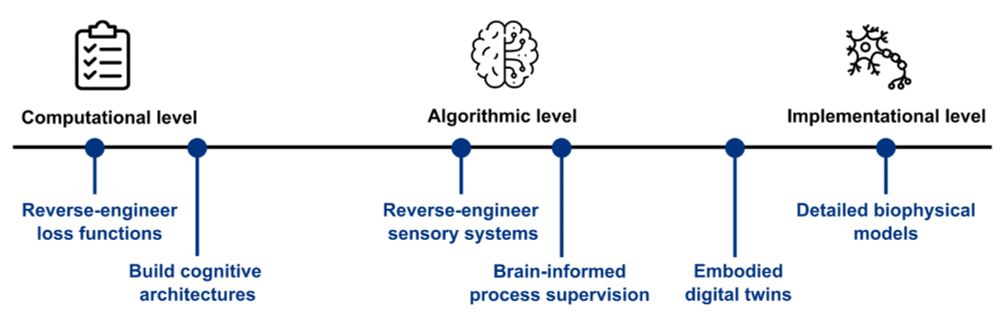
Excited to release what we’ve been working on at Amaranth Foundation, our latest whitepaper, NeuroAI for AI safety! A detailed, ambitious roadmap for how neuroscience research can help build safer AI systems while accelerating both virtual neuroscience and neurotech. 1/N
December 2, 2024 at 4:17 PM
Excited to release what we’ve been working on at Amaranth Foundation, our latest whitepaper, NeuroAI for AI safety! A detailed, ambitious roadmap for how neuroscience research can help build safer AI systems while accelerating both virtual neuroscience and neurotech. 1/N
Reposted by Nima Talaei Kamalabadi
1/ I work in #NeuroAI, a growing field of research, which many people have only the haziest conception of...
As way of introduction to this research approach, I'll provide here a very short thread outlining the definition of the field I gave recently at our BRAIN NeuroAI workshop at the NIH.
🧠📈
As way of introduction to this research approach, I'll provide here a very short thread outlining the definition of the field I gave recently at our BRAIN NeuroAI workshop at the NIH.
🧠📈
November 21, 2024 at 4:20 PM
1/ I work in #NeuroAI, a growing field of research, which many people have only the haziest conception of...
As way of introduction to this research approach, I'll provide here a very short thread outlining the definition of the field I gave recently at our BRAIN NeuroAI workshop at the NIH.
🧠📈
As way of introduction to this research approach, I'll provide here a very short thread outlining the definition of the field I gave recently at our BRAIN NeuroAI workshop at the NIH.
🧠📈