




New England Primate Conservancy
@neprimateconsrv.bsky.social
Making knowledge a pathway to compassion and conservation.
Armed with knowledge, everybody can be a conservationist!
Armed with knowledge, everybody can be a conservationist!
Join a virtual scavenger hunt across NEPC’s website and explore the world of primate conservation. Guided steps help you gather clues that reveal a mystery quote, making learning both fun and interactive. neprimateconservancy.org/conservation-exploration/

December 4, 2025 at 3:38 PM
Join a virtual scavenger hunt across NEPC’s website and explore the world of primate conservation. Guided steps help you gather clues that reveal a mystery quote, making learning both fun and interactive. neprimateconservancy.org/conservation-exploration/
Tshuapa red colobuses (Piliocolobus tholloni) are endemic to the DRC. Primarily leaf-eaters; their low-nutrient diet and complex digestive system make them slow-movers and vulnerable to hunting. Also threatened by habitat loss. Vulnerable. Photo: © Gabriel Jamie/iNaturalist/CC4.0.

December 4, 2025 at 1:04 PM
Tshuapa red colobuses (Piliocolobus tholloni) are endemic to the DRC. Primarily leaf-eaters; their low-nutrient diet and complex digestive system make them slow-movers and vulnerable to hunting. Also threatened by habitat loss. Vulnerable. Photo: © Gabriel Jamie/iNaturalist/CC4.0.
Crowned lemurs (Eulemur coronatus) are endemic to northern Madagascar. Sexually dimorphic, females are light gray with pale orange crowns, and males are reddish-brown with striking black and orange crowns. Populations are decreasing due to habitat loss and forest fragmentation. Listed as Endangered.

December 3, 2025 at 8:47 PM
Crowned lemurs (Eulemur coronatus) are endemic to northern Madagascar. Sexually dimorphic, females are light gray with pale orange crowns, and males are reddish-brown with striking black and orange crowns. Populations are decreasing due to habitat loss and forest fragmentation. Listed as Endangered.
Join us in making knowledge a pathway to compassion and conservation. Please give what you can. We are so very grateful. neprimateconservancy.org/donate/

December 2, 2025 at 4:00 PM
Join us in making knowledge a pathway to compassion and conservation. Please give what you can. We are so very grateful. neprimateconservancy.org/donate/
Discover the world of primates with this downloadable card deck—featuring 4 exciting games that bring learning to life! Dive deeper with the “Who’s in the Cards?” quick-access guide to detailed Primate Species Profiles. Play, explore, and learn!
neprimateconservancy.org/primates-and-their-habitats/
neprimateconservancy.org/primates-and-their-habitats/

December 2, 2025 at 3:10 PM
Discover the world of primates with this downloadable card deck—featuring 4 exciting games that bring learning to life! Dive deeper with the “Who’s in the Cards?” quick-access guide to detailed Primate Species Profiles. Play, explore, and learn!
neprimateconservancy.org/primates-and-their-habitats/
neprimateconservancy.org/primates-and-their-habitats/
Bicolor banded langurs (Presbytis bicolor) are endemic to Sumatra, Indonesia, living in single-male or one-male multi-female groups. Threatened by habitat conversion for agriculture and collection for the illegal pet trade. Listed as Data Deficient. Photo:© sichaoma/iNaturalist/CC4.0.

December 2, 2025 at 1:08 PM
Bicolor banded langurs (Presbytis bicolor) are endemic to Sumatra, Indonesia, living in single-male or one-male multi-female groups. Threatened by habitat conversion for agriculture and collection for the illegal pet trade. Listed as Data Deficient. Photo:© sichaoma/iNaturalist/CC4.0.
It's been a tough financial year for everyone, including us. We really need your support. Tomorrow is Giving Tuesday. Please give what you can: neprimateconservancy.org/donate/
December 1, 2025 at 1:09 PM
It's been a tough financial year for everyone, including us. We really need your support. Tomorrow is Giving Tuesday. Please give what you can: neprimateconservancy.org/donate/
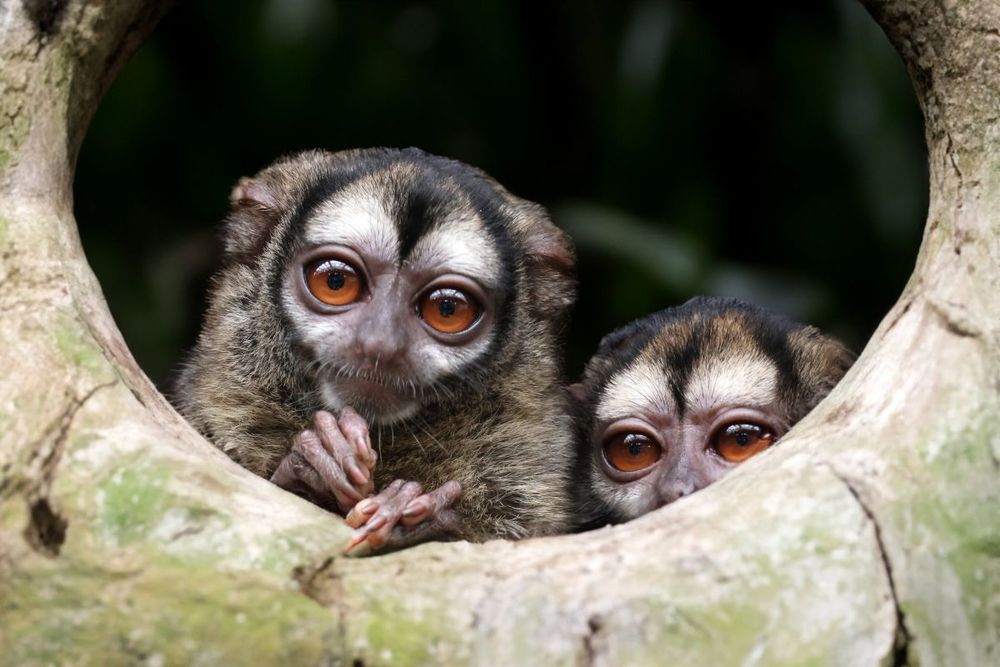
Northern night monkeys (Aotus trivirgatus), also known as three-striped night monkeys and douroucoulis, are found in Venezuela and Brazil, north of the Amazon River. They live in family groups consisting of a mated pair and their offspring. Widespread in their range, but threatened by habitat loss.
December 1, 2025 at 12:40 PM
Northern night monkeys (Aotus trivirgatus), also known as three-striped night monkeys and douroucoulis, are found in Venezuela and Brazil, north of the Amazon River. They live in family groups consisting of a mated pair and their offspring. Widespread in their range, but threatened by habitat loss.
Weddell's saddle-back tamarins (Leontocebus weddelli) are native to the lowland Amazonian forests of Bolivia, Brazil, and Peru. They generally live in groups of 2-9 and form mixed-species troops with emperor tamarins, white-lipped tamarins, and Goeldi's monkeys. Widespread in their range.

November 30, 2025 at 1:24 PM
Weddell's saddle-back tamarins (Leontocebus weddelli) are native to the lowland Amazonian forests of Bolivia, Brazil, and Peru. They generally live in groups of 2-9 and form mixed-species troops with emperor tamarins, white-lipped tamarins, and Goeldi's monkeys. Widespread in their range.
Red-handed howler monkeys (Alouatta belzebul), found in Amazonian Brazil, are dietary generalists. Soil consumption aids digestive processes and provides added nutrients. Threatened by hunting and habitat destruction. Vulnerable. Photo: © Roberto Almeida/iNaturalist/CC 4.0.

November 29, 2025 at 12:36 PM
Red-handed howler monkeys (Alouatta belzebul), found in Amazonian Brazil, are dietary generalists. Soil consumption aids digestive processes and provides added nutrients. Threatened by hunting and habitat destruction. Vulnerable. Photo: © Roberto Almeida/iNaturalist/CC 4.0.
Blue monkeys (Cercopithecus mitis) are native to an extensive geographic range across Central and East Africa. Their diverse diet and adaptability allow them to thrive in fragmented and degraded forests. Although widespread, threatened by habitat loss, human encroachment, and hunting. Least Concern.

November 28, 2025 at 3:44 PM
Blue monkeys (Cercopithecus mitis) are native to an extensive geographic range across Central and East Africa. Their diverse diet and adaptability allow them to thrive in fragmented and degraded forests. Although widespread, threatened by habitat loss, human encroachment, and hunting. Least Concern.
Hubbard's sportive lemurs (Lepilemur hubbardorum) only occur in the Zombitse-Vohibasia region of southwestern Madagascar. Nocturnal; individuals return daily to the same tree roost to sleep during the daytime. Threatened by habitat loss and unsustainable levels of hunting. Listed as Endangered.

November 27, 2025 at 1:30 PM
Hubbard's sportive lemurs (Lepilemur hubbardorum) only occur in the Zombitse-Vohibasia region of southwestern Madagascar. Nocturnal; individuals return daily to the same tree roost to sleep during the daytime. Threatened by habitat loss and unsustainable levels of hunting. Listed as Endangered.
Happy Thanksgiving to our friends in the US.
November 27, 2025 at 12:46 PM
Happy Thanksgiving to our friends in the US.
Learn the "art" of forming theories to explain their adaptations in appearance and behavior. Use the 5-step scientific method to develop and support your hypotheses. The focus is on the process of discovery rather than getting the “right” answer. neprimateconservancy.org/educated-guesses/

November 26, 2025 at 6:11 PM
Learn the "art" of forming theories to explain their adaptations in appearance and behavior. Use the 5-step scientific method to develop and support your hypotheses. The focus is on the process of discovery rather than getting the “right” answer. neprimateconservancy.org/educated-guesses/
Heck's macaques (Macaca hecki) are endemic to Indonesia's North Sulawesi province, a mountainous region with many active volcanoes. Mostly terrestrial, they live in groups of up to 30 individuals. Threatened by habitat loss and forest fragmentation. Vulnerable. Photo courtesy of © Jono Dashper.

November 26, 2025 at 2:30 PM
Heck's macaques (Macaca hecki) are endemic to Indonesia's North Sulawesi province, a mountainous region with many active volcanoes. Mostly terrestrial, they live in groups of up to 30 individuals. Threatened by habitat loss and forest fragmentation. Vulnerable. Photo courtesy of © Jono Dashper.
Black-footed gray langurs (Semnopithecus hypoleucos), also called Malabar sacred langurs, are endemic to the Western Ghats Mountains in India's southwest coast and a world heritage site rich in biodiversity. Threatened by forest degradation from human activities and hunting. Listed as Least Concern.

November 25, 2025 at 12:45 PM
Black-footed gray langurs (Semnopithecus hypoleucos), also called Malabar sacred langurs, are endemic to the Western Ghats Mountains in India's southwest coast and a world heritage site rich in biodiversity. Threatened by forest degradation from human activities and hunting. Listed as Least Concern.
This engaging lesson explores what makes rainforests unique, their extraordinary biodiversity, and their vital role in keeping Earth healthy. A video introduces the key concepts, complemented by a downloadable game and interactive lesson modules. neprimateconservancy.org/lessons-and-activities/

November 24, 2025 at 2:29 PM
This engaging lesson explores what makes rainforests unique, their extraordinary biodiversity, and their vital role in keeping Earth healthy. A video introduces the key concepts, complemented by a downloadable game and interactive lesson modules. neprimateconservancy.org/lessons-and-activities/
Guiana spider monkeys (Ateles paniscus), or black or red-faced spider monkeys, are native to Brazil, French Guiana, Guyana, Suriname, and possibly Venezuela. Long prehensile tails free up hands to grasp branches, fruits, and leaves. Threatened by habitat loss and hunting pressures. Vulnerable.

November 24, 2025 at 12:03 PM
Guiana spider monkeys (Ateles paniscus), or black or red-faced spider monkeys, are native to Brazil, French Guiana, Guyana, Suriname, and possibly Venezuela. Long prehensile tails free up hands to grasp branches, fruits, and leaves. Threatened by habitat loss and hunting pressures. Vulnerable.
Gray-shanked douc langurs (Pygathrix cinerea) are found in fragmented populations in Vietnam's central highlands. One of 3 douc langur species, differentiated by the color of their lower legs. Threatened by deforestation and hunting. Critically Endangered.

November 23, 2025 at 1:11 PM
Gray-shanked douc langurs (Pygathrix cinerea) are found in fragmented populations in Vietnam's central highlands. One of 3 douc langur species, differentiated by the color of their lower legs. Threatened by deforestation and hunting. Critically Endangered.
Vieira's titis (Plecturocebus vieirai) are endemic to Brazil in a region referred to as the “Arc of Deforestation,” with the highest rates of forest loss. Threatened by severe habitat loss due to expansion of agriculture, cattle ranching, human settlements, and infrastructure. Critically Endangered.

November 22, 2025 at 1:28 PM
Vieira's titis (Plecturocebus vieirai) are endemic to Brazil in a region referred to as the “Arc of Deforestation,” with the highest rates of forest loss. Threatened by severe habitat loss due to expansion of agriculture, cattle ranching, human settlements, and infrastructure. Critically Endangered.
Tibetan macaques (Macaca thibetana) are endemic to east-central China. The largest of the macaques. Mostly terrestrial, they prefer to sleep in caves. Threatened by habitat loss; recent halts to deforestation may bring hope for population stability. Near Threatened.

November 21, 2025 at 1:21 PM
Tibetan macaques (Macaca thibetana) are endemic to east-central China. The largest of the macaques. Mostly terrestrial, they prefer to sleep in caves. Threatened by habitat loss; recent halts to deforestation may bring hope for population stability. Near Threatened.
Golden-crowned sifakas (Propithecus tattersalli) are restricted to forest fragments in northeastern Madagascar. Their population is suspected to have endured a decline of at least 80% in three generations. Threatened by severe forest loss. Endangered. Photo: © Kyle West/iNaturalist/CC 4.0.

November 20, 2025 at 1:43 PM
Golden-crowned sifakas (Propithecus tattersalli) are restricted to forest fragments in northeastern Madagascar. Their population is suspected to have endured a decline of at least 80% in three generations. Threatened by severe forest loss. Endangered. Photo: © Kyle West/iNaturalist/CC 4.0.
Gray's sportive lemurs (Lepilemur dorsalisi)are endemic to northwestern Madagascar. Nocturnal, they spend daylight hours sleeping in tree holes and vine tangles. By night, they forage for leaves, flowers, and fruit. Their range is severely fragmented and continuing to decline. Endangered.

November 19, 2025 at 12:43 PM
Gray's sportive lemurs (Lepilemur dorsalisi)are endemic to northwestern Madagascar. Nocturnal, they spend daylight hours sleeping in tree holes and vine tangles. By night, they forage for leaves, flowers, and fruit. Their range is severely fragmented and continuing to decline. Endangered.
Niemitz's tarsiers (Tarsius niemitzi) are found on the Togian Island archipelago of Tomini Bay, Sulawesi, Indonesia. Their diet is 100% live animal prey, mainly insects and small vertebrates. Threatened by habitat loss, agricultural pesticides, and predation by domestic animals. Endangered.

November 18, 2025 at 1:08 PM
Niemitz's tarsiers (Tarsius niemitzi) are found on the Togian Island archipelago of Tomini Bay, Sulawesi, Indonesia. Their diet is 100% live animal prey, mainly insects and small vertebrates. Threatened by habitat loss, agricultural pesticides, and predation by domestic animals. Endangered.
White-cheeked macaques (Macaca leucogenys) are found in southeastern Tibet, China, and India. Unknown to science until 2015, considered one of the most important zoological discoveries of the decade. Threatened by hunting and habitat loss. Endangered. Photo: ©Shuangqi Liu/iNaturalist/CC 4.0.

November 17, 2025 at 2:06 PM
White-cheeked macaques (Macaca leucogenys) are found in southeastern Tibet, China, and India. Unknown to science until 2015, considered one of the most important zoological discoveries of the decade. Threatened by hunting and habitat loss. Endangered. Photo: ©Shuangqi Liu/iNaturalist/CC 4.0.