



New England Primate Conservancy
@neprimateconsrv.bsky.social
Making knowledge a pathway to compassion and conservation.
Armed with knowledge, everybody can be a conservationist!
Armed with knowledge, everybody can be a conservationist!
In a world with 6,700 mammal species, how can you tell which ones are primates? As part of our "Discovering Primates: A Video Journey" series for younger learners, "WHO are Primates?" looks at which species belong to which primate groups. You might be surprised! youtu.be/Ne_gzf2Ur4U

WHO are Primates?
YouTube video by New England Primate Conservancy
youtu.be
February 17, 2026 at 2:11 PM
In a world with 6,700 mammal species, how can you tell which ones are primates? As part of our "Discovering Primates: A Video Journey" series for younger learners, "WHO are Primates?" looks at which species belong to which primate groups. You might be surprised! youtu.be/Ne_gzf2Ur4U
Eastern lesser bamboo lemurs (Hapalemur griseus), also called gray bamboo lemurs, are native to eastern regions of Madagascar. They live near and among bamboo and eat bamboo stalks and vines. One of the most hunted of all lemurs. Threatened by habitat loss and unsustainable hunting. Vulnerable.

February 17, 2026 at 12:44 PM
Eastern lesser bamboo lemurs (Hapalemur griseus), also called gray bamboo lemurs, are native to eastern regions of Madagascar. They live near and among bamboo and eat bamboo stalks and vines. One of the most hunted of all lemurs. Threatened by habitat loss and unsustainable hunting. Vulnerable.
Chimpanzees, like humans, use facial expressions to convey emotions and communicate. Sometimes their expressions look like ours and can even mean the same thing. Other times, they mean something entirely different! Color and Explore. neprimateconservancy.org/color-me-chimpanzee/

February 16, 2026 at 6:53 PM
Chimpanzees, like humans, use facial expressions to convey emotions and communicate. Sometimes their expressions look like ours and can even mean the same thing. Other times, they mean something entirely different! Color and Explore. neprimateconservancy.org/color-me-chimpanzee/
Bemaraha woolly lemurs (Avahi cleesei), also known as John Cleese's avahi; named for the English comedian's (Monty Python fame) efforts to protect lemurs. Their geographic range is severely fragmented and experiencing ongoing decline. Photo: ©ttso/iNaturalist.CC4.0. Critically Endangered

February 16, 2026 at 1:33 PM
Bemaraha woolly lemurs (Avahi cleesei), also known as John Cleese's avahi; named for the English comedian's (Monty Python fame) efforts to protect lemurs. Their geographic range is severely fragmented and experiencing ongoing decline. Photo: ©ttso/iNaturalist.CC4.0. Critically Endangered
Golden-faced sakis (Pithecia chrysocephala) are endemic to Brazil. Fairly small monkeys, their long, coarse, fluffy hair easily piloerects when they are approached, making them appear larger than they are. Their populations appear stable.
youtu.be/ebfnZJsWuWc
youtu.be/ebfnZJsWuWc

Golden-Faced Saki—Puff Up Their Hair to Appear Larger
YouTube video by New England Primate Conservancy
youtu.be
February 15, 2026 at 6:49 PM
Golden-faced sakis (Pithecia chrysocephala) are endemic to Brazil. Fairly small monkeys, their long, coarse, fluffy hair easily piloerects when they are approached, making them appear larger than they are. Their populations appear stable.
youtu.be/ebfnZJsWuWc
youtu.be/ebfnZJsWuWc
Hamlyn's monkeys (Cercopithecus hamlyni), also called owl-faced guenons for their white vertical nose stripe, yellow browband, and rounded face highlighted by specks of yellow, live at high altitudes in dense bamboo forests of DR Congo and Rwanda. Threatened by habitat loss and hunting. Vulnerable.

February 14, 2026 at 12:52 PM
Hamlyn's monkeys (Cercopithecus hamlyni), also called owl-faced guenons for their white vertical nose stripe, yellow browband, and rounded face highlighted by specks of yellow, live at high altitudes in dense bamboo forests of DR Congo and Rwanda. Threatened by habitat loss and hunting. Vulnerable.
Happy Valentine's Day!

February 14, 2026 at 12:28 PM
Happy Valentine's Day!
Black-faced lion tamarins (Leontopithecus caissara) are endemic to Brazil, occupying the southernmost limits of distribution of marmosets and tamarins in the Atlantic Forest. The estimated remaining total population is 250 mature individuals. Listed as Endangered.

February 13, 2026 at 2:54 PM
Black-faced lion tamarins (Leontopithecus caissara) are endemic to Brazil, occupying the southernmost limits of distribution of marmosets and tamarins in the Atlantic Forest. The estimated remaining total population is 250 mature individuals. Listed as Endangered.
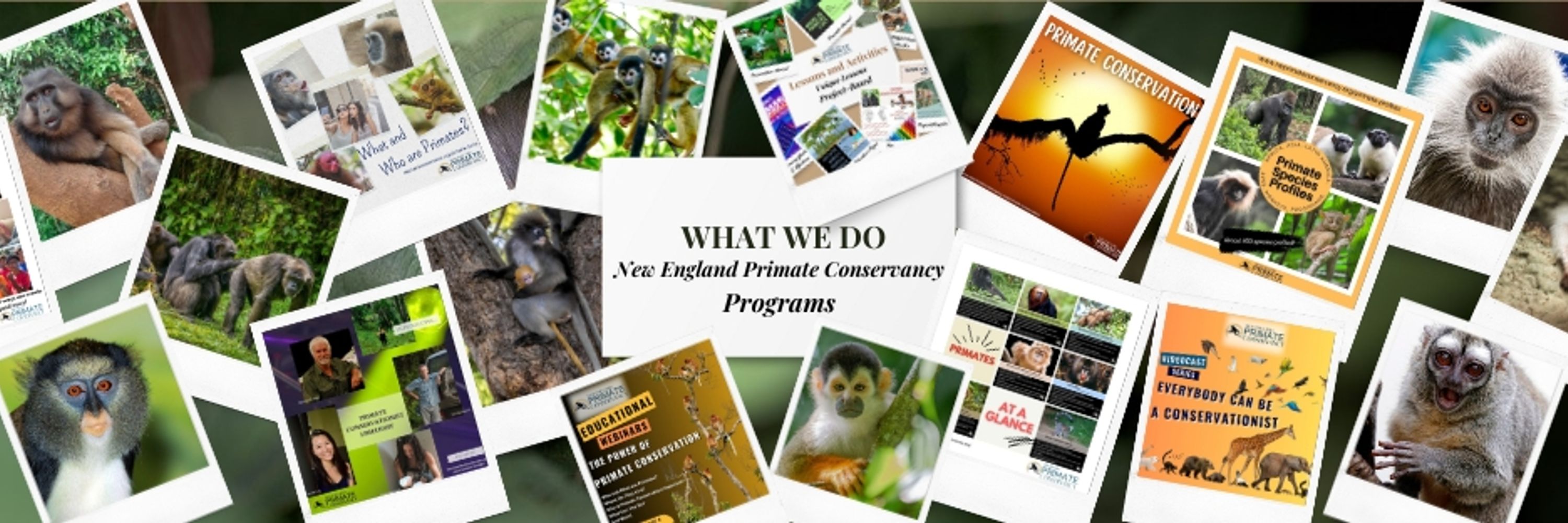
New England Primate Conservancy's programs build knowledge and inspire compassion that drives conservation.

February 12, 2026 at 3:13 PM
New England Primate Conservancy's programs build knowledge and inspire compassion that drives conservation.
Randrianasolo's sportive lemurs (Lepilemur randrianasoloi) are native to central-western Madagascar. They live in dry, deciduous forests that are threatened by unsustainable agricultural practices. Threatened by severe forest fragmentation and habitat loss. Listed as Endangered.

February 12, 2026 at 1:51 PM
Randrianasolo's sportive lemurs (Lepilemur randrianasoloi) are native to central-western Madagascar. They live in dry, deciduous forests that are threatened by unsustainable agricultural practices. Threatened by severe forest fragmentation and habitat loss. Listed as Endangered.
This video delves into the hidden strategies, astonishing adaptations, and deep interconnections that enable life on Earth to persist. From the smallest insects to the towering giants of the wild — it’s all part of the great tapestry of survival. youtu.be/_JOg2cbyKjA

Protecting Nature, Preserving Life—Nature's Secrets to Survival!!!
YouTube video by New England Primate Conservancy
youtu.be
February 11, 2026 at 3:56 PM
This video delves into the hidden strategies, astonishing adaptations, and deep interconnections that enable life on Earth to persist. From the smallest insects to the towering giants of the wild — it’s all part of the great tapestry of survival. youtu.be/_JOg2cbyKjA
Robinson's banded langurs (Presbytis robinsoni) are found in Peninsular Malaysia, Thailand, and Myanmar. Threatened by deforestation, habitat conversion, and forest fragmentation. Particularly affected by oil palm plantations, which are expanding very rapidly within their range. Near Threatened.

February 11, 2026 at 12:37 PM
Robinson's banded langurs (Presbytis robinsoni) are found in Peninsular Malaysia, Thailand, and Myanmar. Threatened by deforestation, habitat conversion, and forest fragmentation. Particularly affected by oil palm plantations, which are expanding very rapidly within their range. Near Threatened.
Tarsiers are among the world’s most unusual animals! They are surely the most unique primates. Mostly solitary and the only fully carnivorous primates. They can turn their heads 180° on each side, and they can hunt in darkness by hearing their prey. They are perfect predators. youtu.be/6y9dpO6jW6Y

Tarsiers...In a Nutshell
YouTube video by New England Primate Conservancy
youtu.be
February 10, 2026 at 6:22 PM
Tarsiers are among the world’s most unusual animals! They are surely the most unique primates. Mostly solitary and the only fully carnivorous primates. They can turn their heads 180° on each side, and they can hunt in darkness by hearing their prey. They are perfect predators. youtu.be/6y9dpO6jW6Y
Eastern woolly lemurs (Avahi laniger) are native to Madagascar's east coast in moist rainforests. They live in monogamous family groups that maintain long-lasting bonds. They are arboreal (live in trees) and nocturnal. Threatened by habitat loss and hunting for bushmeat. Listed as Vulnerable.

February 10, 2026 at 12:57 PM
Eastern woolly lemurs (Avahi laniger) are native to Madagascar's east coast in moist rainforests. They live in monogamous family groups that maintain long-lasting bonds. They are arboreal (live in trees) and nocturnal. Threatened by habitat loss and hunting for bushmeat. Listed as Vulnerable.
Meet the lorises—some of the most unusual primates on Earth and perfectly tuned to life after sunset. With enormous eyes, a vise-like grip, and stealthy movements, they navigate the canopy in near silence. Their adaptations tell a powerful story of evolution and survival.
youtu.be/iw29AdEwjuo
youtu.be/iw29AdEwjuo

Lorises—Small, Secretive, and Full of Surprises
YouTube video by New England Primate Conservancy
youtu.be
February 9, 2026 at 3:53 PM
Meet the lorises—some of the most unusual primates on Earth and perfectly tuned to life after sunset. With enormous eyes, a vise-like grip, and stealthy movements, they navigate the canopy in near silence. Their adaptations tell a powerful story of evolution and survival.
youtu.be/iw29AdEwjuo
youtu.be/iw29AdEwjuo
The endangered and little-studied Rondo dwarf galago.
youtu.be/nIrCNeTMvBU
youtu.be/nIrCNeTMvBU

Rondo Dwarf Galago—Not well studied
YouTube video by New England Primate Conservancy
youtu.be
February 9, 2026 at 1:29 PM
The endangered and little-studied Rondo dwarf galago.
youtu.be/nIrCNeTMvBU
youtu.be/nIrCNeTMvBU
Allen's Squirrel Galago. They leap vertically at nearly 14 times their body length.
youtu.be/QdarrVBRbiM
youtu.be/QdarrVBRbiM

Allen's Squirrel Galago—Make Vertical Leaps at Nearly 14 Times Their Body Length
YouTube video by New England Primate Conservancy
youtu.be
February 8, 2026 at 2:04 PM
Allen's Squirrel Galago. They leap vertically at nearly 14 times their body length.
youtu.be/QdarrVBRbiM
youtu.be/QdarrVBRbiM
Spectral tarsiers (Tarsius tarsier), also called eastern tarsiers, are endemic to Sulawesi, Indonesia. Small nocturnal carnivores. Spectral tarsier populations have steadily declined, and continue to decline, as human activity drastically reshapes Sulawesi's landscape. Listed as Vulnerable.

February 7, 2026 at 3:36 PM
Spectral tarsiers (Tarsius tarsier), also called eastern tarsiers, are endemic to Sulawesi, Indonesia. Small nocturnal carnivores. Spectral tarsier populations have steadily declined, and continue to decline, as human activity drastically reshapes Sulawesi's landscape. Listed as Vulnerable.
Chacma baboons (Papio ursinus) are found in Southern Africa. They occupy forests, savannas, shrublands, and grasslands. They aerate soil while foraging for tubers and roots, exposing nutrients otherwise unavailable to some larger animals. Widespread and abundant, they face no major threats.

February 6, 2026 at 12:29 PM
Chacma baboons (Papio ursinus) are found in Southern Africa. They occupy forests, savannas, shrublands, and grasslands. They aerate soil while foraging for tubers and roots, exposing nutrients otherwise unavailable to some larger animals. Widespread and abundant, they face no major threats.
Lemurs are the prosimian primates of Madagascar and found nowhere else in the world. More than 110 lemur species inhabit this island nation through a wide variety of ecosystems. With 98% of lemurs threatened with extinction, they are the world’s most endangered primate group.
youtu.be/2i3SHCDex5A
youtu.be/2i3SHCDex5A

Lemurs—Prosimians of Madagascar
YouTube video by New England Primate Conservancy
youtu.be
February 5, 2026 at 3:45 PM
Lemurs are the prosimian primates of Madagascar and found nowhere else in the world. More than 110 lemur species inhabit this island nation through a wide variety of ecosystems. With 98% of lemurs threatened with extinction, they are the world’s most endangered primate group.
youtu.be/2i3SHCDex5A
youtu.be/2i3SHCDex5A
Amazon black howlers (Alouatta nigerrima) are endemic to Brazil. Deep jaws surround their enlarged larynx and hyoid bone to produce their characteristic howls. Threatened by hunting and habitat loss. Least Concern. Photo: ©Leonardo Merçon/iNaturalist/CC4.0.

February 5, 2026 at 1:15 PM
Amazon black howlers (Alouatta nigerrima) are endemic to Brazil. Deep jaws surround their enlarged larynx and hyoid bone to produce their characteristic howls. Threatened by hunting and habitat loss. Least Concern. Photo: ©Leonardo Merçon/iNaturalist/CC4.0.
Northern yellow-cheeked crested gibbons (Nomascus annamensis) are native to Cambodia, Lao PDR, and Vietnam. They live in monogamous family groups of parents and offspring. Threatened by habitat loss, habitat degradation, hunting, and the pet trade. Listed as Endangered.

February 4, 2026 at 2:46 PM
Northern yellow-cheeked crested gibbons (Nomascus annamensis) are native to Cambodia, Lao PDR, and Vietnam. They live in monogamous family groups of parents and offspring. Threatened by habitat loss, habitat degradation, hunting, and the pet trade. Listed as Endangered.
The prosimians of mainland Africa are generally not very well known. They’re not particularly charismatic. But they’re so unique! All nocturnal, these small primates and their unusual lifestyles will surely surprise you. Find out about them here!
youtu.be/tvUYkD6ledw
youtu.be/tvUYkD6ledw

Pottos, Galagos, and Angwantibos—Mainland Africa's Prosimians
YouTube video by New England Primate Conservancy
youtu.be
February 3, 2026 at 3:58 PM
The prosimians of mainland Africa are generally not very well known. They’re not particularly charismatic. But they’re so unique! All nocturnal, these small primates and their unusual lifestyles will surely surprise you. Find out about them here!
youtu.be/tvUYkD6ledw
youtu.be/tvUYkD6ledw
White-cheeked spider monkeys (Ateles marginatus) are endemic to Brazil's Amazon Basin. They enjoy the many fruits that comprise 83% of their diet. As seed dispersers, they are critical to the life cycle of the plants whose fruits they consume. Threatened by habitat loss and hunting. Endangered.

February 3, 2026 at 2:04 PM
White-cheeked spider monkeys (Ateles marginatus) are endemic to Brazil's Amazon Basin. They enjoy the many fruits that comprise 83% of their diet. As seed dispersers, they are critical to the life cycle of the plants whose fruits they consume. Threatened by habitat loss and hunting. Endangered.
