



@michael-s-marshall.bsky.social
12) Thank you to Scottish Federation of Housing Associations, Shelter Scotland and CIH Scotland for commissioning the research. And thanks to my co-authors - Craig Watkins, Berna Keskin, Richard Dunning, Ed Ferrari and @kengibb.bsky.social. @housingevidence.bsky.social. End.
September 24, 2025 at 12:21 PM
12) Thank you to Scottish Federation of Housing Associations, Shelter Scotland and CIH Scotland for commissioning the research. And thanks to my co-authors - Craig Watkins, Berna Keskin, Richard Dunning, Ed Ferrari and @kengibb.bsky.social. @housingevidence.bsky.social. End.
11) The reason for the difference in the budgetary figures is purely down to differences in the number of homes. Our research suggests 9,000 homes annually will be not be sufficient to meet affordable housing need, even at the lowest range of our estimates.
September 24, 2025 at 12:21 PM
11) The reason for the difference in the budgetary figures is purely down to differences in the number of homes. Our research suggests 9,000 homes annually will be not be sufficient to meet affordable housing need, even at the lowest range of our estimates.
10) Yet the Government's funding commitment is £415mn short of our annual budget. On a per home basis, the Government's commitment is similar (if not more generous) than ours. So there's agreement that grant rates need to increase following a recent dip in delivery.

September 24, 2025 at 12:21 PM
10) Yet the Government's funding commitment is £415mn short of our annual budget. On a per home basis, the Government's commitment is similar (if not more generous) than ours. So there's agreement that grant rates need to increase following a recent dip in delivery.
9) Recently the Scottish Government announced an investment of £4.9bn over four years to deliver 36,000 affordable homes. Increased investment is of course welcome and a step in right direction. www.gov.scot/publications...

Tackling Scotland's Housing Emergency
Building on the significant progress made to date, the Housing Emergency Action Plan sets out new, enhanced and accelerated actions - reflecting our determination to go further and faster in our commi...
www.gov.scot
September 24, 2025 at 12:21 PM
9) Recently the Scottish Government announced an investment of £4.9bn over four years to deliver 36,000 affordable homes. Increased investment is of course welcome and a step in right direction. www.gov.scot/publications...
8) The figures for need underline the urgent investment required in social housing supply in Scotland. Based upon the existing affordable housing benchmarks in Scotland, uprated for plausible inflationary scenarios, we estimate the 5-year budget needs to be between £8-9.2bn.
September 24, 2025 at 12:21 PM
8) The figures for need underline the urgent investment required in social housing supply in Scotland. Based upon the existing affordable housing benchmarks in Scotland, uprated for plausible inflationary scenarios, we estimate the 5-year budget needs to be between £8-9.2bn.
7) There has been a decline in annual lettings within the social sector in recent years, affecting the sector's capacity to meet need through turnover in existing stock. But this is primarily due to fewer homes becoming vacant annually, not longer void periods.

September 24, 2025 at 12:21 PM
7) There has been a decline in annual lettings within the social sector in recent years, affecting the sector's capacity to meet need through turnover in existing stock. But this is primarily due to fewer homes becoming vacant annually, not longer void periods.
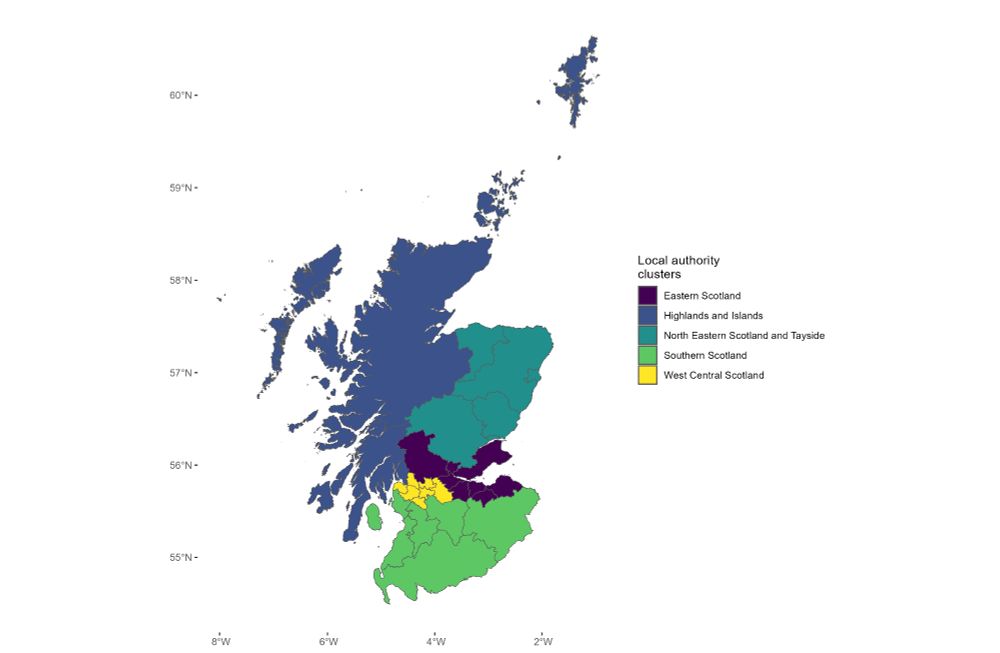
6) The geography of need is stark. In absolute terms, over 50% of affordable housing need is in the Eastern Scotland region. When measured as housing need per 1,000 households, Highlands and Islands has the second highest need.
September 24, 2025 at 12:21 PM
6) The geography of need is stark. In absolute terms, over 50% of affordable housing need is in the Eastern Scotland region. When measured as housing need per 1,000 households, Highlands and Islands has the second highest need.
5) Affordability will also affect newly forming households over the next parliamentary term. We estimate that 55% of newly formed households will be unable to afford market housing. And this pressure will be felt unevenly due to regional variation in affordability.

September 24, 2025 at 12:21 PM
5) Affordability will also affect newly forming households over the next parliamentary term. We estimate that 55% of newly formed households will be unable to afford market housing. And this pressure will be felt unevenly due to regional variation in affordability.
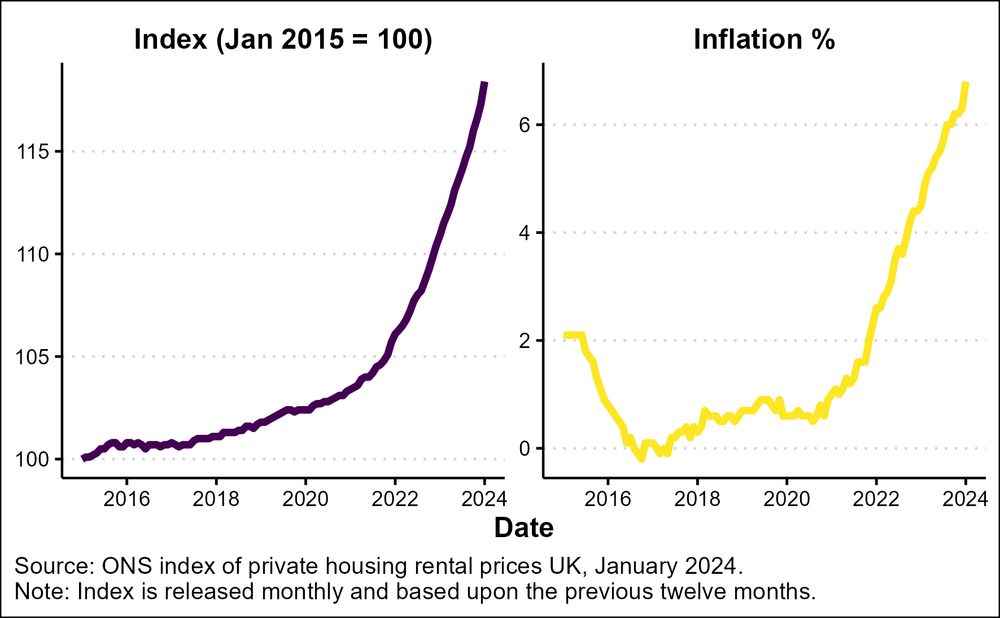
4) There has also been an increase in households in the private sector living with disrepair and in homes unsuitable for their health needs. Plus, 36.5% of these households are in affordability stress following the cost of living crisis and rental inflation.
September 24, 2025 at 12:21 PM
4) There has also been an increase in households in the private sector living with disrepair and in homes unsuitable for their health needs. Plus, 36.5% of these households are in affordability stress following the cost of living crisis and rental inflation.
3) Rising homelessness is a key driver of need. The number of open homelessness cases has risen by 45.5% relative to previous research conducted in 2020. As this graph shows, this has been associated with a dramatic increase in households in temporary accommodation.

September 24, 2025 at 12:21 PM
3) Rising homelessness is a key driver of need. The number of open homelessness cases has risen by 45.5% relative to previous research conducted in 2020. As this graph shows, this has been associated with a dramatic increase in households in temporary accommodation.
2) Headline findings:
🏠 15,693 affordable homes required annually
🏠 £1.64bn required annually to fund the programme
🏠 The requirement could vary between 11,254 and 19,493 homes annually depending upon demographic trends and market conditions
🏠 15,693 affordable homes required annually
🏠 £1.64bn required annually to fund the programme
🏠 The requirement could vary between 11,254 and 19,493 homes annually depending upon demographic trends and market conditions
September 24, 2025 at 12:21 PM
2) Headline findings:
🏠 15,693 affordable homes required annually
🏠 £1.64bn required annually to fund the programme
🏠 The requirement could vary between 11,254 and 19,493 homes annually depending upon demographic trends and market conditions
🏠 15,693 affordable homes required annually
🏠 £1.64bn required annually to fund the programme
🏠 The requirement could vary between 11,254 and 19,493 homes annually depending upon demographic trends and market conditions
The report is available on the @thinkhouseinfo.bsky.social repository of housing research!
www.thinkhouse.org.uk/site/assets/...
www.thinkhouse.org.uk/site/assets/...
www.thinkhouse.org.uk
August 20, 2025 at 3:00 PM
The report is available on the @thinkhouseinfo.bsky.social repository of housing research!
www.thinkhouse.org.uk/site/assets/...
www.thinkhouse.org.uk/site/assets/...
I agree. It's not as much the decline in the physical existence of spaces or the existence of institutions - unions still exist obviously. It's more the decline in participation and engagement - driven by big social, economic and demographic trends - and poor substitutes, some of which are online.
July 29, 2025 at 11:24 AM
I agree. It's not as much the decline in the physical existence of spaces or the existence of institutions - unions still exist obviously. It's more the decline in participation and engagement - driven by big social, economic and demographic trends - and poor substitutes, some of which are online.
Admittedly this is based only on my anecdotal reading of the situation - my grandparents were members of all of the above, I'm a member of none. So I'd be interested to see more research/data on it. But in any case I don't think either pubs or cafes are the main story here.
July 29, 2025 at 10:16 AM
Admittedly this is based only on my anecdotal reading of the situation - my grandparents were members of all of the above, I'm a member of none. So I'd be interested to see more research/data on it. But in any case I don't think either pubs or cafes are the main story here.
I think a decline in civil society spaces has contributed. Lost opportunities for building of social capital, trust in institutions, and sense of control over change. But I think the report is focusing on wrong spaces/institutions. I'd look more at unions, churches, co-ops, working clubs etc.
July 29, 2025 at 10:16 AM
I think a decline in civil society spaces has contributed. Lost opportunities for building of social capital, trust in institutions, and sense of control over change. But I think the report is focusing on wrong spaces/institutions. I'd look more at unions, churches, co-ops, working clubs etc.
Reposted

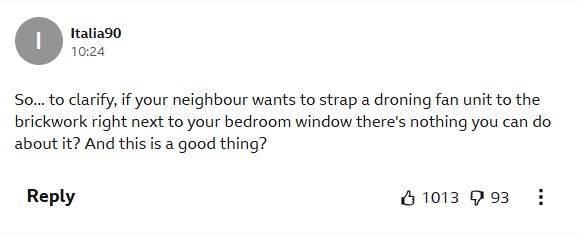
Actually Italia90, to clarify... no.
Heat pumps still have to pass a noise test (called MCS 020) which ensures they do not make a sound above 37 decibels at the nearest neighbouring window.
That's quieter than a library, apparently.
Heat pumps still have to pass a noise test (called MCS 020) which ensures they do not make a sound above 37 decibels at the nearest neighbouring window.
That's quieter than a library, apparently.
May 29, 2025 at 1:59 PM
Actually Italia90, to clarify... no.
Heat pumps still have to pass a noise test (called MCS 020) which ensures they do not make a sound above 37 decibels at the nearest neighbouring window.
That's quieter than a library, apparently.
Heat pumps still have to pass a noise test (called MCS 020) which ensures they do not make a sound above 37 decibels at the nearest neighbouring window.
That's quieter than a library, apparently.