


Martina Adamek
@martinaadamek.bsky.social
Reposted by Martina Adamek
Want to know how diverse soil really is?
Our ultra deep sequencing is now published in GigaScience: academic.oup.com/gigascience/...
Soil is wild! Thanks for leading the study @canerbagci.bsky.social
#secmet #soil #metagenomics #bacterialdiversity
Our ultra deep sequencing is now published in GigaScience: academic.oup.com/gigascience/...
Soil is wild! Thanks for leading the study @canerbagci.bsky.social
#secmet #soil #metagenomics #bacterialdiversity

Ultra-deep long-read metagenomics captures diverse taxonomic and biosynthetic potential of soil microbes
AbstractBackground. Soil ecosystems have long been recognised as hotspots of microbial diversity, but most estimates of their microbial and functional comp
academic.oup.com
October 28, 2025 at 3:08 PM
Want to know how diverse soil really is?
Our ultra deep sequencing is now published in GigaScience: academic.oup.com/gigascience/...
Soil is wild! Thanks for leading the study @canerbagci.bsky.social
#secmet #soil #metagenomics #bacterialdiversity
Our ultra deep sequencing is now published in GigaScience: academic.oup.com/gigascience/...
Soil is wild! Thanks for leading the study @canerbagci.bsky.social
#secmet #soil #metagenomics #bacterialdiversity
Reposted by Martina Adamek
Happy to share our newest manuscript about the discovery and hererologous expression of metanodin, a new lassopeptide with unprecedented structural features directly from soil metagenomes. pubs.acs.org/doi/full/10....
#secmet #lassopeptides #syntheticbiology
#secmet #lassopeptides #syntheticbiology

Discovery and Heterologous Expression of the Soil Metagenome-Derived Lasso Peptide Metanodin with an Unprecedented Ring Structure
Culture-independent metagenomic approaches have proven to be effective tools for identifying previously hidden biosynthetic gene clusters (BGCs) encoding novel natural products with potential medical relevance. However, producing these compounds remains challenging as metagenomic BGCs often originate from organisms phylogenetically distant from available heterologous hosts. Lasso peptides, a subclass of ribosomally synthesized and post-translationally modified peptide (RiPP) natural products, exhibit diverse bioactivities, yet no lasso peptide has previously been discovered directly from a metagenome. Here, we report the discovery and heterologous expression of the first soil metagenome-derived lasso peptide. Expression of its biosynthetic gene cluster in Escherichia coli, followed by mass spectrometry analysis, strongly supported the predicted amino acid sequence and lasso structure of the peptide. Notably, this lasso peptide is the first to feature asparagine as the ring-forming residue at position one. Taxonomic analysis of the corresponding BGC identified an uncultivated member of the Steroidobacterales family (Gammaproteobacteria) as the closest known relative of the potential native host. These findings underscore the potential of metagenomic genome mining to reveal structurally novel RiPPs and to expand our understanding of the natural diversity of lasso peptides.
pubs.acs.org
October 28, 2025 at 2:39 PM
Happy to share our newest manuscript about the discovery and hererologous expression of metanodin, a new lassopeptide with unprecedented structural features directly from soil metagenomes. pubs.acs.org/doi/full/10....
#secmet #lassopeptides #syntheticbiology
#secmet #lassopeptides #syntheticbiology
Reposted by Martina Adamek
⏰ Just 7 days left for our Glycopeptide Renaming Challenge!
💡 Share your best name idea and win 500€
👉 More info and submission here: docs.google.com/forms/d/1ym9...
#secmet #NaturalProducts #Antibiotics #NamingChallenge #Glycopeptides @gdwantibiotics.bsky.social @marghesosio.bsky.social
💡 Share your best name idea and win 500€
👉 More info and submission here: docs.google.com/forms/d/1ym9...
#secmet #NaturalProducts #Antibiotics #NamingChallenge #Glycopeptides @gdwantibiotics.bsky.social @marghesosio.bsky.social

Naming Challenge: Help Redefine the Glycopeptide Family!
We are excited to launch a naming competition inspired by the recent preprint "Phylogenetic distance and structural diversity directing a reclassification of glycopeptide antibiotics" (https://www.bio...
docs.google.com
September 8, 2025 at 12:14 PM
⏰ Just 7 days left for our Glycopeptide Renaming Challenge!
💡 Share your best name idea and win 500€
👉 More info and submission here: docs.google.com/forms/d/1ym9...
#secmet #NaturalProducts #Antibiotics #NamingChallenge #Glycopeptides @gdwantibiotics.bsky.social @marghesosio.bsky.social
💡 Share your best name idea and win 500€
👉 More info and submission here: docs.google.com/forms/d/1ym9...
#secmet #NaturalProducts #Antibiotics #NamingChallenge #Glycopeptides @gdwantibiotics.bsky.social @marghesosio.bsky.social
Reposted by Martina Adamek
Check out the Ziemert Lab’s new YouTube channel
m.youtube.com/@ZiemertLab
We’ve uploaded short tutorial videos on how to use our tools for genome mining and natural product discovery.
Thanks Semih, @martinaadamek.bsky.social @turgutmesut.bsky.social ! #GenomeMining #SecMet #naturalproducts
m.youtube.com/@ZiemertLab
We’ve uploaded short tutorial videos on how to use our tools for genome mining and natural product discovery.
Thanks Semih, @martinaadamek.bsky.social @turgutmesut.bsky.social ! #GenomeMining #SecMet #naturalproducts
ZiemertLab
The Ziemert lab is interested in the evolution and distribution of bacterial secondary metabolites. These bioactive compounds are especially important in human medicine as the chemical scaffolds are t...
m.youtube.com
July 8, 2025 at 8:09 PM
Check out the Ziemert Lab’s new YouTube channel
m.youtube.com/@ZiemertLab
We’ve uploaded short tutorial videos on how to use our tools for genome mining and natural product discovery.
Thanks Semih, @martinaadamek.bsky.social @turgutmesut.bsky.social ! #GenomeMining #SecMet #naturalproducts
m.youtube.com/@ZiemertLab
We’ve uploaded short tutorial videos on how to use our tools for genome mining and natural product discovery.
Thanks Semih, @martinaadamek.bsky.social @turgutmesut.bsky.social ! #GenomeMining #SecMet #naturalproducts
Reposted by Martina Adamek

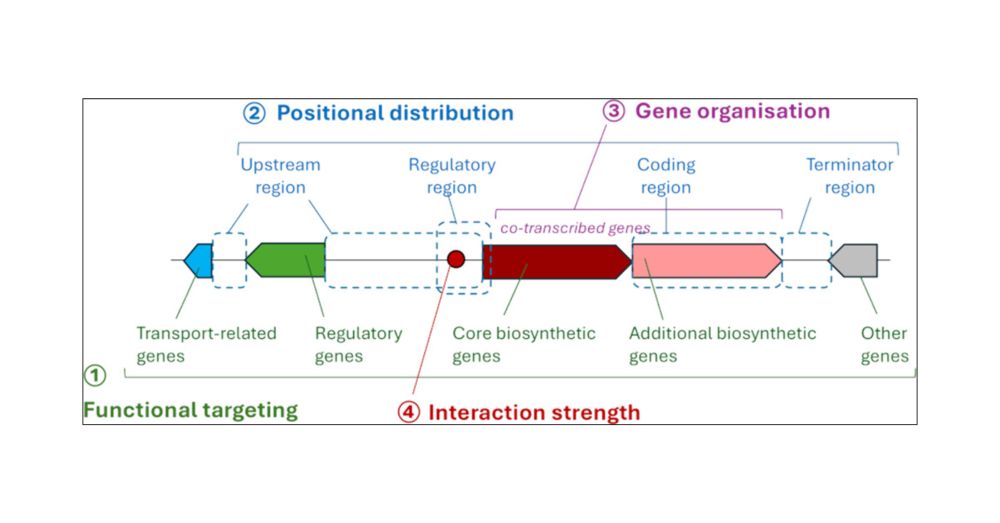
Useful paper: "The Transcriptional Architecture of Bacterial Biosynthetic Gene Clusters" #microsky #streptomyces
pubs.acs.org/doi/abs/10.1...
pubs.acs.org/doi/abs/10.1...
The Transcriptional Architecture of Bacterial Biosynthetic Gene Clusters
Bacterial biosynthetic gene clusters (BGCs) drive the production of diverse bioactive specialized metabolites regulated by transcription factors (TFs) in response to environmental signals. In this met...
pubs.acs.org
July 1, 2025 at 8:47 AM
Useful paper: "The Transcriptional Architecture of Bacterial Biosynthetic Gene Clusters" #microsky #streptomyces
pubs.acs.org/doi/abs/10.1...
pubs.acs.org/doi/abs/10.1...
Reposted by Martina Adamek

🚨 Naming Challenge:
Help redefine the #glycopeptide family!
🏆Submit your idea & win 500 € + authorship credit
Let’s rethink antibiotic classification—together!
🧬 Deadline: Sept 15, 2025
👉 docs.google.com/forms/d/e/1F...
@nadineziemert.bsky.social #NameChallenge #NaturalProducts #Antibiotics
Help redefine the #glycopeptide family!
🏆Submit your idea & win 500 € + authorship credit
Let’s rethink antibiotic classification—together!
🧬 Deadline: Sept 15, 2025
👉 docs.google.com/forms/d/e/1F...
@nadineziemert.bsky.social #NameChallenge #NaturalProducts #Antibiotics

June 30, 2025 at 7:42 AM
🚨 Naming Challenge:
Help redefine the #glycopeptide family!
🏆Submit your idea & win 500 € + authorship credit
Let’s rethink antibiotic classification—together!
🧬 Deadline: Sept 15, 2025
👉 docs.google.com/forms/d/e/1F...
@nadineziemert.bsky.social #NameChallenge #NaturalProducts #Antibiotics
Help redefine the #glycopeptide family!
🏆Submit your idea & win 500 € + authorship credit
Let’s rethink antibiotic classification—together!
🧬 Deadline: Sept 15, 2025
👉 docs.google.com/forms/d/e/1F...
@nadineziemert.bsky.social #NameChallenge #NaturalProducts #Antibiotics
Reposted by Martina Adamek

Always happy to see new compounds from Amycolatopsis, even more when they're dragons. 🐉 ❤️
Dracomicins, Hybrid Oligosaccharide–Nonribosomal Peptide Antibiotics from Amycolatopsis Species
pubs.acs.org/doi/10.1021/...
pubs.acs.org/doi/10.1021/...

June 18, 2025 at 1:53 PM
Always happy to see new compounds from Amycolatopsis, even more when they're dragons. 🐉 ❤️
Reposted by Martina Adamek
Hey fellow Germany-based scientists! There‘s an open letter from @de.scientists4future.org that you can sign until tomorrow 10am: www.bayceer.uni-bayreuth.de/s4f/de/top/o...
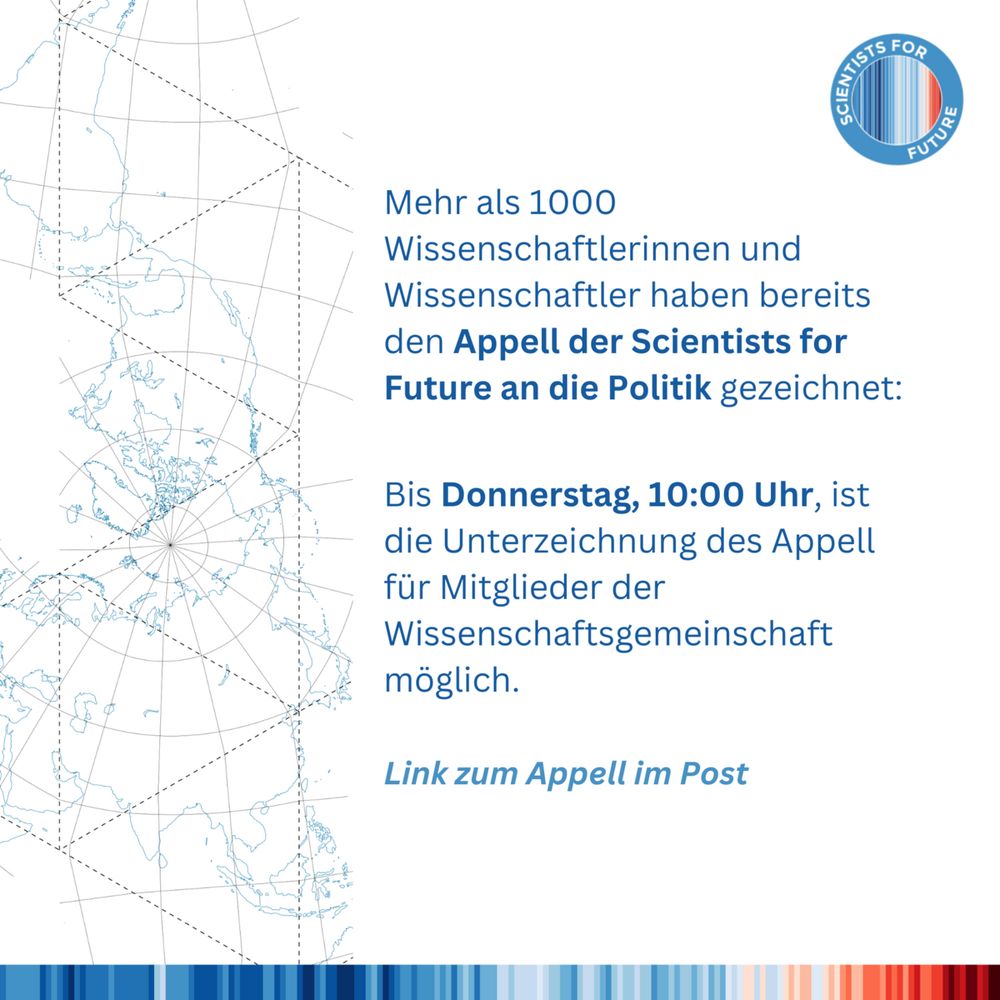
S4F: Ein Appell von Wissenschaftlerinnen und Wissenschaftlern in Deutschland an die Politik
als Wissenschaftlerinnen und Wissenschaftler in Deutschland sind wir in großer Sorge. Die Klimakrise und weitere Umweltkrisen (Biodiversitätsverlust, Überlastung biogeochemischer Stoffkreisläufe ......
www.bayceer.uni-bayreuth.de
March 12, 2025 at 2:46 PM
Hey fellow Germany-based scientists! There‘s an open letter from @de.scientists4future.org that you can sign until tomorrow 10am: www.bayceer.uni-bayreuth.de/s4f/de/top/o...
Reposted by Martina Adamek
Redox control of antibiotic biosynthesis in Streptomyces.
Remarkable work led by @katienoble241.bsky.social and Rebecca Devine demonstrates why antibiotic biosynthesis is often switched on in solid cultures and off in liquid.
www.biorxiv.org/content/10.1...
Remarkable work led by @katienoble241.bsky.social and Rebecca Devine demonstrates why antibiotic biosynthesis is often switched on in solid cultures and off in liquid.
www.biorxiv.org/content/10.1...

Redox control of antibiotic biosynthesis
Streptomyces bacteria make diverse specialised metabolites that form the basis of ~55% of clinically used antibiotics. Despite this, only 3% of their encoded specialised metabolites have been matched ...
www.biorxiv.org
March 10, 2025 at 8:39 PM
Redox control of antibiotic biosynthesis in Streptomyces.
Remarkable work led by @katienoble241.bsky.social and Rebecca Devine demonstrates why antibiotic biosynthesis is often switched on in solid cultures and off in liquid.
www.biorxiv.org/content/10.1...
Remarkable work led by @katienoble241.bsky.social and Rebecca Devine demonstrates why antibiotic biosynthesis is often switched on in solid cultures and off in liquid.
www.biorxiv.org/content/10.1...