




Liana Lareau
@lianafaye.bsky.social
Associate Professor of Bioengineering, Berkeley. Living in an RNA world. lareaulab.org
At the same time, we made thousands of synonymous mutations in endogenous yeast genes and measured their growth. We used careful statistics and controls. Only 3%, 204 of 6874, had a fitness effect! This goes against a controversial recent result that most synonymous mutations had fitness effects.

August 7, 2025 at 8:29 AM
At the same time, we made thousands of synonymous mutations in endogenous yeast genes and measured their growth. We used careful statistics and controls. Only 3%, 204 of 6874, had a fitness effect! This goes against a controversial recent result that most synonymous mutations had fitness effects.
So. Yes, information about codons can be pulled out of a model that only saw protein sequence! It predicts slow codons in signal peptides and transit peptides for localization. Fast codons in protein domains and active sites for accuracy. But, no big signal about co-translational protein folding.

August 7, 2025 at 8:29 AM
So. Yes, information about codons can be pulled out of a model that only saw protein sequence! It predicts slow codons in signal peptides and transit peptides for localization. Fast codons in protein domains and active sites for accuracy. But, no big signal about co-translational protein folding.

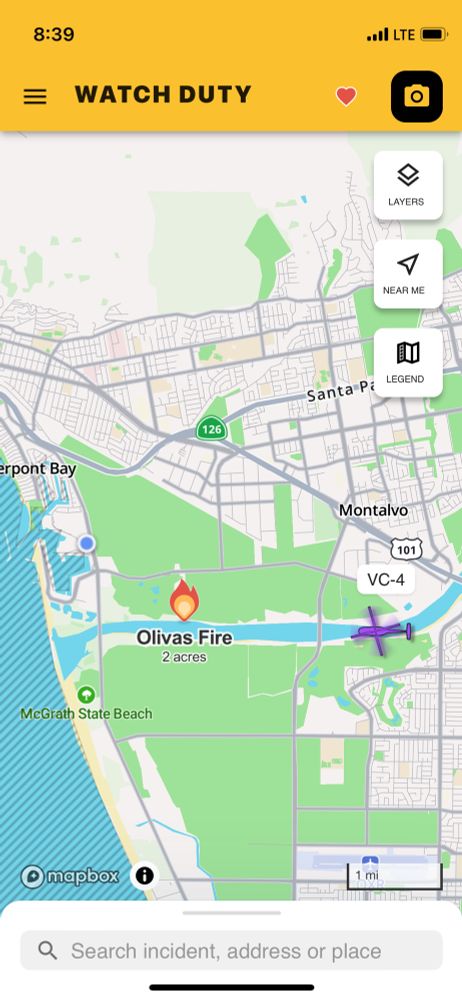
thisisfine.gif (They’re doing a great job, already have a helicopter on this little fire that just popped up in sight of my conference. Not worried about this one but we’ll keep an eye on it.)
January 8, 2025 at 5:18 PM
thisisfine.gif (They’re doing a great job, already have a helicopter on this little fire that just popped up in sight of my conference. Not worried about this one but we’ll keep an eye on it.)
If you lower initiation, slow codons don’t matter as much, which we confirmed by sticking stem-loop structures in the 5’ UTRs. But we think there’s more to it than that.

November 29, 2023 at 7:13 AM
If you lower initiation, slow codons don’t matter as much, which we confirmed by sticking stem-loop structures in the 5’ UTRs. But we think there’s more to it than that.
That pretty much left one option, some sort of active feedback on initiation. We did a CRISPRi screen using a version of the Ingolia lab’s CiBER-seq barcoded readout, and the one trend that came out was translation initiation factors, especially many subunits of eIF3.

November 29, 2023 at 7:12 AM
That pretty much left one option, some sort of active feedback on initiation. We did a CRISPRi screen using a version of the Ingolia lab’s CiBER-seq barcoded readout, and the one trend that came out was translation initiation factors, especially many subunits of eIF3.
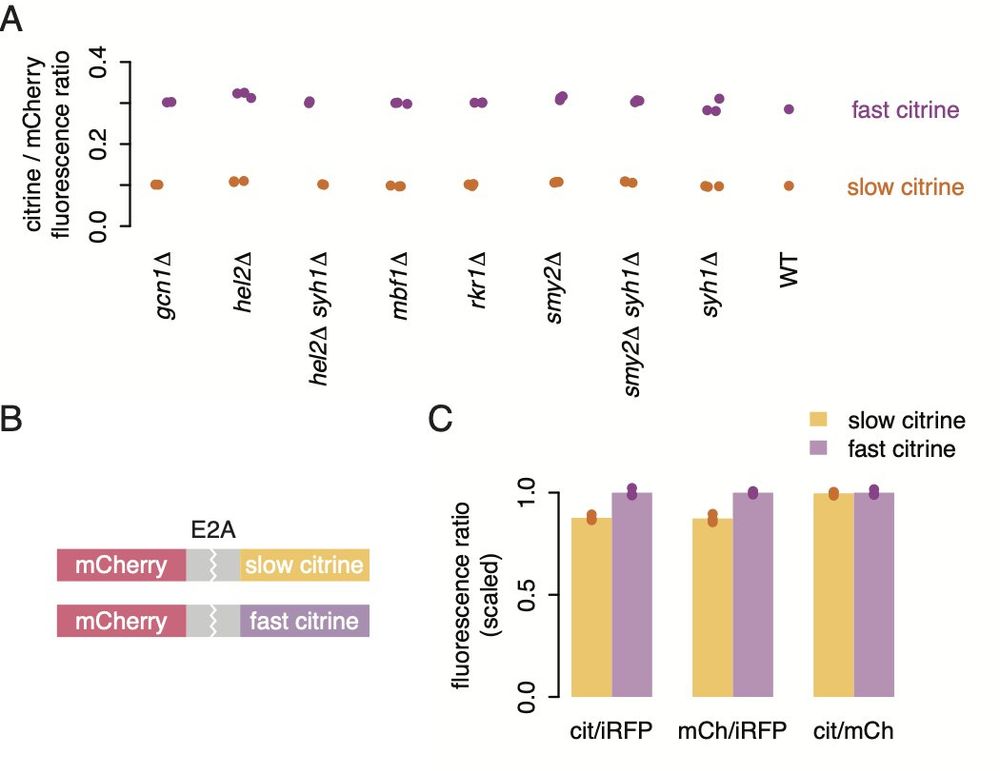
Maybe ribosomes were removed before finishing? We deleted lots of genes that clear up stalled ribosome, with no effect. Maybe slow ribosomes at the beginning got in the way? We shuffled around codons and saw no change.

November 29, 2023 at 7:12 AM
Maybe ribosomes were removed before finishing? We deleted lots of genes that clear up stalled ribosome, with no effect. Maybe slow ribosomes at the beginning got in the way? We shuffled around codons and saw no change.
So we started testing all the ways you could get less protein. A fraction of the effect came from mRNA stability, but the translation efficiency per mRNA was much lower too, on top of that.

November 29, 2023 at 7:11 AM
So we started testing all the ways you could get less protein. A fraction of the effect came from mRNA stability, but the translation efficiency per mRNA was much lower too, on top of that.
And if the same number of ribosomes start, but they move slower on the transcript with slow codons, you’d expect a lot more ribosomes on the slow reporter! But we see the same number. (In all figures, purple is the fastest and orange is the second-slowest of our six reporters).

November 29, 2023 at 7:10 AM
And if the same number of ribosomes start, but they move slower on the transcript with slow codons, you’d expect a lot more ribosomes on the slow reporter! But we see the same number. (In all figures, purple is the fastest and orange is the second-slowest of our six reporters).
We used our model to design a series of synonymous sequences encoding the fluorescent protein citrine, slowest possible to fastest and in between. We were surprised that the decoding time was a precise, linear predictor of protein output in yeast.

November 29, 2023 at 7:09 AM
We used our model to design a series of synonymous sequences encoding the fluorescent protein citrine, slowest possible to fastest and in between. We were surprised that the decoding time was a precise, linear predictor of protein output in yeast.