


Laurent Oziel
@laurentoz.bsky.social
Arctic Ocean oceanographer and biogeochemist.
Now marine biogeochemical modeller but still connect with field / satellite observations.
Ecosystem, carbon and nutrient cycles, climate & "Earth" system.
Now marine biogeochemical modeller but still connect with field / satellite observations.
Ecosystem, carbon and nutrient cycles, climate & "Earth" system.
Reposted by Laurent Oziel
Sea ice in the Arctic and around Antarctica cool our climate, drive ocean circulation across the planet, and provide a unique habitat for polar ecosystems.
Sea ice amounts have now fallen to their lowest since we started measuring them. This is not good.
🌊🥼❄️🧪
www.bbc.co.uk/news/article...
Sea ice amounts have now fallen to their lowest since we started measuring them. This is not good.
🌊🥼❄️🧪
www.bbc.co.uk/news/article...
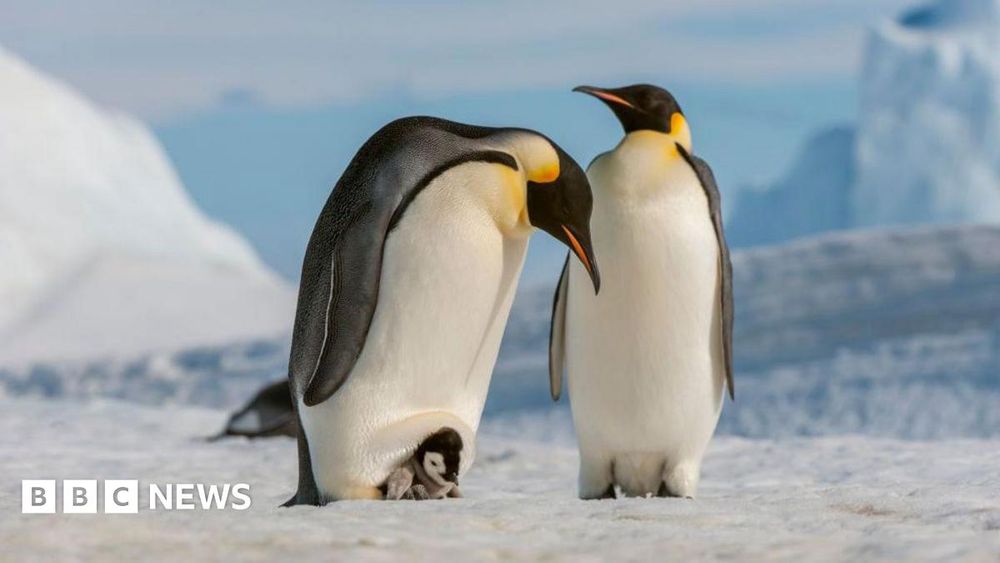
World's sea-ice falls to record low
The world's frozen oceans keep the planet cool, but they currently have less ice than ever recorded before.
www.bbc.co.uk
February 15, 2025 at 9:28 AM
Sea ice in the Arctic and around Antarctica cool our climate, drive ocean circulation across the planet, and provide a unique habitat for polar ecosystems.
Sea ice amounts have now fallen to their lowest since we started measuring them. This is not good.
🌊🥼❄️🧪
www.bbc.co.uk/news/article...
Sea ice amounts have now fallen to their lowest since we started measuring them. This is not good.
🌊🥼❄️🧪
www.bbc.co.uk/news/article...
Reposted by Laurent Oziel

Saturday ice update - #Arctic sea ice extent is currently the *lowest* on record (JAXA data)
• about 790,000 km² below the 2010s mean
• about 1,450,000 km² below the 2000s mean
• about 2,040,000 km² below the 1990s mean
• about 2,430,000 km² below the 1980s mean
Plots: zacklabe.com/arctic-sea-i...
• about 790,000 km² below the 2010s mean
• about 1,450,000 km² below the 2000s mean
• about 2,040,000 km² below the 1990s mean
• about 2,430,000 km² below the 1980s mean
Plots: zacklabe.com/arctic-sea-i...

February 8, 2025 at 7:47 PM
Saturday ice update - #Arctic sea ice extent is currently the *lowest* on record (JAXA data)
• about 790,000 km² below the 2010s mean
• about 1,450,000 km² below the 2000s mean
• about 2,040,000 km² below the 1990s mean
• about 2,430,000 km² below the 1980s mean
Plots: zacklabe.com/arctic-sea-i...
• about 790,000 km² below the 2010s mean
• about 1,450,000 km² below the 2000s mean
• about 2,040,000 km² below the 1990s mean
• about 2,430,000 km² below the 1980s mean
Plots: zacklabe.com/arctic-sea-i...
Reposted by Laurent Oziel

Our new paper on the inflation of the Arctic Ocean's Beaufort Gyre was published this week.
The gyre inflation in a warming climate implies its increasingly important role for the climate system and marine ecosystem. @natureportfolio.bsky.social @commsearth.bsky.social
doi.org/10.1038/s432...
The gyre inflation in a warming climate implies its increasingly important role for the climate system and marine ecosystem. @natureportfolio.bsky.social @commsearth.bsky.social
doi.org/10.1038/s432...

Dominant inflation of the Arctic Ocean’s Beaufort Gyre in a warming climate - Communications Earth & Environment
The Beaufort Gyre, the largest Arctic freshwater reservoir, will accumulate more freshwater, elevate sea level, and intensify its circulation as the climate warms, driven by increased freshwater fluxe...
doi.org
January 26, 2025 at 9:06 PM
Our new paper on the inflation of the Arctic Ocean's Beaufort Gyre was published this week.
The gyre inflation in a warming climate implies its increasingly important role for the climate system and marine ecosystem. @natureportfolio.bsky.social @commsearth.bsky.social
doi.org/10.1038/s432...
The gyre inflation in a warming climate implies its increasingly important role for the climate system and marine ecosystem. @natureportfolio.bsky.social @commsearth.bsky.social
doi.org/10.1038/s432...
Reposted by Laurent Oziel

Massive piece of work by Laurent Oziel and many #AWI colleagues, conducted within the #COMFORT project:
Laurent conducted future 🌊 Arctic Ocean high-resolution simulations that account for climate change AND carbon & nutrient inputs from rivers & coastal erosion.
⬇️
doi.org/10.1038/s415...
Laurent conducted future 🌊 Arctic Ocean high-resolution simulations that account for climate change AND carbon & nutrient inputs from rivers & coastal erosion.
⬇️
doi.org/10.1038/s415...

Climate change and terrigenous inputs decrease the efficiency of the future Arctic Ocean’s biological carbon pump - Nature Climate Change
Changes in the Arctic could impact the oceanic carbon sequestration of the region. Here the authors consider regional biogeochemistry, including coastal erosion and river inputs, to show a 40% reducti...
doi.org
January 6, 2025 at 10:13 PM
Massive piece of work by Laurent Oziel and many #AWI colleagues, conducted within the #COMFORT project:
Laurent conducted future 🌊 Arctic Ocean high-resolution simulations that account for climate change AND carbon & nutrient inputs from rivers & coastal erosion.
⬇️
doi.org/10.1038/s415...
Laurent conducted future 🌊 Arctic Ocean high-resolution simulations that account for climate change AND carbon & nutrient inputs from rivers & coastal erosion.
⬇️
doi.org/10.1038/s415...