



@ladymag88.bsky.social
Reposted

Gorgeous! Messier 78, a reflection nebula in Orion
(Credit: ESO/Igor Chekalin)
(Credit: ESO/Igor Chekalin)

March 10, 2025 at 9:41 PM
Gorgeous! Messier 78, a reflection nebula in Orion
(Credit: ESO/Igor Chekalin)
(Credit: ESO/Igor Chekalin)
Reposted
Gorgeous: A Hubble View of Starburst Galaxy Messier 94
(Credit: ESA/Hubble & NASA)
(Credit: ESA/Hubble & NASA)

March 6, 2025 at 5:53 PM
Gorgeous: A Hubble View of Starburst Galaxy Messier 94
(Credit: ESA/Hubble & NASA)
(Credit: ESA/Hubble & NASA)
Reposted
An incredible edge on view of the “UFO Galaxy” (NGC 2683)
NGC 2683 is often called the "UFO Galaxy" due to its nearly edge-on orientation, which makes it resemble a classic flying saucer.
(Credit: ESA/Hubble & NASA)
NGC 2683 is often called the "UFO Galaxy" due to its nearly edge-on orientation, which makes it resemble a classic flying saucer.
(Credit: ESA/Hubble & NASA)

February 19, 2025 at 5:12 PM
An incredible edge on view of the “UFO Galaxy” (NGC 2683)
NGC 2683 is often called the "UFO Galaxy" due to its nearly edge-on orientation, which makes it resemble a classic flying saucer.
(Credit: ESA/Hubble & NASA)
NGC 2683 is often called the "UFO Galaxy" due to its nearly edge-on orientation, which makes it resemble a classic flying saucer.
(Credit: ESA/Hubble & NASA)
Reposted

Spot the imposter 💥🔭
The sparkling spiral galaxy gracing this NASA/ESA Hubble Space Telescope image is UGC 5460.
In this image, there is also a far closer object: a star just 577 light-years away in our own galaxy. Can you spot it?
🔗 esahubble.org/images/potw2...
The sparkling spiral galaxy gracing this NASA/ESA Hubble Space Telescope image is UGC 5460.
In this image, there is also a far closer object: a star just 577 light-years away in our own galaxy. Can you spot it?
🔗 esahubble.org/images/potw2...

February 17, 2025 at 10:24 AM
Spot the imposter 💥🔭
The sparkling spiral galaxy gracing this NASA/ESA Hubble Space Telescope image is UGC 5460.
In this image, there is also a far closer object: a star just 577 light-years away in our own galaxy. Can you spot it?
🔗 esahubble.org/images/potw2...
The sparkling spiral galaxy gracing this NASA/ESA Hubble Space Telescope image is UGC 5460.
In this image, there is also a far closer object: a star just 577 light-years away in our own galaxy. Can you spot it?
🔗 esahubble.org/images/potw2...
Reposted

Justifiable, in my opinion, The New Yorker.

February 10, 2025 at 10:59 PM
Justifiable, in my opinion, The New Yorker.
Reposted
The elegant quetzal, an iconic emblem in Mesoamerican culture and the national bird of Guatemala, enjoys feasting on fruits from the avocado family.
They ingest the fruits whole and later expel the seeds, significantly contributing to the thriving of avocado trees.
They ingest the fruits whole and later expel the seeds, significantly contributing to the thriving of avocado trees.

February 7, 2025 at 4:56 PM
The elegant quetzal, an iconic emblem in Mesoamerican culture and the national bird of Guatemala, enjoys feasting on fruits from the avocado family.
They ingest the fruits whole and later expel the seeds, significantly contributing to the thriving of avocado trees.
They ingest the fruits whole and later expel the seeds, significantly contributing to the thriving of avocado trees.
Reposted
Magnificent!
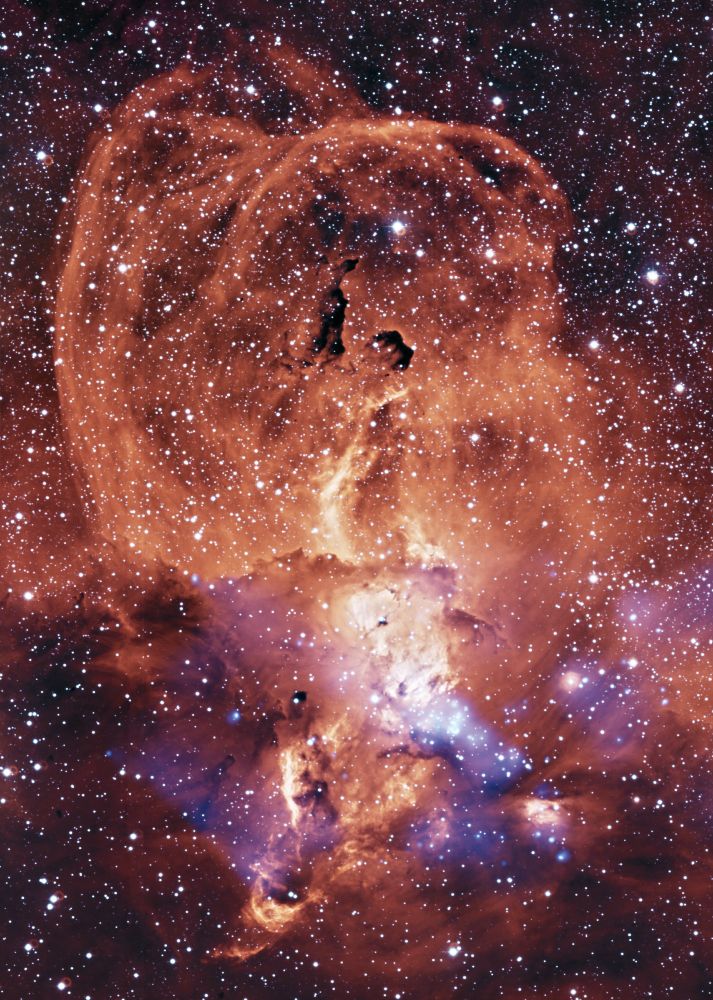
NGC 3576: Located about 9,000 light years from Earth. Star formation and death are responsible for the intriguing & complex shapes seen within. This image is over 70 light years across!
(Credit: X-ray: NASA/CXC/Penn State/L.Townsley et al, Optical: ESO/2.2m telescope)
NGC 3576: Located about 9,000 light years from Earth. Star formation and death are responsible for the intriguing & complex shapes seen within. This image is over 70 light years across!
(Credit: X-ray: NASA/CXC/Penn State/L.Townsley et al, Optical: ESO/2.2m telescope)
February 7, 2025 at 3:15 PM
Magnificent!
NGC 3576: Located about 9,000 light years from Earth. Star formation and death are responsible for the intriguing & complex shapes seen within. This image is over 70 light years across!
(Credit: X-ray: NASA/CXC/Penn State/L.Townsley et al, Optical: ESO/2.2m telescope)
NGC 3576: Located about 9,000 light years from Earth. Star formation and death are responsible for the intriguing & complex shapes seen within. This image is over 70 light years across!
(Credit: X-ray: NASA/CXC/Penn State/L.Townsley et al, Optical: ESO/2.2m telescope)
Reposted


Reposted

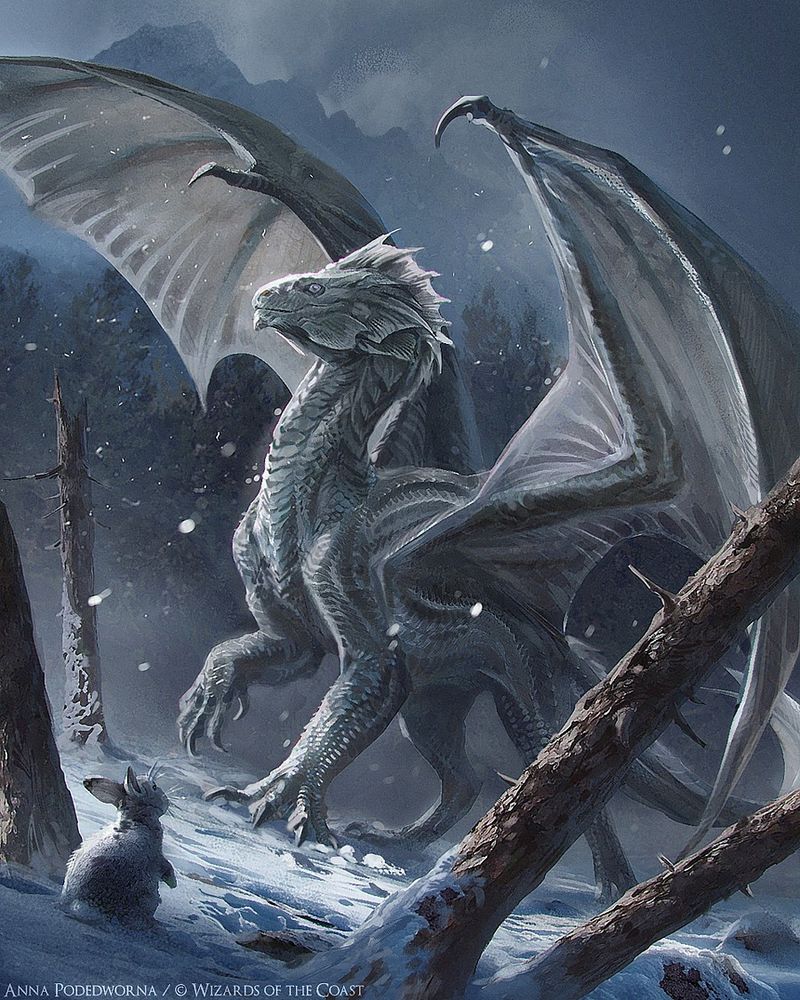
Silver dragon wyrmling illustration for Dungeons & Dragons: Monster Manual (2024)
January 25, 2025 at 6:58 PM
Silver dragon wyrmling illustration for Dungeons & Dragons: Monster Manual (2024)
Reposted
This gorgeous image of the Omega Nebula, captured by ESO's VLT, is among the sharpest ground-based views ever obtained of this celestial marvel.
It reveals the intricate, dusty, and rosy central regions of the renowned star-forming area in great detail.
(Credit: ESO)
It reveals the intricate, dusty, and rosy central regions of the renowned star-forming area in great detail.
(Credit: ESO)

January 24, 2025 at 4:10 AM
This gorgeous image of the Omega Nebula, captured by ESO's VLT, is among the sharpest ground-based views ever obtained of this celestial marvel.
It reveals the intricate, dusty, and rosy central regions of the renowned star-forming area in great detail.
(Credit: ESO)
It reveals the intricate, dusty, and rosy central regions of the renowned star-forming area in great detail.
(Credit: ESO)
Reposted
The Stunning Tarantula Nebula, spanning 1000 light-years in the Large Magellanic Cloud, is named for its tarantula-like bright patches and is a prime region for studying massive star formation.
(Credit: TRAPPIST/E. Jehin/ESO)
(Credit: TRAPPIST/E. Jehin/ESO)

January 23, 2025 at 1:55 AM
The Stunning Tarantula Nebula, spanning 1000 light-years in the Large Magellanic Cloud, is named for its tarantula-like bright patches and is a prime region for studying massive star formation.
(Credit: TRAPPIST/E. Jehin/ESO)
(Credit: TRAPPIST/E. Jehin/ESO)
Reposted
Current wake-up routine:

January 19, 2025 at 2:26 PM
Current wake-up routine:
Reposted


Reposted
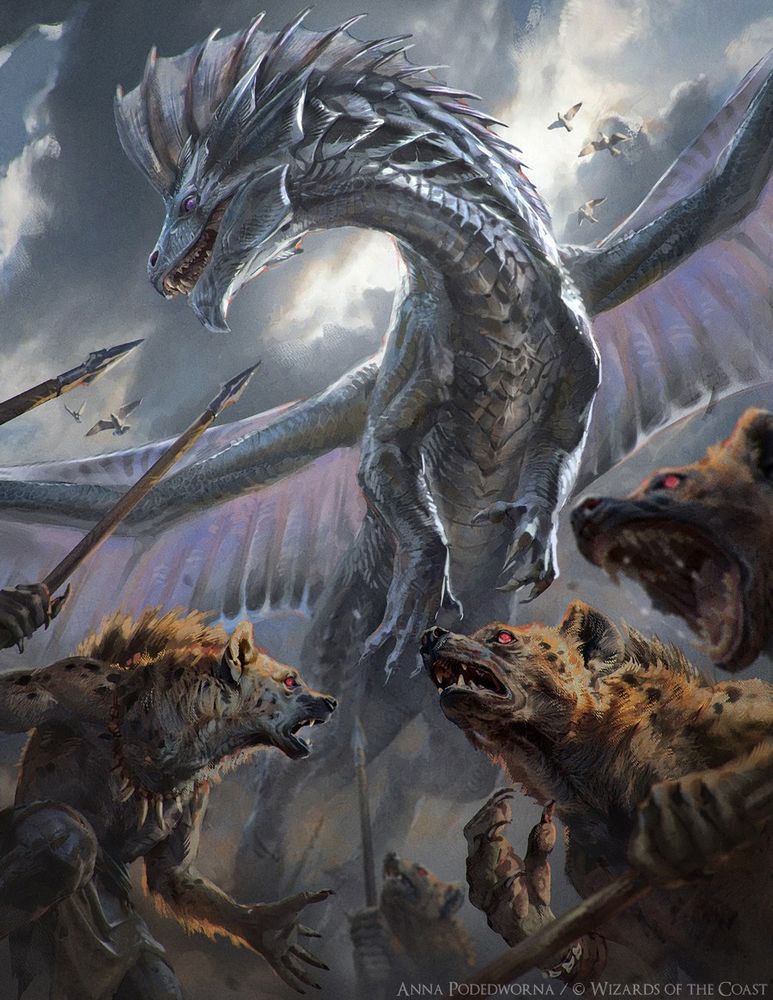
Silver dragon I had the pleasure to illustrate for Dungeons & Dragons: Monster Manual (2024)
January 14, 2025 at 6:59 PM
Silver dragon I had the pleasure to illustrate for Dungeons & Dragons: Monster Manual (2024)
Reposted
A deep infrared view of the Orion Nebula
(Credit: ESO/J. Emerson/VISTA, Cambridge Astronomical Survey Unit)
(Credit: ESO/J. Emerson/VISTA, Cambridge Astronomical Survey Unit)

January 13, 2025 at 4:56 PM
A deep infrared view of the Orion Nebula
(Credit: ESO/J. Emerson/VISTA, Cambridge Astronomical Survey Unit)
(Credit: ESO/J. Emerson/VISTA, Cambridge Astronomical Survey Unit)
Reposted
Amazingly beautiful: The Black Eye Galaxy
Credit: NASA and the Hubble Heritage Team (AURA/STScI); Acknowledgment: S. Smartt (Institute of Astronomy) and D. Richstone (U. Michigan)
Credit: NASA and the Hubble Heritage Team (AURA/STScI); Acknowledgment: S. Smartt (Institute of Astronomy) and D. Richstone (U. Michigan)

January 6, 2025 at 6:58 PM
Amazingly beautiful: The Black Eye Galaxy
Credit: NASA and the Hubble Heritage Team (AURA/STScI); Acknowledgment: S. Smartt (Institute of Astronomy) and D. Richstone (U. Michigan)
Credit: NASA and the Hubble Heritage Team (AURA/STScI); Acknowledgment: S. Smartt (Institute of Astronomy) and D. Richstone (U. Michigan)
Reposted
Look agThe extraordinarily beautiful barred spiral galaxy NGC 1300
(Credit: NASA, ESA, and The Hubble Heritage Team (STScI/AURA))ain at that dot...
(Credit: NASA, ESA, and The Hubble Heritage Team (STScI/AURA))ain at that dot...

December 27, 2024 at 10:01 PM
Look agThe extraordinarily beautiful barred spiral galaxy NGC 1300
(Credit: NASA, ESA, and The Hubble Heritage Team (STScI/AURA))ain at that dot...
(Credit: NASA, ESA, and The Hubble Heritage Team (STScI/AURA))ain at that dot...
Reposted
Googling Stuff: Then v Now.

December 11, 2024 at 5:15 PM
Googling Stuff: Then v Now.
Reposted

Etymology of the day: before a tapering piece of hanging ice was called an ‘icicle’ it was an ‘ickle’. In the Middle Ages people decided to add ‘ice’ for extra oomph and (tautologically) called it an ‘ice ickle’, until the two words eventually blended together.
November 28, 2024 at 10:17 AM
Etymology of the day: before a tapering piece of hanging ice was called an ‘icicle’ it was an ‘ickle’. In the Middle Ages people decided to add ‘ice’ for extra oomph and (tautologically) called it an ‘ice ickle’, until the two words eventually blended together.