



Joost de Jong
@joost-de-jong.bsky.social
Postdoc at the INCC Paris, studying temporal integration and time perception ⏱️ using psychophysical experiments 👀 and neurocomputational models 🧠
Pinned
APA PsycNet
psycnet.apa.org
Excited to share something that's been ~6y in the making: psycnet.apa.org/record/2025-... (preprint: osf.io/preprints/ps...). Ever wondered how it's possible that time flies by in passing, but seems like ages when looking back? ⌛ Our UTC model might have some answers! #compneuro #cogpsy 🧠🟦 (1/n)
Reposted by Joost de Jong
Which do you think lasts longer, a spade or an hourglass symbol?
Excited to share a new preprint from my lab, with some interesting and surprising results. 🧵 follows
doi.org/10.31234/osf...
Excited to share a new preprint from my lab, with some interesting and surprising results. 🧵 follows
doi.org/10.31234/osf...

October 6, 2025 at 3:42 PM
Which do you think lasts longer, a spade or an hourglass symbol?
Excited to share a new preprint from my lab, with some interesting and surprising results. 🧵 follows
doi.org/10.31234/osf...
Excited to share a new preprint from my lab, with some interesting and surprising results. 🧵 follows
doi.org/10.31234/osf...
Reposted by Joost de Jong

1/4 I’m really excited to share that my first PhD manuscript has been accepted for publication in the Journal of Neuroscience 🎉! Until it becomes available, don’t forget to check out our updated preprint (with some additional insights) #JNeurosci
Preprint Alert!!
In our latest study, we describe a novel relationship between action planning and working memory. Our results show that action-item associations affect how working memory maintains the fidelity of sensory information during a task.
Check it out: www.biorxiv.org/content/10.1...
In our latest study, we describe a novel relationship between action planning and working memory. Our results show that action-item associations affect how working memory maintains the fidelity of sensory information during a task.
Check it out: www.biorxiv.org/content/10.1...

Motor control processes moderate visual working memory gating
Gating processes that regulate sensory input into visual working memory (WM) and the execution of planned actions share neural mechanisms, suggesting a mutual interaction. In a preregistered study (OS...
www.biorxiv.org
September 15, 2025 at 10:32 AM
1/4 I’m really excited to share that my first PhD manuscript has been accepted for publication in the Journal of Neuroscience 🎉! Until it becomes available, don’t forget to check out our updated preprint (with some additional insights) #JNeurosci
Reposted by Joost de Jong

Have you ever wondered WHY memories fade away? And why some people are good at remembering facts while others suck at it? If so, you would be interested in thew new paper by Yinan Xu, Florian Sense, @van-rijn.org, @chantelpratphd.bsky.social, and myself doi.org/10.1371/jour... 👇 🧪

Default mode network connectivity predicts individual differences in long-term forgetting: Evidence for storage degradation, not retrieval failure
Author summary Why do some people forget faster than others? This study investigates individual differences in long-term memory forgetting by linking them to patterns of brain connectivity. Although m...
doi.org
September 13, 2025 at 6:12 AM
Have you ever wondered WHY memories fade away? And why some people are good at remembering facts while others suck at it? If so, you would be interested in thew new paper by Yinan Xu, Florian Sense, @van-rijn.org, @chantelpratphd.bsky.social, and myself doi.org/10.1371/jour... 👇 🧪
Reposted by Joost de Jong

🚨WHOHOO!! I am happy to share that I received the #ERCStG for my project PRECHRON: The Prefrontal Chronometer for Organizing Working Memory.
I am going to study #neuraloscillations during #workingmemory at the @rug.nl @rug-gmw.bsky.social
#brainstimulation #TMS #EEG
I am going to study #neuraloscillations during #workingmemory at the @rug.nl @rug-gmw.bsky.social
#brainstimulation #TMS #EEG

September 4, 2025 at 11:54 AM
🚨WHOHOO!! I am happy to share that I received the #ERCStG for my project PRECHRON: The Prefrontal Chronometer for Organizing Working Memory.
I am going to study #neuraloscillations during #workingmemory at the @rug.nl @rug-gmw.bsky.social
#brainstimulation #TMS #EEG
I am going to study #neuraloscillations during #workingmemory at the @rug.nl @rug-gmw.bsky.social
#brainstimulation #TMS #EEG
Reposted by Joost de Jong

Onderzoekers: zomer voorbijgevlogen, maar begin voelt ook wel weer lang geleden

Onderzoekers: zomer voorbijgevlogen, maar begin voelt ook wel weer lang geleden
De zomer is echt voorbij gevlógen. Dat stellen onderzoekers van de Universiteit Utrecht.
speld.nl
September 3, 2025 at 8:27 AM
Onderzoekers: zomer voorbijgevlogen, maar begin voelt ook wel weer lang geleden
Reposted by Joost de Jong

☀️Voor boekenliefhebbers☀️Een wereld vol denkers ligt binnenkort in de winkel! Over hoe mensen, dieren, planten en AI allemaal op hun eigen unieke manieren nadenken. Bij elke bestelling nu een toffe extra 👇 1/2 #wetenschap #boeken #psychologie @uitgeverijbalans.bsky.social

September 3, 2025 at 6:51 AM
☀️Voor boekenliefhebbers☀️Een wereld vol denkers ligt binnenkort in de winkel! Over hoe mensen, dieren, planten en AI allemaal op hun eigen unieke manieren nadenken. Bij elke bestelling nu een toffe extra 👇 1/2 #wetenschap #boeken #psychologie @uitgeverijbalans.bsky.social
Always wondered about whether perception is temporally discrete or continuous ⏱️👀? Stop by poster #67 this morning at #ECVP, where I introduce a simple *continuous* rolling window model that accounts for some classic visual phenomena, like band-pass filtering, visible persistence and postdiction.
August 28, 2025 at 6:07 AM
Always wondered about whether perception is temporally discrete or continuous ⏱️👀? Stop by poster #67 this morning at #ECVP, where I introduce a simple *continuous* rolling window model that accounts for some classic visual phenomena, like band-pass filtering, visible persistence and postdiction.
Reposted by Joost de Jong

🚨 New preprint: Invisible neural frequency tagging (RIFT) for the underfunded researcher:
👉 www.biorxiv.org/cgi/content/...
RIFT uses high-frequency flicker to probe attention in M/EEG with minimal stimulus visibility and little distraction. Until now, it required a costly high-speed projector.
👉 www.biorxiv.org/cgi/content/...
RIFT uses high-frequency flicker to probe attention in M/EEG with minimal stimulus visibility and little distraction. Until now, it required a costly high-speed projector.

Rapid Invisible Frequency Tagging (RIFT) with a consumer monitor: A proof-of-concept
Rapid Invisible Frequency Tagging (RIFT) enables neural frequency tagging at rates above the flicker fusion threshold, eliciting steady-state responses to flicker that is almost imperceptible. While R...
www.biorxiv.org
August 22, 2025 at 11:52 AM
🚨 New preprint: Invisible neural frequency tagging (RIFT) for the underfunded researcher:
👉 www.biorxiv.org/cgi/content/...
RIFT uses high-frequency flicker to probe attention in M/EEG with minimal stimulus visibility and little distraction. Until now, it required a costly high-speed projector.
👉 www.biorxiv.org/cgi/content/...
RIFT uses high-frequency flicker to probe attention in M/EEG with minimal stimulus visibility and little distraction. Until now, it required a costly high-speed projector.
Reposted by Joost de Jong

Postdoc position open in our #workingmemory lab! See here for more info: www.unige.ch/fapse/womcog...
June 30, 2025 at 11:07 AM
Postdoc position open in our #workingmemory lab! See here for more info: www.unige.ch/fapse/womcog...
Reposted by Joost de Jong

Jelmer Borst and I are looking for a PhD candidate to build an EEG-based model of human working memory! This is a really cool project that I've wanted to kick off for a while, and I can't wait to see it happen. Please share and I'm happy to answer any Qs about the project!
www.rug.nl/about-ug/wor...
www.rug.nl/about-ug/wor...
Vacatures bij de RUG
www.rug.nl
July 3, 2025 at 1:29 PM
Jelmer Borst and I are looking for a PhD candidate to build an EEG-based model of human working memory! This is a really cool project that I've wanted to kick off for a while, and I can't wait to see it happen. Please share and I'm happy to answer any Qs about the project!
www.rug.nl/about-ug/wor...
www.rug.nl/about-ug/wor...
Reposted by Joost de Jong

Our new paper out now in Science explores how neural activity in the lateral entorhinal cortex (LEC) *drifts* over time - and *jumps* at key boundaries - to help organize events in memory.
🔗 www.science.org/doi/10.1126/...
Here's a quick summary of what we found 🧵👇
🔗 www.science.org/doi/10.1126/...
Here's a quick summary of what we found 🧵👇
June 26, 2025 at 6:15 PM
Our new paper out now in Science explores how neural activity in the lateral entorhinal cortex (LEC) *drifts* over time - and *jumps* at key boundaries - to help organize events in memory.
🔗 www.science.org/doi/10.1126/...
Here's a quick summary of what we found 🧵👇
🔗 www.science.org/doi/10.1126/...
Here's a quick summary of what we found 🧵👇
Reposted by Joost de Jong
"As appealing as they can be, Large Language Models are as useful to scientific research as microwaves are to fine
cuisine."
doi.org/10.1177/0301...
cuisine."
doi.org/10.1177/0301...
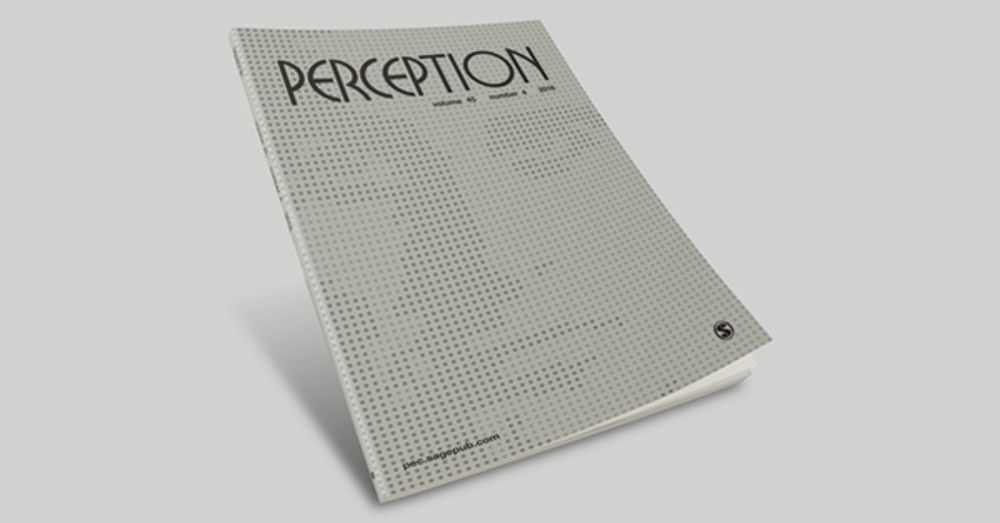
Using AI for peer reviewing is like using a microwave to reheat an old meal - Pascal Mamassian, 2025
doi.org
June 13, 2025 at 7:34 AM
"As appealing as they can be, Large Language Models are as useful to scientific research as microwaves are to fine
cuisine."
doi.org/10.1177/0301...
cuisine."
doi.org/10.1177/0301...
Reposted by Joost de Jong

Large-scale projects run the risk of stifling scientific independence. Instead, let’s explore alternative mechanisms of collaboration, writes @neuralreckoning.bsky.social.
#neuroskyence
www.thetransmitter.org/funding/neur...
#neuroskyence
www.thetransmitter.org/funding/neur...
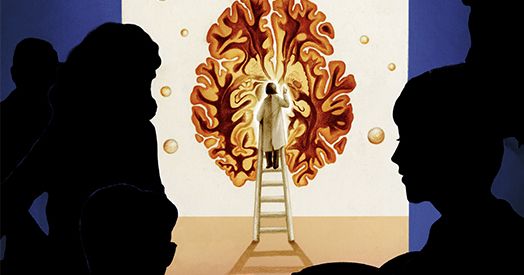
Neuroscience needs to empower early-career researchers, not fund moon shots
Large-scale projects run the risk of stifling scientific independence. Instead, let’s explore alternative mechanisms of collaboration.
www.thetransmitter.org
May 26, 2025 at 3:40 PM
Large-scale projects run the risk of stifling scientific independence. Instead, let’s explore alternative mechanisms of collaboration, writes @neuralreckoning.bsky.social.
#neuroskyence
www.thetransmitter.org/funding/neur...
#neuroskyence
www.thetransmitter.org/funding/neur...
Reposted by Joost de Jong

About time our latest project about time got out!
How do self-paced encoding and retention relate to performance in (working) memory-guided actions?
Find out now in Memory and Cognition: doi.org/10.3758/s134...
(or check the short version below)🧵
How do self-paced encoding and retention relate to performance in (working) memory-guided actions?
Find out now in Memory and Cognition: doi.org/10.3758/s134...
(or check the short version below)🧵
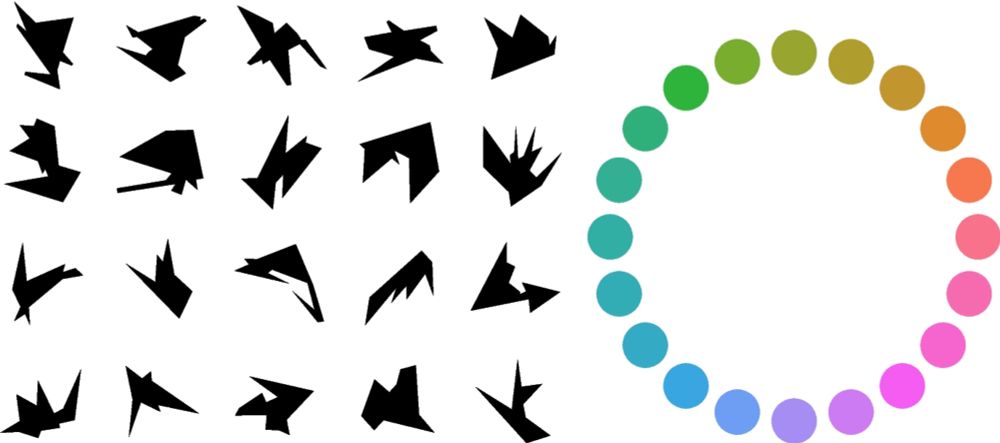
The rise and fall of memories: Temporal dynamics of visual working memory - Memory & Cognition
Visual working memory (VWM) is a cognitive system, which temporarily stores task-relevant visual information to enable interactions with the environment. In everyday VWM use, we typically decide how l...
doi.org
May 15, 2025 at 9:56 AM
About time our latest project about time got out!
How do self-paced encoding and retention relate to performance in (working) memory-guided actions?
Find out now in Memory and Cognition: doi.org/10.3758/s134...
(or check the short version below)🧵
How do self-paced encoding and retention relate to performance in (working) memory-guided actions?
Find out now in Memory and Cognition: doi.org/10.3758/s134...
(or check the short version below)🧵
Reposted by Joost de Jong
Interested in pupillometry, eye movements, visual attention, visual working memory, or related topics? Apply with our group in in beautiful, livable, and friendly Groningen! Reach out to @elkanakyurek.bsky.social, @van-rijn.org, @olaf.dimigen.de, @miles2708.bsky.social or myself to explore options!

Choose Science. Choose Europe.
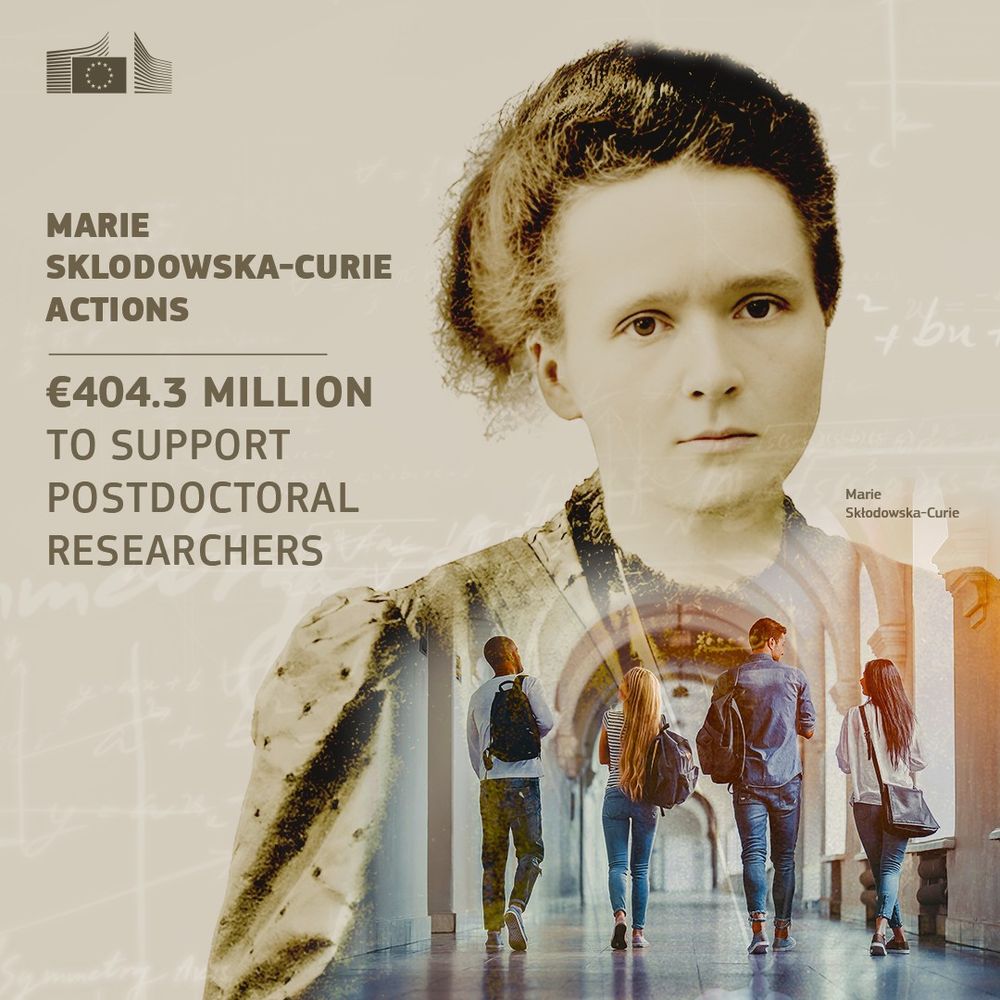
A new Marie Skłodowska-Curie Actions Postdoctoral Fellowships 2025 call is now open.
With a budget of €404.3 million, it will support around 1,650 researchers from Europe and beyond.
Apply by 10 September → europa.eu/!fBTMgF
A new Marie Skłodowska-Curie Actions Postdoctoral Fellowships 2025 call is now open.
With a budget of €404.3 million, it will support around 1,650 researchers from Europe and beyond.
Apply by 10 September → europa.eu/!fBTMgF
May 9, 2025 at 9:25 AM
Interested in pupillometry, eye movements, visual attention, visual working memory, or related topics? Apply with our group in in beautiful, livable, and friendly Groningen! Reach out to @elkanakyurek.bsky.social, @van-rijn.org, @olaf.dimigen.de, @miles2708.bsky.social or myself to explore options!
Reposted by Joost de Jong

My new piece in @theguardian.com
Techno-optimism is human pessimism.
www.theguardian.com/commentisfre...
Techno-optimism is human pessimism.
www.theguardian.com/commentisfre...
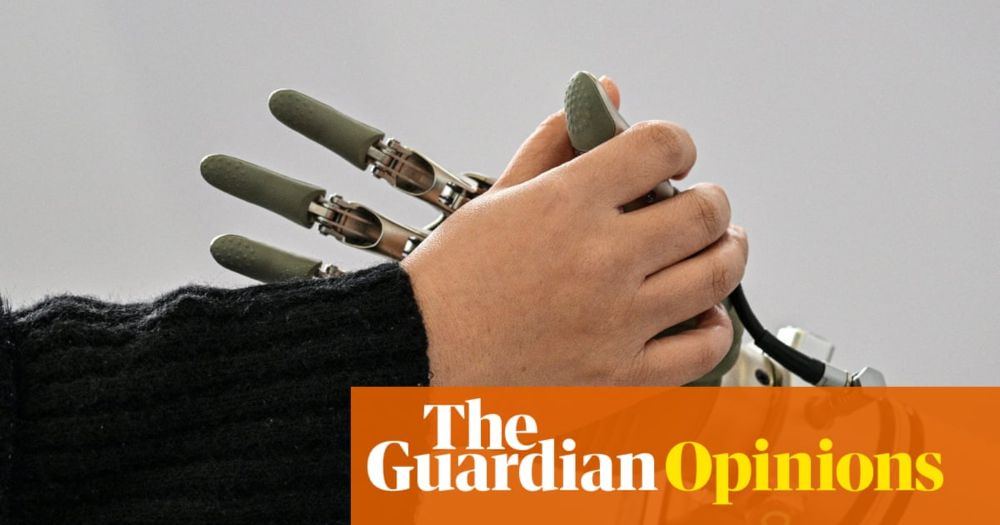
AI is ‘beating’ humans at empathy and creativity. But these games are rigged | MJ Crockett
Research pitting people against AI systems gives AI an edge by asking us to perform in machine-like ways
www.theguardian.com
February 27, 2025 at 3:30 PM
My new piece in @theguardian.com
Techno-optimism is human pessimism.
www.theguardian.com/commentisfre...
Techno-optimism is human pessimism.
www.theguardian.com/commentisfre...
Reposted by Joost de Jong

Our tutorial on how to use ARIADNE to make your research life easier is now finally published in AMPPS! 🤩
Read it: journals.sagepub.com/doi/10.1177/...
Check out the tool: igor-biodgps.github.io/ARIADNE/grap...
Supported by IGOR (www.dgps.de/fachgruppen/...) and @zpid.bsky.social ❤️
Read it: journals.sagepub.com/doi/10.1177/...
Check out the tool: igor-biodgps.github.io/ARIADNE/grap...
Supported by IGOR (www.dgps.de/fachgruppen/...) and @zpid.bsky.social ❤️

January 31, 2025 at 8:54 AM
Our tutorial on how to use ARIADNE to make your research life easier is now finally published in AMPPS! 🤩
Read it: journals.sagepub.com/doi/10.1177/...
Check out the tool: igor-biodgps.github.io/ARIADNE/grap...
Supported by IGOR (www.dgps.de/fachgruppen/...) and @zpid.bsky.social ❤️
Read it: journals.sagepub.com/doi/10.1177/...
Check out the tool: igor-biodgps.github.io/ARIADNE/grap...
Supported by IGOR (www.dgps.de/fachgruppen/...) and @zpid.bsky.social ❤️
Reposted by Joost de Jong

Prior knowledge changes sensory processing in the spinal cord?! 🤯 www.science.org/doi/10.1126/... #neuroskyence
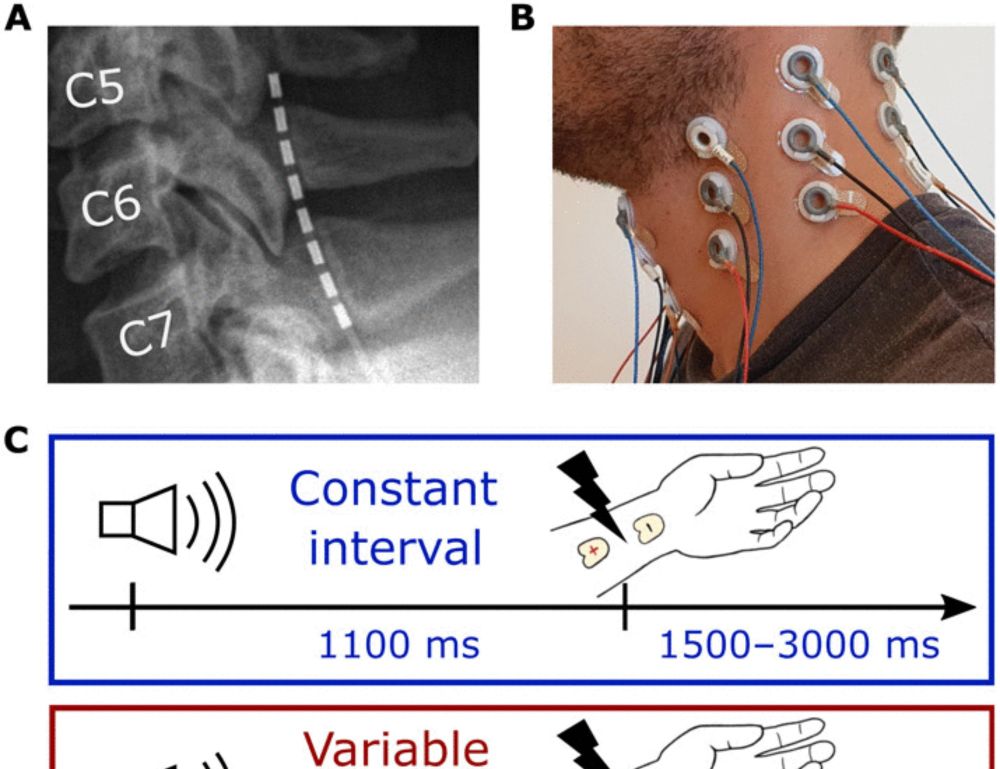
Prior knowledge changes initial sensory processing in the human spinal cord
High-frequency signals at a neuronal population level reveal a cognitive influence on sensory processing in the human spinal cord.
www.science.org
January 18, 2025 at 8:57 AM
Prior knowledge changes sensory processing in the spinal cord?! 🤯 www.science.org/doi/10.1126/... #neuroskyence
Reposted by Joost de Jong
Waarom gaat de tijd sneller als je het naar je zin hebt? In deze aflevering van de podcastserie van Universiteit van Nederland over tijd legt Hedderik van Rijn (@van-rijn.org) uit waarom onze beleving van tijd zo flexibel is. www.universiteitvannederland.nl/podcast/waar...

January 7, 2025 at 2:59 PM
Waarom gaat de tijd sneller als je het naar je zin hebt? In deze aflevering van de podcastserie van Universiteit van Nederland over tijd legt Hedderik van Rijn (@van-rijn.org) uit waarom onze beleving van tijd zo flexibel is. www.universiteitvannederland.nl/podcast/waar...
Excited to share something that's been ~6y in the making: psycnet.apa.org/record/2025-... (preprint: osf.io/preprints/ps...). Ever wondered how it's possible that time flies by in passing, but seems like ages when looking back? ⌛ Our UTC model might have some answers! #compneuro #cogpsy 🧠🟦 (1/n)
APA PsycNet
psycnet.apa.org
January 8, 2025 at 2:18 PM
Excited to share something that's been ~6y in the making: psycnet.apa.org/record/2025-... (preprint: osf.io/preprints/ps...). Ever wondered how it's possible that time flies by in passing, but seems like ages when looking back? ⌛ Our UTC model might have some answers! #compneuro #cogpsy 🧠🟦 (1/n)
Reposted by Joost de Jong
The unbearable slowness of being: Humans still clock in at just 10 bits/s. Even after peer review :) Share link: authors.elsevier.com/a/1kHVa3BtfH.... ArXiv: arxiv.org/abs/2408.10234
authors.elsevier.com
December 17, 2024 at 6:54 PM
The unbearable slowness of being: Humans still clock in at just 10 bits/s. Even after peer review :) Share link: authors.elsevier.com/a/1kHVa3BtfH.... ArXiv: arxiv.org/abs/2408.10234