


student interested in neuroscience
@iloveneuroscience.bsky.social
Student interested in/reposting systems and computational neuroscience papers
Interested in vision, navigation, neural circuit flexibility, neuromodulation, and dynamic coding
Interested in vision, navigation, neural circuit flexibility, neuromodulation, and dynamic coding
Reposted by student interested in neuroscience
Excited to share the latest work from the lab—a true tour de force led by @nbaumgar.bsky.social. TLDR: We report a novel endogenous mechanism whereby cycling ovarian hormones alter threat memory expression through state-dependent recruitment of the lateral septum to the memory ensemble. 🧵⬇️

The lateral septum orchestrates state-dependent modulation of associative threat memory dynamics across the ovarian hormone cycle https://www.biorxiv.org/content/10.64898/2026.01.28.702128v1
February 3, 2026 at 4:19 PM
Excited to share the latest work from the lab—a true tour de force led by @nbaumgar.bsky.social. TLDR: We report a novel endogenous mechanism whereby cycling ovarian hormones alter threat memory expression through state-dependent recruitment of the lateral septum to the memory ensemble. 🧵⬇️
Reposted by student interested in neuroscience

Working with rats, & not happy w MRI based brain atlases from adult males? We've got you! High resolution (2photon), 3D atlases (female rats) are now available in @brainglobe.info. Plz start using these atlases & let us know your feedback for the official release!
brainglobe.info/blog/swc-fem...
🐭🧠
brainglobe.info/blog/swc-fem...
🐭🧠
February 3, 2026 at 9:14 AM
Working with rats, & not happy w MRI based brain atlases from adult males? We've got you! High resolution (2photon), 3D atlases (female rats) are now available in @brainglobe.info. Plz start using these atlases & let us know your feedback for the official release!
brainglobe.info/blog/swc-fem...
🐭🧠
brainglobe.info/blog/swc-fem...
🐭🧠
Reposted by student interested in neuroscience

We're partnering with @anthropic.com on the development of artificial intelligence tools for massive data analysis and exploration.
This collaboration will explore how AI systems could expedite analysis and day-to-day scientific workflows.
🔗 https://bit.ly/4rsghh9
This collaboration will explore how AI systems could expedite analysis and day-to-day scientific workflows.
🔗 https://bit.ly/4rsghh9

Anthropic partners with Allen Institute and Howard Hughes Medical Institute to accelerate scientific discovery
Anthropic is an AI safety and research company that's working to build reliable, interpretable, and steerable AI systems.
www.anthropic.com
February 2, 2026 at 6:41 PM
We're partnering with @anthropic.com on the development of artificial intelligence tools for massive data analysis and exploration.
This collaboration will explore how AI systems could expedite analysis and day-to-day scientific workflows.
🔗 https://bit.ly/4rsghh9
This collaboration will explore how AI systems could expedite analysis and day-to-day scientific workflows.
🔗 https://bit.ly/4rsghh9
Reposted by student interested in neuroscience

While humans spontaneously dance to a beat, the evolutionary origins of this ability remain debated. Behavioral work has shown that primates can move to auditory rhythms after training.
Our question was: How does this association emerge in the brain?
www.biorxiv.org/content/10....
Our question was: How does this association emerge in the brain?
www.biorxiv.org/content/10....

Reward-driven emergence of auditory pattern encoding in the primate motor system
The ability to anticipate rhythmic patterns is fundamental to human experience, enabling music appreciation, speech comprehension, and dancing in sync to music. How the brain learns to use acoustic information to guide motor behavior remains a key question whose neural underpinnings and evolutionary origins are debated, especially in non-human primates. To understand how brain areas involved in motor control naively respond to predictable tone patterns, we recorded large single neuron populations across primary somatosensory (S1), primary motor (M1), dorsal premotor (PMd), supplementary motor (SMA), pre-supplementary motor (preSMA) cortices, globus pallidus interna (GPi), and medial geniculate body (MGB) of a rhesus monkey. During passive listening (Experiment 1) with a reward only at the end of each trial, primarily the MGB, not motor areas, responded to the auditory tone patterns, ruling out the spontaneous entrainment of motor activity to auditory patterns. Almost all areas robustly
www.biorxiv.org
January 30, 2026 at 7:41 PM
While humans spontaneously dance to a beat, the evolutionary origins of this ability remain debated. Behavioral work has shown that primates can move to auditory rhythms after training.
Our question was: How does this association emerge in the brain?
www.biorxiv.org/content/10....
Our question was: How does this association emerge in the brain?
www.biorxiv.org/content/10....
Reposted by student interested in neuroscience

ICYMI 2:
Artificially ⬆️basal ganglia activity made birds learn to sing faster! Why? Interestingly, ⬆️activity also caused ⬆️variability. Moreover, the magnitude of ⬆️variability correlated with accelerated rates of learning, suggesting enhanced exploration facilitated learning!
Artificially ⬆️basal ganglia activity made birds learn to sing faster! Why? Interestingly, ⬆️activity also caused ⬆️variability. Moreover, the magnitude of ⬆️variability correlated with accelerated rates of learning, suggesting enhanced exploration facilitated learning!

January 30, 2026 at 5:17 PM
ICYMI 2:
Artificially ⬆️basal ganglia activity made birds learn to sing faster! Why? Interestingly, ⬆️activity also caused ⬆️variability. Moreover, the magnitude of ⬆️variability correlated with accelerated rates of learning, suggesting enhanced exploration facilitated learning!
Artificially ⬆️basal ganglia activity made birds learn to sing faster! Why? Interestingly, ⬆️activity also caused ⬆️variability. Moreover, the magnitude of ⬆️variability correlated with accelerated rates of learning, suggesting enhanced exploration facilitated learning!
Reposted by student interested in neuroscience

We think cortex might function like a JEPA. It looks like prediction errors in layer 2/3 are not computed against input (as is the idea in predictive processing), but against a representation in latent space (i.e. like in a JEPA arxiv.org/abs/2301.08243 or RPL doi.org/10.1101/2025...).
January 30, 2026 at 2:51 PM
We think cortex might function like a JEPA. It looks like prediction errors in layer 2/3 are not computed against input (as is the idea in predictive processing), but against a representation in latent space (i.e. like in a JEPA arxiv.org/abs/2301.08243 or RPL doi.org/10.1101/2025...).
Reposted by student interested in neuroscience

Our work with @georgkeller.bsky.social on testing predictive processing (PP) models in cortex is out on biorvix now! www.biorxiv.org/content/10.6... A short thread on our findings and thoughts on where we should move on from PP below.
A functional influence based circuit motif that constrains the set of plausible algorithms of cortical function
There are several plausible algorithms for cortical function that are specific enough to make testable predictions of the interactions between functionally identified cell types. Many of these algorithms are based on some variant of predictive processing. Here we set out to experimentally distinguish between two such predictive processing variants. A central point of variability between them lies in the proposed vertical communication between layer 2/3 and layer 5, which stems from the diverging assumptions about the computational role of layer 5. One assumes a hierarchically organized architecture and proposes that, within a given node of the network, layer 5 conveys unexplained bottom-up input to prediction error neurons of layer 2/3. The other proposes a non-hierarchical architecture in which internal representation neurons of layer 5 provide predictions for the local prediction error neurons of layer 2/3. We show that the functional influence of layer 2/3 cell types on layer 5 is incompatible with the hierarchical variant, while the functional influence of layer 5 cell types on prediction error neurons of layer 2/3 is incompatible with the non-hierarchical variant. Given these data, we can constrain the space of plausible algorithms of cortical function. We propose a model for cortical function based on a combination of a joint embedding predictive architecture (JEPA) and predictive processing that makes experimentally testable predictions. ### Competing Interest Statement The authors have declared no competing interest. Swiss National Science Foundation, https://ror.org/00yjd3n13 Novartis Foundation, https://ror.org/04f9t1x17 European Research Council, https://ror.org/0472cxd90, 865617
www.biorxiv.org
January 30, 2026 at 2:37 PM
Our work with @georgkeller.bsky.social on testing predictive processing (PP) models in cortex is out on biorvix now! www.biorxiv.org/content/10.6... A short thread on our findings and thoughts on where we should move on from PP below.
Reposted by student interested in neuroscience

www.neuroai.science/p/claude-cod...
Why yes this is very helpful for me as an undergrad. I like the way the methods that Patrick laid, how to aid research using AI and its pros vs cons
Why yes this is very helpful for me as an undergrad. I like the way the methods that Patrick laid, how to aid research using AI and its pros vs cons

Claude Code for Scientists
Abundant code without the sharp edges
www.neuroai.science
January 29, 2026 at 4:24 PM
www.neuroai.science/p/claude-cod...
Why yes this is very helpful for me as an undergrad. I like the way the methods that Patrick laid, how to aid research using AI and its pros vs cons
Why yes this is very helpful for me as an undergrad. I like the way the methods that Patrick laid, how to aid research using AI and its pros vs cons
Reposted by student interested in neuroscience

How does metabolic learning shape human behaviour? In our recent study www.sciencedirect.com/science/arti..., we found that it shapes flavour preferences but, surprisingly, not action. Thread 🧵

January 29, 2026 at 1:55 PM
How does metabolic learning shape human behaviour? In our recent study www.sciencedirect.com/science/arti..., we found that it shapes flavour preferences but, surprisingly, not action. Thread 🧵
Reposted by student interested in neuroscience

I’m thrilled to share our latest preprint from the lab, now available on BioRxiv! We investigated how early life adversity (ELA) shapes the adult brain, and the results are a stark reminder that sex isn't just a variable but leads to fundamentally different stress-induced mechanistic consequences

January 29, 2026 at 1:15 PM
I’m thrilled to share our latest preprint from the lab, now available on BioRxiv! We investigated how early life adversity (ELA) shapes the adult brain, and the results are a stark reminder that sex isn't just a variable but leads to fundamentally different stress-induced mechanistic consequences
Reposted by student interested in neuroscience
www.nature.com/articles/s41... beautiful work from Stephen Liberles’ lab on neural mechanisms of sensing blood volume.

Vagal blood volume receptors compensate for haemorrhage and posture change - Nature
A vagal reflex to blood volume changes in the heart involves PIEZO2 and helps to stabilize blood pressure in an upright posture and after blood loss.
www.nature.com
January 29, 2026 at 12:00 AM
www.nature.com/articles/s41... beautiful work from Stephen Liberles’ lab on neural mechanisms of sensing blood volume.
Reposted by student interested in neuroscience

Love this. “Spontaneous” has always really meant “we don’t know why X is happening”, a perspective tied to the dominance of structured task paradigms for studying cognition, behavior, and brain activity.


January 28, 2026 at 8:19 PM
Love this. “Spontaneous” has always really meant “we don’t know why X is happening”, a perspective tied to the dominance of structured task paradigms for studying cognition, behavior, and brain activity.
Reposted by student interested in neuroscience
Completely agree! E.g: In this preprint, I co-expressed axon-GCaMP and inhibitory DREADD (H4) and showed that local CNO infusion attenuates terminal Ca2+ during singing. In my case, I wanted to validate the DREADD, but this can also be used the other way around (1/3)
www.biorxiv.org/content/10.6...
www.biorxiv.org/content/10.6...

January 28, 2026 at 5:21 PM
Completely agree! E.g: In this preprint, I co-expressed axon-GCaMP and inhibitory DREADD (H4) and showed that local CNO infusion attenuates terminal Ca2+ during singing. In my case, I wanted to validate the DREADD, but this can also be used the other way around (1/3)
www.biorxiv.org/content/10.6...
www.biorxiv.org/content/10.6...
Reposted by student interested in neuroscience

look, we have a choice: artificial intelligence that consumes vast amounts of electricity or human intelligence that runs on widely available grilled cheese.
there are already windmills producing so much grilled cheese that people are selling the excess back to utility companies.
there are already windmills producing so much grilled cheese that people are selling the excess back to utility companies.
January 28, 2026 at 1:59 PM
look, we have a choice: artificial intelligence that consumes vast amounts of electricity or human intelligence that runs on widely available grilled cheese.
there are already windmills producing so much grilled cheese that people are selling the excess back to utility companies.
there are already windmills producing so much grilled cheese that people are selling the excess back to utility companies.
Reposted by student interested in neuroscience

Join us for a Presidential Lecture on 2/11 with Stephen Liberles: "The Vagus Nerve: How the Brain Listens to the Body." Liberles will discuss his lab’s efforts to elucidate the workings of the vagus nerve. https://www.simonsfoundation.org/event/the-vagus-nerve-how-the-brain-listens-to-the-body/

The Vagus Nerve: How the Brain Listens to the Body
The Vagus Nerve: How the Brain Listens to the Body on Simons Foundation
www.simonsfoundation.org
January 28, 2026 at 3:56 PM
Join us for a Presidential Lecture on 2/11 with Stephen Liberles: "The Vagus Nerve: How the Brain Listens to the Body." Liberles will discuss his lab’s efforts to elucidate the workings of the vagus nerve. https://www.simonsfoundation.org/event/the-vagus-nerve-how-the-brain-listens-to-the-body/
Reposted by student interested in neuroscience

The hippocampal map has its own attentional control signal!
Our new study reveals that theta #sweeps can be instantly biased towards behaviourally relevant locations. See 📹 in post 4/6 and preprint here 👉
www.biorxiv.org/content/10.6...
🧵(1/6)
Our new study reveals that theta #sweeps can be instantly biased towards behaviourally relevant locations. See 📹 in post 4/6 and preprint here 👉
www.biorxiv.org/content/10.6...
🧵(1/6)
Attention-like regulation of theta sweeps in the brain's spatial navigation circuit
Spatial attention supports navigation by prioritizing information from selected locations. A candidate neural mechanism is provided by theta-paced sweeps in grid- and place-cell population activity, which sample nearby space in a left-right-alternating pattern coordinated by parasubicular direction signals. During exploration, this alternation promotes uniform spatial coverage, but whether sweeps can be flexibly tuned to locations of particular interest remains unclear. Using large-scale Neuropixels recordings in freely-behaving rats, we show that sweeps and direction signals are rapidly and dynamically modulated: they track moving targets during pursuit, precede orienting responses during immobility, and reverse during backward locomotion — without prior spatial learning. Similar modulation occurs during REM sleep. Canonical head-direction signals remain head-aligned. These findings identify sweeps as a flexible, attention-like mechanism for selectively sampling allocentric cognitive maps. ### Competing Interest Statement The authors have declared no competing interest. European Research Council, Synergy Grant 951319 (EIM) The Research Council of Norway, Centre of Neural Computation 223262 (EIM, MBM), Centre for Algorithms in the Cortex 332640 (EIM, MBM), National Infrastructure grant (NORBRAIN, 295721 and 350201) The Kavli Foundation, https://ror.org/00kztt736 Ministry of Science and Education, Norway (EIM, MBM) Faculty of Medicine and Health Sciences; NTNU, Norway (AZV)
www.biorxiv.org
January 28, 2026 at 10:03 AM
The hippocampal map has its own attentional control signal!
Our new study reveals that theta #sweeps can be instantly biased towards behaviourally relevant locations. See 📹 in post 4/6 and preprint here 👉
www.biorxiv.org/content/10.6...
🧵(1/6)
Our new study reveals that theta #sweeps can be instantly biased towards behaviourally relevant locations. See 📹 in post 4/6 and preprint here 👉
www.biorxiv.org/content/10.6...
🧵(1/6)
Reposted by student interested in neuroscience

What does it mean that facial expressions activate many of the same cortical pathways as voluntary movements—and how might that impact studies using “reflexive” facial expressions to measure pain? Read more from @natmesanash.bsky.social at @thetransmitter.bsky.social bit.ly/4pMlqQd #PRF
Facial expressions less reflexive than previously thought | The Transmitter: Neuroscience News and Perspectives
A countenance such as a grimace activates many of the same cortical pathways as voluntary facial movements.
bit.ly
January 27, 2026 at 2:00 PM
What does it mean that facial expressions activate many of the same cortical pathways as voluntary movements—and how might that impact studies using “reflexive” facial expressions to measure pain? Read more from @natmesanash.bsky.social at @thetransmitter.bsky.social bit.ly/4pMlqQd #PRF
Reposted by student interested in neuroscience

Studying aspects of the brain’s emotion system that enable organisms to infer indirect threats and understand changing context can establish a common framework that bridges species and levels of analysis, writes @jojolab.bsky.social.
#neuroskyence
www.thetransmitter.org/emotion/why-...
#neuroskyence
www.thetransmitter.org/emotion/why-...
January 26, 2026 at 2:44 PM
Studying aspects of the brain’s emotion system that enable organisms to infer indirect threats and understand changing context can establish a common framework that bridges species and levels of analysis, writes @jojolab.bsky.social.
#neuroskyence
www.thetransmitter.org/emotion/why-...
#neuroskyence
www.thetransmitter.org/emotion/why-...
Reposted by student interested in neuroscience
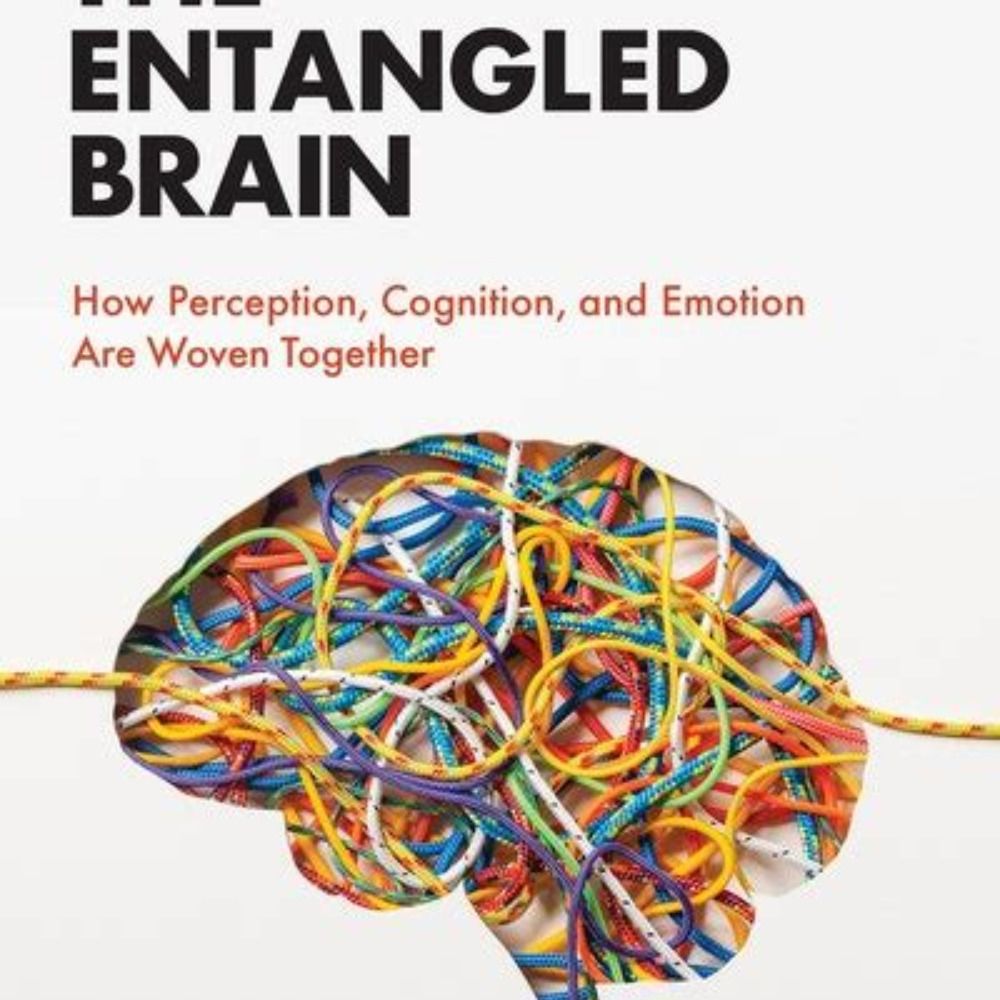
*Multi-region computations in the brain*
When two regions are better than one...
doi.org/10.1016/j.ne...
#neuroskyence
When two regions are better than one...
doi.org/10.1016/j.ne...
#neuroskyence

January 23, 2026 at 6:15 PM
*Multi-region computations in the brain*
When two regions are better than one...
doi.org/10.1016/j.ne...
#neuroskyence
When two regions are better than one...
doi.org/10.1016/j.ne...
#neuroskyence
Reposted by student interested in neuroscience

In case you missed it... here's how we train mice to become experts in a visual spatial attention task (in 17 days!) PLUS new findings: contrast sensitivity improves at relevant spatial locations 👁️🧠 Tons of work from the team (700+ days of data from 36 🐭and 11 👩🔬 👨🔬) led by Kayla Peelman 💪
A standardized and reproducible behavioral protocol to elicit visual spatial attention in mice https://www.biorxiv.org/content/10.64898/2025.12.19.695467v1
January 21, 2026 at 9:52 PM
In case you missed it... here's how we train mice to become experts in a visual spatial attention task (in 17 days!) PLUS new findings: contrast sensitivity improves at relevant spatial locations 👁️🧠 Tons of work from the team (700+ days of data from 36 🐭and 11 👩🔬 👨🔬) led by Kayla Peelman 💪
Reposted by student interested in neuroscience

IMO: NeuroAI approaches + models with rich stimuli/behavior, interactive environments, and ethnologically relevant tasks.
But I'm curious to hear thoughts folks have about this... I'm sure there's a variety of interesting ones
But I'm curious to hear thoughts folks have about this... I'm sure there's a variety of interesting ones
January 18, 2026 at 3:51 PM
IMO: NeuroAI approaches + models with rich stimuli/behavior, interactive environments, and ethnologically relevant tasks.
But I'm curious to hear thoughts folks have about this... I'm sure there's a variety of interesting ones
But I'm curious to hear thoughts folks have about this... I'm sure there's a variety of interesting ones
Reposted by student interested in neuroscience

What happens when a neuroscientist realizes trauma rewired their own brain? ❤️🩹
I’ll be sharing that very personal story - the intersection of my research, insights it's brought me & the healing journey I've embarked on - LIVE & LIVESTREAMING on 1/26!
Tickets 👇
www.storycollider.org/tickets/2026...
I’ll be sharing that very personal story - the intersection of my research, insights it's brought me & the healing journey I've embarked on - LIVE & LIVESTREAMING on 1/26!
Tickets 👇
www.storycollider.org/tickets/2026...

On Jan 26, Do Not Miss UNSPOKEN, an @storycollider.bsky.social event @caveatnyc.bsky.social! JOIN Diana Li & @paulacroxson.bsky.social when they host @denisejcai.bsky.social & 4 other story tellers for an unforgettable evening of deeply personal stories.🎟️🎟️ 👉 www.storycollider.org/tickets/2026...

January 14, 2026 at 4:12 PM
What happens when a neuroscientist realizes trauma rewired their own brain? ❤️🩹
I’ll be sharing that very personal story - the intersection of my research, insights it's brought me & the healing journey I've embarked on - LIVE & LIVESTREAMING on 1/26!
Tickets 👇
www.storycollider.org/tickets/2026...
I’ll be sharing that very personal story - the intersection of my research, insights it's brought me & the healing journey I've embarked on - LIVE & LIVESTREAMING on 1/26!
Tickets 👇
www.storycollider.org/tickets/2026...
Reposted by student interested in neuroscience

Reposted by student interested in neuroscience

I’m very happy to share the latest from my lab published in @Nature
Hippocampal neurons that initially encode reward shift their tuning over the course of days to precede or predict reward.
Full text here:
rdcu.be/eY5nh
Hippocampal neurons that initially encode reward shift their tuning over the course of days to precede or predict reward.
Full text here:
rdcu.be/eY5nh
January 14, 2026 at 9:32 PM
I’m very happy to share the latest from my lab published in @Nature
Hippocampal neurons that initially encode reward shift their tuning over the course of days to precede or predict reward.
Full text here:
rdcu.be/eY5nh
Hippocampal neurons that initially encode reward shift their tuning over the course of days to precede or predict reward.
Full text here:
rdcu.be/eY5nh
Reposted by student interested in neuroscience

Was a honor to give this SfN Special Lecture & share 10 yrs of work from the lab on its 10th anniversary! Thankful to the incredible lab members, collaborators & participant volunteers who made this work possible. Link to video recording here👇
www.youtube.com/watch?v=TVhD...
www.youtube.com/watch?v=TVhD...

Nanthia Suthana- From Foraging to Flashbacks-The Neural Basis of Spatial Memory & Mental Time Travel
YouTube video by Suthana Lab
www.youtube.com
January 13, 2026 at 11:50 PM
Was a honor to give this SfN Special Lecture & share 10 yrs of work from the lab on its 10th anniversary! Thankful to the incredible lab members, collaborators & participant volunteers who made this work possible. Link to video recording here👇
www.youtube.com/watch?v=TVhD...
www.youtube.com/watch?v=TVhD...