



Heather Major
@heathermajor.bsky.social
seabird ecologist, professor
Reposted by Heather Major
New paper assessing the use of seabird diet data into fisheries stock assessment. We found that the integration of predator (i.e., seabird) diet data into an assessment model can improve assessment outcomes by filling in critical data gaps where appropriate. 🧪🪶🦑
doi.org/10.1016/j.fi...
doi.org/10.1016/j.fi...
Redirecting
doi.org
November 6, 2025 at 2:01 PM
New paper assessing the use of seabird diet data into fisheries stock assessment. We found that the integration of predator (i.e., seabird) diet data into an assessment model can improve assessment outcomes by filling in critical data gaps where appropriate. 🧪🪶🦑
doi.org/10.1016/j.fi...
doi.org/10.1016/j.fi...
Reposted by Heather Major

🪶Diet diversity across northern hemisphere ecosystems affects seabird responses to climate change, with breeding productivity declining in the Arctic and North Atlantic but not in the Pacific from 1963 to 2020.
👉Read more here:
www.nature.com/articles/s43...
👉Read more here:
www.nature.com/articles/s43...

Ecosystems mediate climate impacts on northern hemisphere seabirds - Communications Earth & Environment
Diet diversity across northern hemisphere ecosystems affects seabird responses to climate change, with breeding productivity declining in the Arctic and North Atlantic but not in the Pacific from 1993 to 2019, based on 138 time series of breeding success and linear mixed effects models.
www.nature.com
October 10, 2025 at 1:17 PM
🪶Diet diversity across northern hemisphere ecosystems affects seabird responses to climate change, with breeding productivity declining in the Arctic and North Atlantic but not in the Pacific from 1963 to 2020.
👉Read more here:
www.nature.com/articles/s43...
👉Read more here:
www.nature.com/articles/s43...
Reposted by Heather Major
New paper!! Geolocator error decreases with an increase in the number of days of data. By @bennett-sophie.bsky.social et al.
www.marineornithology.org/PDF/53_2/53_...
#seabirds #OpenAccess #biologging
www.marineornithology.org/PDF/53_2/53_...
#seabirds #OpenAccess #biologging

October 10, 2025 at 1:48 PM
New paper!! Geolocator error decreases with an increase in the number of days of data. By @bennett-sophie.bsky.social et al.
www.marineornithology.org/PDF/53_2/53_...
#seabirds #OpenAccess #biologging
www.marineornithology.org/PDF/53_2/53_...
#seabirds #OpenAccess #biologging
Reposted by Heather Major
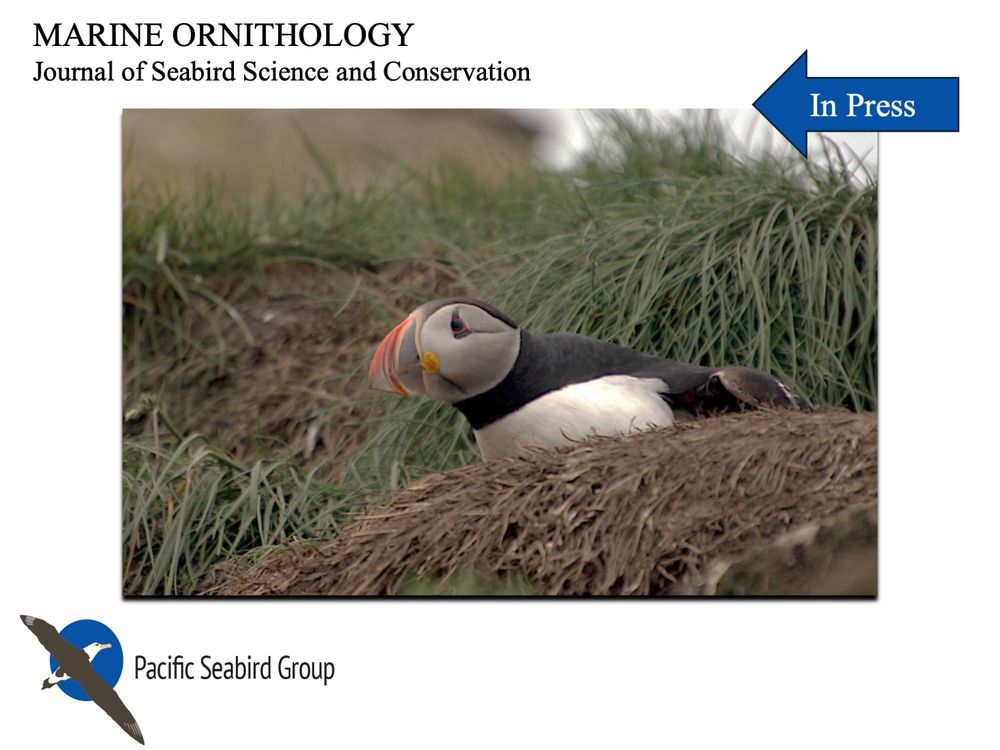
New paper alert: Behavioral response of Atlantic Puffins Fratercula arctica to marine heatwaves in the Gulf of Maine, USA: A webcam study. By Julie Wallace et al.
#seabirds #OpenAccess #HeatWaves
www.marineornithology.org/PDF/53_2/53_...
#seabirds #OpenAccess #HeatWaves
www.marineornithology.org/PDF/53_2/53_...
October 8, 2025 at 7:46 AM
New paper alert: Behavioral response of Atlantic Puffins Fratercula arctica to marine heatwaves in the Gulf of Maine, USA: A webcam study. By Julie Wallace et al.
#seabirds #OpenAccess #HeatWaves
www.marineornithology.org/PDF/53_2/53_...
#seabirds #OpenAccess #HeatWaves
www.marineornithology.org/PDF/53_2/53_...
Reposted by Heather Major

New paper alert! How can new technologies improve seabid population monitoring? Output from a workshop at the International Seabird Group Conference in Coimbra last year.
academic.oup.com/icesjms/arti...
academic.oup.com/icesjms/arti...

Opportunities and challenges for new technologies in seabird population monitoring
Abstract. Monitoring of seabird population size and demography has for decades relied on observer-based methods. While such methods have allowed the accumu
academic.oup.com
September 23, 2025 at 9:27 AM
New paper alert! How can new technologies improve seabid population monitoring? Output from a workshop at the International Seabird Group Conference in Coimbra last year.
academic.oup.com/icesjms/arti...
academic.oup.com/icesjms/arti...
Reposted by Heather Major
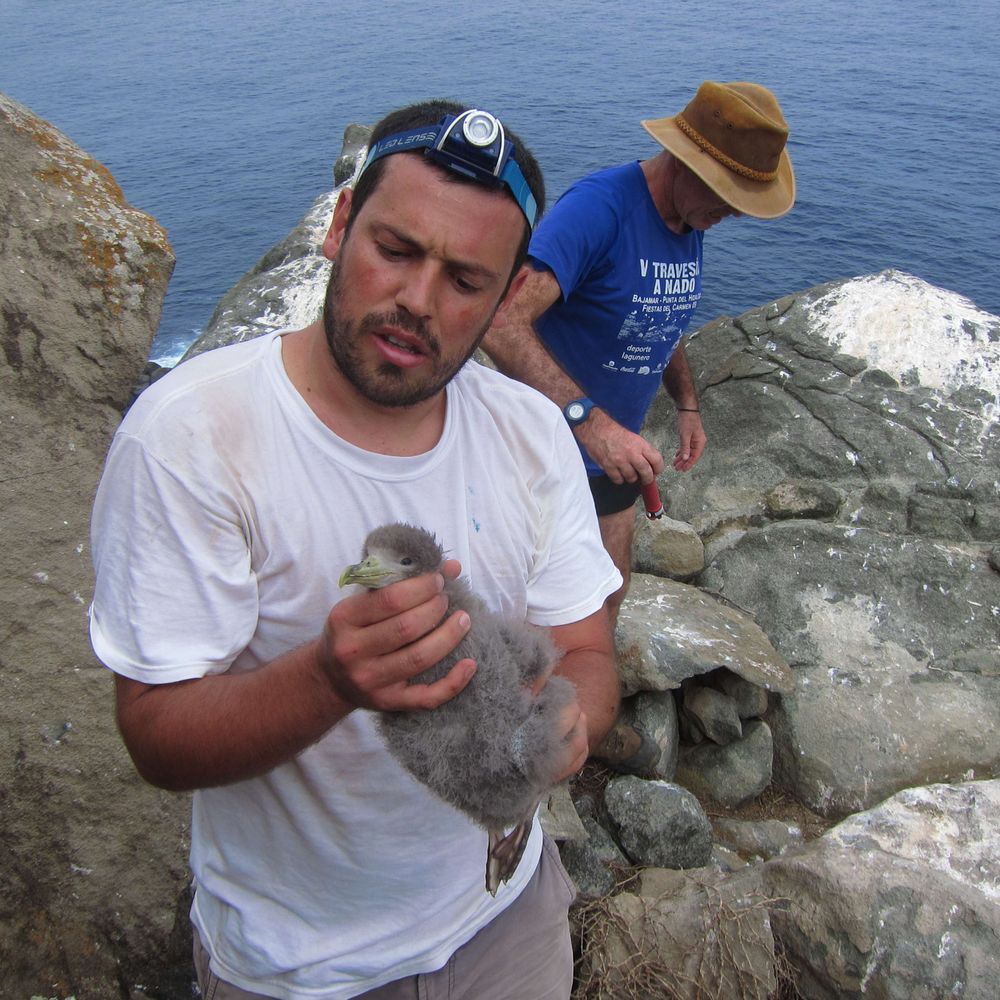
New post at ecolightsforseabirds website!
Pufflings navigating the lit night
About a recent study by @tbrownbirds.bsky.social on the Atlantic Puffin
ecolightsforseabirds.weebly.com/news/pufflin...
#ornithology
#seabirds
Pufflings navigating the lit night
About a recent study by @tbrownbirds.bsky.social on the Atlantic Puffin
ecolightsforseabirds.weebly.com/news/pufflin...
#ornithology
#seabirds

Pufflings navigating the lit night
Each year in Newfoundland, Canada, fledgling Atlantic Puffins (“pufflings”; Fratercula arctica ) become stranded in coastal towns during their nocturnal first flights from breeding colonies on...
ecolightsforseabirds.weebly.com
September 6, 2025 at 6:24 PM
New post at ecolightsforseabirds website!
Pufflings navigating the lit night
About a recent study by @tbrownbirds.bsky.social on the Atlantic Puffin
ecolightsforseabirds.weebly.com/news/pufflin...
#ornithology
#seabirds
Pufflings navigating the lit night
About a recent study by @tbrownbirds.bsky.social on the Atlantic Puffin
ecolightsforseabirds.weebly.com/news/pufflin...
#ornithology
#seabirds
Reposted by Heather Major

New @adriftlab.bsky.social paper in Emu-Austral Ornithology with @seabirdsentinel.bsky.social on the age of first return of Sable Shearwaters #seabirds #ornithology 🪶🧪
doi.org/10.1080/0158...
doi.org/10.1080/0158...

September 5, 2025 at 10:05 AM
New @adriftlab.bsky.social paper in Emu-Austral Ornithology with @seabirdsentinel.bsky.social on the age of first return of Sable Shearwaters #seabirds #ornithology 🪶🧪
doi.org/10.1080/0158...
doi.org/10.1080/0158...
I've watched the first 5 episodes and they are great. You should watch them and if you watch the 6th you might just see me!
In May 2024 a film crew came out to Machias Seal Island (MSI) to talk puffins for a 6-part series titled "Deep Dive North America". Watch Episode 6, airing Sept 6, 2025 to see the video from MSI (airing on Love Nature, AppleTV, and Prime)! lovenature.com/shows/deep-d...

Deep Dive North America - Love Nature
From two-inch beach mice to 24-metre blue whales, North America is home to the most diverse and charismatic marine life on the planet. Presenter Lizzie Daly embarks on an epic road trip from the froze...
lovenature.com
September 3, 2025 at 1:22 PM
I've watched the first 5 episodes and they are great. You should watch them and if you watch the 6th you might just see me!
Reposted by Heather Major
Heads up Canada folks. My mug and dulcet tones are likely to grace the CBC tomorrow, talking about the global plastics treaty, and our research in Nunatsiavut (and plastics generally)
August 14, 2025 at 9:02 PM
Heads up Canada folks. My mug and dulcet tones are likely to grace the CBC tomorrow, talking about the global plastics treaty, and our research in Nunatsiavut (and plastics generally)
Reposted by Heather Major
So excited to share our massive review on #alienspecies, now published! It was an honor to collaborate with a team of 65 authors on this project. We show how #biologicalinvasions are accelerating globally and what we still need to learn to halt them. 👾
#BiologicalReviews #Ecology #IPBES
#BiologicalReviews #Ecology #IPBES

Biological invasions: a global assessment of geographic distributions, long‐term trends, and data gaps
Biological invasions are one of the major drivers of biodiversity decline and have been shown to have far-reaching consequences for society and the economy. Preventing the introduction and spread of ....
onlinelibrary.wiley.com
August 13, 2025 at 10:43 AM
So excited to share our massive review on #alienspecies, now published! It was an honor to collaborate with a team of 65 authors on this project. We show how #biologicalinvasions are accelerating globally and what we still need to learn to halt them. 👾
#BiologicalReviews #Ecology #IPBES
#BiologicalReviews #Ecology #IPBES
Reposted by Heather Major
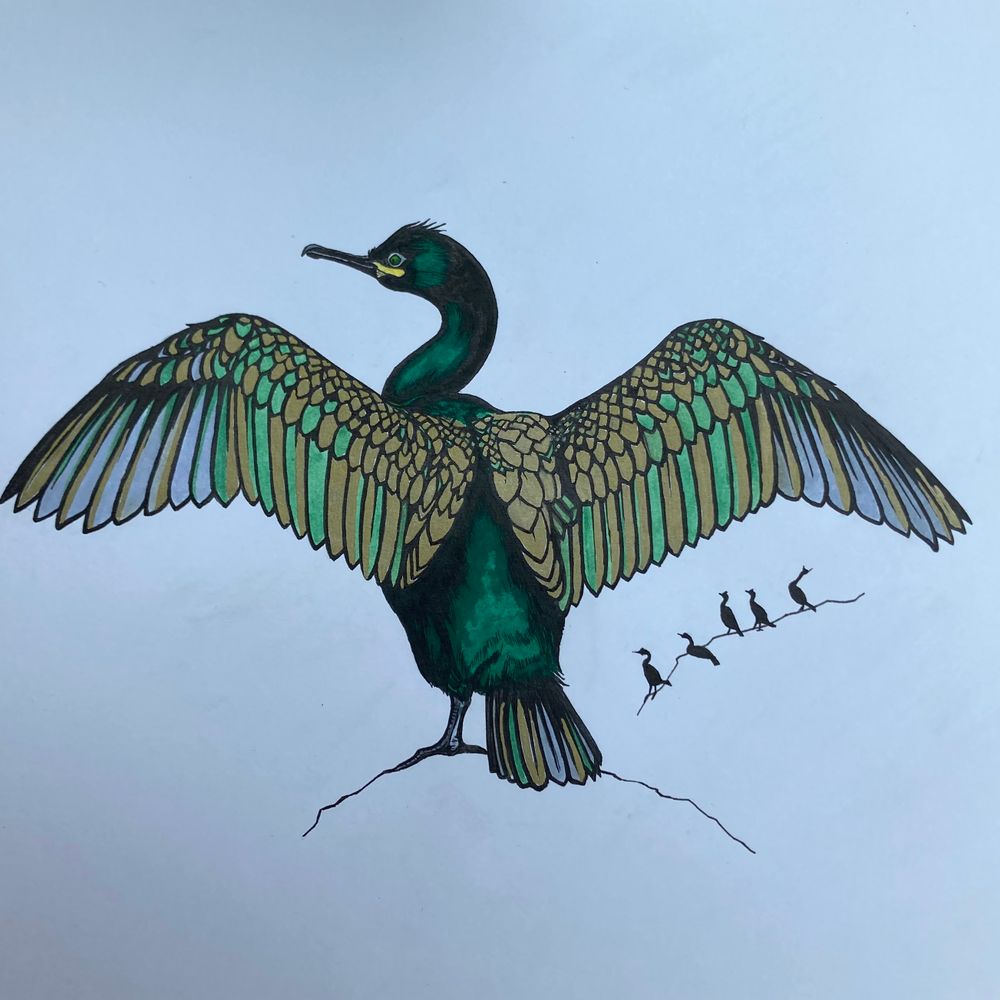
Long term monitoring is essential to understanding seabird populations - especially in the context of climate change.
A 68-year study on Leach’s storm-petrels showed that survival is inversely related to the AMO index
#Seabirds #Ornithology
royalsocietypublishing.org/doi/10.1098/...
A 68-year study on Leach’s storm-petrels showed that survival is inversely related to the AMO index
#Seabirds #Ornithology
royalsocietypublishing.org/doi/10.1098/...

Adult survival in a small seabird, Hydrobates leucorhous, covaries with the Atlantic Multidecadal Oscillation over the past six decades | Proceedings of the Royal Society B: Biological Sciences
Seabirds’ annual survival is influenced by numerous factors, but oceanic conditions
are among the most significant. Indices used to monitor these conditions typically
cycle over decades. Using the lon...
royalsocietypublishing.org
July 23, 2025 at 6:39 PM
Long term monitoring is essential to understanding seabird populations - especially in the context of climate change.
A 68-year study on Leach’s storm-petrels showed that survival is inversely related to the AMO index
#Seabirds #Ornithology
royalsocietypublishing.org/doi/10.1098/...
A 68-year study on Leach’s storm-petrels showed that survival is inversely related to the AMO index
#Seabirds #Ornithology
royalsocietypublishing.org/doi/10.1098/...
Reposted by Heather Major
MSc candidate and current field lead at Machias Seal Island spoke with Khalil Aktar on CBC Information Morning this morning about the 33-year old puffin captured on July 8th. You can listen here: www.cbc.ca/listen/live-... 🧪🦑🪶

© CBC/Radio-Canada 2025. All rights reserved.
www.cbc.ca
July 10, 2025 at 3:29 PM
MSc candidate and current field lead at Machias Seal Island spoke with Khalil Aktar on CBC Information Morning this morning about the 33-year old puffin captured on July 8th. You can listen here: www.cbc.ca/listen/live-... 🧪🦑🪶
Reposted by Heather Major
We haven't done a full check, but we might have captured the oldest puffin on Machias Seal Island. While the longevity record for Atlantic Puffin is 45 years (from Iceland), the North American record is 33 years. Last night we captured a bird banded as a chick in 1992, making it 33!🧪🪶

July 9, 2025 at 12:32 PM
We haven't done a full check, but we might have captured the oldest puffin on Machias Seal Island. While the longevity record for Atlantic Puffin is 45 years (from Iceland), the North American record is 33 years. Last night we captured a bird banded as a chick in 1992, making it 33!🧪🪶
Reposted by Heather Major
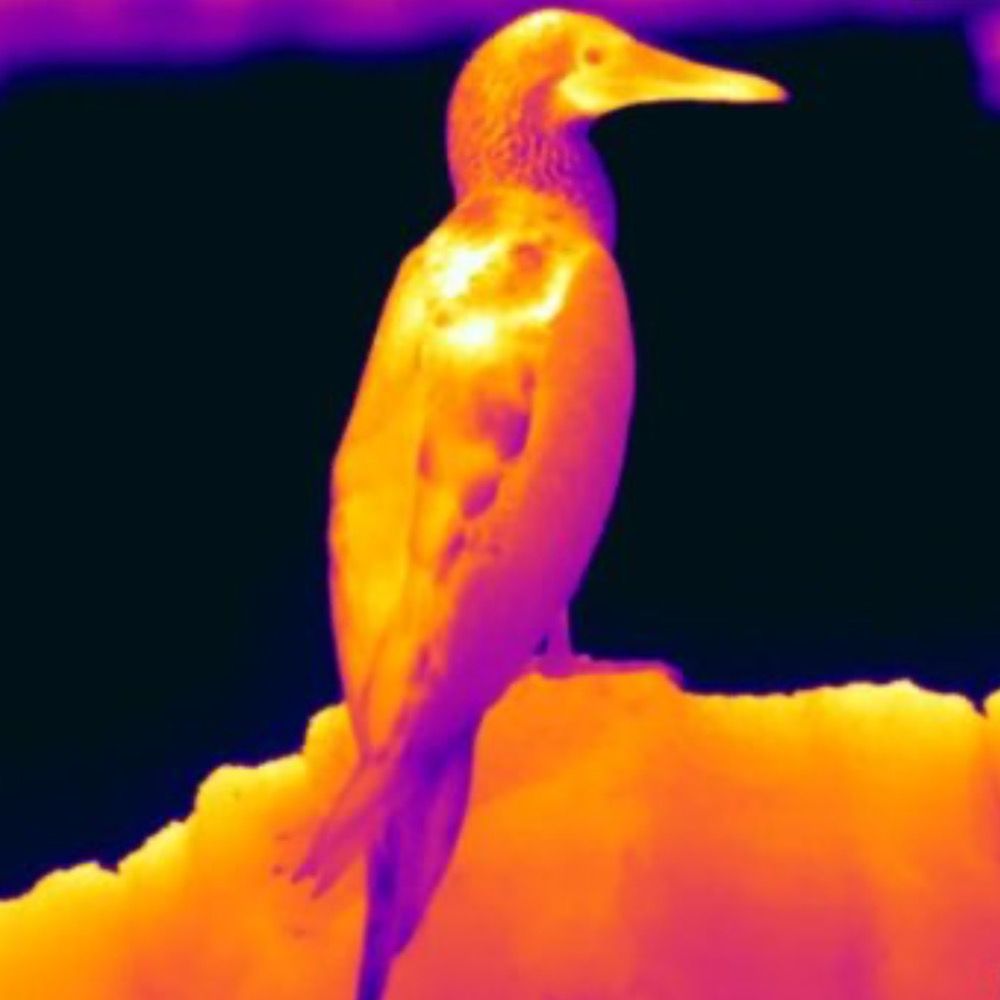
Shape-Shifting Shorebirds: How Wing Length Is Responding to a Warming World
We’re excited to share the publication of a new paper in Ecography, led by PhD candidate Sara Ryding (Deakin University, collaboration with Matt Symonds Lab), which explores how climate change may be reshaping the…
We’re excited to share the publication of a new paper in Ecography, led by PhD candidate Sara Ryding (Deakin University, collaboration with Matt Symonds Lab), which explores how climate change may be reshaping the…

Shape-Shifting Shorebirds: How Wing Length Is Responding to a Warming World
We’re excited to share the publication of a new paper in Ecography, led by PhD candidate Sara Ryding (Deakin University, collaboration with Matt Symonds Lab), which explores how climate change may be reshaping the morphology of migratory shorebirds. Using an incredibly extensive dataset of nearly 19,000 juvenile birds across 11 species sampled over 43 years, Sara investigated whether warming temperatures are causing changes in relative wing length, a trait thought to play a role in thermoregulation.
tattersalllab.com
June 20, 2025 at 2:36 PM
Shape-Shifting Shorebirds: How Wing Length Is Responding to a Warming World
We’re excited to share the publication of a new paper in Ecography, led by PhD candidate Sara Ryding (Deakin University, collaboration with Matt Symonds Lab), which explores how climate change may be reshaping the…
We’re excited to share the publication of a new paper in Ecography, led by PhD candidate Sara Ryding (Deakin University, collaboration with Matt Symonds Lab), which explores how climate change may be reshaping the…
Reposted by Heather Major
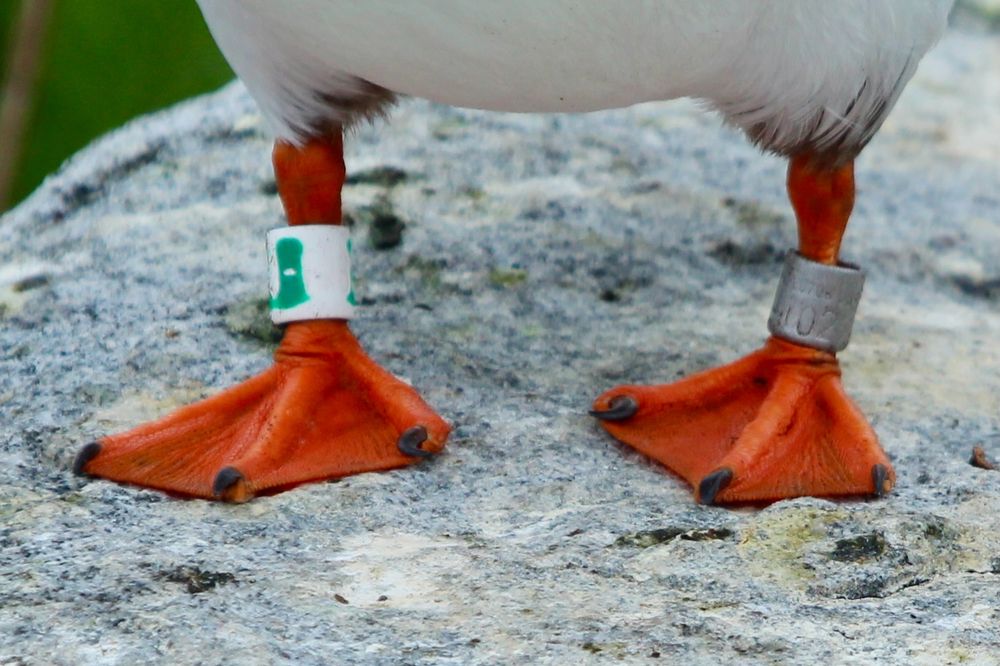
After years of seeing the faded plastic band on this puffin and being unable to re-sight it, we finally re-captured it and replaced its bands. This bird was first banded as chick in 1996 making it 29 years old (!) and among the oldest in our records. 🦑🪶🧪
June 17, 2025 at 5:13 PM
After years of seeing the faded plastic band on this puffin and being unable to re-sight it, we finally re-captured it and replaced its bands. This bird was first banded as chick in 1996 making it 29 years old (!) and among the oldest in our records. 🦑🪶🧪
Reposted by Heather Major

Seabirds are our compass!🌊
Did you know the largest High Seas Marine Protected Area (MPA) outside Antarctica was identified from seabird tracking data?🌍
The NACES MPA is used by up to five million birds, such as Arctic Tern and Atlantic Puffin.
Learn more👉 www.seabirdtracking.org/case-studies...
Did you know the largest High Seas Marine Protected Area (MPA) outside Antarctica was identified from seabird tracking data?🌍
The NACES MPA is used by up to five million birds, such as Arctic Tern and Atlantic Puffin.
Learn more👉 www.seabirdtracking.org/case-studies...

June 13, 2025 at 11:19 AM
Seabirds are our compass!🌊
Did you know the largest High Seas Marine Protected Area (MPA) outside Antarctica was identified from seabird tracking data?🌍
The NACES MPA is used by up to five million birds, such as Arctic Tern and Atlantic Puffin.
Learn more👉 www.seabirdtracking.org/case-studies...
Did you know the largest High Seas Marine Protected Area (MPA) outside Antarctica was identified from seabird tracking data?🌍
The NACES MPA is used by up to five million birds, such as Arctic Tern and Atlantic Puffin.
Learn more👉 www.seabirdtracking.org/case-studies...
Reposted by Heather Major
Weather is getting warmer and our work is ramping up. First puffin chicks hatched this weekend! The colony is noisy with the peeps of chicks (some being described as sounding like tea kettles). 🦑🪶🐧🧪

June 9, 2025 at 11:52 AM
Weather is getting warmer and our work is ramping up. First puffin chicks hatched this weekend! The colony is noisy with the peeps of chicks (some being described as sounding like tea kettles). 🦑🪶🐧🧪
Reposted by Heather Major
NEW PAPER relevant for #ornithology provides guidance how to interpret #bioacoustics indices to characterize populations such as #seabirds. Paper is here: buff.ly/phErViS
ShinyApp is here: buff.ly/IechtSX
ShinyApp is here: buff.ly/IechtSX

June 5, 2025 at 3:57 PM
NEW PAPER relevant for #ornithology provides guidance how to interpret #bioacoustics indices to characterize populations such as #seabirds. Paper is here: buff.ly/phErViS
ShinyApp is here: buff.ly/IechtSX
ShinyApp is here: buff.ly/IechtSX
Reposted by Heather Major
First Razorbill chicks have hatched! This is a little later than the last three years (first chicks hatched in the last week of May), right on the average for the last 10 years, and a full 2 weeks earlier than 1995-2004! 🪶🦑

June 4, 2025 at 12:09 PM
First Razorbill chicks have hatched! This is a little later than the last three years (first chicks hatched in the last week of May), right on the average for the last 10 years, and a full 2 weeks earlier than 1995-2004! 🪶🦑
Reposted by Heather Major

Systematic assessment of the increasing presence of white sharks in Atlantic Canadian waters www.int-res.com/abstracts/me...

Systematic assessment of the increasing presence of white sharks in Atlantic Canadian waters
This study presents the first systematic assessment of trends in white shark Carcharodon carcharias presence in Atlantic Canadian waters (ACWs) using 2 standardized acoustic monitoring...
www.int-res.com
June 2, 2025 at 5:28 PM
Systematic assessment of the increasing presence of white sharks in Atlantic Canadian waters www.int-res.com/abstracts/me...
Reposted by Heather Major
Expanded Marine Protections Around South Georgia and South Sandwich Islands Take Effect
Major move will help region’s rich biodiversity: Almost half a million square kilometers of ocean is now closed to fishing www.pew-bertarelli-ocean-legacy.org/en/research-... 🦑🧪🌎
Major move will help region’s rich biodiversity: Almost half a million square kilometers of ocean is now closed to fishing www.pew-bertarelli-ocean-legacy.org/en/research-... 🦑🧪🌎

Expanded Marine Protections Around South Georgia and South Sandwich Islands Take Effect
On April 22, the Government of South Georgia and the South Sandwich Islands, a U.K. overseas territory, officially enacted a strengthened set of protections for its vast marine protected area (MPA). F...
www.pew-bertarelli-ocean-legacy.org
May 30, 2025 at 1:11 PM
Expanded Marine Protections Around South Georgia and South Sandwich Islands Take Effect
Major move will help region’s rich biodiversity: Almost half a million square kilometers of ocean is now closed to fishing www.pew-bertarelli-ocean-legacy.org/en/research-... 🦑🧪🌎
Major move will help region’s rich biodiversity: Almost half a million square kilometers of ocean is now closed to fishing www.pew-bertarelli-ocean-legacy.org/en/research-... 🦑🧪🌎
Reposted by Heather Major
Another week has flown by, highlights include warbler fallout (!), resightings, adult puffin and razorbill banding, getting our last research blind built (its a bit wonky but safe and will work for the time being), and the start of tourist season. 🦑🪶

May 28, 2025 at 11:05 AM
Another week has flown by, highlights include warbler fallout (!), resightings, adult puffin and razorbill banding, getting our last research blind built (its a bit wonky but safe and will work for the time being), and the start of tourist season. 🦑🪶
Reposted by Heather Major
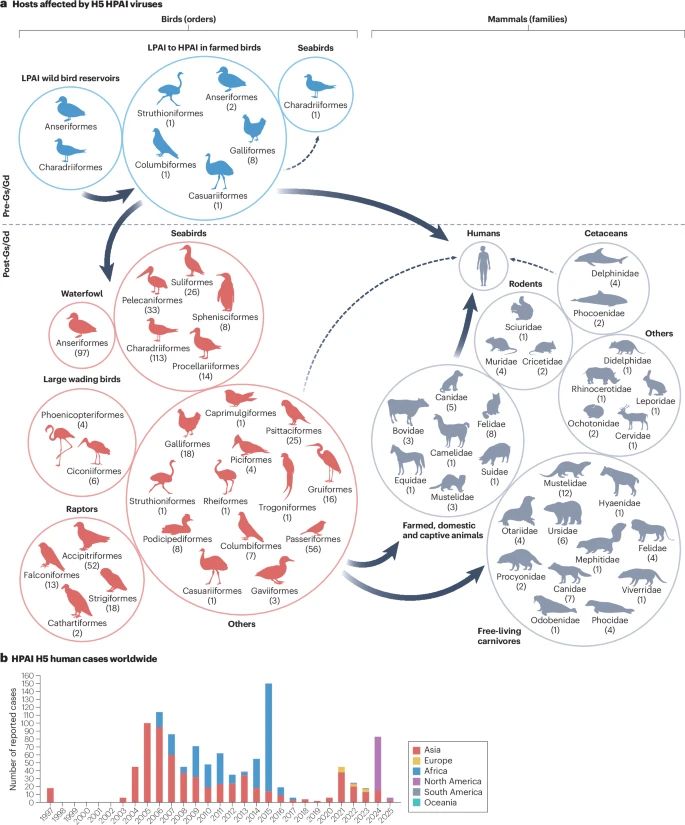
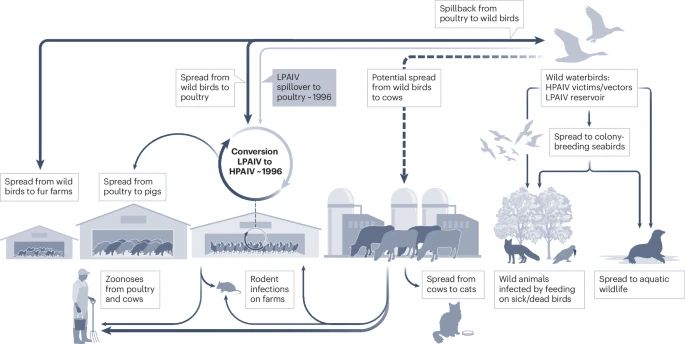
Excellent, epic review of HPAI H5N1!
👉 www.nature.com/articles/s41...
👉 www.nature.com/articles/s41...
May 22, 2025 at 10:24 PM
Excellent, epic review of HPAI H5N1!
👉 www.nature.com/articles/s41...
👉 www.nature.com/articles/s41...
🦑🧪
New paper from PhD candidate Allison Anholt describing seabird bycatch in the Greenland halibut fishery in the Canadian Arctic. We found that Northern Fulmars were the most frequently reported seabird bycatch species with high levels of monthly and annual variation. #seabirds doi.org/10.1093/mcfa...

Incidental seabird bycatch in the Greenland Halibut fishery in northern Canada reported via at-sea observer programs
doi.org
May 21, 2025 at 4:50 PM
🦑🧪
Reposted by Heather Major
Week one is done! Our first week was spent getting things set-up and training/orienting new crew members. We've also been banding adult puffins and Razorbills, checking our productivity nests, and re-sighting. If that's not enough we retrieved our first GLS logger of the season! 🐧🦑🧪


May 21, 2025 at 12:50 PM
Week one is done! Our first week was spent getting things set-up and training/orienting new crew members. We've also been banding adult puffins and Razorbills, checking our productivity nests, and re-sighting. If that's not enough we retrieved our first GLS logger of the season! 🐧🦑🧪