



Gabriel Istrate
@gistrate.bsky.social
Computer Scientist, University of Bucharest. Theoretical Computer Science, Multiagent Systems, Complex Systems (and MUCH MORE)
Now when will a theoretical computer science conference do the same?😀

December 6, 2025 at 6:28 AM
Now when will a theoretical computer science conference do the same?😀
Reposted by Gabriel Istrate

To celebrate the closing of our inaugural conference, we have asked our friends at Slowburn Brewing Co-op to help commemorate this event. Together we have come up with the EurIPA – The Last Session, a lovely session IPA🍻


December 5, 2025 at 2:52 PM
To celebrate the closing of our inaugural conference, we have asked our friends at Slowburn Brewing Co-op to help commemorate this event. Together we have come up with the EurIPA – The Last Session, a lovely session IPA🍻


Reposted by Gabriel Istrate

It’s widely known (and, I think, pretty uncontroversial) that learning requires effort — specifically, if you don’t have to work at getting the knowledge, it won’t stick.
Even if an LLM could be trusted to give you correct information 100% of the time, it would be an inferior method of learning it.
Even if an LLM could be trusted to give you correct information 100% of the time, it would be an inferior method of learning it.

Relying on ChatGPT to teach you about a topic leaves you with shallower knowledge than Googling and reading about it, according to new research that compared what more than 10,000 people knew after using one method or the other.
Shared by @gizmodo.com: buff.ly/yAAHtHq
Shared by @gizmodo.com: buff.ly/yAAHtHq
November 21, 2025 at 12:49 PM
It’s widely known (and, I think, pretty uncontroversial) that learning requires effort — specifically, if you don’t have to work at getting the knowledge, it won’t stick.
Even if an LLM could be trusted to give you correct information 100% of the time, it would be an inferior method of learning it.
Even if an LLM could be trusted to give you correct information 100% of the time, it would be an inferior method of learning it.
Reposted by Gabriel Istrate

Hopefullly they also include test of space awards.
Computational Complexity Conference launches its first test of time award. Nominations due by March 2.
computationalcomplex...
computationalcomplex...
November 9, 2025 at 4:28 AM
Hopefullly they also include test of space awards.
Reposted by Gabriel Istrate
I'm not using GenAI to write papers, but with a deadline at my 9am tomorrow morning I *will* acknowledge my use of the coffee machine
November 4, 2025 at 2:23 AM
I'm not using GenAI to write papers, but with a deadline at my 9am tomorrow morning I *will* acknowledge my use of the coffee machine
Reposted by Gabriel Istrate
The Simon-Mandelbrot dispute.
Here is how it was done in the old days when scholarly disputes were handled slowly (over 8 years!) and in peer reviewed journals (with exciting titles), rather than in snappy and rude online forums.
Here is how it was done in the old days when scholarly disputes were handled slowly (over 8 years!) and in peer reviewed journals (with exciting titles), rather than in snappy and rude online forums.

June 23, 2025 at 12:38 AM
The Simon-Mandelbrot dispute.
Here is how it was done in the old days when scholarly disputes were handled slowly (over 8 years!) and in peer reviewed journals (with exciting titles), rather than in snappy and rude online forums.
Here is how it was done in the old days when scholarly disputes were handled slowly (over 8 years!) and in peer reviewed journals (with exciting titles), rather than in snappy and rude online forums.
Reposted by Gabriel Istrate

Computer Science is no longer just about building systems or proving theorems--it's about observation and experiments.
In my latest blog post, I argue it’s time we had our own "Econometrics," a discipline devoted to empirical rigor.
doomscrollingbabel.manoel.xyz/p/the-missin...
In my latest blog post, I argue it’s time we had our own "Econometrics," a discipline devoted to empirical rigor.
doomscrollingbabel.manoel.xyz/p/the-missin...

October 5, 2025 at 4:07 PM
Computer Science is no longer just about building systems or proving theorems--it's about observation and experiments.
In my latest blog post, I argue it’s time we had our own "Econometrics," a discipline devoted to empirical rigor.
doomscrollingbabel.manoel.xyz/p/the-missin...
In my latest blog post, I argue it’s time we had our own "Econometrics," a discipline devoted to empirical rigor.
doomscrollingbabel.manoel.xyz/p/the-missin...
Here's my yearly reminder that summer is for ... this (even though I will still carry a 13 inch, pdf-capable, e-reader on the beach).

August 17, 2025 at 2:25 PM
Here's my yearly reminder that summer is for ... this (even though I will still carry a 13 inch, pdf-capable, e-reader on the beach).
Reposted by Gabriel Istrate
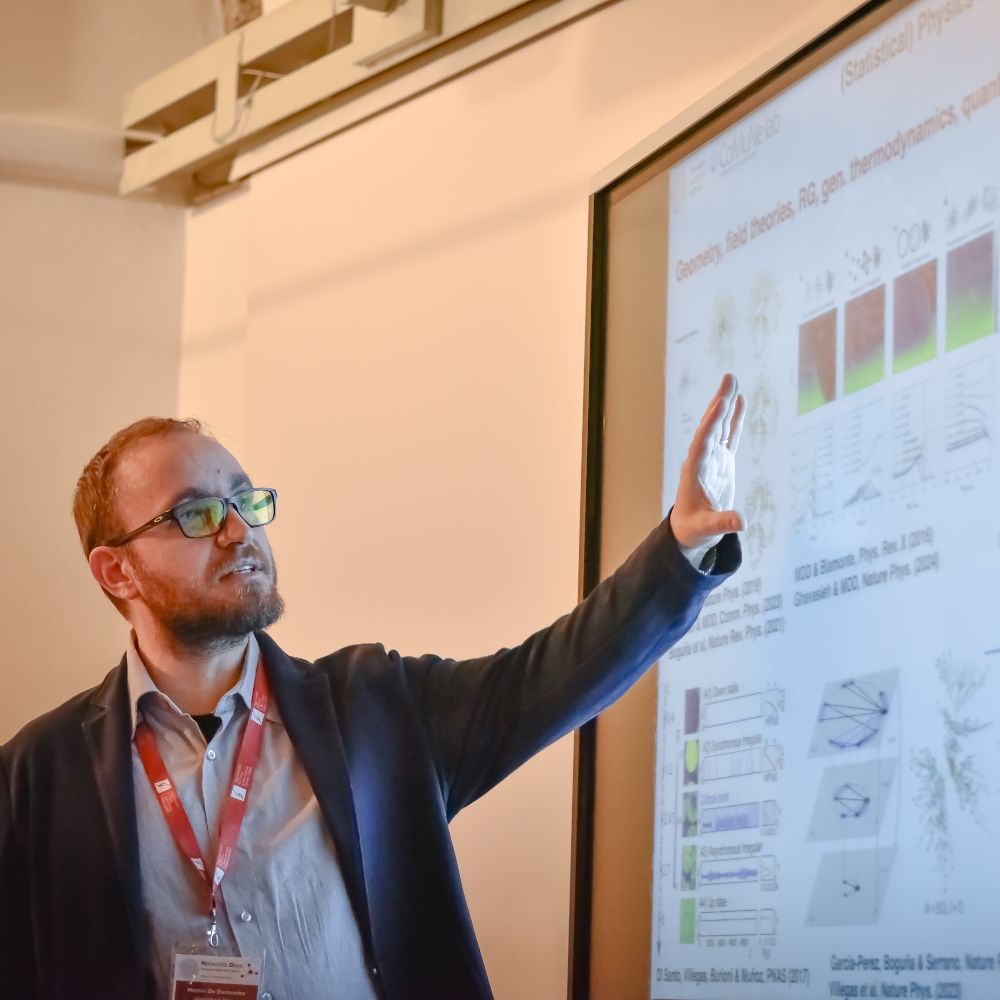
"our results indicate that academia pays a price by focusing attention and resources on superstars"
Nice to see this supported by data analysis, now.
H/T: @cxdig.bsky.social
www.nature.com/articles/s41...
Nice to see this supported by data analysis, now.
H/T: @cxdig.bsky.social
www.nature.com/articles/s41...
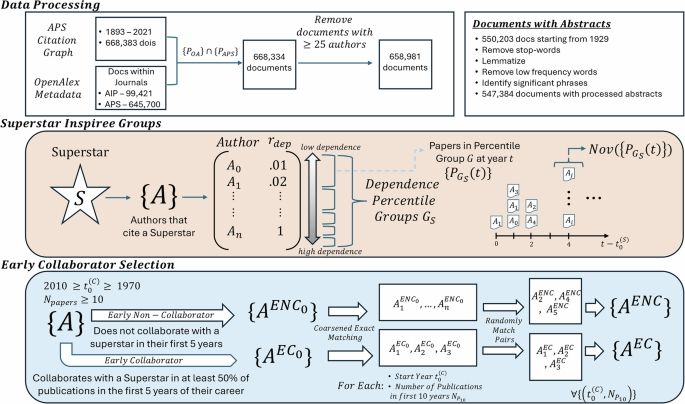
The innovation trade-off: how following superstars shapes academic novelty - Humanities and Social Sciences Communications
Humanities and Social Sciences Communications - The innovation trade-off: how following superstars shapes academic novelty
www.nature.com
July 19, 2025 at 12:05 PM
"our results indicate that academia pays a price by focusing attention and resources on superstars"
Nice to see this supported by data analysis, now.
H/T: @cxdig.bsky.social
www.nature.com/articles/s41...
Nice to see this supported by data analysis, now.
H/T: @cxdig.bsky.social
www.nature.com/articles/s41...
Reposted by Gabriel Istrate
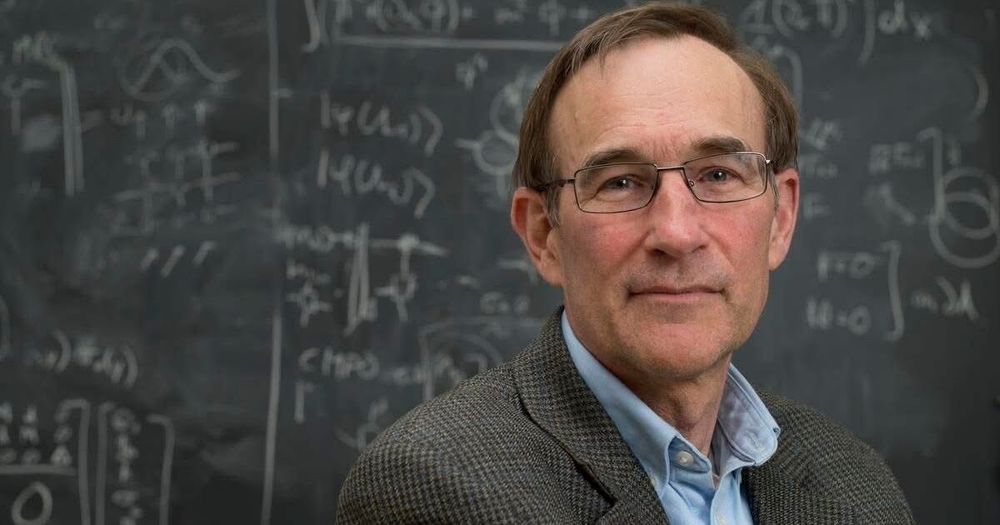
RIP Ray Laflamme, gone too soon.
Ray was a stellar scientist, the founding director of the IQC and of CIFAR's Quantum Information program, but more importantly a warm & generous human who built community and helped many (particularly junior researchers).
May his memory be a blessing.
Ray was a stellar scientist, the founding director of the IQC and of CIFAR's Quantum Information program, but more importantly a warm & generous human who built community and helped many (particularly junior researchers).
May his memory be a blessing.
June 21, 2025 at 4:56 PM
RIP Ray Laflamme, gone too soon.
Ray was a stellar scientist, the founding director of the IQC and of CIFAR's Quantum Information program, but more importantly a warm & generous human who built community and helped many (particularly junior researchers).
May his memory be a blessing.
Ray was a stellar scientist, the founding director of the IQC and of CIFAR's Quantum Information program, but more importantly a warm & generous human who built community and helped many (particularly junior researchers).
May his memory be a blessing.
Reposted by Gabriel Istrate


Reposted by Gabriel Istrate

Before AGI, it would be nice if the slides I prepared on a Mac using Microsoft PowerPoint looked exactly the same on Windows. Just saying.
May 14, 2025 at 4:02 AM
Before AGI, it would be nice if the slides I prepared on a Mac using Microsoft PowerPoint looked exactly the same on Windows. Just saying.
Reposted by Gabriel Istrate
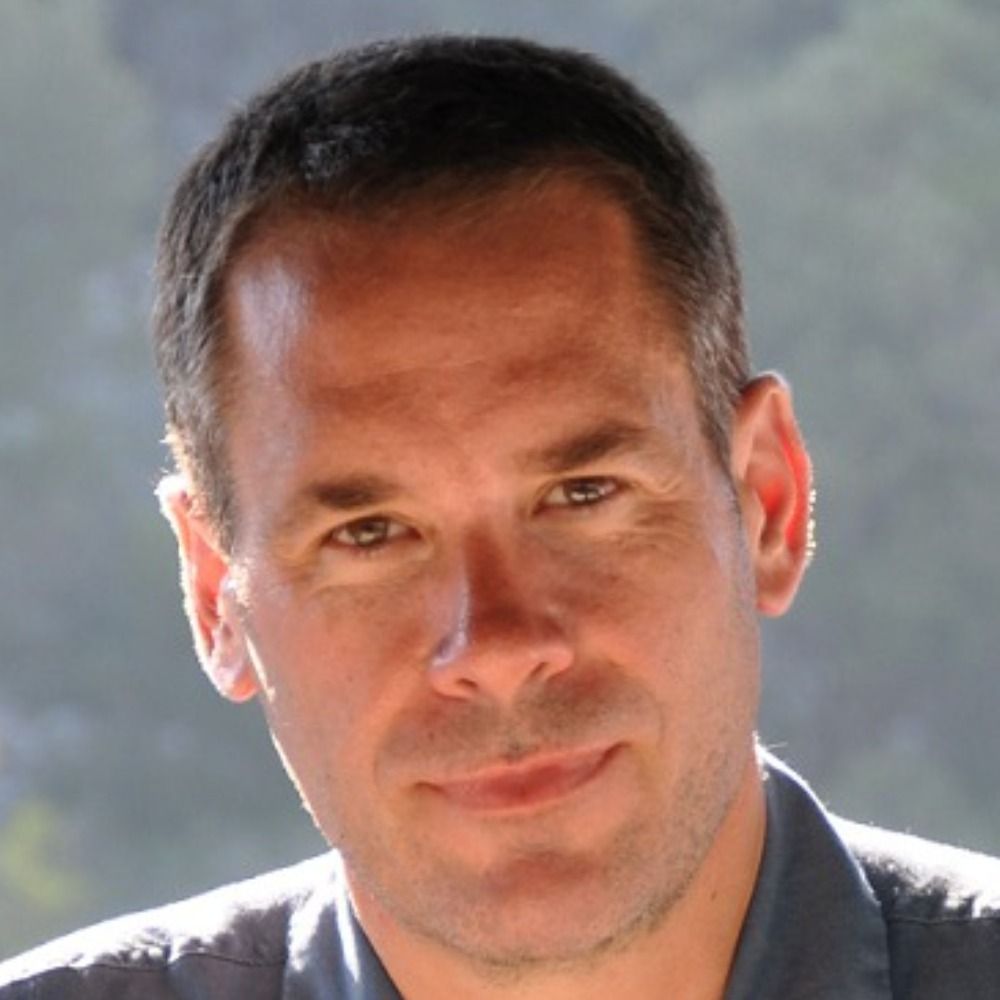
Patrick Suppes was born OTD in 1922.
One of the great 20th century philosophers of science, Pat was an early critic of the semantic conception of theories, believing that theories are best conceived as sets of models.
He was also accomplished in both empirical science and business.
🦋🦫 #PhilSci
One of the great 20th century philosophers of science, Pat was an early critic of the semantic conception of theories, believing that theories are best conceived as sets of models.
He was also accomplished in both empirical science and business.
🦋🦫 #PhilSci

March 17, 2025 at 3:04 PM
Patrick Suppes was born OTD in 1922.
One of the great 20th century philosophers of science, Pat was an early critic of the semantic conception of theories, believing that theories are best conceived as sets of models.
He was also accomplished in both empirical science and business.
🦋🦫 #PhilSci
One of the great 20th century philosophers of science, Pat was an early critic of the semantic conception of theories, believing that theories are best conceived as sets of models.
He was also accomplished in both empirical science and business.
🦋🦫 #PhilSci
Reposted by Gabriel Istrate

The assault on science is indicative of a broader pattern: Rejection of
facts and intellectual rigour.
facts and intellectual rigour.
March 16, 2025 at 4:07 AM
The assault on science is indicative of a broader pattern: Rejection of
facts and intellectual rigour.
facts and intellectual rigour.
Reposted by Gabriel Istrate
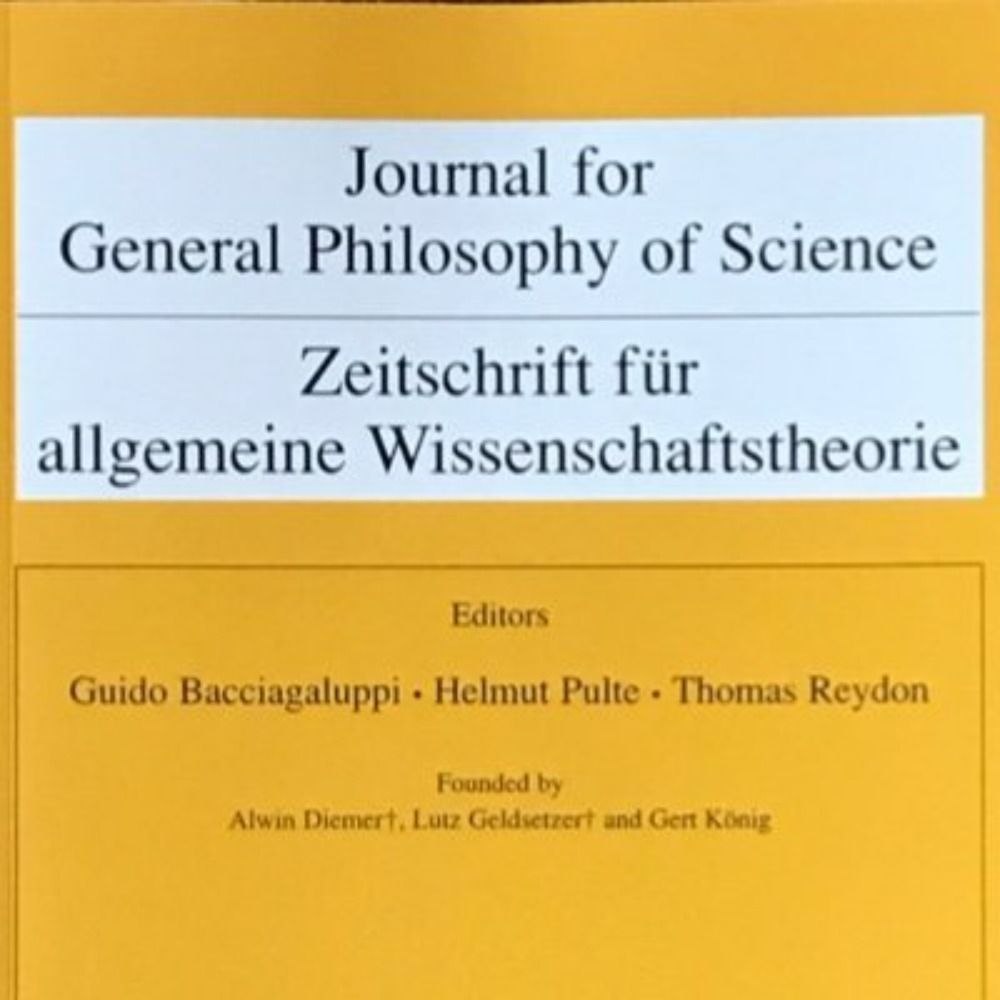
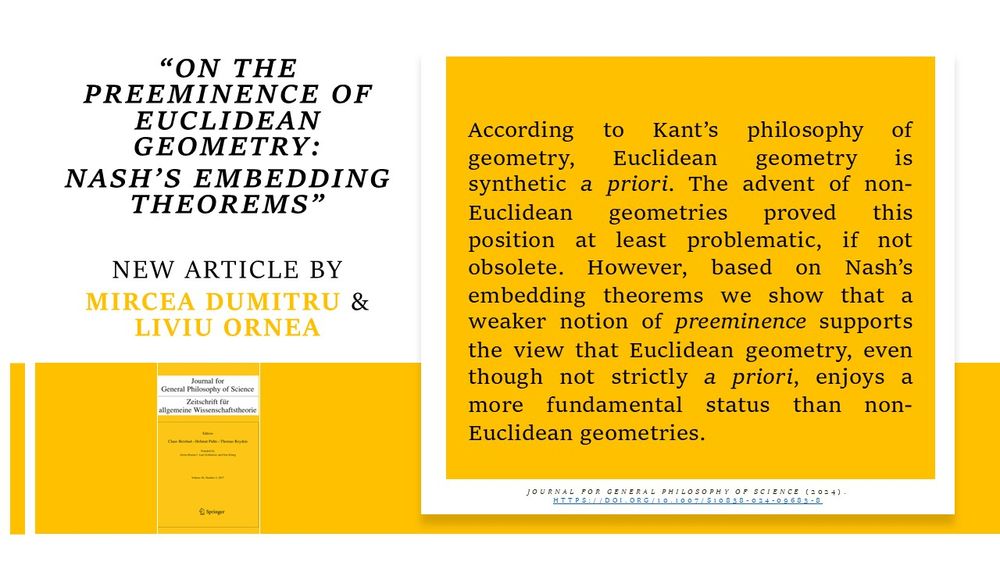
Does Euclidean geometry hold a more fundamental status than non-Euclidean geometries? 📐🟣 In a recent paper, Mircea Dumitru and Liviu Ornea argue that it does and that Nash’s embedding theorems provide a way to demonstrate this 👇📃 link.springer.com/article/10.1... #philsky #philsci #mathsky
February 25, 2025 at 8:40 PM
Does Euclidean geometry hold a more fundamental status than non-Euclidean geometries? 📐🟣 In a recent paper, Mircea Dumitru and Liviu Ornea argue that it does and that Nash’s embedding theorems provide a way to demonstrate this 👇📃 link.springer.com/article/10.1... #philsky #philsci #mathsky
Reposted by Gabriel Istrate
New paper: Simulating Time With Square-Root Space
people.csail.mit.edu/rrw/time-vs-...
It's still hard for me to believe it myself, but I seem to have shown that TIME[t] is contained in SPACE[sqrt{t log t}].
To appear in STOC. Comments are very welcome!
people.csail.mit.edu/rrw/time-vs-...
It's still hard for me to believe it myself, but I seem to have shown that TIME[t] is contained in SPACE[sqrt{t log t}].
To appear in STOC. Comments are very welcome!
people.csail.mit.edu
February 21, 2025 at 10:19 PM
New paper: Simulating Time With Square-Root Space
people.csail.mit.edu/rrw/time-vs-...
It's still hard for me to believe it myself, but I seem to have shown that TIME[t] is contained in SPACE[sqrt{t log t}].
To appear in STOC. Comments are very welcome!
people.csail.mit.edu/rrw/time-vs-...
It's still hard for me to believe it myself, but I seem to have shown that TIME[t] is contained in SPACE[sqrt{t log t}].
To appear in STOC. Comments are very welcome!
Reposted by Gabriel Istrate

As SFI President David Krakauer puts it, “The Santa Fe Institute is metaphorically a Monastery in the Mountains — living at the edge of wilderness and society.”
December 19, 2024 at 8:10 PM
As SFI President David Krakauer puts it, “The Santa Fe Institute is metaphorically a Monastery in the Mountains — living at the edge of wilderness and society.”
Reposted by Gabriel Istrate
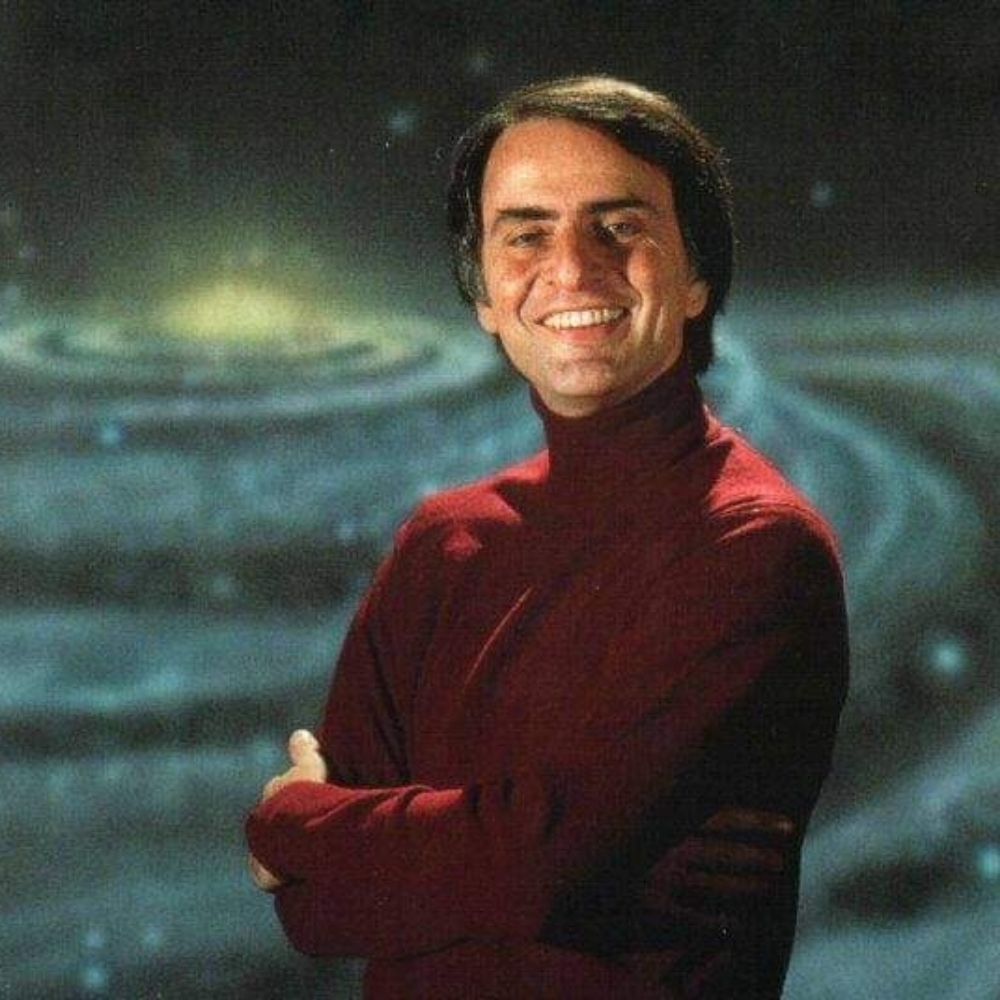
"We've arranged a society based on science and technology, in which nobody understands anything about science and technology. This combustible mixture of ignorance and power, sooner or later, is going to blow up in our faces."
Carl Sagan (Charlie Rose Interview)
❤️☮️🌏 #carlsagan
Carl Sagan (Charlie Rose Interview)
❤️☮️🌏 #carlsagan
November 19, 2024 at 12:41 PM
"We've arranged a society based on science and technology, in which nobody understands anything about science and technology. This combustible mixture of ignorance and power, sooner or later, is going to blow up in our faces."
Carl Sagan (Charlie Rose Interview)
❤️☮️🌏 #carlsagan
Carl Sagan (Charlie Rose Interview)
❤️☮️🌏 #carlsagan
Reposted by Gabriel Istrate

I wanted my Algorithms students to program NP hardness reductions so we developed Karp. A domain specific language for writing Karp reductions. Our students are quite good with a debugger, so reducing learning Theory to debugging seemed like a win. docs.racket-lang.org/karp/index.h...
Karp: A Language for NP Reductions
docs.racket-lang.org
November 27, 2024 at 4:48 AM
I wanted my Algorithms students to program NP hardness reductions so we developed Karp. A domain specific language for writing Karp reductions. Our students are quite good with a debugger, so reducing learning Theory to debugging seemed like a win. docs.racket-lang.org/karp/index.h...
Reposted by Gabriel Istrate

I've now read a bunch of papers like this -- ABMs where the agents' behaviors are driven by generative AIs. They often tell us interesting things about the AI algorithms, but never in my experience have we learned anything new about people.

I am genuinely curious abt the planned uses for these agents
Science is asking questions & allowing for unexpected answers
How can an agent surprise us in an experiment? In a survey?
An agent is a predictive model
Such models are often proved wrong by field experiments
arxiv.org/pdf/2411.10109

November 25, 2024 at 11:37 PM
I've now read a bunch of papers like this -- ABMs where the agents' behaviors are driven by generative AIs. They often tell us interesting things about the AI algorithms, but never in my experience have we learned anything new about people.
Not only ML reviews, though
The PCP theorem, a jewel of theoretical computer science, establishes that any NP statement can be assessed by a randomized verifier who only checks a vanishing fraction of the proof (indeed, a constant # of characters!)
This has had incredible impact, most notably on how ML reviews are conducted
This has had incredible impact, most notably on how ML reviews are conducted
November 26, 2024 at 6:32 AM
Not only ML reviews, though
Reposted by Gabriel Istrate
Optimist: The cup is half full
Pessimist: The cup is half empty
LaTeX user: The whole spacing and size are wrong, you should have been using \bigcup
Pessimist: The cup is half empty
LaTeX user: The whole spacing and size are wrong, you should have been using \bigcup

Optimist: The cup is half full
Pessimist: The cup is half empty
STS researcher: The cup is an affordance
Pessimist: The cup is half empty
STS researcher: The cup is an affordance

Optimist: The cup is half full
Pessimist: The cup is half empty
Cosmologist: The cup is dusty or full of gravitational waves
Pessimist: The cup is half empty
Cosmologist: The cup is dusty or full of gravitational waves
November 23, 2024 at 8:49 PM
Optimist: The cup is half full
Pessimist: The cup is half empty
LaTeX user: The whole spacing and size are wrong, you should have been using \bigcup
Pessimist: The cup is half empty
LaTeX user: The whole spacing and size are wrong, you should have been using \bigcup
Reposted by Gabriel Istrate

There is now gurobi-ai-modeling.readthedocs.io which is aimed at the non-mathematician crowd for building optimization models from human-language problem descriptions.
AI Modeling - Gurobi OptimizationContentsMenuExpandLight modeDark modeAuto light/dark, in light modeAuto light/dark, in dark mode
gurobi-ai-modeling.readthedocs.io
November 24, 2024 at 12:12 AM
There is now gurobi-ai-modeling.readthedocs.io which is aimed at the non-mathematician crowd for building optimization models from human-language problem descriptions.
Reposted by Gabriel Istrate
Finally found it!

November 22, 2024 at 6:46 PM
Finally found it!