




Fact Retriever
@factretriever.bsky.social
Knowledge connoisseurs changing the world with one interesting fact at a time 📚❤️
www.factretriever.com
www.factretriever.com
Candy Land was created 70 years ago to give kids stuck in polio wards a way to vicariously move freely in the pursuit of delights.
The original board featured a boy in a leg brace about to walk through starting gate of the game.
#funfacts#classicgames#candyland
The original board featured a boy in a leg brace about to walk through starting gate of the game.
#funfacts#classicgames#candyland

May 6, 2025 at 5:39 PM
Candy Land was created 70 years ago to give kids stuck in polio wards a way to vicariously move freely in the pursuit of delights.
The original board featured a boy in a leg brace about to walk through starting gate of the game.
#funfacts#classicgames#candyland
The original board featured a boy in a leg brace about to walk through starting gate of the game.
#funfacts#classicgames#candyland
The word "rodent" comes from the Latin word "rodere," meaning "to gnaw."
April 23, 2025 at 6:17 PM
The word "rodent" comes from the Latin word "rodere," meaning "to gnaw."
Male lobster’s bladders are in their heads, and when they fight, they squirt each other in the face with urine.
April 22, 2025 at 2:24 PM
Male lobster’s bladders are in their heads, and when they fight, they squirt each other in the face with urine.
The word "everywhen" means all the time or always.
April 7, 2025 at 7:26 PM
The word "everywhen" means all the time or always.
The "O" before an Irish name, such as "O'Reilly," means "descendant of."
March 21, 2025 at 5:42 PM
The "O" before an Irish name, such as "O'Reilly," means "descendant of."

A pangram is a sentence that contains every letter in the language. For example, "The quick brown fox jumps over the lazy dog."
March 6, 2025 at 5:05 PM
A pangram is a sentence that contains every letter in the language. For example, "The quick brown fox jumps over the lazy dog."
A duel between three people is called a "truel."
March 3, 2025 at 7:05 PM
A duel between three people is called a "truel."
A single strand of spaghetti is called a spaghetto.
The word "spaghetto" is the singular form of "spaghetti," which comes from the Italian word "spago," meaning "string" or "twine."
The word "spaghetto" is the singular form of "spaghetti," which comes from the Italian word "spago," meaning "string" or "twine."
February 17, 2025 at 3:31 AM
A single strand of spaghetti is called a spaghetto.
The word "spaghetto" is the singular form of "spaghetti," which comes from the Italian word "spago," meaning "string" or "twine."
The word "spaghetto" is the singular form of "spaghetti," which comes from the Italian word "spago," meaning "string" or "twine."
Did you know that around 8 billion candy hearts are made annually? ❤️🩷💚🩵
February 11, 2025 at 7:35 PM
Did you know that around 8 billion candy hearts are made annually? ❤️🩷💚🩵
Did you know ladybugs don't start out cute? 🐞✨
Meet the ladybug larvae—amazing little predators! 🐜👀
Meet the ladybug larvae—amazing little predators! 🐜👀
January 14, 2025 at 2:45 AM
Did you know ladybugs don't start out cute? 🐞✨
Meet the ladybug larvae—amazing little predators! 🐜👀
Meet the ladybug larvae—amazing little predators! 🐜👀
What is special about a chameleon's eyes?
A chameleon can rotate and focus its eyes separately to look at two different objects at the same time!
A chameleon can rotate and focus its eyes separately to look at two different objects at the same time!
January 6, 2025 at 10:25 PM
What is special about a chameleon's eyes?
A chameleon can rotate and focus its eyes separately to look at two different objects at the same time!
A chameleon can rotate and focus its eyes separately to look at two different objects at the same time!
Sloths only move about 40 yards per day and spend almost 20 hours a day sleeping.
December 31, 2024 at 8:41 PM
Sloths only move about 40 yards per day and spend almost 20 hours a day sleeping.
Even though they have six legs, dragonflies can't walk. They were built for life in the air.
December 10, 2024 at 4:02 AM
Even though they have six legs, dragonflies can't walk. They were built for life in the air.
The typical flake falls toward the ground at about 1.5 mph and takes around an hour to reach the ground.
December 6, 2024 at 6:37 PM
The typical flake falls toward the ground at about 1.5 mph and takes around an hour to reach the ground.
Despite their name, red pandas aren't closely related to giant pandas.
They're actually more closely related to raccoons, weasels, and skunks.
They're actually more closely related to raccoons, weasels, and skunks.
December 4, 2024 at 6:35 PM
Despite their name, red pandas aren't closely related to giant pandas.
They're actually more closely related to raccoons, weasels, and skunks.
They're actually more closely related to raccoons, weasels, and skunks.
Even though they have short limbs, badgers can run up to 20 miles per hour (32 kph).
December 2, 2024 at 8:15 PM
Even though they have short limbs, badgers can run up to 20 miles per hour (32 kph).
Someone who suffers from "anatidaephobia" believes that somewhere, somehow a duck or goose is constantly watching them.

November 29, 2024 at 8:31 PM
Someone who suffers from "anatidaephobia" believes that somewhere, somehow a duck or goose is constantly watching them.
Reposted by Fact Retriever

I think about this a lot as I'm panicking in my shower.

November 24, 2024 at 3:16 PM
I think about this a lot as I'm panicking in my shower.
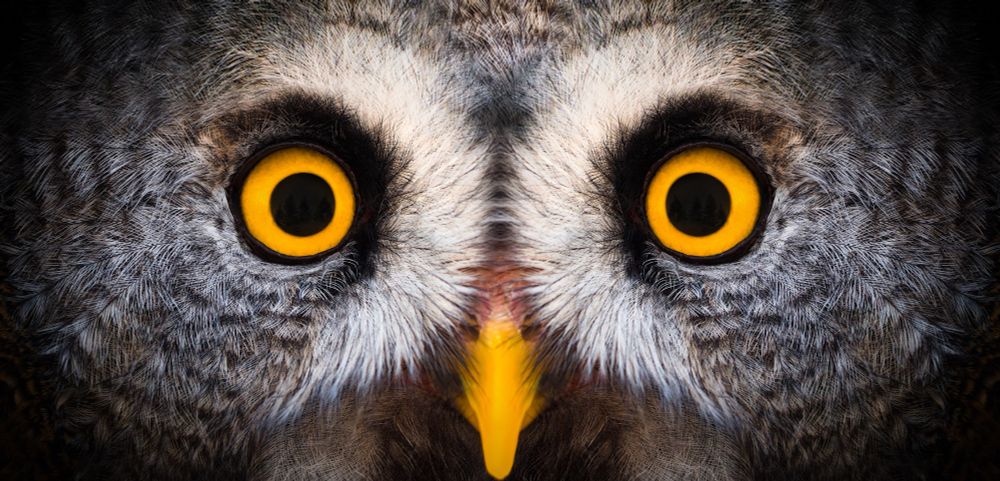
Great owls have eyes that face forward on the front of their heads, like ours.
In fact, owls have the most forward-facing eyes of any group of birds.
In fact, owls have the most forward-facing eyes of any group of birds.
November 25, 2024 at 9:52 PM
Great owls have eyes that face forward on the front of their heads, like ours.
In fact, owls have the most forward-facing eyes of any group of birds.
In fact, owls have the most forward-facing eyes of any group of birds.
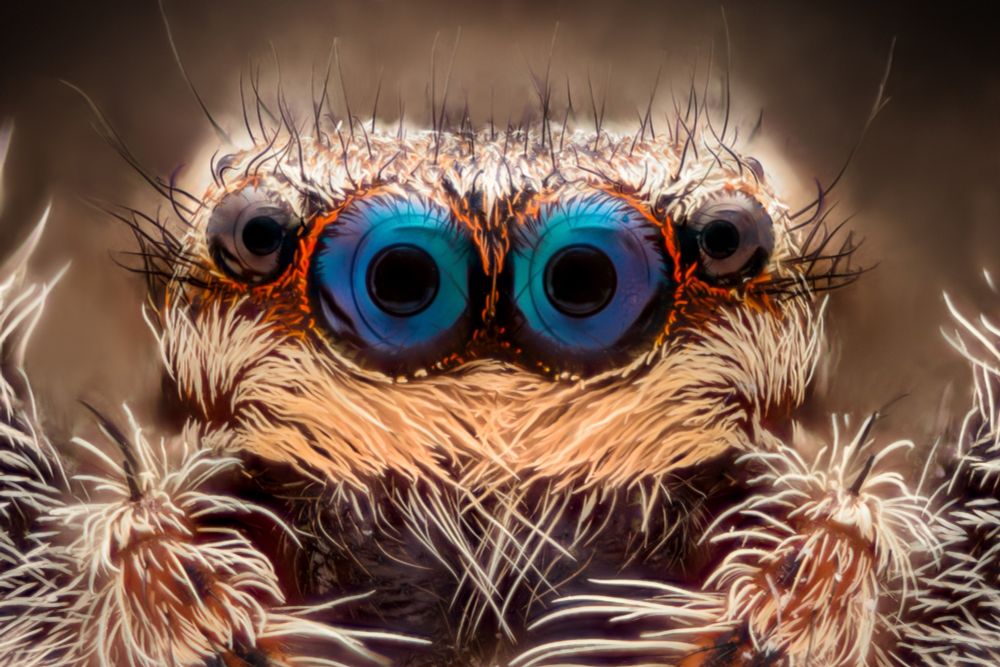
Jumping spiders have 4 oversized eyes that give them impeccable eyesight.
The smaller set of eyes provide a wide angle view and a sense of motion, while the larger set of eyes provide a massive amount of detail in color. Their retinas can also swivel on their own.
The smaller set of eyes provide a wide angle view and a sense of motion, while the larger set of eyes provide a massive amount of detail in color. Their retinas can also swivel on their own.
November 20, 2024 at 8:54 PM
Jumping spiders have 4 oversized eyes that give them impeccable eyesight.
The smaller set of eyes provide a wide angle view and a sense of motion, while the larger set of eyes provide a massive amount of detail in color. Their retinas can also swivel on their own.
The smaller set of eyes provide a wide angle view and a sense of motion, while the larger set of eyes provide a massive amount of detail in color. Their retinas can also swivel on their own.
A cross ocean wave breaking during a stormy evening

November 17, 2024 at 2:50 AM
A cross ocean wave breaking during a stormy evening
We're happy to be on BlueSky! We're here just to share interesting bits of trivia. Join us if you'd like!
The kererū (New Zealand Wood Pigeon) is known for getting drunk off fermented fruit and falling out of trees.
It has earned the reputation for being "clumsy, drunk, gluttonous, & glamorous."
The kererū (New Zealand Wood Pigeon) is known for getting drunk off fermented fruit and falling out of trees.
It has earned the reputation for being "clumsy, drunk, gluttonous, & glamorous."

November 16, 2024 at 6:45 PM
We're happy to be on BlueSky! We're here just to share interesting bits of trivia. Join us if you'd like!
The kererū (New Zealand Wood Pigeon) is known for getting drunk off fermented fruit and falling out of trees.
It has earned the reputation for being "clumsy, drunk, gluttonous, & glamorous."
The kererū (New Zealand Wood Pigeon) is known for getting drunk off fermented fruit and falling out of trees.
It has earned the reputation for being "clumsy, drunk, gluttonous, & glamorous."
Our followers on X suggested we check out Bluesky, so here we are! It looks wonderful so far!
DYK: The name “daisy” is from the Old English phrase “Daes eage,” which translates to “day’s eye"?
This name reflects how these flowers close their petals in the evening & reopen them in the morning.
DYK: The name “daisy” is from the Old English phrase “Daes eage,” which translates to “day’s eye"?
This name reflects how these flowers close their petals in the evening & reopen them in the morning.
November 16, 2024 at 2:58 AM
Our followers on X suggested we check out Bluesky, so here we are! It looks wonderful so far!
DYK: The name “daisy” is from the Old English phrase “Daes eage,” which translates to “day’s eye"?
This name reflects how these flowers close their petals in the evening & reopen them in the morning.
DYK: The name “daisy” is from the Old English phrase “Daes eage,” which translates to “day’s eye"?
This name reflects how these flowers close their petals in the evening & reopen them in the morning.