



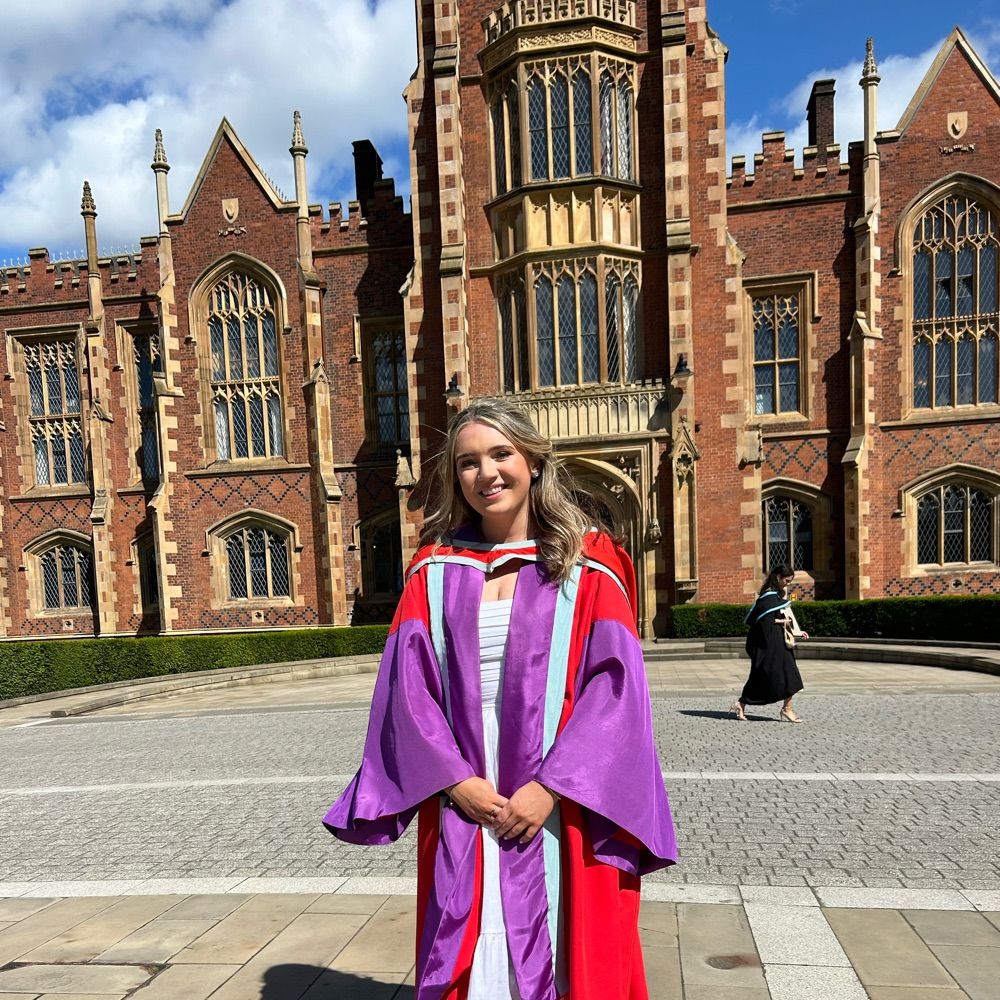
Emily Bowman, PhD
@emsdoesscience.bsky.social
Postdoctoral Researcher at the University of Oxford, Department of Psychiatry 🧠
Data science, precision psychiatry, and #biomarkers, especially in #delirium, #dementia and #psychosis.
Sometimes a musician 🎻, Belfast born and bred, Views my own!
Data science, precision psychiatry, and #biomarkers, especially in #delirium, #dementia and #psychosis.
Sometimes a musician 🎻, Belfast born and bred, Views my own!
Emma Cunningham, Danny McAuley, Bernadette McGuinness, David Beverland, Henrik Zetterberg, @jmschott.bsky.social, Amanda Heslegrave, Elena Veleva, Rhiannon Laban, Aoife Sweeney
July 17, 2025 at 12:26 PM
Emma Cunningham, Danny McAuley, Bernadette McGuinness, David Beverland, Henrik Zetterberg, @jmschott.bsky.social, Amanda Heslegrave, Elena Veleva, Rhiannon Laban, Aoife Sweeney
Read this paper Open Access in Alzheimer's and Dementia, the Journal of @alzassociation.bsky.social
Massive thanks to my wonderful co-authors for their support on this work (and throughout my PhD!) 🙏
Massive thanks to my wonderful co-authors for their support on this work (and throughout my PhD!) 🙏
July 17, 2025 at 12:26 PM
Read this paper Open Access in Alzheimer's and Dementia, the Journal of @alzassociation.bsky.social
Massive thanks to my wonderful co-authors for their support on this work (and throughout my PhD!) 🙏
Massive thanks to my wonderful co-authors for their support on this work (and throughout my PhD!) 🙏
🎯 Further research into the pathways of such subtypes could pave the way for personalised delirium care and better outcomes.
📔Next on the agenda - validation and assessment of differential outcomes.
📔Next on the agenda - validation and assessment of differential outcomes.
July 17, 2025 at 12:26 PM
🎯 Further research into the pathways of such subtypes could pave the way for personalised delirium care and better outcomes.
📔Next on the agenda - validation and assessment of differential outcomes.
📔Next on the agenda - validation and assessment of differential outcomes.
🔍 We found:
Class 1: Older, worse baseline cognition (despite exclusion of people with existing dementia), higher depression, and more signs of brain injury/neurodegeneration (GFAP, NfL, sTREM2).
Class 2: Fewer symptoms, better baseline cognition.
Class 1: Older, worse baseline cognition (despite exclusion of people with existing dementia), higher depression, and more signs of brain injury/neurodegeneration (GFAP, NfL, sTREM2).
Class 2: Fewer symptoms, better baseline cognition.

July 17, 2025 at 12:26 PM
🔍 We found:
Class 1: Older, worse baseline cognition (despite exclusion of people with existing dementia), higher depression, and more signs of brain injury/neurodegeneration (GFAP, NfL, sTREM2).
Class 2: Fewer symptoms, better baseline cognition.
Class 1: Older, worse baseline cognition (despite exclusion of people with existing dementia), higher depression, and more signs of brain injury/neurodegeneration (GFAP, NfL, sTREM2).
Class 2: Fewer symptoms, better baseline cognition.
💻 Methods
We analysed data from the PostOperative Delirium Belfast Study (led by Dr Emma Cunningham), to investigate subtypes of patients being assessed for delirium after surgery, using Latent Class Analysis (LCA).
LCA is a person-centred, unsupervised, statistical learning approach.
We analysed data from the PostOperative Delirium Belfast Study (led by Dr Emma Cunningham), to investigate subtypes of patients being assessed for delirium after surgery, using Latent Class Analysis (LCA).
LCA is a person-centred, unsupervised, statistical learning approach.
July 17, 2025 at 12:26 PM
💻 Methods
We analysed data from the PostOperative Delirium Belfast Study (led by Dr Emma Cunningham), to investigate subtypes of patients being assessed for delirium after surgery, using Latent Class Analysis (LCA).
LCA is a person-centred, unsupervised, statistical learning approach.
We analysed data from the PostOperative Delirium Belfast Study (led by Dr Emma Cunningham), to investigate subtypes of patients being assessed for delirium after surgery, using Latent Class Analysis (LCA).
LCA is a person-centred, unsupervised, statistical learning approach.
I completed my PhD in #delirium #phenotyping, in Belfast, where I’m from. I’m passionate about the use of existing data and generation of strong new datasets to find out more about the condition.
And finally in my spare time, I play the violin in the Oxford Millennium Orchestra! 🎻
And finally in my spare time, I play the violin in the Oxford Millennium Orchestra! 🎻
November 15, 2024 at 1:21 PM
I completed my PhD in #delirium #phenotyping, in Belfast, where I’m from. I’m passionate about the use of existing data and generation of strong new datasets to find out more about the condition.
And finally in my spare time, I play the violin in the Oxford Millennium Orchestra! 🎻
And finally in my spare time, I play the violin in the Oxford Millennium Orchestra! 🎻