


Dudley Observatory
@dudleyobservatory.bsky.social
Science outreach for the New York Capital Region. 160 plus years of astronomy research and education. Walk around at night looking up a lot.
Titan, Saturn's largest moon, casts its shadow on Saturn in early hours of Sunday. Every 15 years Titan repeatedly crosses Saturn's face from Earth's viewpoint and casts its very tiny black shadow onto Saturn' face. On Saturday night-early Sunday, Titan's shadow crosses Saturn from 2:25am to 7:04am.

August 1, 2025 at 12:23 PM
Titan, Saturn's largest moon, casts its shadow on Saturn in early hours of Sunday. Every 15 years Titan repeatedly crosses Saturn's face from Earth's viewpoint and casts its very tiny black shadow onto Saturn' face. On Saturday night-early Sunday, Titan's shadow crosses Saturn from 2:25am to 7:04am.
The region was so remote that it took years for word to arrive at Moscow. Twenty years later, scientist Leonid Kulik led an expedition. He witnessed forest devastated for miles, trees felled in a radial pattern from a central area. Suspecting a meteor, the expedition dredged the swamp to no avail.

July 1, 2025 at 6:26 PM
The region was so remote that it took years for word to arrive at Moscow. Twenty years later, scientist Leonid Kulik led an expedition. He witnessed forest devastated for miles, trees felled in a radial pattern from a central area. Suspecting a meteor, the expedition dredged the swamp to no avail.
The resulting blast knocked people off their feet 70 kilometers away. Night skies were so bright that one could read a newspaper at midnight. Barometers around the world registered the blast wave. Monday was the 117th anniversary of the Tunguska Event.

July 1, 2025 at 6:23 PM
The resulting blast knocked people off their feet 70 kilometers away. Night skies were so bright that one could read a newspaper at midnight. Barometers around the world registered the blast wave. Monday was the 117th anniversary of the Tunguska Event.
We're a day late, but here's an interesting "yesterday in history".
About 7:15 AM, on June 30, 1908, a bright object roared out of the sky and exploded over Siberian forest.
About 7:15 AM, on June 30, 1908, a bright object roared out of the sky and exploded over Siberian forest.

July 1, 2025 at 6:21 PM
We're a day late, but here's an interesting "yesterday in history".
About 7:15 AM, on June 30, 1908, a bright object roared out of the sky and exploded over Siberian forest.
About 7:15 AM, on June 30, 1908, a bright object roared out of the sky and exploded over Siberian forest.
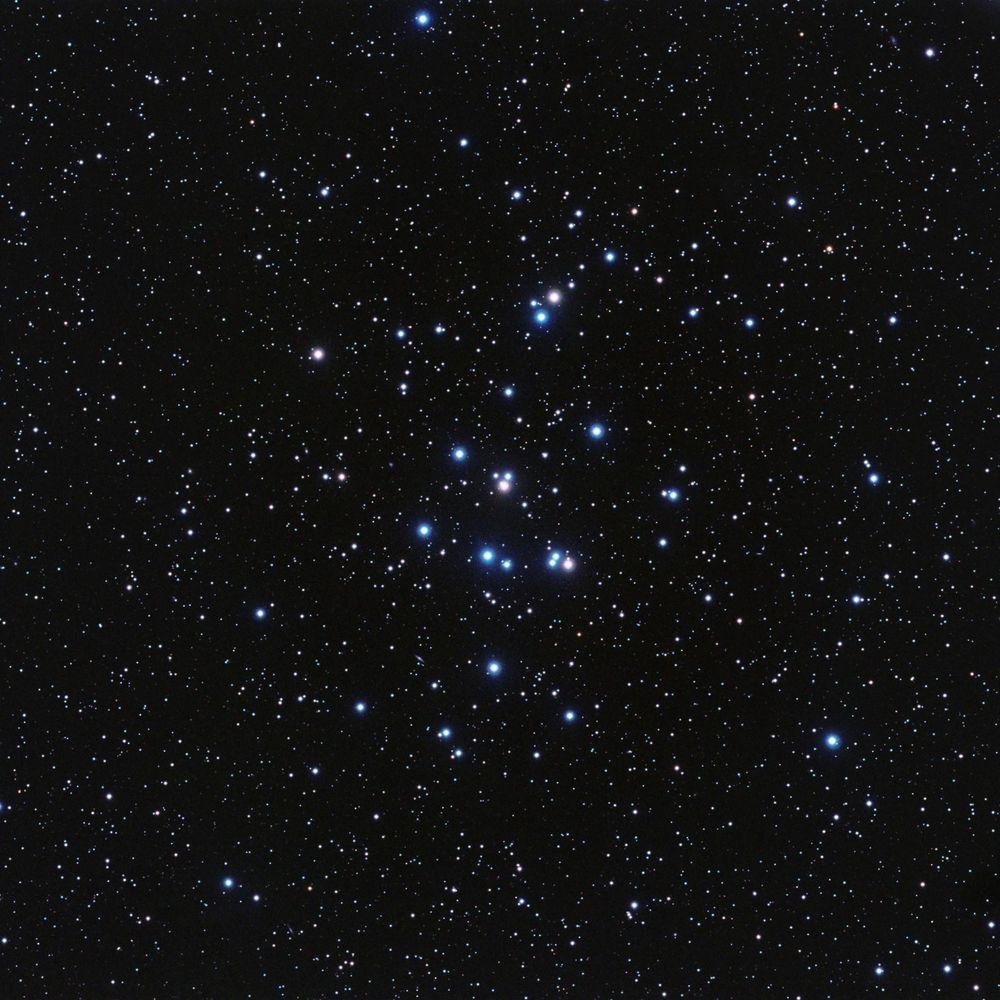
On Saturday evening, the thick waxing crescent Moon will glow close to Mars and the Beehive star cluster (M44 or Praesepe). Mars is less than 1° to the right of the Beehive star cluster. This cluster of around 1000 stars is close to Earth at about 600 light years away.
May 2, 2025 at 2:40 PM
On Saturday evening, the thick waxing crescent Moon will glow close to Mars and the Beehive star cluster (M44 or Praesepe). Mars is less than 1° to the right of the Beehive star cluster. This cluster of around 1000 stars is close to Earth at about 600 light years away.
Venus has passed its inferior conjunction and is now emerging into dawn view. Look for it very low due east starting about 30 minutes before sunrise. It's in its thin-crescent phase. Binoculars or telescope will help. Post-conjunction, the bulge of the crescent now faces lower left toward the Sun.

April 4, 2025 at 4:36 PM
Venus has passed its inferior conjunction and is now emerging into dawn view. Look for it very low due east starting about 30 minutes before sunrise. It's in its thin-crescent phase. Binoculars or telescope will help. Post-conjunction, the bulge of the crescent now faces lower left toward the Sun.
On Friday evening, the first quarter Moon will lie below a line formed by Mars and the twin stars of Gemini, Castor and Pollux. Procyon, the brightest star in Canis Minor, sits nearby.
On Saturday, Mars and the Moon will be 3° or 4° apart.
On Saturday, Mars and the Moon will be 3° or 4° apart.

April 4, 2025 at 10:53 AM
On Friday evening, the first quarter Moon will lie below a line formed by Mars and the twin stars of Gemini, Castor and Pollux. Procyon, the brightest star in Canis Minor, sits nearby.
On Saturday, Mars and the Moon will be 3° or 4° apart.
On Saturday, Mars and the Moon will be 3° or 4° apart.
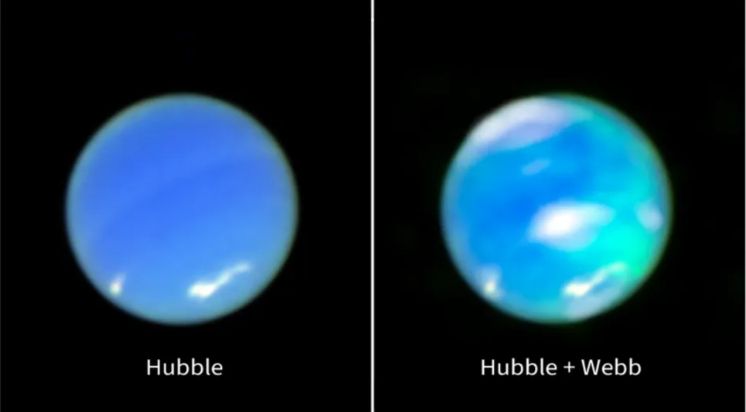
First images of Neptune's elusive auroras. It's long assumed that Neptune had them and they've been observed on Jupiter, Saturn and Uranus, this is the first time we've gotten direct images from a telescope.
March 28, 2025 at 6:18 PM
First images of Neptune's elusive auroras. It's long assumed that Neptune had them and they've been observed on Jupiter, Saturn and Uranus, this is the first time we've gotten direct images from a telescope.
With Mercury fading and moving lower into evening twilight we are running out of time to spot elusive Mercury. You will need a good view west with clear skies. It is best to start looking around 30 minutes after sunset. Any earlier and the sky will be too bright, later Mercury will be too low.

March 11, 2025 at 2:15 PM
With Mercury fading and moving lower into evening twilight we are running out of time to spot elusive Mercury. You will need a good view west with clear skies. It is best to start looking around 30 minutes after sunset. Any earlier and the sky will be too bright, later Mercury will be too low.
A chain of stars wraps around Polaris, the Pole Star; making up the constellation Draco, the Dragon. Draco is ancient, from the Mesopotamians. When the Pyramids were built, Thuban, one of Draco's stars was, itself, the Pole Star. Several Pyramids were oriented to it.

March 3, 2025 at 2:54 PM
A chain of stars wraps around Polaris, the Pole Star; making up the constellation Draco, the Dragon. Draco is ancient, from the Mesopotamians. When the Pyramids were built, Thuban, one of Draco's stars was, itself, the Pole Star. Several Pyramids were oriented to it.
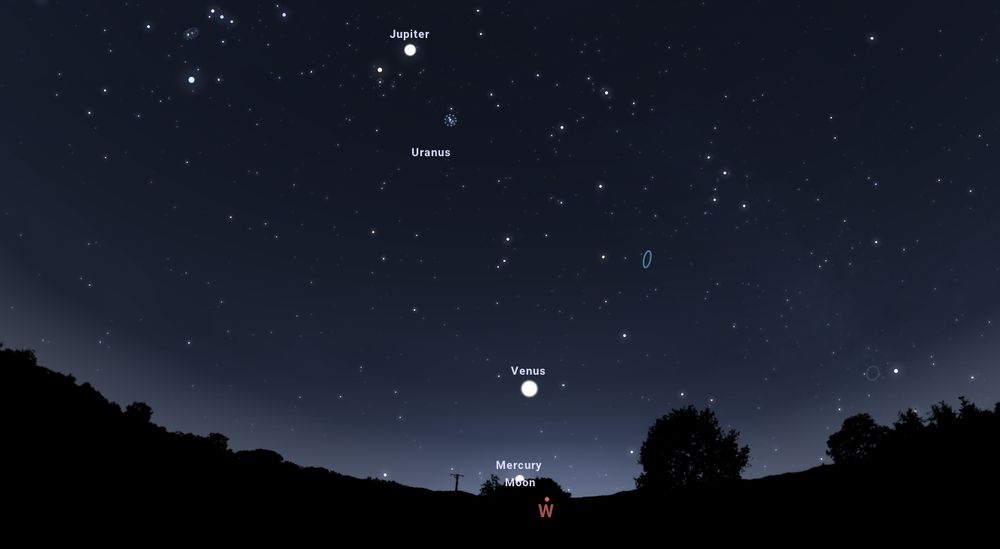
Trying to spot the planetary parade tonight? For the Northeastern US, start right at sunset - Saturn and Mercury set early. Four planets, Mercury, Venus, Jupiter and Mars will be visible to the naked eye with a clear sky. For Neptune and Uranus, you'll need binoculars or a small telescope.
February 28, 2025 at 4:33 PM
Trying to spot the planetary parade tonight? For the Northeastern US, start right at sunset - Saturn and Mercury set early. Four planets, Mercury, Venus, Jupiter and Mars will be visible to the naked eye with a clear sky. For Neptune and Uranus, you'll need binoculars or a small telescope.
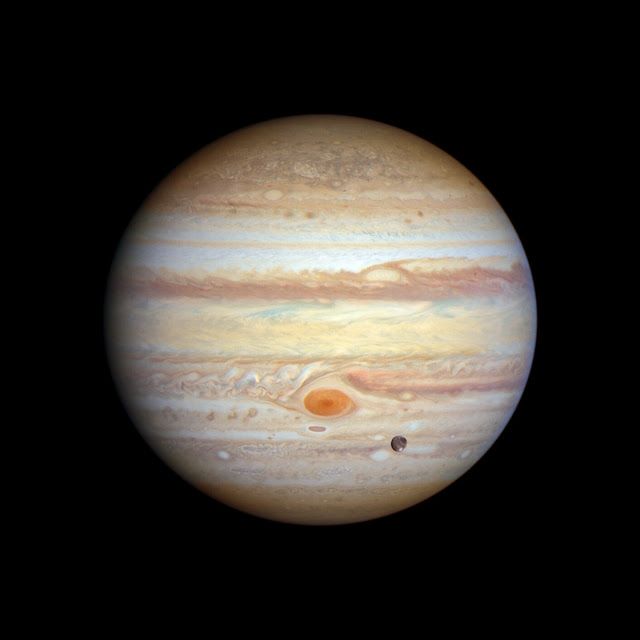
Jupiter, in southern Taurus, will be highest at 7:08 PM, 69° high and sets at 2:41 AM. Monday, the Great Red Spot (a giant storm) is visible at 8 PM; Tuesday reveals Ganymede beginning to cross the planet at 12:38 AM and ends at 2:56 AM. Wednesday features the Great Red Spot at 1:49 AM.
February 10, 2025 at 7:49 PM
Jupiter, in southern Taurus, will be highest at 7:08 PM, 69° high and sets at 2:41 AM. Monday, the Great Red Spot (a giant storm) is visible at 8 PM; Tuesday reveals Ganymede beginning to cross the planet at 12:38 AM and ends at 2:56 AM. Wednesday features the Great Red Spot at 1:49 AM.
On Friday, the waxing gibbous Moon will be near Jupiter. The Moon will lie between Capella and the red supergiant star Betelgeuse. Capella is the brightest star in the constellation of Auriga the Charioteer. Betelgeuse is the 2nd brightest star in Orion the Hunter.

February 7, 2025 at 6:16 PM
On Friday, the waxing gibbous Moon will be near Jupiter. The Moon will lie between Capella and the red supergiant star Betelgeuse. Capella is the brightest star in the constellation of Auriga the Charioteer. Betelgeuse is the 2nd brightest star in Orion the Hunter.
Just after twilight, look to the West for the waxing crescent Moon lining up with Saturn and Venus on consecutive evenings. On Friday, the Moon and Saturn are 3° apart, then on Saturday, the brilliant Moon-Venus pair are just 2½° apart.

January 31, 2025 at 1:51 PM
Just after twilight, look to the West for the waxing crescent Moon lining up with Saturn and Venus on consecutive evenings. On Friday, the Moon and Saturn are 3° apart, then on Saturday, the brilliant Moon-Venus pair are just 2½° apart.
Venus continues to dominate the evening sky. On Wednesday at 6:00 P.M. it is 31 degrees above the horizon and through a telescope we now see about 39% of Venus’ sunlight side. As Venus continues to catch up with Earth and draw closer the fat crescent will slim down and grow larger.

January 29, 2025 at 11:56 AM
Venus continues to dominate the evening sky. On Wednesday at 6:00 P.M. it is 31 degrees above the horizon and through a telescope we now see about 39% of Venus’ sunlight side. As Venus continues to catch up with Earth and draw closer the fat crescent will slim down and grow larger.
Now I'll post about Jupiter's red spot (since we're closer to Wednesday).
The Great Red Spot (a large storm) is visible Wednesday at 12:13 AM. This will be a "break out the telescope" object to view.
Image credit in alt text
The Great Red Spot (a large storm) is visible Wednesday at 12:13 AM. This will be a "break out the telescope" object to view.
Image credit in alt text

January 28, 2025 at 8:25 PM
Now I'll post about Jupiter's red spot (since we're closer to Wednesday).
The Great Red Spot (a large storm) is visible Wednesday at 12:13 AM. This will be a "break out the telescope" object to view.
Image credit in alt text
The Great Red Spot (a large storm) is visible Wednesday at 12:13 AM. This will be a "break out the telescope" object to view.
Image credit in alt text
I was about to post about the visibility of Jupiter's red spot on Wednesday, but just noticed a pass of the International Space Station (ISS) occurring tonight that will be visible for 4 minutes starting around 6:10 p.m. low in the northwestern sky. Old hat for many, but I find it still fun to spot.

January 27, 2025 at 4:53 PM
I was about to post about the visibility of Jupiter's red spot on Wednesday, but just noticed a pass of the International Space Station (ISS) occurring tonight that will be visible for 4 minutes starting around 6:10 p.m. low in the northwestern sky. Old hat for many, but I find it still fun to spot.
Try to spot the equilateral Winter Triangle in the southeast. Sirius is its brightest and lowest star. Betelgeuse stands above it by about two fists at arm's length. Left of their midpoint shines Procyon. Sirius is cold white, Betelgeuse yellow-orange, and Procyon a very slightly yellowish white.

January 24, 2025 at 7:56 PM
Try to spot the equilateral Winter Triangle in the southeast. Sirius is its brightest and lowest star. Betelgeuse stands above it by about two fists at arm's length. Left of their midpoint shines Procyon. Sirius is cold white, Betelgeuse yellow-orange, and Procyon a very slightly yellowish white.
Head out and look for Mars, Jupiter, Saturn, and Venus in a clear arc. Venus and Saturn will be in the southwest, Jupiter will be high overhead, and Mars will be in the east. This "planetary alignment" happens often, but they also don't happen every year, so it's worth getting out there to see!

January 22, 2025 at 12:02 PM
Head out and look for Mars, Jupiter, Saturn, and Venus in a clear arc. Venus and Saturn will be in the southwest, Jupiter will be high overhead, and Mars will be in the east. This "planetary alignment" happens often, but they also don't happen every year, so it's worth getting out there to see!
Winters in the Northeast are notoriously cloudy. However, if the sky is clear, twenty-three of the fifty brightest stars are visible in tonight's sky. Orion, the Dogs and Taurus account for the majority of the brightest stars in the heavens.

January 20, 2025 at 3:02 PM
Winters in the Northeast are notoriously cloudy. However, if the sky is clear, twenty-three of the fifty brightest stars are visible in tonight's sky. Orion, the Dogs and Taurus account for the majority of the brightest stars in the heavens.
The closest approach of Saturn and Venus will fall on Friday and Saturday evenings - an eye-catching sight.
Look for Venus and fainter Saturn in the southwest during and after dusk. They appear just 2¼° apart (about the width of your thumb at arm’s length). Saturn is left of Venus.
Look for Venus and fainter Saturn in the southwest during and after dusk. They appear just 2¼° apart (about the width of your thumb at arm’s length). Saturn is left of Venus.

January 17, 2025 at 8:42 PM
The closest approach of Saturn and Venus will fall on Friday and Saturday evenings - an eye-catching sight.
Look for Venus and fainter Saturn in the southwest during and after dusk. They appear just 2¼° apart (about the width of your thumb at arm’s length). Saturn is left of Venus.
Look for Venus and fainter Saturn in the southwest during and after dusk. They appear just 2¼° apart (about the width of your thumb at arm’s length). Saturn is left of Venus.
Let's hope for clear skies, because January is an amazing time to see a handful of planets, no telescope required!
Right now, during the first couple of hours after dark, you'll be able to see Mars, Jupiter, Saturn, and Venus clearly (assuming we don't have to deal with clouds!).
Right now, during the first couple of hours after dark, you'll be able to see Mars, Jupiter, Saturn, and Venus clearly (assuming we don't have to deal with clouds!).

January 14, 2025 at 4:37 PM
Let's hope for clear skies, because January is an amazing time to see a handful of planets, no telescope required!
Right now, during the first couple of hours after dark, you'll be able to see Mars, Jupiter, Saturn, and Venus clearly (assuming we don't have to deal with clouds!).
Right now, during the first couple of hours after dark, you'll be able to see Mars, Jupiter, Saturn, and Venus clearly (assuming we don't have to deal with clouds!).