



Dudley Observatory
@dudleyobservatory.bsky.social
Science outreach for the New York Capital Region. 160 plus years of astronomy research and education. Walk around at night looking up a lot.
Saturn now rises around 5:45 P.M. and is just over 35 degrees above the southeastern horizon by 9:30 P.M. It is due south, highest around 11:35 P.M., when it will be around 44 degrees above the horizon. In a month the ringed planet will be due south and highest around 8:30 P.M.
October 8, 2025 at 8:08 PM
Saturn now rises around 5:45 P.M. and is just over 35 degrees above the southeastern horizon by 9:30 P.M. It is due south, highest around 11:35 P.M., when it will be around 44 degrees above the horizon. In a month the ringed planet will be due south and highest around 8:30 P.M.
While on the theme of me not liking article titles - the sun is not actually in a decline and facing it's "last gasp". That's actually around 4-4.5 billion years from now. But "yay!" to additional northern lights viewing opportunities.

Northern lights may get stronger within the next 2 years as the sun enters a turbulent decline with a 'last gasp' finale
Auroras aren't over: the sun's decline brings more storms, and a 'last gasp' finale could light up skies in the next 2 years.
www.space.com
October 3, 2025 at 4:02 PM
While on the theme of me not liking article titles - the sun is not actually in a decline and facing it's "last gasp". That's actually around 4-4.5 billion years from now. But "yay!" to additional northern lights viewing opportunities.
Interesting new finds from Perseverance (not actually involving a metal detector)

'The metal detector has gone off': Perseverance rover's find is a shiny new clue in the search for life on Mars
"This is the moment where the metal detector has gone off and you've dug up something shiny. You still need to find out exactly what you've got — but you've got something to work with."
www.space.com
October 3, 2025 at 2:55 PM
Interesting new finds from Perseverance (not actually involving a metal detector)
Antares is a fun, red supergiant to look for. It's radius is about 680 times larger than our own sun. The article has details on how to find it on September 27th.

See the red supergiant star Antares shine with the crescent moon at sunset on Sept. 27
The crescent moon shines close to the red star Antares on Sept. 27.
www.space.com
September 26, 2025 at 6:16 PM
Antares is a fun, red supergiant to look for. It's radius is about 680 times larger than our own sun. The article has details on how to find it on September 27th.
The Perseid meteor shower is active for many days before and several days after its peak, which this year is predicted for the night of August 12-13.
August 8, 2025 at 2:39 PM
The Perseid meteor shower is active for many days before and several days after its peak, which this year is predicted for the night of August 12-13.
Titan, Saturn's largest moon, casts its shadow on Saturn in early hours of Sunday. Every 15 years Titan repeatedly crosses Saturn's face from Earth's viewpoint and casts its very tiny black shadow onto Saturn' face. On Saturday night-early Sunday, Titan's shadow crosses Saturn from 2:25am to 7:04am.

August 1, 2025 at 12:23 PM
Titan, Saturn's largest moon, casts its shadow on Saturn in early hours of Sunday. Every 15 years Titan repeatedly crosses Saturn's face from Earth's viewpoint and casts its very tiny black shadow onto Saturn' face. On Saturday night-early Sunday, Titan's shadow crosses Saturn from 2:25am to 7:04am.
Reposted by Dudley Observatory

Nearly 4,000 NASA Employees Quit as Part of Trump Buyouts
gizmodo.com/nearly-4000-... "Keith Cowing argues that it won’t be long before we see the consequences of gutting NASA and other core institutions of American science and technology."
gizmodo.com/nearly-4000-... "Keith Cowing argues that it won’t be long before we see the consequences of gutting NASA and other core institutions of American science and technology."

Nearly 4,000 NASA Employees Quit as Part of Trump Buyouts
“And yet, somehow, we’re going to go to Mars sooner.”
gizmodo.com
July 28, 2025 at 4:22 PM
Nearly 4,000 NASA Employees Quit as Part of Trump Buyouts
gizmodo.com/nearly-4000-... "Keith Cowing argues that it won’t be long before we see the consequences of gutting NASA and other core institutions of American science and technology."
gizmodo.com/nearly-4000-... "Keith Cowing argues that it won’t be long before we see the consequences of gutting NASA and other core institutions of American science and technology."
Reposted by Dudley Observatory

Last December, NASA’s Parker Solar Probe made the closest-ever approach to the sun, coming within 3.8 million miles of it.
Sounds far? That’s only 4% of the Earth-to-sun distance. The images it captured on the flyby could reshape our understanding of the sun.
buff.ly/BzfNa2N
Sounds far? That’s only 4% of the Earth-to-sun distance. The images it captured on the flyby could reshape our understanding of the sun.
buff.ly/BzfNa2N
July 28, 2025 at 1:37 PM
Last December, NASA’s Parker Solar Probe made the closest-ever approach to the sun, coming within 3.8 million miles of it.
Sounds far? That’s only 4% of the Earth-to-sun distance. The images it captured on the flyby could reshape our understanding of the sun.
buff.ly/BzfNa2N
Sounds far? That’s only 4% of the Earth-to-sun distance. The images it captured on the flyby could reshape our understanding of the sun.
buff.ly/BzfNa2N
The second meteor shower to keep an eye out for is the Alpha Capricornids which peak at the same time as the Delta Aquariids. This shower had a modest rate of 5 meteors/hours, known for slow-moving fireballs.
July 28, 2025 at 1:59 PM
The second meteor shower to keep an eye out for is the Alpha Capricornids which peak at the same time as the Delta Aquariids. This shower had a modest rate of 5 meteors/hours, known for slow-moving fireballs.
This week’s main event is the annual appearance of two meteor showers. The first is the Southern Delta Shower which happens on the nights of July 29th and 30th; the shower generates about 25 meteors per hour from the star Delta Aquarii.
July 28, 2025 at 1:57 PM
This week’s main event is the annual appearance of two meteor showers. The first is the Southern Delta Shower which happens on the nights of July 29th and 30th; the shower generates about 25 meteors per hour from the star Delta Aquarii.
A great breakdown on the effects of cosmic radiation and why it would be a barrier to prolonged space travel.

Cosmic radiation gave the Fantastic Four superpowers. Here's what would happen in real life.
It has long been a concern for astronauts. But how much does cosmic radiation affect the rest of us?
www.nationalgeographic.com
July 25, 2025 at 5:50 PM
A great breakdown on the effects of cosmic radiation and why it would be a barrier to prolonged space travel.
In late July and early August, look for Orion the Hunter, eastward before dawn. Orion is one of the sky’s most easy-to-spot constellations. Orion returns in late July and early August, ascending in the east before sunrise. That’s why Orion has been called the ghost of the shimmering summer dawn.
July 25, 2025 at 2:21 PM
In late July and early August, look for Orion the Hunter, eastward before dawn. Orion is one of the sky’s most easy-to-spot constellations. Orion returns in late July and early August, ascending in the east before sunrise. That’s why Orion has been called the ghost of the shimmering summer dawn.
On Wednesday look for the ISS rising from the west northwestern horizon at 10:11 P.M. By 10:12 it will be close to 20 degrees above the horizon and headed northward. Its path will take it below the Big Dipper and then through Boötes.
July 23, 2025 at 7:32 PM
On Wednesday look for the ISS rising from the west northwestern horizon at 10:11 P.M. By 10:12 it will be close to 20 degrees above the horizon and headed northward. Its path will take it below the Big Dipper and then through Boötes.

Monday’s Moon appears in Scorpius by 9PM, sets at 2:11 AM, 15° high in the southeast, appears 92% illuminated, and rises at 6:25 PM. Tuesday finds the Moon shifted to Ophiuchus, sets at 2:52 AM, rises at 7:25 PM, 10° high in the southeast, 96% lit and sets at 3:42 AM, Wednesday.
July 7, 2025 at 3:05 PM
Monday’s Moon appears in Scorpius by 9PM, sets at 2:11 AM, 15° high in the southeast, appears 92% illuminated, and rises at 6:25 PM. Tuesday finds the Moon shifted to Ophiuchus, sets at 2:52 AM, rises at 7:25 PM, 10° high in the southeast, 96% lit and sets at 3:42 AM, Wednesday.
We're a day late, but here's an interesting "yesterday in history".
About 7:15 AM, on June 30, 1908, a bright object roared out of the sky and exploded over Siberian forest.
About 7:15 AM, on June 30, 1908, a bright object roared out of the sky and exploded over Siberian forest.

July 1, 2025 at 6:21 PM
We're a day late, but here's an interesting "yesterday in history".
About 7:15 AM, on June 30, 1908, a bright object roared out of the sky and exploded over Siberian forest.
About 7:15 AM, on June 30, 1908, a bright object roared out of the sky and exploded over Siberian forest.
Try to see the Milky Way this weekend if you have a dark sky.
The Milky Way runs just inside the Summer Triangle's bottom edge and this stretch includes the Cygnus Star Cloud, one of its richest regions. When we look toward Cygnus, we're looking downstream through the local arm of our galaxy.
The Milky Way runs just inside the Summer Triangle's bottom edge and this stretch includes the Cygnus Star Cloud, one of its richest regions. When we look toward Cygnus, we're looking downstream through the local arm of our galaxy.
June 27, 2025 at 5:56 PM
Try to see the Milky Way this weekend if you have a dark sky.
The Milky Way runs just inside the Summer Triangle's bottom edge and this stretch includes the Cygnus Star Cloud, one of its richest regions. When we look toward Cygnus, we're looking downstream through the local arm of our galaxy.
The Milky Way runs just inside the Summer Triangle's bottom edge and this stretch includes the Cygnus Star Cloud, one of its richest regions. When we look toward Cygnus, we're looking downstream through the local arm of our galaxy.
The International Space Station (ISS) is now in the morning sky. If you're a night owl or extreme early riser there is a fine pass soon after 3 A.M. Friday, it will be overhead, bright, and the space station will move out of the Earth’s shadow and into view when high in the sky.
June 24, 2025 at 4:59 PM
The International Space Station (ISS) is now in the morning sky. If you're a night owl or extreme early riser there is a fine pass soon after 3 A.M. Friday, it will be overhead, bright, and the space station will move out of the Earth’s shadow and into view when high in the sky.
If you have clear skies, take a look towards the west around 10:00 p.m. For typical cloudy New England skies, we have link to the livestream below.

Watch the stunning Mars and Regulus conjunction today with this free livestream
Mars and Regulus will appear remarkably close to each other on June 17 and you can watch the action unfold live here on Space.com.
www.space.com
June 17, 2025 at 7:16 PM
If you have clear skies, take a look towards the west around 10:00 p.m. For typical cloudy New England skies, we have link to the livestream below.
Several dim but lovely constellations are currently visible sandwiched between brighter Pegasus, Aquarius and Cygnus. One of these is Delphinus, the Dolphin. It looks like a diamond with a tail and replicates a dolphin leaping out of the water. It is found midway between Pegasus’ and Cygnus.
June 17, 2025 at 7:09 PM
Several dim but lovely constellations are currently visible sandwiched between brighter Pegasus, Aquarius and Cygnus. One of these is Delphinus, the Dolphin. It looks like a diamond with a tail and replicates a dolphin leaping out of the water. It is found midway between Pegasus’ and Cygnus.
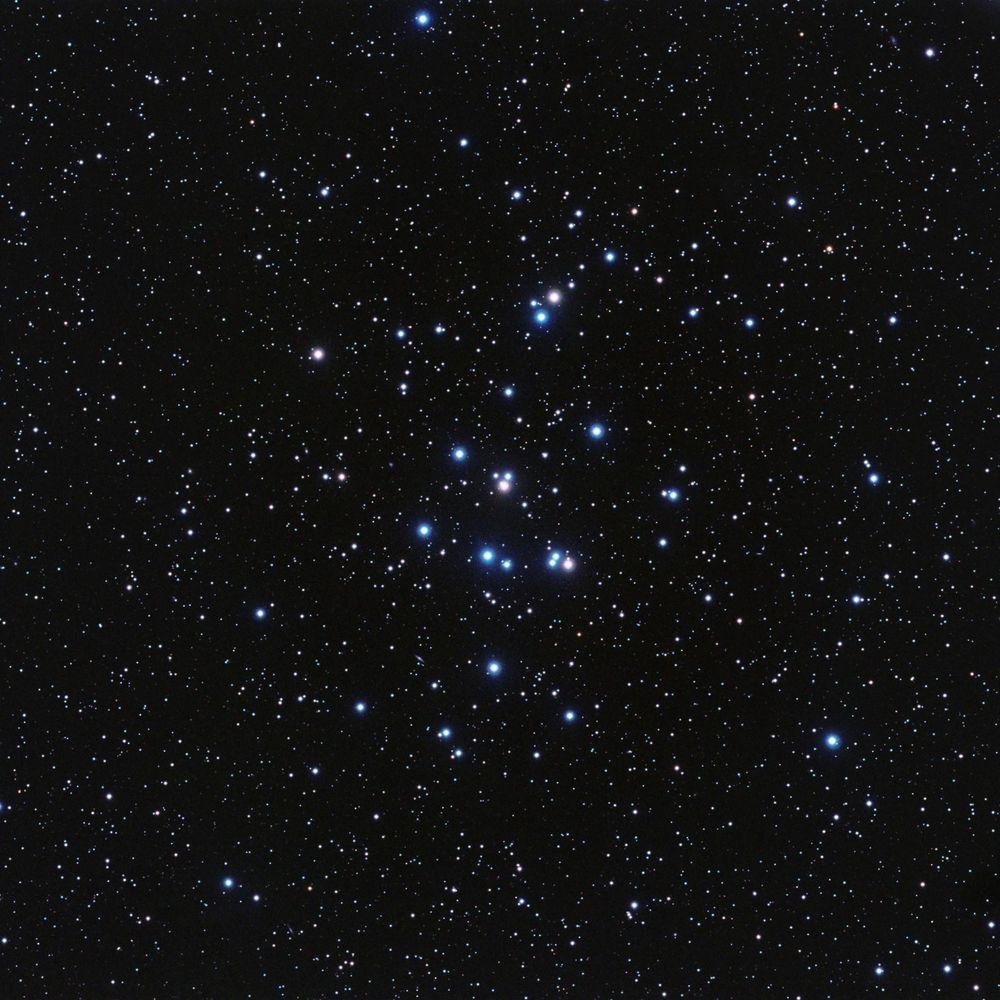
On Saturday evening, the thick waxing crescent Moon will glow close to Mars and the Beehive star cluster (M44 or Praesepe). Mars is less than 1° to the right of the Beehive star cluster. This cluster of around 1000 stars is close to Earth at about 600 light years away.
May 2, 2025 at 2:40 PM
On Saturday evening, the thick waxing crescent Moon will glow close to Mars and the Beehive star cluster (M44 or Praesepe). Mars is less than 1° to the right of the Beehive star cluster. This cluster of around 1000 stars is close to Earth at about 600 light years away.
For our NorthEastern US skywatchers - on Friday early morning, the waning gibbous Moon will hang near the asterism of the Teapot of Sagittarius the Archer. On Saturday early morning, the Moon will float inside the stars of the Teapot.
April 17, 2025 at 4:34 PM
For our NorthEastern US skywatchers - on Friday early morning, the waning gibbous Moon will hang near the asterism of the Teapot of Sagittarius the Archer. On Saturday early morning, the Moon will float inside the stars of the Teapot.
Venus has passed its inferior conjunction and is now emerging into dawn view. Look for it very low due east starting about 30 minutes before sunrise. It's in its thin-crescent phase. Binoculars or telescope will help. Post-conjunction, the bulge of the crescent now faces lower left toward the Sun.

April 4, 2025 at 4:36 PM
Venus has passed its inferior conjunction and is now emerging into dawn view. Look for it very low due east starting about 30 minutes before sunrise. It's in its thin-crescent phase. Binoculars or telescope will help. Post-conjunction, the bulge of the crescent now faces lower left toward the Sun.
On Friday evening, the first quarter Moon will lie below a line formed by Mars and the twin stars of Gemini, Castor and Pollux. Procyon, the brightest star in Canis Minor, sits nearby.
On Saturday, Mars and the Moon will be 3° or 4° apart.
On Saturday, Mars and the Moon will be 3° or 4° apart.

April 4, 2025 at 10:53 AM
On Friday evening, the first quarter Moon will lie below a line formed by Mars and the twin stars of Gemini, Castor and Pollux. Procyon, the brightest star in Canis Minor, sits nearby.
On Saturday, Mars and the Moon will be 3° or 4° apart.
On Saturday, Mars and the Moon will be 3° or 4° apart.