




Dominik Hryshaiev
@domhhv.bsky.social
Full-stack developer passionate about open source, TypeScript, and React
ex-Waze, ex-Unstoppable Domains
Available for hire
Playing PS5 and PC games in my free time
https://github.com/domhhv
ex-Waze, ex-Unstoppable Domains
Available for hire
Playing PS5 and PC games in my free time
https://github.com/domhhv
Here's a brief explanation:
- Private Constructor: Prevents direct instantiation of the class.
- Static Method `getInstance()`: Provides a global point of access to the instance.
- Single Instance: Ensures only one instance is created and reused.
- Private Constructor: Prevents direct instantiation of the class.
- Static Method `getInstance()`: Provides a global point of access to the instance.
- Single Instance: Ensures only one instance is created and reused.
March 26, 2025 at 7:47 PM
Here's a brief explanation:
- Private Constructor: Prevents direct instantiation of the class.
- Static Method `getInstance()`: Provides a global point of access to the instance.
- Single Instance: Ensures only one instance is created and reused.
- Private Constructor: Prevents direct instantiation of the class.
- Static Method `getInstance()`: Provides a global point of access to the instance.
- Single Instance: Ensures only one instance is created and reused.

Lastly, SQLFluff isn’t perfect — I’ve hit walls with parsing Postgres functions (especially with plpgsql).
I also had to learn how -- noqa works to ignore specific lines. E.g. -- noqa: CV10 next to a line disables rule on quoted literals for it.
Still worth it. Would do again.
Hope this helped!
I also had to learn how -- noqa works to ignore specific lines. E.g. -- noqa: CV10 next to a line disables rule on quoted literals for it.
Still worth it. Would do again.
Hope this helped!

March 24, 2025 at 6:27 PM
Lastly, SQLFluff isn’t perfect — I’ve hit walls with parsing Postgres functions (especially with plpgsql).
I also had to learn how -- noqa works to ignore specific lines. E.g. -- noqa: CV10 next to a line disables rule on quoted literals for it.
Still worth it. Would do again.
Hope this helped!
I also had to learn how -- noqa works to ignore specific lines. E.g. -- noqa: CV10 next to a line disables rule on quoted literals for it.
Still worth it. Would do again.
Hope this helped!
I also added SQLFluff to CI so migrations and seeds are linted on every PR.
This runs SQLFluff via `pip` in GitHub Actions.
Here's the GitHub workflow config. Takes 20 lines and saves headaches in prod.
This runs SQLFluff via `pip` in GitHub Actions.
Here's the GitHub workflow config. Takes 20 lines and saves headaches in prod.

March 24, 2025 at 6:27 PM
I also added SQLFluff to CI so migrations and seeds are linted on every PR.
This runs SQLFluff via `pip` in GitHub Actions.
Here's the GitHub workflow config. Takes 20 lines and saves headaches in prod.
This runs SQLFluff via `pip` in GitHub Actions.
Here's the GitHub workflow config. Takes 20 lines and saves headaches in prod.
I use Husky to run SQLFluff in pre-commit hooks with lint-staged.
Here's my lint-staged.config.js.
There's also a fix to transform the absolute paths to relative ones since when we run the command inside the Docker container, the paths are relative to the mounted volume, not our local file system.
Here's my lint-staged.config.js.
There's also a fix to transform the absolute paths to relative ones since when we run the command inside the Docker container, the paths are relative to the mounted volume, not our local file system.

March 24, 2025 at 6:27 PM
I use Husky to run SQLFluff in pre-commit hooks with lint-staged.
Here's my lint-staged.config.js.
There's also a fix to transform the absolute paths to relative ones since when we run the command inside the Docker container, the paths are relative to the mounted volume, not our local file system.
Here's my lint-staged.config.js.
There's also a fix to transform the absolute paths to relative ones since when we run the command inside the Docker container, the paths are relative to the mounted volume, not our local file system.
I added two npm scripts to my package.json to run SQLFluff with Docker:
- lint:sql (to lint files)
- fix:sql (to auto-format them)
So I don’t have to install Python or pip—just Docker.
Those commands automatically detect .sql files but can also take a path to a specific one as an argument.
- lint:sql (to lint files)
- fix:sql (to auto-format them)
So I don’t have to install Python or pip—just Docker.
Those commands automatically detect .sql files but can also take a path to a specific one as an argument.

March 24, 2025 at 6:27 PM
I added two npm scripts to my package.json to run SQLFluff with Docker:
- lint:sql (to lint files)
- fix:sql (to auto-format them)
So I don’t have to install Python or pip—just Docker.
Those commands automatically detect .sql files but can also take a path to a specific one as an argument.
- lint:sql (to lint files)
- fix:sql (to auto-format them)
So I don’t have to install Python or pip—just Docker.
Those commands automatically detect .sql files but can also take a path to a specific one as an argument.
SQLFluff is a linter & formatter for SQL, customizable and dialect-aware (Postgres in the case of Supabase).
You can run it via Docker (they provide an official image) or install it globally via pip/brew.
It reads from .sqlfluff config file in the root of your app.
Here’s what mine looks like.
You can run it via Docker (they provide an official image) or install it globally via pip/brew.
It reads from .sqlfluff config file in the root of your app.
Here’s what mine looks like.

March 24, 2025 at 6:27 PM
SQLFluff is a linter & formatter for SQL, customizable and dialect-aware (Postgres in the case of Supabase).
You can run it via Docker (they provide an official image) or install it globally via pip/brew.
It reads from .sqlfluff config file in the root of your app.
Here’s what mine looks like.
You can run it via Docker (they provide an official image) or install it globally via pip/brew.
It reads from .sqlfluff config file in the root of your app.
Here’s what mine looks like.
Here are the links to my profile and achievements pages used in the post:
www.codecademy.com/profiles/dom...
www.codecademy.com/users/domhhv...
www.codecademy.com/profiles/dom...
www.codecademy.com/users/domhhv...

domhhv's profile | Codecademy
Codecademy profile page for domhhv
www.codecademy.com
March 18, 2025 at 9:46 PM
Here are the links to my profile and achievements pages used in the post:
www.codecademy.com/profiles/dom...
www.codecademy.com/users/domhhv...
www.codecademy.com/profiles/dom...
www.codecademy.com/users/domhhv...
Well, there're actually a few sneak pics of my rigs in my feed ;)
February 15, 2025 at 5:46 PM
Well, there're actually a few sneak pics of my rigs in my feed ;)
Well my top four games:
- Returnal
- TLOU2R
- Cyberpunk 2077
- Hogwarts Legacy
My gaming setups are not static, as I play PS5 in my living room and PC in my office, where I also have my work desk with monitors set up–it serves two purposes: gaming and coding, heh
- Returnal
- TLOU2R
- Cyberpunk 2077
- Hogwarts Legacy
My gaming setups are not static, as I play PS5 in my living room and PC in my office, where I also have my work desk with monitors set up–it serves two purposes: gaming and coding, heh
February 15, 2025 at 5:36 PM
Well my top four games:
- Returnal
- TLOU2R
- Cyberpunk 2077
- Hogwarts Legacy
My gaming setups are not static, as I play PS5 in my living room and PC in my office, where I also have my work desk with monitors set up–it serves two purposes: gaming and coding, heh
- Returnal
- TLOU2R
- Cyberpunk 2077
- Hogwarts Legacy
My gaming setups are not static, as I play PS5 in my living room and PC in my office, where I also have my work desk with monitors set up–it serves two purposes: gaming and coding, heh
Thankfully, my gaming PC is also helping me get through the PSN downtime. Between Steam, EA, Epic Games and other launchers, there’s always something to play! How’s everyone else holding up? 🎮 💻

February 8, 2025 at 8:52 PM
Thankfully, my gaming PC is also helping me get through the PSN downtime. Between Steam, EA, Epic Games and other launchers, there’s always something to play! How’s everyone else holding up? 🎮 💻
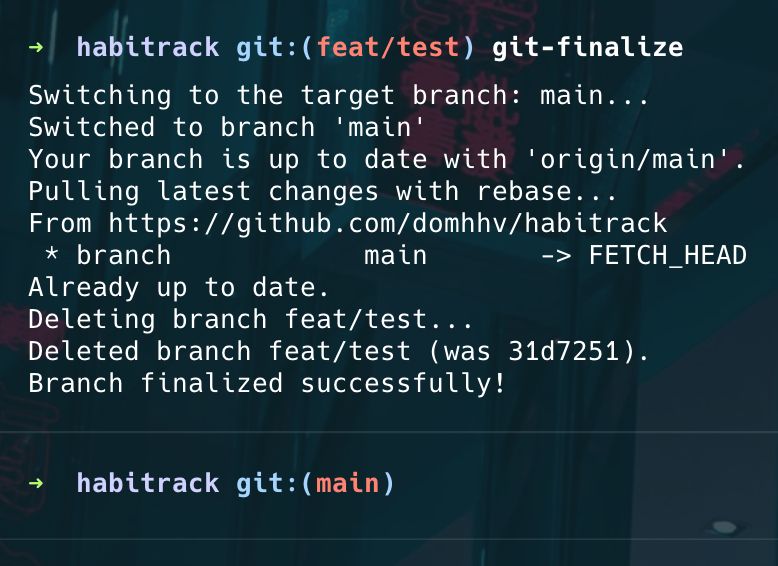
This script:
- Switches to `main` by default (or any branch you prefer).
- Pulls the latest changes with rebase.
- Deletes the old branch.
- Optionally stashes and pops local changes if needed (just add --stash).
Hopefully, it helps your productivity as well if you've faced the same problem!
- Switches to `main` by default (or any branch you prefer).
- Pulls the latest changes with rebase.
- Deletes the old branch.
- Optionally stashes and pops local changes if needed (just add --stash).
Hopefully, it helps your productivity as well if you've faced the same problem!
December 8, 2024 at 6:53 PM
This script:
- Switches to `main` by default (or any branch you prefer).
- Pulls the latest changes with rebase.
- Deletes the old branch.
- Optionally stashes and pops local changes if needed (just add --stash).
Hopefully, it helps your productivity as well if you've faced the same problem!
- Switches to `main` by default (or any branch you prefer).
- Pulls the latest changes with rebase.
- Deletes the old branch.
- Optionally stashes and pops local changes if needed (just add --stash).
Hopefully, it helps your productivity as well if you've faced the same problem!