


@careme.bsky.social
Dogs. Green tea. Natto. French food especially cheese. Politics and whatevernot. That kind of stuff idk.
Reposted

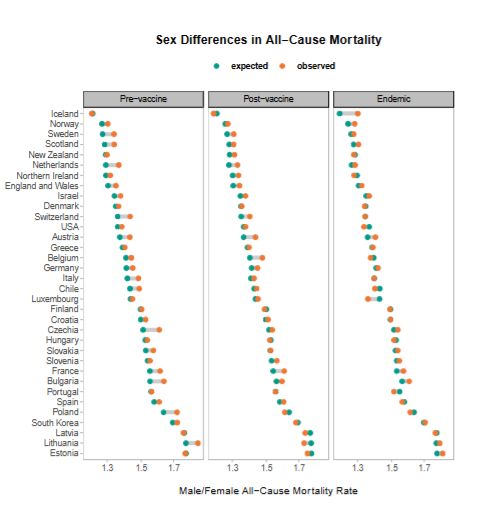
More men died from COVID-19, but since men generally have a higher risk of death at all ages, women weren’t always better off when looking at the increase in mortality. In some cases, their death rates rose even more. Excellent new study just out!
medrxiv.org/content/10.1...
#demography #Population
medrxiv.org/content/10.1...
#demography #Population
July 29, 2025 at 9:01 PM
More men died from COVID-19, but since men generally have a higher risk of death at all ages, women weren’t always better off when looking at the increase in mortality. In some cases, their death rates rose even more. Excellent new study just out!
medrxiv.org/content/10.1...
#demography #Population
medrxiv.org/content/10.1...
#demography #Population
Reposted

Comparative Analysis of Long COVID and Post-Vaccination Syndrome: A Cross-Sectional Study of Clinical Symptoms and Machine Learning-Based Differentiation
This has been a preprint before, and wasn't good.
www.medrxiv.org/cont...
1/5
This has been a preprint before, and wasn't good.
www.medrxiv.org/cont...
1/5

Comparative Analysis of Long COVID and Post-Vaccination Syndrome: A Cross-Sectional Study of Clinical Symptoms and Machine Learning-Based Differentiation
Importance. Long COVID is a well documented post viral syndrome, while post vaccination syndrome (PVS) remains poorly characterized. Understanding their similarities and differences is essential for refining diagnostic criteria and developing targeted interventions. This study systematically compares the symptomatology of long COVID and PVS following COVID 19 vaccination, highlighting key distinctions that could inform clinical practice and research. Objective. To assess the clinical characteristics of long COVID and PVS and identify key distinguishing features between the conditions. Design, Setting and Participants. This cross sectional analysis used questionnaire data from the decentralized Yale Listen to Immune, Symptom and Treatment Experiences Now (LISTEN) Study, collected from May 2022 to July 2023. Data analysis occurred between July 2023 and May 2024. A convenience sample of adults (age ≥18 years) with either long COVID or PVS was included. Main Outcomes and Measures. Symptom data were analyzed using clustering techniques to identify groups with shared symptom patterns. A gradient boosted machine learning model was used to determine the most distinguishing symptoms between long COVID and PVS. Results. The long COVID group (n = 441) and PVS group (n = 241) had similar demographic profiles (median age 46 years; 74% vs 80% female, respectively). Participants with long COVID most commonly reported brain fog, altered sense of smell and taste, shortness of breath, fatigue, memory problems, and difficulty speaking. Participants with PVS more frequently reported burning sensations, neuropathy, and numbness. Clustering analysis identified three symptom based subgroups: one enriched for neurological symptoms and PVS; one characterized by multi system symptoms and predominantly long COVID; and one dominated by psychiatric and sleep symptoms, also primarily long COVID. The machine learning model achieved an AUC of 0.79 (95% CI, 0.75 0.82) and highlighted altered sense of smell, cough, burning sensations, and brain fog as key differentiators. Conclusions and Relevance. Although long COVID and PVS share overlapping symptoms, they have distinct clinical profiles, suggesting the possibility of different underlying biological mechanisms. These distinctions may help refine diagnostic criteria, guide personalized treatment strategies, and inform further research into their respective pathophysiology.
### Competing Interest Statement
H.M.K., in the past three years, received options for Element Science and Identifeye and payments from F-Prime for advisory roles. He was a co-founder of and held equity in Hugo Health. He is a co-founder of and holds equity in Refactor Health and ENSIGHT-AI. He is associated with research contracts through Yale University from Janssen, Kenvue, Novartis, and Pfizer. B.B. was partially supported by, and C.C. was supported by, a grant from the Yale-Mayo Clinic Center of Excellence in Regulatory Science and Innovation (CERSI) (U01FD005938). A.I. co-founded RIGImmune, Xanadu Bio and PanV and is a member of the Board of Directors of Roche Holding and Genentech. B.D. reports being a plaintiff in a lawsuit against AstraZeneca alleging breach of contract following her volunteer participation in 2020 in their COVID-19 vaccine clinical trial. She is also a co-chair of REACT19, a non-profit organization offering financial, physical, and emotional support for those suffering from long-term COVID-19 vaccine adverse events. D.H. serves on the Advisory Board of REACT19.
### Funding Statement
This study was funded in part by the Howard Hughes Medical Institute Collaborative COVID-19 Initiative, and in part by Fred Cohen and Carolyn Klebanoff.
### Author Declarations
I confirm all relevant ethical guidelines have been followed, and any necessary IRB and/or ethics committee approvals have been obtained.
Yes
The details of the IRB/oversight body that provided approval or exemption for the research described are given below:
The Yale University Institutional Review Board approved the LISTEN study.
I confirm that all necessary patient/participant consent has been obtained and the appropriate institutional forms have been archived, and that any patient/participant/sample identifiers included were not known to anyone (e.g., hospital staff, patients or participants themselves) outside the research group so cannot be used to identify individuals.
Yes
I understand that all clinical trials and any other prospective interventional studies must be registered with an ICMJE-approved registry, such as ClinicalTrials.gov. I confirm that any such study reported in the manuscript has been registered and the trial registration ID is provided (note: if posting a prospective study registered retrospectively, please provide a statement in the trial ID field explaining why the study was not registered in advance).
Yes
I have followed all appropriate research reporting guidelines, such as any relevant EQUATOR Network research reporting checklist(s) and other pertinent material, if applicable.
Yes
All data produced in the present study are available upon reasonable request to the corresponding author.
www.medrxiv.org
August 18, 2025 at 7:24 PM
Comparative Analysis of Long COVID and Post-Vaccination Syndrome: A Cross-Sectional Study of Clinical Symptoms and Machine Learning-Based Differentiation
This has been a preprint before, and wasn't good.
www.medrxiv.org/cont...
1/5
This has been a preprint before, and wasn't good.
www.medrxiv.org/cont...
1/5
Reposted
Here they looked at people with an infection (SARS-CoV-2) and those without. They looked at PBMCs and used an assay that detects DNA fragments/damage ... and what did they find?
This should not come as a surprise: more DNA fragments during an immune response!
4/6
This should not come as a surprise: more DNA fragments during an immune response!
4/6

August 20, 2025 at 11:26 AM
Here they looked at people with an infection (SARS-CoV-2) and those without. They looked at PBMCs and used an assay that detects DNA fragments/damage ... and what did they find?
This should not come as a surprise: more DNA fragments during an immune response!
4/6
This should not come as a surprise: more DNA fragments during an immune response!
4/6
Reposted
Pediatric Long COVID Is Characterized by Myeloid CCR6 Suppression and Immune Dysregulation
Someone working in finance and claiming to be in Health Care Consulting made a mess of this pre-print (and many other papers). What does it show?
www.biorxiv.org/cont...
1/9
Someone working in finance and claiming to be in Health Care Consulting made a mess of this pre-print (and many other papers). What does it show?
www.biorxiv.org/cont...
1/9

Pediatric Long COVID Is Characterized by Myeloid CCR6 Suppression and Immune Dysregulation
The biological mechanisms underlying long COVID in the pediatric population are poorly understood. Our study aimed to characterize the immune pathophysiology of long COVID in children and young people (CYP). We analyzed major immune cell compartments in PBMCs, as well as specific SARS-CoV-2 antibody response in CYP with (n=99) and without (n=18) long COVID at three months following acute infection. Our findings indicate that pediatric long COVID is associated with a dysregulated immune response characterized by altered innate immunity and overactivated T-, B- and NK-cell responses. Furthermore, CYP with long COVID had an impaired humoral response to SARS-CoV-2 marked by a dysregulated B-cell compartment and lower levels of anti-RBD IgG and IgA. This correlated with reduced neutralizing capacity against SARS-CoV-2. Random forest analysis identified CCR6 expression on myeloid cells as the most relevant biomarker that distinguishes long COVID from control individuals with 79% accuracy.
### Competing Interest Statement
The authors have declared no competing interest.
Barcelona City Council and the Spanish Ministry of Science and Innovation, 22S09391-001
University Hospital Germans Trias i Pujol, LC2313
Catalan Agency of Management of University and Research Grants, 2023 FI-1 00207, 2020 BP 00046
Gilead Sciences (Spain), https://ror.org/02qacef07, EU Gilead Research Scholars Program in HIV award 2021, GLD21-00070
Spanish Ministry of Science and Innovation, FJC2021-047205-I, RYC2020-028934-I/AEI/10.13039/501100011033, PID2022-139271OB-I00, CB21/13/00063
Horizon Europe Research and Innovation program, 101057100
Fundació La Marató de TV3, 202130-30-31-32
www.biorxiv.org
August 25, 2025 at 10:23 AM
Pediatric Long COVID Is Characterized by Myeloid CCR6 Suppression and Immune Dysregulation
Someone working in finance and claiming to be in Health Care Consulting made a mess of this pre-print (and many other papers). What does it show?
www.biorxiv.org/cont...
1/9
Someone working in finance and claiming to be in Health Care Consulting made a mess of this pre-print (and many other papers). What does it show?
www.biorxiv.org/cont...
1/9
Reposted

@barbie4congress.bsky.social: More than 1,500 came out today for #HandsOff in The Villages, Florida to tell Elon Musk and Donald Trump to keep their hands off Social Security, Medicare, Veteran’s Benefits, and our democracy.
April 5, 2025 at 6:30 PM
@barbie4congress.bsky.social: More than 1,500 came out today for #HandsOff in The Villages, Florida to tell Elon Musk and Donald Trump to keep their hands off Social Security, Medicare, Veteran’s Benefits, and our democracy.
Reposted

A UK-led operation has uncovered a multibillion-dollar money laundering scheme run out of London, Moscow and Dubai that enabled Russian spies and European drug traffickers to evade sanctions using cryptocurrency www.ft.com/content/31b9...

December 4, 2024 at 5:05 PM
A UK-led operation has uncovered a multibillion-dollar money laundering scheme run out of London, Moscow and Dubai that enabled Russian spies and European drug traffickers to evade sanctions using cryptocurrency www.ft.com/content/31b9...
Reposted

Singapore's rival casino resorts are betting billions on expansions as their licenses come up for renewal.
Find out which one is on a roll in this week's free Singapore Edition newsletter.
Find out which one is on a roll in this week's free Singapore Edition newsletter.

Singapore’s Massive Casino Bets
Welcome to Singapore Edition. Each week we bring you insights into one of Asia’s most dynamic economies. If you haven’t yet, please sign up here.
www.bloomberg.com
November 23, 2024 at 5:39 AM
Singapore's rival casino resorts are betting billions on expansions as their licenses come up for renewal.
Find out which one is on a roll in this week's free Singapore Edition newsletter.
Find out which one is on a roll in this week's free Singapore Edition newsletter.
Reposted

Another example of Elon Musk causing more harm than helping:


October 4, 2024 at 7:57 PM
Another example of Elon Musk causing more harm than helping:
Reposted

Most young businesses fail. Tech founders get blunt feedback at a comedy show -- and laugh off the challenges standing in their way.

Welcome to ‘Snark Tank,’ where Silicon Valley start-ups get roasted
Most young businesses fail. Tech founders get blunt feedback at a comedy show -- and laugh off the challenges standing in their way.
www.washingtonpost.com
July 28, 2024 at 8:18 PM
Most young businesses fail. Tech founders get blunt feedback at a comedy show -- and laugh off the challenges standing in their way.
Reposted
Laws and procedures that slow the counting of votes extend the window of uncertainty about the results... and (since uncertainty drives the rumor mill) lead to more rumoring and more opportunity to sow distrust in the results: www.washingtonpost.com/politics/202...

Pennsylvania presidential election results could again take days to count
Republicans in the state Senate refused to change the law and allow mail-in votes to be counted ahead of Election Day, despite widespread calls for change.
www.washingtonpost.com
July 27, 2024 at 2:57 PM
Laws and procedures that slow the counting of votes extend the window of uncertainty about the results... and (since uncertainty drives the rumor mill) lead to more rumoring and more opportunity to sow distrust in the results: www.washingtonpost.com/politics/202...
Reposted

No one will regret anything they don't post.
July 14, 2024 at 12:34 AM
No one will regret anything they don't post.
Reposted

Listen as Cory Doctorow, Cindy Cohn, and @thejasonkelley.com discuss how antitrust actions provide hope that megacompanies can still be forced to do better for users, on the new episode of EFF’s “How to Fix the Internet.”

Podcast Episode: Fighting Enshittification
The early internet had a lot of “technological self-determination" — you could opt out of things, protect your privacy, control your experience. The problem was that it took a fair amount of
www.eff.org
July 4, 2024 at 6:44 PM
Listen as Cory Doctorow, Cindy Cohn, and @thejasonkelley.com discuss how antitrust actions provide hope that megacompanies can still be forced to do better for users, on the new episode of EFF’s “How to Fix the Internet.”
Reposted
The way people attacking any discussion of Biden's electability - and that's what it's about - sound like the people who flipped out on anyone questioning Hillary's electability and it's giving me the same feeling in the pit of my stomach.
June 29, 2024 at 5:01 PM
The way people attacking any discussion of Biden's electability - and that's what it's about - sound like the people who flipped out on anyone questioning Hillary's electability and it's giving me the same feeling in the pit of my stomach.
Reposted
The candidate is always responsible for the final decisions, but Biden should fire every single person involved in prepping him. That shitshow was what happens when you prep thinking people care how many Pell grants you gave out or how close you came to the Paris climate targets.

They coach the shit out of the Democrat, the candidate comes in tired & tight, & the Republican wins through shamelessness
June 28, 2024 at 4:29 AM
The candidate is always responsible for the final decisions, but Biden should fire every single person involved in prepping him. That shitshow was what happens when you prep thinking people care how many Pell grants you gave out or how close you came to the Paris climate targets.
Reposted

I mean, after Trump reinstates Schedule F, the executive agencies really *won't* have any special expertise to draw on, so the Roberts court is just planning ahead.
June 28, 2024 at 3:17 PM
I mean, after Trump reinstates Schedule F, the executive agencies really *won't* have any special expertise to draw on, so the Roberts court is just planning ahead.
Reposted

has he tried cutting out avocado toast
NEW YORK (AP) — NY appellate judge rejects Donald Trump’s request to pause $454 million civil fraud penalty, halts some other sanctions.
February 28, 2024 at 9:01 PM
has he tried cutting out avocado toast
Reposted
Requiring ID to access social media will “harm everyone’s ability to speak out and share information, regardless of their age,” EFF’s Jason Kelley told The Center Square; that data could be sold, stolen, or abused, & millions without government ID would lose access.

Illinois legislator seeks social media ID others say could violate free speech
(The Center Square) – An Illinois state senator is looking to regulate social media companies in order to protect children from harm, but some see a patchwork of laws across
www.thecentersquare.com
February 15, 2024 at 12:01 AM
Requiring ID to access social media will “harm everyone’s ability to speak out and share information, regardless of their age,” EFF’s Jason Kelley told The Center Square; that data could be sold, stolen, or abused, & millions without government ID would lose access.
Reposted

This is a profile of a man who does not believe in human freedom. The world is nothing but overlapping hierarchies and if you do not sit at the top of one then you must be made to serve those who do. www.texasmonthly.com/news-politic...

The Billionaire Bully Who Wants to Turn Texas Into a Christian Theocracy
The state’s most powerful figure, Tim Dunn, isn’t an elected official. But behind the scenes, the West Texas oilman and lay preacher is lavishly financing what he regards as a holy war against public ...
www.texasmonthly.com
February 15, 2024 at 1:01 AM
This is a profile of a man who does not believe in human freedom. The world is nothing but overlapping hierarchies and if you do not sit at the top of one then you must be made to serve those who do. www.texasmonthly.com/news-politic...
Reposted

A judge has tossed yet another state law (this one is Ohio's, requiring "parental consent" for kids to use social media) out for being unconstitutional. This is yet another in a long list of victories against various "protect the children online" laws by NetChoice. www.techdirt.com/2024/02/12/j...

Judge Grants Preliminary Injunction Blocking Ohio’s Unconstitutional ‘Parental Consent’ Social Media Law
Last month we wrote about Netchoice suing Ohio over its “Parental Notification by Social Media Act,” in which I filed a declaration highlighting how problematic the law would be for a site like Tec…
www.techdirt.com
February 12, 2024 at 11:53 PM
A judge has tossed yet another state law (this one is Ohio's, requiring "parental consent" for kids to use social media) out for being unconstitutional. This is yet another in a long list of victories against various "protect the children online" laws by NetChoice. www.techdirt.com/2024/02/12/j...
Reposted
You shouldn't usually share passwords, but when it comes to protecting yourself from some AI scams, it can be a simple way to confirm that you're talking to a person—not a robot.

Worried About AI Voice Clone Scams? Create a Family Password
Your grandfather receives a call late at night from a person pretending to be you. The caller says that you are in jail or have been kidnapped and that they need money urgently to get you out of
www.eff.org
February 1, 2024 at 12:55 AM
You shouldn't usually share passwords, but when it comes to protecting yourself from some AI scams, it can be a simple way to confirm that you're talking to a person—not a robot.
Reposted

China said 9.02 million babies were born in 2023, the seventh year in a row that its birth rate has fallen. The shrinking and aging population worries officials because it is draining the country of the working-age people it needs to power the economy. nyti.ms/3S1hkok

January 17, 2024 at 8:56 PM
China said 9.02 million babies were born in 2023, the seventh year in a row that its birth rate has fallen. The shrinking and aging population worries officials because it is draining the country of the working-age people it needs to power the economy. nyti.ms/3S1hkok
Reposted
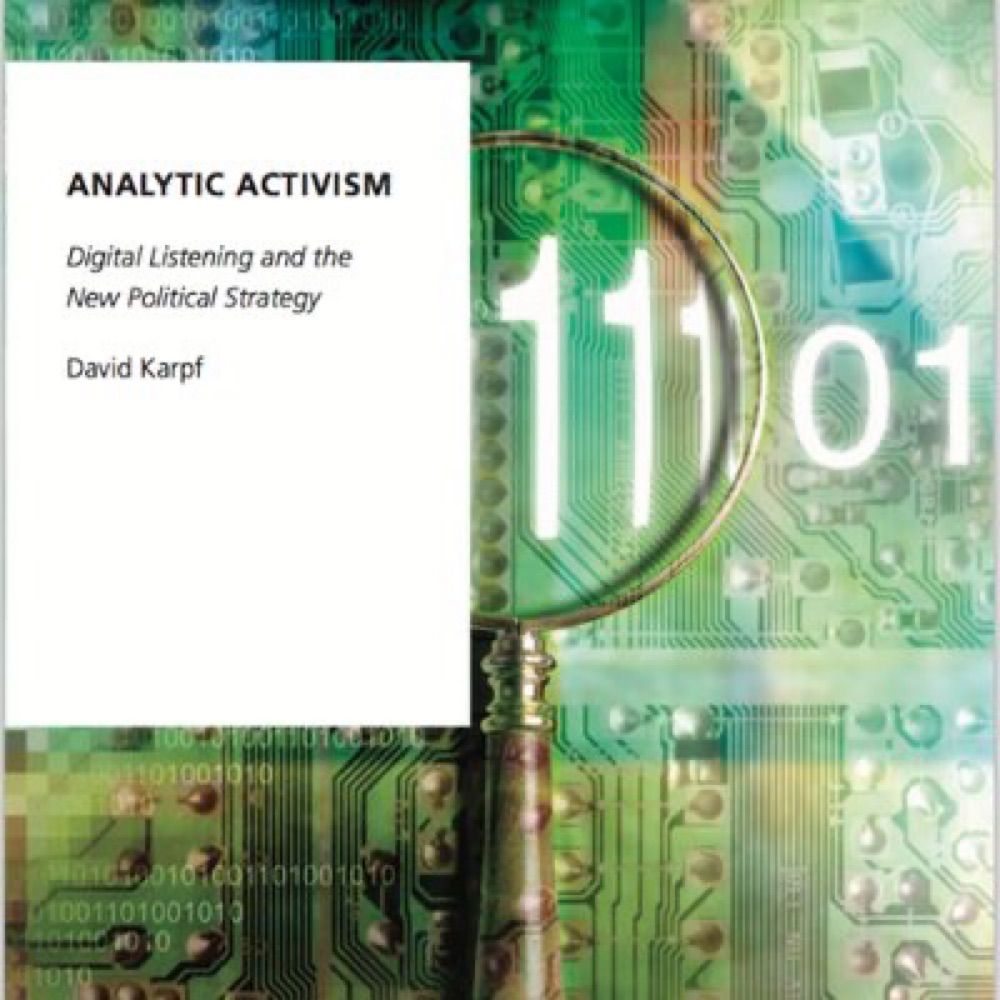
November 2000: WIRED profiles an “ecohacker” who is going to solve climate change by overwhelming the ocean with plankton.
Silicon Valley is never gonna stop believing we are one tech breakthrough away from solving the climate crisis.
Silicon Valley is never gonna stop believing we are one tech breakthrough away from solving the climate crisis.

December 25, 2023 at 12:05 AM
November 2000: WIRED profiles an “ecohacker” who is going to solve climate change by overwhelming the ocean with plankton.
Silicon Valley is never gonna stop believing we are one tech breakthrough away from solving the climate crisis.
Silicon Valley is never gonna stop believing we are one tech breakthrough away from solving the climate crisis.
Reposted
Grok, launched this month on X, has angered conservatives by endorsing diversity. Elon Musk says he’s trying to fix it.

Elon Musk promised an anti-‘woke’ chatbot. It’s not going as planned.
Elon Musk’s “Grok” AI is drawing complaints from conservatives, who say it’s still too liberal. Musk says he’s trying to fix it.
www.washingtonpost.com
December 23, 2023 at 8:15 PM
Grok, launched this month on X, has angered conservatives by endorsing diversity. Elon Musk says he’s trying to fix it.