



Pedro H. Santos
@blightedboy2.bsky.social
Master's student at UFRJ (Brazil)
My research is focused on the interface between Sociolinguistics and Neuroscience (EEG-ERPs).
Member of Acesin (Syntactic Access Lab)
My research is focused on the interface between Sociolinguistics and Neuroscience (EEG-ERPs).
Member of Acesin (Syntactic Access Lab)
Reposted by Pedro H. Santos
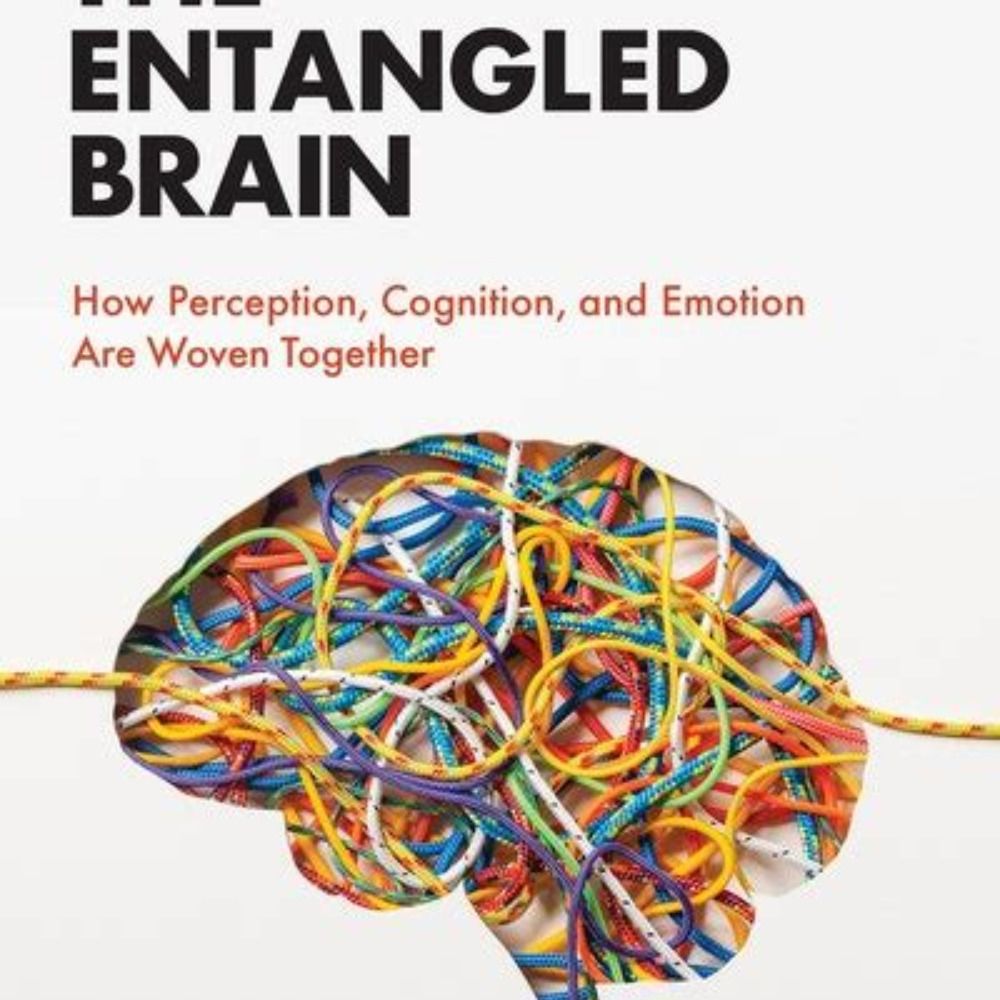
𝗪𝗵𝗮𝘁 𝗮𝗿𝗲 𝗯𝗿𝗮𝗶𝗻 𝗻𝗲𝘁𝘄𝗼𝗿𝗸𝘀?
Do they even exist...?
Join @lucinauddin.bsky.social who will present, followed by discussion in the Neuroscience & Philosophy Salon.
Open to all.
Date: Dec 9, 12pm EST-US
Register: umd.zoom.us/meeting/regi... (you need a zoom account which is free)
#neuroskyence
Do they even exist...?
Join @lucinauddin.bsky.social who will present, followed by discussion in the Neuroscience & Philosophy Salon.
Open to all.
Date: Dec 9, 12pm EST-US
Register: umd.zoom.us/meeting/regi... (you need a zoom account which is free)
#neuroskyence
Welcome! You are invited to join a meeting: NeuroPhilo Salon. After registering, you will receive a confirmation email about joining the meeting.
Welcome! You are invited to join a meeting: NeuroPhilo Salon. After registering, you will receive a confirmation email about joining the meeting.
umd.zoom.us
November 29, 2025 at 5:14 PM
𝗪𝗵𝗮𝘁 𝗮𝗿𝗲 𝗯𝗿𝗮𝗶𝗻 𝗻𝗲𝘁𝘄𝗼𝗿𝗸𝘀?
Do they even exist...?
Join @lucinauddin.bsky.social who will present, followed by discussion in the Neuroscience & Philosophy Salon.
Open to all.
Date: Dec 9, 12pm EST-US
Register: umd.zoom.us/meeting/regi... (you need a zoom account which is free)
#neuroskyence
Do they even exist...?
Join @lucinauddin.bsky.social who will present, followed by discussion in the Neuroscience & Philosophy Salon.
Open to all.
Date: Dec 9, 12pm EST-US
Register: umd.zoom.us/meeting/regi... (you need a zoom account which is free)
#neuroskyence
Reposted by Pedro H. Santos

Me trying to keep up with the oscillations discussion in bluesky

November 24, 2025 at 2:42 PM
Me trying to keep up with the oscillations discussion in bluesky
Reposted by Pedro H. Santos

Origins of language, one of humanity’s most distinctive traits, may be best explained as a unique convergence of multiple capacities each with its own evolutionary history, involving intertwined roles of biology & culture. This framing can expand research horizons. A 🧵 on our @science.org paper.🧪1/n

What enables human language? A biocultural framework
Explaining the origins of language is a key challenge in understanding ourselves as a species. We present an empirical framework that draws on synergies across fields to facilitate robust studies of l...
www.science.org
November 23, 2025 at 11:54 AM
Origins of language, one of humanity’s most distinctive traits, may be best explained as a unique convergence of multiple capacities each with its own evolutionary history, involving intertwined roles of biology & culture. This framing can expand research horizons. A 🧵 on our @science.org paper.🧪1/n
Reposted by Pedro H. Santos
If you are unable to download the full version of our newly published language evolution article in Science, there is a link for direct free access on the Max Planck Institute website here:
November 23, 2025 at 7:09 PM
If you are unable to download the full version of our newly published language evolution article in Science, there is a link for direct free access on the Max Planck Institute website here:
Reposted by Pedro H. Santos

New paper out today in Cognitive Neuroscience!
Proposing an explicit, causal-mechanistic, falsifiable and empirically grounded neural code for natural language syntax, and its innate basis.
ROSE: A Universal Neural Grammar
www.tandfonline.com/doi/full/10....
Proposing an explicit, causal-mechanistic, falsifiable and empirically grounded neural code for natural language syntax, and its innate basis.
ROSE: A Universal Neural Grammar
www.tandfonline.com/doi/full/10....
ROSE: A Universal Neural Grammar
Processing natural language syntax requires a negotiation between symbolic and subsymbolic representations. Building on the recent representation, operation, structure, encoding (ROSE) neurocomputa...
www.tandfonline.com
July 14, 2025 at 5:42 PM
New paper out today in Cognitive Neuroscience!
Proposing an explicit, causal-mechanistic, falsifiable and empirically grounded neural code for natural language syntax, and its innate basis.
ROSE: A Universal Neural Grammar
www.tandfonline.com/doi/full/10....
Proposing an explicit, causal-mechanistic, falsifiable and empirically grounded neural code for natural language syntax, and its innate basis.
ROSE: A Universal Neural Grammar
www.tandfonline.com/doi/full/10....
Reposted by Pedro H. Santos

Beyond Broca: The Two Routes to Speaking. My new
@psychtoday.bsky.social essay excerpted and adapted from Wired for Words: The Neural Architecture of Language, forthcoming this month @mitpress.bsky.social.
www.psychologytoday.com/us/blog/wire...
.
@psychtoday.bsky.social essay excerpted and adapted from Wired for Words: The Neural Architecture of Language, forthcoming this month @mitpress.bsky.social.
www.psychologytoday.com/us/blog/wire...
.

Beyond Broca: The Two Routes to Speaking
For 150 years, Broca's area has defined speech production. Now scientists have discovered a second parallel system that controls the melody and rhythm of how we speak and sing.
www.psychologytoday.com
November 4, 2025 at 3:47 PM
Beyond Broca: The Two Routes to Speaking. My new
@psychtoday.bsky.social essay excerpted and adapted from Wired for Words: The Neural Architecture of Language, forthcoming this month @mitpress.bsky.social.
www.psychologytoday.com/us/blog/wire...
.
@psychtoday.bsky.social essay excerpted and adapted from Wired for Words: The Neural Architecture of Language, forthcoming this month @mitpress.bsky.social.
www.psychologytoday.com/us/blog/wire...
.
Reposted by Pedro H. Santos

AI slop and the destruction of knowledge irisvanrooijcogsci.com/2025/08/12/a...

AI slop and the destruction of knowledge
This week I was looking for info on what cognitive scientists mean when they speak of ‘domain-general’ cognition. I was curious, because the nuances are relevant for something I am researching at t…
irisvanrooijcogsci.com
August 12, 2025 at 10:12 PM
AI slop and the destruction of knowledge irisvanrooijcogsci.com/2025/08/12/a...
Confronting the connectivity crisis in human M/EEG research
www.sciencedirect.com/science/arti...
www.sciencedirect.com/science/arti...

Confronting the connectivity crisis in human M/EEG research
The cognitive neuroscience community using M/EEG has not converged on measures of task-related inter-regional brain connectivity that generalize acros…
www.sciencedirect.com
September 20, 2025 at 8:00 PM
Confronting the connectivity crisis in human M/EEG research
www.sciencedirect.com/science/arti...
www.sciencedirect.com/science/arti...
Reposted by Pedro H. Santos
'Left perisylvian rhythms encode prosody and syntax during delayed sentence repetition'.
Cool intracranial work on syntax and phonology!
www.jneurosci.org/content/earl...
Cool intracranial work on syntax and phonology!
www.jneurosci.org/content/earl...

Left perisylvian rhythms encode prosody and syntax during delayed sentence repetition
The human brain must add information to the acoustic speech signal in order to understand language. Many accounts propose that the prosodic structure of utterances (including their syllabic rhythm and...
www.jneurosci.org
August 20, 2025 at 7:14 PM
'Left perisylvian rhythms encode prosody and syntax during delayed sentence repetition'.
Cool intracranial work on syntax and phonology!
www.jneurosci.org/content/earl...
Cool intracranial work on syntax and phonology!
www.jneurosci.org/content/earl...
Reposted by Pedro H. Santos

Really grateful to the editors of @jslx.bsky.social for this opportunity to write about Bill's legacy -- both scholarly and some personal -- from our perspective as 3 students from his later years. 🐦
w @laurelmack.bsky.social & Meredith Tamminga
onlinelibrary.wiley.com/doi/10.1111/...
w @laurelmack.bsky.social & Meredith Tamminga
onlinelibrary.wiley.com/doi/10.1111/...

Bill Labov: Looking Back, Looking Forward
Bill Labov passed away peacefully at home on December 17, 2024, with his wife and fellow Penn linguist Gillian Sankoff by his side. He leaves behind a legacy so large that it is hard to put into word....
onlinelibrary.wiley.com
August 20, 2025 at 8:01 PM
Really grateful to the editors of @jslx.bsky.social for this opportunity to write about Bill's legacy -- both scholarly and some personal -- from our perspective as 3 students from his later years. 🐦
w @laurelmack.bsky.social & Meredith Tamminga
onlinelibrary.wiley.com/doi/10.1111/...
w @laurelmack.bsky.social & Meredith Tamminga
onlinelibrary.wiley.com/doi/10.1111/...
Reposted by Pedro H. Santos
"Our results suggest that LLMs' ability to predict brain activation does not strongly differ between language and non-language-related brain areas"
On whether the relationship between large language models and brain activity is language-specific
2025.ccneuro.org/abstract_pdf...
On whether the relationship between large language models and brain activity is language-specific
2025.ccneuro.org/abstract_pdf...
2025.ccneuro.org
August 19, 2025 at 7:44 PM
"Our results suggest that LLMs' ability to predict brain activation does not strongly differ between language and non-language-related brain areas"
On whether the relationship between large language models and brain activity is language-specific
2025.ccneuro.org/abstract_pdf...
On whether the relationship between large language models and brain activity is language-specific
2025.ccneuro.org/abstract_pdf...
Reposted by Pedro H. Santos
New paper out today!
We provide evidence from 84,000 individuals with language deficits across 9 languages for distinct but highly common and robust structural syntactic types generated from Merge-based syntax.
🌲 🧠
arxiv.org/abs/2508.02885
We provide evidence from 84,000 individuals with language deficits across 9 languages for distinct but highly common and robust structural syntactic types generated from Merge-based syntax.
🌲 🧠
arxiv.org/abs/2508.02885

Merge-based syntax is mediated by distinct neurocognitive mechanisms: A clustering analysis of comprehension abilities in 84,000 individuals with language deficits across nine languages
In the modern language sciences, the core computational operation of syntax, 'Merge', is defined as an operation that combines two linguistic units (e.g., 'brown', 'cat') to form a categorized structu...
arxiv.org
August 6, 2025 at 1:16 AM
New paper out today!
We provide evidence from 84,000 individuals with language deficits across 9 languages for distinct but highly common and robust structural syntactic types generated from Merge-based syntax.
🌲 🧠
arxiv.org/abs/2508.02885
We provide evidence from 84,000 individuals with language deficits across 9 languages for distinct but highly common and robust structural syntactic types generated from Merge-based syntax.
🌲 🧠
arxiv.org/abs/2508.02885
Reposted by Pedro H. Santos

Beautiful work from the Raimondo lab documenting the protracted maturation of human neurons (h/t @lancasterlab.bsky.social)
For #neoteny fans 🧪🧠
www.biorxiv.org/content/10.1...
For #neoteny fans 🧪🧠
www.biorxiv.org/content/10.1...

Human neurons undergo protracted functional maturation into adulthood
Human cognitive development is uniquely prolonged, reflecting the extended postnatal maturation of the cerebral cortex where cell-type differentiation, synaptogenesis, myelination8 and transcriptional...
www.biorxiv.org
August 2, 2025 at 6:33 AM
Beautiful work from the Raimondo lab documenting the protracted maturation of human neurons (h/t @lancasterlab.bsky.social)
For #neoteny fans 🧪🧠
www.biorxiv.org/content/10.1...
For #neoteny fans 🧪🧠
www.biorxiv.org/content/10.1...
Reposted by Pedro H. Santos
When word order matters: human brains represent sentence meaning differently from large language models
www.biorxiv.org/content/10.1...
www.biorxiv.org/content/10.1...

When word order matters: human brains represent sentence meaning differently from large language models
Large language models based on the transformer architecture are now capable of producing human-like language. But do they encode and process linguistic meaning in a human-like way? Here, we address th...
www.biorxiv.org
July 27, 2025 at 10:39 PM
When word order matters: human brains represent sentence meaning differently from large language models
www.biorxiv.org/content/10.1...
www.biorxiv.org/content/10.1...


Reposted by Pedro H. Santos
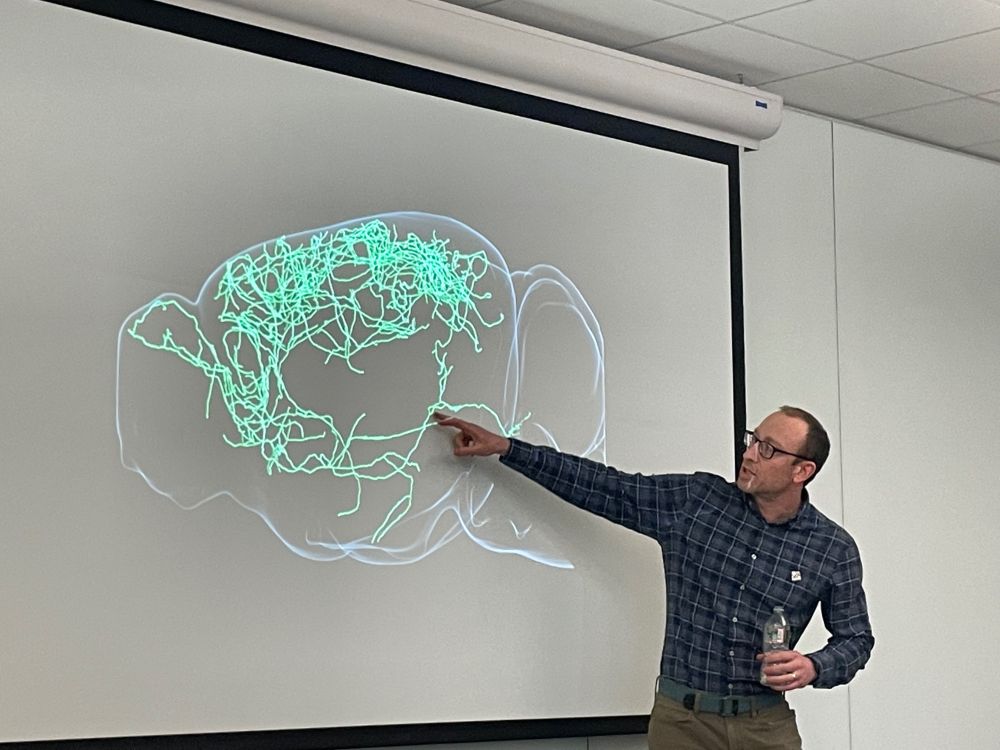
THIS IS ONE NEURON! Jaw dropping.
It distributes a particular neurotransmitter (norepinephrine) across the mouse brain; it’s a locus coeruleus neuron.
@jeremiahycohen.bsky.social and colleagues at the @alleninstitute.bsky.social are using new biotech to see things never seen before.
It distributes a particular neurotransmitter (norepinephrine) across the mouse brain; it’s a locus coeruleus neuron.
@jeremiahycohen.bsky.social and colleagues at the @alleninstitute.bsky.social are using new biotech to see things never seen before.
April 15, 2025 at 4:21 PM
THIS IS ONE NEURON! Jaw dropping.
It distributes a particular neurotransmitter (norepinephrine) across the mouse brain; it’s a locus coeruleus neuron.
@jeremiahycohen.bsky.social and colleagues at the @alleninstitute.bsky.social are using new biotech to see things never seen before.
It distributes a particular neurotransmitter (norepinephrine) across the mouse brain; it’s a locus coeruleus neuron.
@jeremiahycohen.bsky.social and colleagues at the @alleninstitute.bsky.social are using new biotech to see things never seen before.
"[...] each of the seven call types we investigated here represents a building block of a compositional structure. [...] akin to human language, compositionality is a pervasive component of bonobos’ vocal communication."
www.science.org/doi/10.1126/...
www.science.org/doi/10.1126/...

Extensive compositionality in the vocal system of bonobos
Compositionality, the capacity to combine meaningful elements into larger meaningful structures, is a hallmark of human language. Compositionality can be trivial (the combination’s meaning is the sum ...
www.science.org
April 6, 2025 at 12:48 PM
"[...] each of the seven call types we investigated here represents a building block of a compositional structure. [...] akin to human language, compositionality is a pervasive component of bonobos’ vocal communication."
www.science.org/doi/10.1126/...
www.science.org/doi/10.1126/...
"I am starting to get pretty good results when I internally run prompts asking LLMs to review papers for signs of questionable research practices. lot of mistakes that people make for a lack of knowing better will be wrongly called fraud. It is better if we start improving our practices right now."

The fog of war in science is about to lift
There is many problems in science: we are about to see it due to automatic parsing of papers
open.substack.com
March 24, 2025 at 2:57 PM
"I am starting to get pretty good results when I internally run prompts asking LLMs to review papers for signs of questionable research practices. lot of mistakes that people make for a lack of knowing better will be wrongly called fraud. It is better if we start improving our practices right now."
On the origin of memory neurons in the human hippocampus: Trends in Cognitive Sciences www.cell.com/trends/cogni...

On the origin of memory neurons in the human hippocampus
The hippocampus is essential for episodic memory, yet its coding mechanism remains
debated. In humans, two main theories have been proposed: one suggests that concept
neurons represent specific elemen...
www.cell.com
March 6, 2025 at 5:05 PM
On the origin of memory neurons in the human hippocampus: Trends in Cognitive Sciences www.cell.com/trends/cogni...
This brought me to tears.
Thank you for bringing it to us, @betsysneller.bsky.social
www.cambridge.org/core/journal...
Thank you for bringing it to us, @betsysneller.bsky.social
www.cambridge.org/core/journal...
Finding out about children’s language | Language Variation and Change | Cambridge Core
Finding out about children’s language
www.cambridge.org
February 18, 2025 at 11:14 PM
This brought me to tears.
Thank you for bringing it to us, @betsysneller.bsky.social
www.cambridge.org/core/journal...
Thank you for bringing it to us, @betsysneller.bsky.social
www.cambridge.org/core/journal...
Reposted by Pedro H. Santos
Roses are red.
Violets are blue.
We do not doubt the technical quality of your study.
However, we are not persuaded that the findings represent a sufficient advance to warrant publication in Nature Valentines, & are returning the paper without a review.
#AcademicValentine
Violets are blue.
We do not doubt the technical quality of your study.
However, we are not persuaded that the findings represent a sufficient advance to warrant publication in Nature Valentines, & are returning the paper without a review.
#AcademicValentine
February 14, 2025 at 9:14 AM
Roses are red.
Violets are blue.
We do not doubt the technical quality of your study.
However, we are not persuaded that the findings represent a sufficient advance to warrant publication in Nature Valentines, & are returning the paper without a review.
#AcademicValentine
Violets are blue.
We do not doubt the technical quality of your study.
However, we are not persuaded that the findings represent a sufficient advance to warrant publication in Nature Valentines, & are returning the paper without a review.
#AcademicValentine
Really interesting discussion about something that is often automatic accepted as truth.
Is Ockham’s razor losing its edge? New perspectives on the principle of model parsimony
www.pnas.org/doi/10.1073/...
Is Ockham’s razor losing its edge? New perspectives on the principle of model parsimony
www.pnas.org/doi/10.1073/...

Is Ockham’s razor losing its edge? New perspectives on the principle of model parsimony | PNAS
The preference for simple explanations, known as the parsimony principle, has long
guided the development of scientific theories, hypotheses, and m...
www.pnas.org
February 5, 2025 at 11:58 PM
Really interesting discussion about something that is often automatic accepted as truth.
Is Ockham’s razor losing its edge? New perspectives on the principle of model parsimony
www.pnas.org/doi/10.1073/...
Is Ockham’s razor losing its edge? New perspectives on the principle of model parsimony
www.pnas.org/doi/10.1073/...
Reposted by Pedro H. Santos

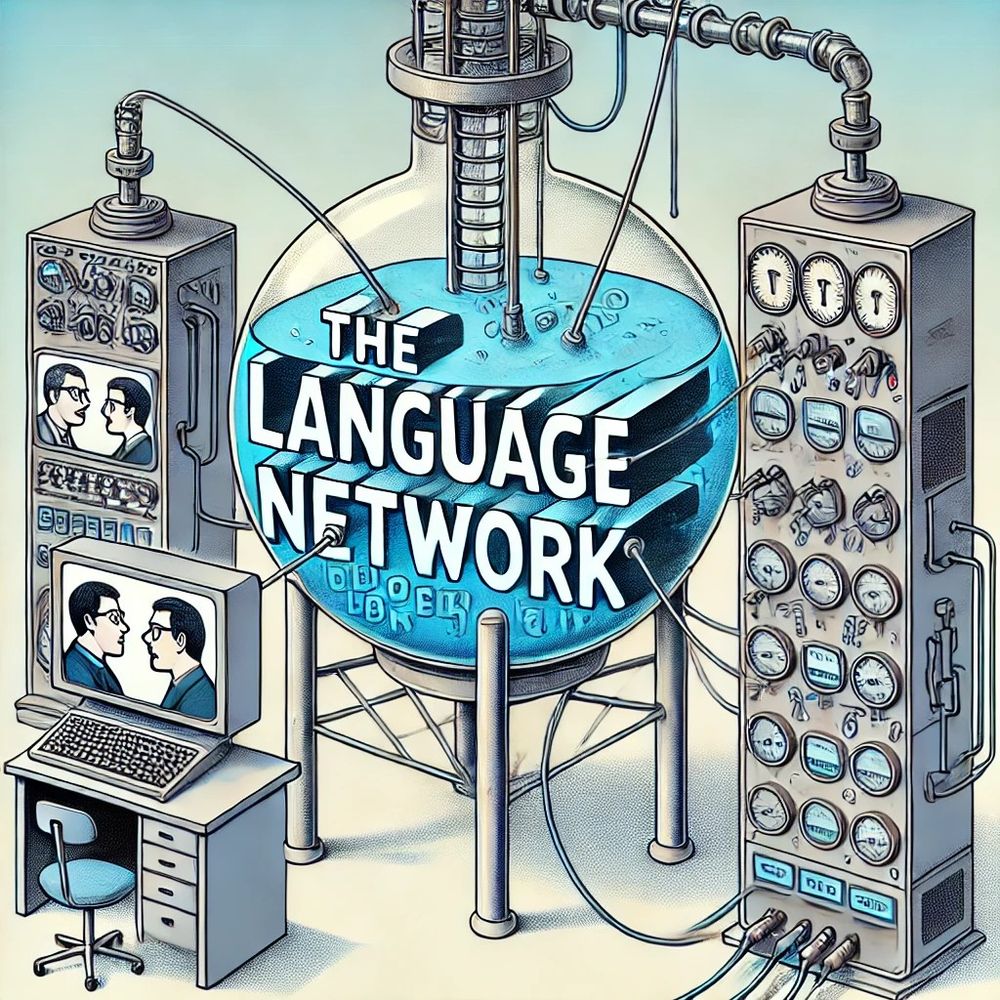
🗣️ Language is widely distributed throughout the brain 🧠
In a recent correspondence in @natrevneurosci.bsky.social, we suggest that there is no 'language network' in the brain. What appears as such is an inevitable illusion created in part by the methods we use.
www.nature.com/articles/s41...
In a recent correspondence in @natrevneurosci.bsky.social, we suggest that there is no 'language network' in the brain. What appears as such is an inevitable illusion created in part by the methods we use.
www.nature.com/articles/s41...
January 31, 2025 at 10:52 AM
🗣️ Language is widely distributed throughout the brain 🧠
In a recent correspondence in @natrevneurosci.bsky.social, we suggest that there is no 'language network' in the brain. What appears as such is an inevitable illusion created in part by the methods we use.
www.nature.com/articles/s41...
In a recent correspondence in @natrevneurosci.bsky.social, we suggest that there is no 'language network' in the brain. What appears as such is an inevitable illusion created in part by the methods we use.
www.nature.com/articles/s41...