



Beebytes Analytics CIC
@beebytes.org
A social enterprise offering #genetics testing services for #honeybees and other #pollinators.
https://beebytes.org/
https://beebytes.org/
Further confirmation that EFB is not endemic in Scotland, and only present in a small number of colonies/apiaries. It will be interesting to see how this finding affects the current Government approach to notifiable disease management.
www.nationalbeeunit.com/assets/PDFs/...
www.nationalbeeunit.com/assets/PDFs/...
www.nationalbeeunit.com
June 17, 2025 at 8:23 AM
Further confirmation that EFB is not endemic in Scotland, and only present in a small number of colonies/apiaries. It will be interesting to see how this finding affects the current Government approach to notifiable disease management.
www.nationalbeeunit.com/assets/PDFs/...
www.nationalbeeunit.com/assets/PDFs/...
Happy World Bee day! What are you doing today to celebrate our wonderful pollinators?

May 20, 2025 at 8:16 AM
Happy World Bee day! What are you doing today to celebrate our wonderful pollinators?
Bee inspectors are vital to deal with notifiable diseases like foulbroods. The lack of inspection in Northern Ireland, coupled with it's new role as a major import route for European honey bees, is very concerning.
www.bbc.co.uk/news/article...
www.bbc.co.uk/news/article...
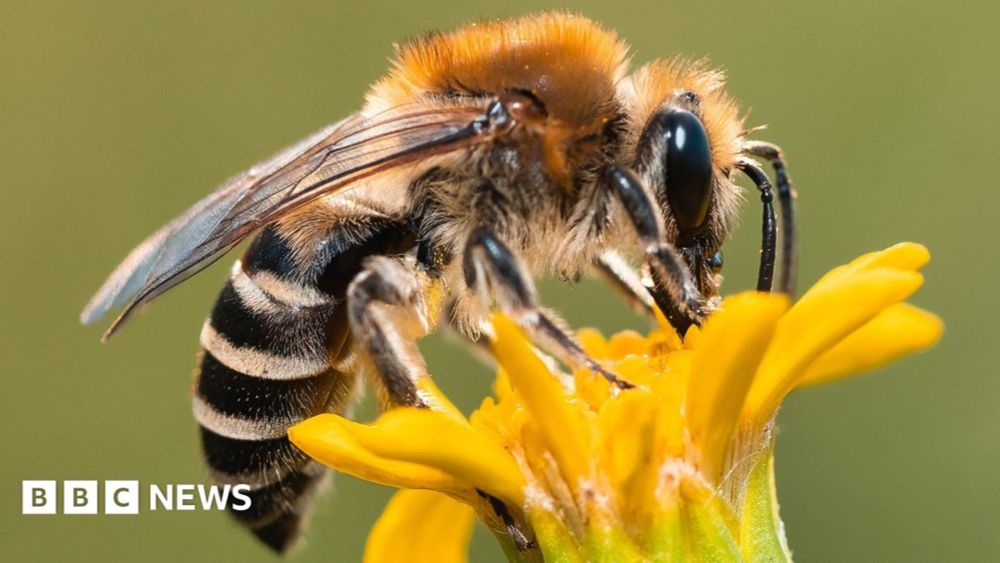
NI's honey bees: Population at risk due to no bee inspectorate
NI's last full-time bee inspector retired in 2024 and the part-time inspector died shortly after.
www.bbc.co.uk
May 6, 2025 at 8:57 AM
Bee inspectors are vital to deal with notifiable diseases like foulbroods. The lack of inspection in Northern Ireland, coupled with it's new role as a major import route for European honey bees, is very concerning.
www.bbc.co.uk/news/article...
www.bbc.co.uk/news/article...
March 25, 2025 at 8:13 PM
Researching insects? @royentsoc.bsky.social is looking for feedback on the subject of insect research practices and ethics... www.royensoc.co.uk/news/res-wel...

RES Great Welfare Survey 2025 - Royal Entomological Society
Insect Research Practices and Ethics in the UK Share Your Experience on Ethics Applications Are you a researcher working with insects? We need your insights! The Royal Entomological Society is conduct...
www.royensoc.co.uk
March 15, 2025 at 4:45 PM
Researching insects? @royentsoc.bsky.social is looking for feedback on the subject of insect research practices and ethics... www.royensoc.co.uk/news/res-wel...
A fascinating technical talk on how selective breeding in honey bees removes rare alleles and opposes natural selection in populations. www.youtube.com/watch?v=UClh...

Jacques van Alphen The backside of selection: A forgotten cause of bee mortality
YouTube video by National Honey Show
www.youtube.com
March 12, 2025 at 10:07 AM
A fascinating technical talk on how selective breeding in honey bees removes rare alleles and opposes natural selection in populations. www.youtube.com/watch?v=UClh...
Looking forward to presenting on the status of native honey bees at the B4 symposium this weekend! www.plymouth.ac.uk/whats-on/b4-...

B4 2-day Honey Bee Symposium 2025
What's on at the University of Plymouth: B4 2-day Honey Bee Symposium 2025. Uniting science, conservation and community around sustainable solutions for...
www.plymouth.ac.uk
February 21, 2025 at 6:59 PM
Looking forward to presenting on the status of native honey bees at the B4 symposium this weekend! www.plymouth.ac.uk/whats-on/b4-...
Good to see the potential for emergency use of neonics on sugar beet finally stopped. Shocking that it no action was taken for 5 years, despite expert and public opinion strongly against this use!
www.theguardian.com/environment/...
www.theguardian.com/environment/...

Government overturns Tory measure and bans emergency use of bee-killing pesticide
Emergency use of Cruiser SB, a neonicotinoid pesticide highly toxic to bees, to be outlawed in UK in line with EU
www.theguardian.com
January 25, 2025 at 3:51 PM
Good to see the potential for emergency use of neonics on sugar beet finally stopped. Shocking that it no action was taken for 5 years, despite expert and public opinion strongly against this use!
www.theguardian.com/environment/...
www.theguardian.com/environment/...
Varroa amitraz resistance is now established in several places in the world. With no obvious replacement 'magic bullet' treatment on the horizon, IPM techniques and work towards natural resistance are more important now than ever: www.nature.com/articles/s41...

Arising amitraz and pyrethroids resistance mutations in the ectoparasitic Varroa destructor mite in Canada - Scientific Reports
Scientific Reports - Arising amitraz and pyrethroids resistance mutations in the ectoparasitic Varroa destructor mite in Canada
www.nature.com
January 12, 2025 at 12:28 PM
Varroa amitraz resistance is now established in several places in the world. With no obvious replacement 'magic bullet' treatment on the horizon, IPM techniques and work towards natural resistance are more important now than ever: www.nature.com/articles/s41...
A Call for Evidence from the UK Parliament on issues surrounding animal and plant biosecurity in relation to imports. Plenty of knowledgeable individuals and orgs here who might want to submit evidence! (deadline 29th Jan) committees.parliament.uk/call-for-evi...

Call for Evidence - Committees - UK Parliament
Animal and plant health
committees.parliament.uk
January 11, 2025 at 5:13 PM
A Call for Evidence from the UK Parliament on issues surrounding animal and plant biosecurity in relation to imports. Plenty of knowledgeable individuals and orgs here who might want to submit evidence! (deadline 29th Jan) committees.parliament.uk/call-for-evi...
A fascinating potential insight into the changes in European honey bees over the last thousand years, no doubt with some challenging DNA analysis required! tvpworld.com/83900838/wou...
tvpworld.com
December 11, 2024 at 1:11 PM
A fascinating potential insight into the changes in European honey bees over the last thousand years, no doubt with some challenging DNA analysis required! tvpworld.com/83900838/wou...
Flowering weeds in arable fields actually provide a major source of forage for pollinators. Important to consider in arable crop management and weed suppression. onlinelibrary.wiley.com/doi/10.1002/...

Pollinator activity and flowering in agricultural weeds in Sweden
The usefulness of weeds to pollinators depends partly on the temporal pattern of flowering and flight activity. We compiled citizen science data on observation of bees and hoverflies typical of agric...
onlinelibrary.wiley.com
December 11, 2024 at 7:42 AM
Flowering weeds in arable fields actually provide a major source of forage for pollinators. Important to consider in arable crop management and weed suppression. onlinelibrary.wiley.com/doi/10.1002/...
An interesting paper quantifying the prevalence of different honeybee sub-species in an area with recent import restrictions. It will be interesting to see 'part 2' in the future to see if these legal protections will prove effective. www.nature.com/articles/s41...

Distribution of honey bee mitochondrial DNA haplotypes in an Italian region where a legislative act is protecting the Apis mellifera ligustica subspecies - Scientific Reports
Scientific Reports - Distribution of honey bee mitochondrial DNA haplotypes in an Italian region where a legislative act is protecting the Apis mellifera ligustica subspecies
www.nature.com
December 4, 2024 at 3:58 PM
An interesting paper quantifying the prevalence of different honeybee sub-species in an area with recent import restrictions. It will be interesting to see 'part 2' in the future to see if these legal protections will prove effective. www.nature.com/articles/s41...
Pupal stress causes early premature hive exiting in honey bees, possibly due to under-developed hypopharyngeal glands. A fascinating potential explanation as to why stressors like varroa can lead to rapid colony failure! biolres.biomedcentral.com/articles/10....

Stress drives premature hive exiting behavior that leads to death in young honey bee (Apis mellifera) workers - Biological Research
Background The Western honey bee, Apis mellifera, is an economically important pollinator, as well as a tractable species for studying the behavioral intricacies of eusociality. Honey bees are current...
biolres.biomedcentral.com
November 30, 2024 at 6:38 PM
Pupal stress causes early premature hive exiting in honey bees, possibly due to under-developed hypopharyngeal glands. A fascinating potential explanation as to why stressors like varroa can lead to rapid colony failure! biolres.biomedcentral.com/articles/10....
Catching up on social media with a series of posts on our work in 2024... starting with our most recent work in Ireland looking at hybridisation risks to the native Irish honey bee, carried out with researchers from @uniofgalway.bsky.social beebytes.org/articles/hyb...

Hybridisation in Irish Honey Bees - Beebytes
Beebytes has taken part in a study in Ireland looking at levels of hybridisation in the native honey bee.
beebytes.org
November 26, 2024 at 11:54 AM
Catching up on social media with a series of posts on our work in 2024... starting with our most recent work in Ireland looking at hybridisation risks to the native Irish honey bee, carried out with researchers from @uniofgalway.bsky.social beebytes.org/articles/hyb...
A great example of using DNA barcoding to identify a wide range of at-risk species in a particular environment.

🦋🕷️ Working with @rspb.bsky.social, UKCEH researchers are using DNA tools to understand how different field margins (grass vs pollen & nectar) support species like moths, butterflies, and spiders while protecting against pesticide drift.
See a new blog post: community.rspb.org.uk/ourwork/farm...
See a new blog post: community.rspb.org.uk/ourwork/farm...

November 21, 2024 at 3:55 PM
A great example of using DNA barcoding to identify a wide range of at-risk species in a particular environment.
That's us just arrived, and seeing some familiar faces already... Looking forward to making some new connections around insects, genetics and conservation (there's never enough time for social media in the summer months!)
November 16, 2024 at 4:39 PM
That's us just arrived, and seeing some familiar faces already... Looking forward to making some new connections around insects, genetics and conservation (there's never enough time for social media in the summer months!)