



@atanughosh.bsky.social
Reposted
Our paper doi.org/10.1039/D4SC... on "Bridge editing of spin-flip emitters gives insight into excited state energies and dynamics" made it to the popular articles collection from 2024 (lmy.de/aYRWi). 🙏@chemicalscience.rsc.org
April 8, 2025 at 12:31 PM
Our paper doi.org/10.1039/D4SC... on "Bridge editing of spin-flip emitters gives insight into excited state energies and dynamics" made it to the popular articles collection from 2024 (lmy.de/aYRWi). 🙏@chemicalscience.rsc.org
Reposted

Iron(III) complexes with luminescence lifetimes as long as precious metal-based compounds
Utilization of an attached organic chromophore while maintaining a luminescent and photoactive LMCT excited state
Joel Wellauer & @bjoernpfund.bsky.social in JACS
pubs.acs.org/doi/10.1021/...
Utilization of an attached organic chromophore while maintaining a luminescent and photoactive LMCT excited state
Joel Wellauer & @bjoernpfund.bsky.social in JACS
pubs.acs.org/doi/10.1021/...
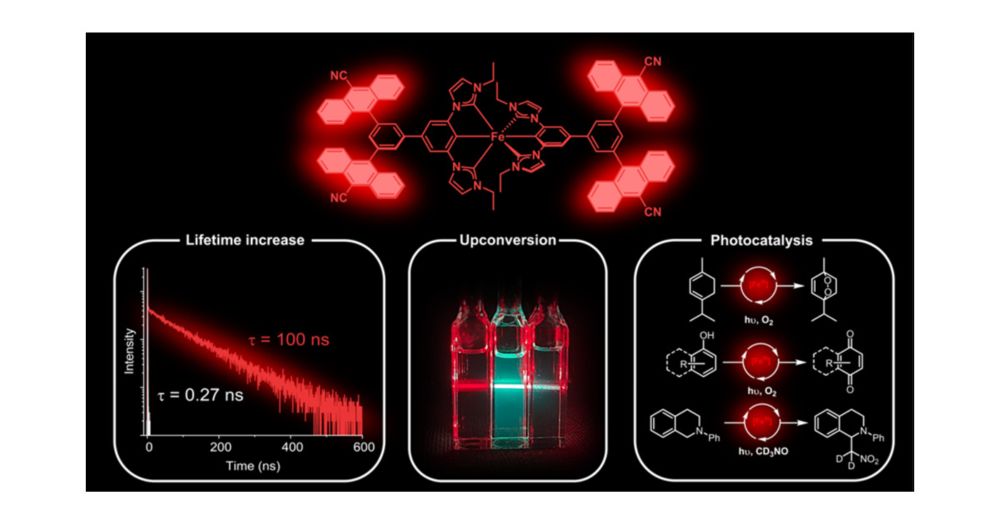
Iron(III) Complexes with Luminescence Lifetimes of up to 100 ns to Enhance Upconversion and Photocatalysis
Iron is the most abundant transition metal element and would be the ideal replacement for noble metals in many applications that rely on luminescent and long-lived electronically excited states. We sh...
pubs.acs.org
February 28, 2025 at 4:10 PM
Iron(III) complexes with luminescence lifetimes as long as precious metal-based compounds
Utilization of an attached organic chromophore while maintaining a luminescent and photoactive LMCT excited state
Joel Wellauer & @bjoernpfund.bsky.social in JACS
pubs.acs.org/doi/10.1021/...
Utilization of an attached organic chromophore while maintaining a luminescent and photoactive LMCT excited state
Joel Wellauer & @bjoernpfund.bsky.social in JACS
pubs.acs.org/doi/10.1021/...
Reposted
A simple guide to the design of metal complexes in luminescence and photoredox catalysis.
With Giacomo Morselli and Christian Reber in JACS @jacs.acspublications.org
pubs.acs.org/doi/10.1021/...
With Giacomo Morselli and Christian Reber in JACS @jacs.acspublications.org
pubs.acs.org/doi/10.1021/...
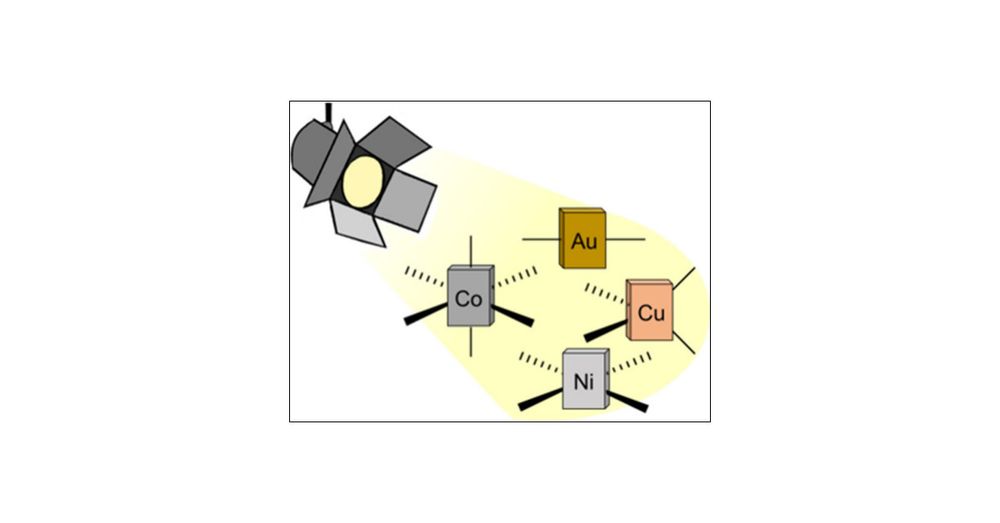
Molecular Design Principles for Photoactive Transition Metal Complexes: A Guide for “Photo-Motivated” Chemists
Luminescence and photochemistry involve electronically excited states that are inherently unstable and therefore spontaneously decay to electronic ground states, in most cases by nonradiative energy release that generates heat. This energy dissipation can occur on a time scale of 100 fs (∼10–13 s) and usually needs to be slowed down to at least the nanosecond (∼10–9 s) time scale for luminescence and intermolecular photochemistry to occur. This is a challenging task with many different factors to consider. An alternative emerging strategy is to target dissociative excited states that lead to metal–ligand bond homolysis on the subnanosecond time scale to access synthetically useful radicals. Based on a thorough review at the most recent advances in the field, this article aims to provide a concise guide to obtaining luminescent and photochemically useful coordination compounds with d-block elements. We hope to encourage “photo-motivated” chemists who have been reluctant to apply their synthetic and other knowledge to photophysics and photochemistry, and we intend to stimulate new approaches to the synthetic control of excited state behavior.
pubs.acs.org
March 27, 2025 at 10:18 PM
A simple guide to the design of metal complexes in luminescence and photoredox catalysis.
With Giacomo Morselli and Christian Reber in JACS @jacs.acspublications.org
pubs.acs.org/doi/10.1021/...
With Giacomo Morselli and Christian Reber in JACS @jacs.acspublications.org
pubs.acs.org/doi/10.1021/...