



Andreas Didion
@andreas1-stargazer.bsky.social
My world, my passion, exploring the beauty of the night sky.
Meine Welt, meine Leidenschaft, die Schönheit des Nachthimmels erkunden.
Meine Welt, meine Leidenschaft, die Schönheit des Nachthimmels erkunden.
✨ M31 – The Andromeda Galaxy ✨
The Andromeda Galaxy (Messier 31) is our closest major galactic neighbor – just 2,537,000 light-years from Earth! 🌌
#M31 #Andromeda #Andromedagalaxie #Astrofotografie #DeepSky #Galaxie #Astronomie #Astrophotography #CosmicBeauty #UniverseLovers
The Andromeda Galaxy (Messier 31) is our closest major galactic neighbor – just 2,537,000 light-years from Earth! 🌌
#M31 #Andromeda #Andromedagalaxie #Astrofotografie #DeepSky #Galaxie #Astronomie #Astrophotography #CosmicBeauty #UniverseLovers

September 15, 2025 at 4:40 PM
✨ M31 – The Andromeda Galaxy ✨
The Andromeda Galaxy (Messier 31) is our closest major galactic neighbor – just 2,537,000 light-years from Earth! 🌌
#M31 #Andromeda #Andromedagalaxie #Astrofotografie #DeepSky #Galaxie #Astronomie #Astrophotography #CosmicBeauty #UniverseLovers
The Andromeda Galaxy (Messier 31) is our closest major galactic neighbor – just 2,537,000 light-years from Earth! 🌌
#M31 #Andromeda #Andromedagalaxie #Astrofotografie #DeepSky #Galaxie #Astronomie #Astrophotography #CosmicBeauty #UniverseLovers
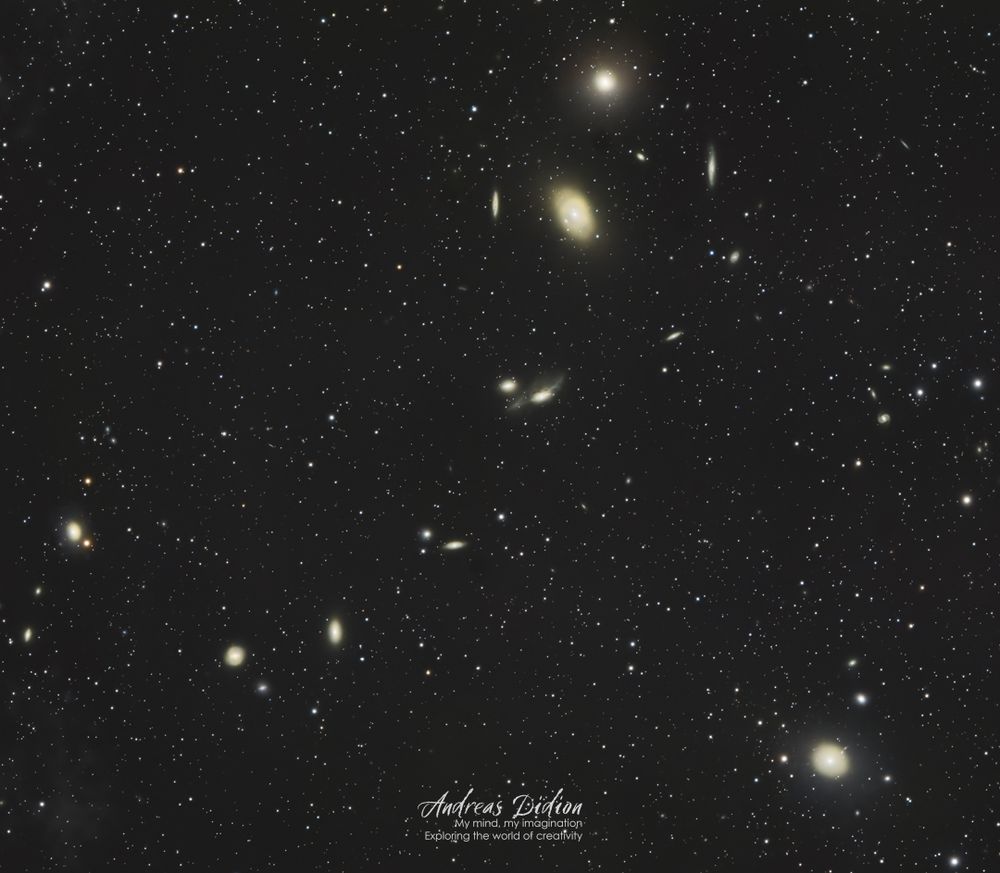
Markarian’s Chain in Virgo: a graceful arc of elliptical and spiral galaxies in the Virgo Cluster, ~50–60 million light-years away—featuring M84, M86, and the “Eyes” pair NGC 4438/4435.
#Astrophotography #MarkariansChain #VirgoCluster #DeepSky #Galaxies #Astronomy #ClearSkies
#Astrophotography #MarkariansChain #VirgoCluster #DeepSky #Galaxies #Astronomy #ClearSkies
September 14, 2025 at 4:39 PM
Markarian’s Chain in Virgo: a graceful arc of elliptical and spiral galaxies in the Virgo Cluster, ~50–60 million light-years away—featuring M84, M86, and the “Eyes” pair NGC 4438/4435.
#Astrophotography #MarkariansChain #VirgoCluster #DeepSky #Galaxies #Astronomy #ClearSkies
#Astrophotography #MarkariansChain #VirgoCluster #DeepSky #Galaxies #Astronomy #ClearSkies
✨ M42 – The Orion Nebula ✨
The Orion Nebula (M42) is one of the brightest and most fascinating star-forming regions in the night sky. It is located about 1,344 light-years away from Earth
#M42 #Orionnebel #DeepSky #Astrofotografie #Sternentstehung #Astronomie #Astrophotography
The Orion Nebula (M42) is one of the brightest and most fascinating star-forming regions in the night sky. It is located about 1,344 light-years away from Earth
#M42 #Orionnebel #DeepSky #Astrofotografie #Sternentstehung #Astronomie #Astrophotography
May 22, 2025 at 6:16 AM
✨ M42 – The Orion Nebula ✨
The Orion Nebula (M42) is one of the brightest and most fascinating star-forming regions in the night sky. It is located about 1,344 light-years away from Earth
#M42 #Orionnebel #DeepSky #Astrofotografie #Sternentstehung #Astronomie #Astrophotography
The Orion Nebula (M42) is one of the brightest and most fascinating star-forming regions in the night sky. It is located about 1,344 light-years away from Earth
#M42 #Orionnebel #DeepSky #Astrofotografie #Sternentstehung #Astronomie #Astrophotography
✨ Leo Triplet – Three Galaxies in Leo ✨
The Leo Triplet is a group of three beautiful spiral galaxies in the constellation Leo: M65, M66, and NGC 3628. They lie about 35 million light-years away from Earth
#LeoTriplet #M65 #M66 #NGC3628 #Galaxien #DeepSky #Astrofotografie #Astrophotography
The Leo Triplet is a group of three beautiful spiral galaxies in the constellation Leo: M65, M66, and NGC 3628. They lie about 35 million light-years away from Earth
#LeoTriplet #M65 #M66 #NGC3628 #Galaxien #DeepSky #Astrofotografie #Astrophotography

April 22, 2025 at 10:12 AM
✨ Leo Triplet – Three Galaxies in Leo ✨
The Leo Triplet is a group of three beautiful spiral galaxies in the constellation Leo: M65, M66, and NGC 3628. They lie about 35 million light-years away from Earth
#LeoTriplet #M65 #M66 #NGC3628 #Galaxien #DeepSky #Astrofotografie #Astrophotography
The Leo Triplet is a group of three beautiful spiral galaxies in the constellation Leo: M65, M66, and NGC 3628. They lie about 35 million light-years away from Earth
#LeoTriplet #M65 #M66 #NGC3628 #Galaxien #DeepSky #Astrofotografie #Astrophotography
M51 – The Whirlpool Galaxy
The Whirlpool Galaxy (M51) is a stunning spiral galaxy in the constellation Canes Venatici. It's located about 31 million light-years from Earth
#M51 #WhirlpoolGalaxy #Galaxie #DeepSky #Astrofotografie #Astronomie #GalaxyPhotography #Astrophotography #CosmicBeauty
The Whirlpool Galaxy (M51) is a stunning spiral galaxy in the constellation Canes Venatici. It's located about 31 million light-years from Earth
#M51 #WhirlpoolGalaxy #Galaxie #DeepSky #Astrofotografie #Astronomie #GalaxyPhotography #Astrophotography #CosmicBeauty

April 21, 2025 at 5:05 PM
M51 – The Whirlpool Galaxy
The Whirlpool Galaxy (M51) is a stunning spiral galaxy in the constellation Canes Venatici. It's located about 31 million light-years from Earth
#M51 #WhirlpoolGalaxy #Galaxie #DeepSky #Astrofotografie #Astronomie #GalaxyPhotography #Astrophotography #CosmicBeauty
The Whirlpool Galaxy (M51) is a stunning spiral galaxy in the constellation Canes Venatici. It's located about 31 million light-years from Earth
#M51 #WhirlpoolGalaxy #Galaxie #DeepSky #Astrofotografie #Astronomie #GalaxyPhotography #Astrophotography #CosmicBeauty
🌙✨ Moon-Pleiades Conjunction 2025 ✨🌌
On April 1, 2025, a rare celestial encounter took place: The waxing crescent Moon passed close to the open star cluster Pleiades (M45) in the constellation Taurus.
#MoonPleiades #Plejaden #M45 #Astrophotography #SpaceLovers #SkyEvent #Canonr6m2 #Pixinsight
On April 1, 2025, a rare celestial encounter took place: The waxing crescent Moon passed close to the open star cluster Pleiades (M45) in the constellation Taurus.
#MoonPleiades #Plejaden #M45 #Astrophotography #SpaceLovers #SkyEvent #Canonr6m2 #Pixinsight

April 6, 2025 at 4:44 PM
🌙✨ Moon-Pleiades Conjunction 2025 ✨🌌
On April 1, 2025, a rare celestial encounter took place: The waxing crescent Moon passed close to the open star cluster Pleiades (M45) in the constellation Taurus.
#MoonPleiades #Plejaden #M45 #Astrophotography #SpaceLovers #SkyEvent #Canonr6m2 #Pixinsight
On April 1, 2025, a rare celestial encounter took place: The waxing crescent Moon passed close to the open star cluster Pleiades (M45) in the constellation Taurus.
#MoonPleiades #Plejaden #M45 #Astrophotography #SpaceLovers #SkyEvent #Canonr6m2 #Pixinsight
🛰️✨ Rush hour in space!🚀💫
From 9 PM to 12:15 AM, the night sky was busy.
This image shows the "leftovers" of a long exposure capturing everything that flew across the sky
Satellites, Planes and probably a few aliens on their way to a cosmic afterwork drink.
Amidst all that chaos, the majestic M65
From 9 PM to 12:15 AM, the night sky was busy.
This image shows the "leftovers" of a long exposure capturing everything that flew across the sky
Satellites, Planes and probably a few aliens on their way to a cosmic afterwork drink.
Amidst all that chaos, the majestic M65

April 4, 2025 at 7:59 AM
🛰️✨ Rush hour in space!🚀💫
From 9 PM to 12:15 AM, the night sky was busy.
This image shows the "leftovers" of a long exposure capturing everything that flew across the sky
Satellites, Planes and probably a few aliens on their way to a cosmic afterwork drink.
Amidst all that chaos, the majestic M65
From 9 PM to 12:15 AM, the night sky was busy.
This image shows the "leftovers" of a long exposure capturing everything that flew across the sky
Satellites, Planes and probably a few aliens on their way to a cosmic afterwork drink.
Amidst all that chaos, the majestic M65
✨ IC 410 – The Tadpole Nebula ✨
IC 410, also known as the Tadpole Nebula, is a stunning star-forming region in the constellation Auriga. It lies about 12,000 light-years from Earth 🌌
#IC410 #TadpoleNebula #DeepSkyPhotography #astrophotograhy #AstroPhoto
IC 410, also known as the Tadpole Nebula, is a stunning star-forming region in the constellation Auriga. It lies about 12,000 light-years from Earth 🌌
#IC410 #TadpoleNebula #DeepSkyPhotography #astrophotograhy #AstroPhoto

March 30, 2025 at 6:29 PM
✨ IC 410 – The Tadpole Nebula ✨
IC 410, also known as the Tadpole Nebula, is a stunning star-forming region in the constellation Auriga. It lies about 12,000 light-years from Earth 🌌
#IC410 #TadpoleNebula #DeepSkyPhotography #astrophotograhy #AstroPhoto
IC 410, also known as the Tadpole Nebula, is a stunning star-forming region in the constellation Auriga. It lies about 12,000 light-years from Earth 🌌
#IC410 #TadpoleNebula #DeepSkyPhotography #astrophotograhy #AstroPhoto
Partial solar eclipse 2025.
Location: Peterberg Observatory
Timelapse from almost 1000 individual shots.
Sorry for the bad start
Location: Peterberg Observatory
Timelapse from almost 1000 individual shots.
Sorry for the bad start
March 29, 2025 at 2:19 PM
Partial solar eclipse 2025.
Location: Peterberg Observatory
Timelapse from almost 1000 individual shots.
Sorry for the bad start
Location: Peterberg Observatory
Timelapse from almost 1000 individual shots.
Sorry for the bad start
✨ M42 – The Orion Nebula ✨
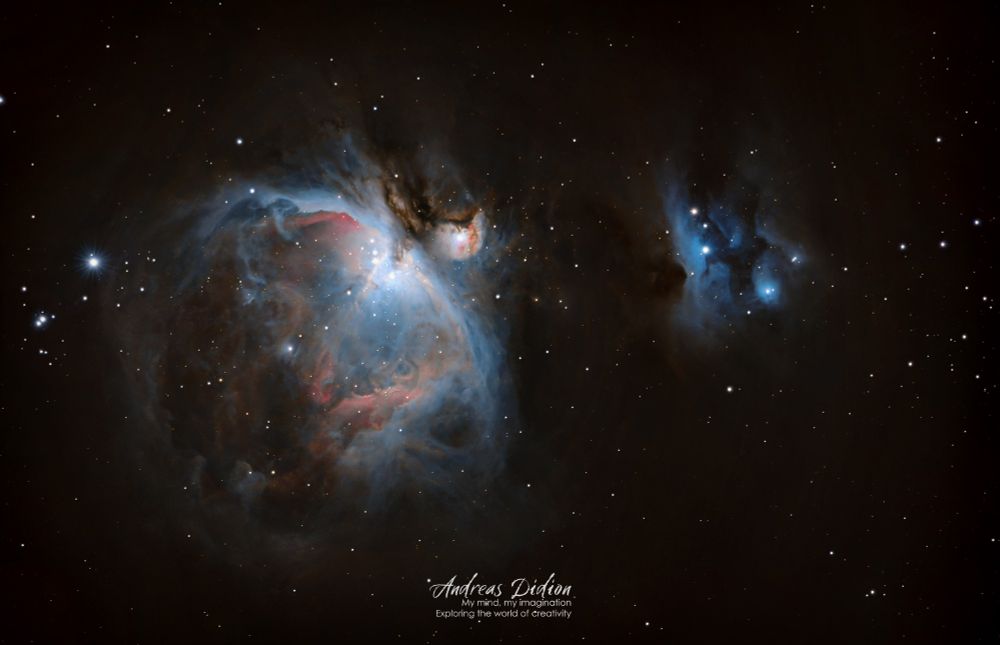
The Orion Nebula (M42) is one of the brightest and most famous deep-sky objects in the night sky. This stunning star-forming region is located about 1,344 light-years away from Earth
#M42 #NGC1976 #AstroPhotography #OrionNebula #NebulaPhotography #SpacePhoto
The Orion Nebula (M42) is one of the brightest and most famous deep-sky objects in the night sky. This stunning star-forming region is located about 1,344 light-years away from Earth
#M42 #NGC1976 #AstroPhotography #OrionNebula #NebulaPhotography #SpacePhoto
March 15, 2025 at 2:42 PM
✨ M42 – The Orion Nebula ✨
The Orion Nebula (M42) is one of the brightest and most famous deep-sky objects in the night sky. This stunning star-forming region is located about 1,344 light-years away from Earth
#M42 #NGC1976 #AstroPhotography #OrionNebula #NebulaPhotography #SpacePhoto
The Orion Nebula (M42) is one of the brightest and most famous deep-sky objects in the night sky. This stunning star-forming region is located about 1,344 light-years away from Earth
#M42 #NGC1976 #AstroPhotography #OrionNebula #NebulaPhotography #SpacePhoto
M45–The Pleiades
The Pleiades (M45) are one of the most beautiful and striking open star clusters in the night sky.
#M45 #Plejaden #SiebenSchwestern #DeepSky #Astrofotografie #Sternenhimmel #Astronomie #Astrophotography #SpaceLovers #UniverseLovers
The Pleiades (M45) are one of the most beautiful and striking open star clusters in the night sky.
#M45 #Plejaden #SiebenSchwestern #DeepSky #Astrofotografie #Sternenhimmel #Astronomie #Astrophotography #SpaceLovers #UniverseLovers


March 10, 2025 at 8:07 AM
M45–The Pleiades
The Pleiades (M45) are one of the most beautiful and striking open star clusters in the night sky.
#M45 #Plejaden #SiebenSchwestern #DeepSky #Astrofotografie #Sternenhimmel #Astronomie #Astrophotography #SpaceLovers #UniverseLovers
The Pleiades (M45) are one of the most beautiful and striking open star clusters in the night sky.
#M45 #Plejaden #SiebenSchwestern #DeepSky #Astrofotografie #Sternenhimmel #Astronomie #Astrophotography #SpaceLovers #UniverseLovers
✨ M42 – Der Orionnebel ✨
Der Orionnebel ist eine der hellsten Sternentstehungsregionen, etwa 1.344 Lichtjahre von uns entfernt (ca. 12.720.000.000.000.000 km). Ein kosmisches Juwel im Sternbild Orion
#SeestarS50
#M42 #Orionnebel #Astrofotografie #DeepSky #Astronomie
Der Orionnebel ist eine der hellsten Sternentstehungsregionen, etwa 1.344 Lichtjahre von uns entfernt (ca. 12.720.000.000.000.000 km). Ein kosmisches Juwel im Sternbild Orion
#SeestarS50
#M42 #Orionnebel #Astrofotografie #DeepSky #Astronomie

January 21, 2025 at 6:44 AM
✨ M42 – Der Orionnebel ✨
Der Orionnebel ist eine der hellsten Sternentstehungsregionen, etwa 1.344 Lichtjahre von uns entfernt (ca. 12.720.000.000.000.000 km). Ein kosmisches Juwel im Sternbild Orion
#SeestarS50
#M42 #Orionnebel #Astrofotografie #DeepSky #Astronomie
Der Orionnebel ist eine der hellsten Sternentstehungsregionen, etwa 1.344 Lichtjahre von uns entfernt (ca. 12.720.000.000.000.000 km). Ein kosmisches Juwel im Sternbild Orion
#SeestarS50
#M42 #Orionnebel #Astrofotografie #DeepSky #Astronomie
✨ NGC 6992 – Der östliche Teil des Cirrusnebels ✨
... ist ein Überbleibsel einer gigantischen Supernova-Explosion, die vor etwa 10.000 Jahren stattfand. Dieser faszinierende Nebel im Sternbild Schwan liegt etwa 2.400 Lichtjahre oder rund 22.703.000.000.000.000 Km von uns entfernt. 🌠
... ist ein Überbleibsel einer gigantischen Supernova-Explosion, die vor etwa 10.000 Jahren stattfand. Dieser faszinierende Nebel im Sternbild Schwan liegt etwa 2.400 Lichtjahre oder rund 22.703.000.000.000.000 Km von uns entfernt. 🌠

January 21, 2025 at 6:33 AM
✨ NGC 6992 – Der östliche Teil des Cirrusnebels ✨
... ist ein Überbleibsel einer gigantischen Supernova-Explosion, die vor etwa 10.000 Jahren stattfand. Dieser faszinierende Nebel im Sternbild Schwan liegt etwa 2.400 Lichtjahre oder rund 22.703.000.000.000.000 Km von uns entfernt. 🌠
... ist ein Überbleibsel einer gigantischen Supernova-Explosion, die vor etwa 10.000 Jahren stattfand. Dieser faszinierende Nebel im Sternbild Schwan liegt etwa 2.400 Lichtjahre oder rund 22.703.000.000.000.000 Km von uns entfernt. 🌠