




Andreas Zametzer
@andizametzer.bsky.social
Geologist and Postdoctoral Researcher @timescaleseps.bsky.social.
Always on the hunt for meme material.
Always on the hunt for meme material.
Reposted by Andreas Zametzer

Forging Earth’s Hotspots: Proterozoic melts that powered giant ore systems
Today, we’re stepping back 1.6 billion years into the heart of Proterozoic Australia — to uncover the fiery processes behind some of the world’s most famous ore systems.
www.cfigs.com.au/discovery
Today, we’re stepping back 1.6 billion years into the heart of Proterozoic Australia — to uncover the fiery processes behind some of the world’s most famous ore systems.
www.cfigs.com.au/discovery
Discovery |
www.cfigs.com.au
October 7, 2025 at 7:34 AM
Forging Earth’s Hotspots: Proterozoic melts that powered giant ore systems
Today, we’re stepping back 1.6 billion years into the heart of Proterozoic Australia — to uncover the fiery processes behind some of the world’s most famous ore systems.
www.cfigs.com.au/discovery
Today, we’re stepping back 1.6 billion years into the heart of Proterozoic Australia — to uncover the fiery processes behind some of the world’s most famous ore systems.
www.cfigs.com.au/discovery
Reposted by Andreas Zametzer

Ancient rocks reveal critical metal origin and continent-breaking forces
Researchers found niobium-rich carbonatites were formed over 800 million years ago, rising from deep in the Earth via crust fractures: www.uni-goettingen.de/en/3240.html?id=7909
#GeologicalMagazine: doi.org/10.1017/S001...
Researchers found niobium-rich carbonatites were formed over 800 million years ago, rising from deep in the Earth via crust fractures: www.uni-goettingen.de/en/3240.html?id=7909
#GeologicalMagazine: doi.org/10.1017/S001...


September 18, 2025 at 10:53 AM
Ancient rocks reveal critical metal origin and continent-breaking forces
Researchers found niobium-rich carbonatites were formed over 800 million years ago, rising from deep in the Earth via crust fractures: www.uni-goettingen.de/en/3240.html?id=7909
#GeologicalMagazine: doi.org/10.1017/S001...
Researchers found niobium-rich carbonatites were formed over 800 million years ago, rising from deep in the Earth via crust fractures: www.uni-goettingen.de/en/3240.html?id=7909
#GeologicalMagazine: doi.org/10.1017/S001...
Reposted by Andreas Zametzer
~80% of the world’s hard-rock #lithium comes from #Archean #pegmatite whose formation is not fully understood. Work by Smithies et al. shows the importance of crustal boundaries and hydrous mantle-derived magma from deep metasomatized lithospheric domains. #openaccess
doi.org/10.1038/s432...
doi.org/10.1038/s432...

Giant lithium-rich pegmatites in Archean cratons form by remelting refertilised roots of greenstone belts - Communications Earth & Environment
Melting of sanukitoid-infused basement beneath greenstone roots produced lithium-rich granites and lithium-pegmatite in the Australian Archean Cratons, according to an analysis of geochemical and isot...
doi.org
September 17, 2025 at 1:50 AM
~80% of the world’s hard-rock #lithium comes from #Archean #pegmatite whose formation is not fully understood. Work by Smithies et al. shows the importance of crustal boundaries and hydrous mantle-derived magma from deep metasomatized lithospheric domains. #openaccess
doi.org/10.1038/s432...
doi.org/10.1038/s432...
Ever wondered how many grains you need to analyse for a representative detrital mineral study? We're putting out some new suggestions and numbers whilst addressing possible sources of bias such as mount heterogeneity:
doi.org/10.1016/j.ep...
doi.org/10.1016/j.ep...

September 13, 2025 at 3:37 AM
Ever wondered how many grains you need to analyse for a representative detrital mineral study? We're putting out some new suggestions and numbers whilst addressing possible sources of bias such as mount heterogeneity:
doi.org/10.1016/j.ep...
doi.org/10.1016/j.ep...
Brand-new study on carbonatites in the central Australian Aileron Province. The carbonatites were emplaced at ca. 830 Ma when the Rodinia Supercontinent started breaking apart and host the critical mineral Niobium (Nb).
doi.org/10.1017/S001...
doi.org/10.1017/S001...
Multi-method geochronology and isotope geochemistry of carbonatites in the Aileron Province, central Australia | Geological Magazine | Cambridge Core
Multi-method geochronology and isotope geochemistry of carbonatites in the Aileron Province, central Australia - Volume 162
doi.org
September 6, 2025 at 4:21 AM
Brand-new study on carbonatites in the central Australian Aileron Province. The carbonatites were emplaced at ca. 830 Ma when the Rodinia Supercontinent started breaking apart and host the critical mineral Niobium (Nb).
doi.org/10.1017/S001...
doi.org/10.1017/S001...
Reposted by Andreas Zametzer

Studies of heavy minerals have been challenging to perform at scale. We've gleaned some interesting new understanding from continental-scale HM analysis from Australia but with implications for sediment routing studies globally.
#openaccess in @jsedimentology.bsky.social explore how heavy mineral analysis at the basin and continent scale informs on basement composition, weathering, erosion, sediment storage and reworking.
doi.org/10.1111/sed....
@milobarham.bsky.social @geochronchris.bsky.social @andizametzer.bsky.social
doi.org/10.1111/sed....
@milobarham.bsky.social @geochronchris.bsky.social @andizametzer.bsky.social

May 20, 2025 at 3:13 PM
Studies of heavy minerals have been challenging to perform at scale. We've gleaned some interesting new understanding from continental-scale HM analysis from Australia but with implications for sediment routing studies globally.
Reposted by Andreas Zametzer
#openaccess in @natcomms.nature.com in collaboration with the #JDLC and #GSWA. Understanding ancient incipient crust formation through a melt-bearing amphibolite from the Sylvania Inlier of the Pilbara Craton, WA. doi.org/10.1038/s414...

May 17, 2025 at 1:36 PM
#openaccess in @natcomms.nature.com in collaboration with the #JDLC and #GSWA. Understanding ancient incipient crust formation through a melt-bearing amphibolite from the Sylvania Inlier of the Pilbara Craton, WA. doi.org/10.1038/s414...
Reposted by Andreas Zametzer
Old rocks and even more ancient Earth history from down under. youtu.be/y1BiUYWwf_A?...

World’s oldest impact crater found, rewriting Earth’s ancient history
YouTube video by Curtin University
youtu.be
March 12, 2025 at 4:50 AM
Old rocks and even more ancient Earth history from down under. youtu.be/y1BiUYWwf_A?...
Reposted by Andreas Zametzer
Rocks from 700 million years ago hold the clues. From glaciers bulldozing landscapes to meltwater rivers flushing chemical elements into the oceans = it’s a story of how land, sea, and sky are all geochemically connected. theconversation.com/giant-glacie...
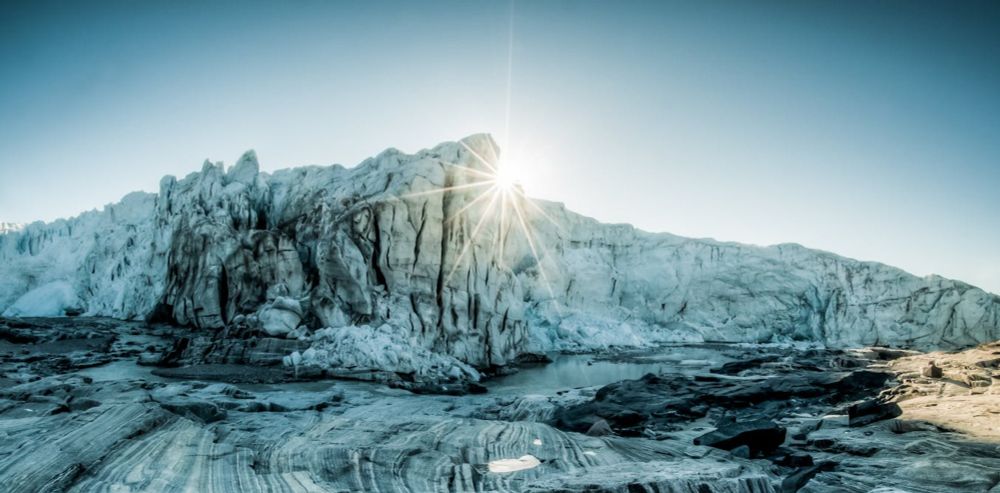
Giant glaciers pulverised Earth’s ancient rocks, setting the stage for complex life
Hundreds of millions of years ago, rocks crushed under kilometres of ice injected vital nutrients into Earth’s oceans.
theconversation.com
March 10, 2025 at 12:56 AM
Rocks from 700 million years ago hold the clues. From glaciers bulldozing landscapes to meltwater rivers flushing chemical elements into the oceans = it’s a story of how land, sea, and sky are all geochemically connected. theconversation.com/giant-glacie...
Reposted by Andreas Zametzer
Boom! Earth's (currently) oldest crater right in the centre of the Pilbara Craton. 3.5 Billion Years old. Hummm.... implications for life. www.nature.com/articles/s41...

A Paleoarchaean impact crater in the Pilbara Craton, Western Australia - Nature Communications
Shatter cones in rocks in the Pilbara craton provide unequivocal evidence for oldest known impact crater on Earth, which struck 3.5 billion years ago.
www.nature.com
March 8, 2025 at 4:25 AM
Boom! Earth's (currently) oldest crater right in the centre of the Pilbara Craton. 3.5 Billion Years old. Hummm.... implications for life. www.nature.com/articles/s41...
Reposted by Andreas Zametzer

Reposted by Andreas Zametzer

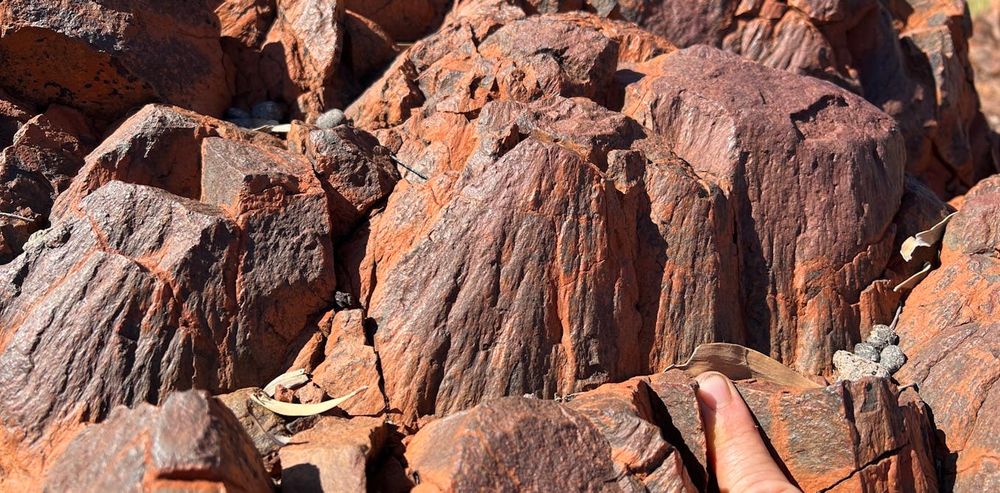
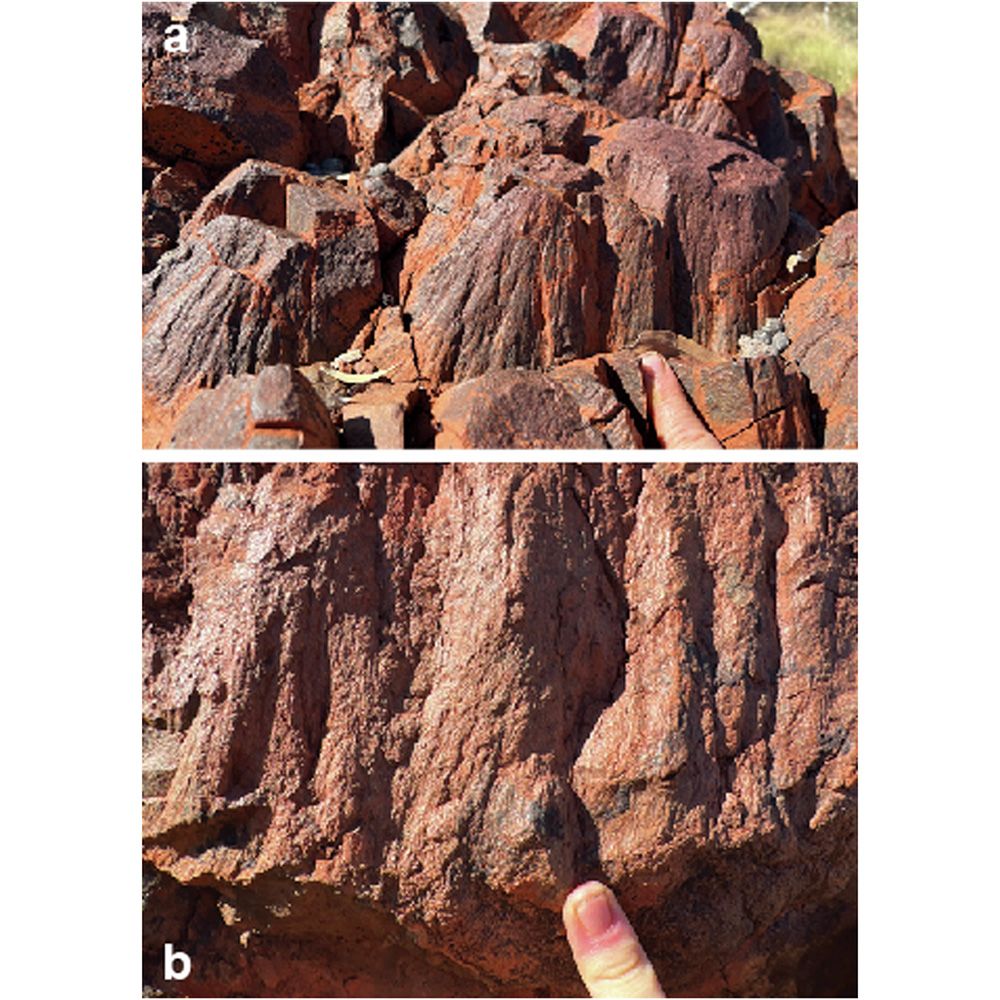
Shatter cones in rocks in the Pilbara craton, in Western Australia, provide evidence for oldest known impact crater on Earth, which struck 3.5 billion years ago, according to a paper in Nature Communications. https://go.nature.com/3DrWafY ⚒️ 🧪
March 11, 2025 at 1:32 PM
Shatter cones in rocks in the Pilbara craton, in Western Australia, provide evidence for oldest known impact crater on Earth, which struck 3.5 billion years ago, according to a paper in Nature Communications. https://go.nature.com/3DrWafY ⚒️ 🧪