




Xinkai Du
@xinkaidu.bsky.social
PhD in PsychMethods & ClinicalPsych with @sverreuj @SachaEpskamp | Prev @UvAmsterdam @UWaterloo | (Network) Psychometrics; (Intensive) Longitudinal Data; Natural Language Processing; Applied Statistics
The link to the initial study on fit indices and Hu/Bentler cutoffs mentioned earlier: psycnet.apa.org/record/2026-31171-001
APA PsycNet
psycnet.apa.org
January 19, 2026 at 9:26 PM
The link to the initial study on fit indices and Hu/Bentler cutoffs mentioned earlier: psycnet.apa.org/record/2026-31171-001
In simulations with both synthetic and empirical networks, DFI showed transparent and often superior type I & II error rates vs. Hu/Bentler cutoffs (especially in empirical networks). We argue that the transparency and consistency of DFI provide more reliable model evaluation of network models.
January 19, 2026 at 9:05 PM
In simulations with both synthetic and empirical networks, DFI showed transparent and often superior type I & II error rates vs. Hu/Bentler cutoffs (especially in empirical networks). We argue that the transparency and consistency of DFI provide more reliable model evaluation of network models.
Our recent study on PsychMethod showed that SEM fit indices had desirable sensitivity to the misspecification in (dynamic) networks, yet were also sensitive to sample and model characteristics (e.g., N and network size), so we created DFI for networks to accommodate design-specific characteristics.
January 19, 2026 at 9:05 PM
Our recent study on PsychMethod showed that SEM fit indices had desirable sensitivity to the misspecification in (dynamic) networks, yet were also sensitive to sample and model characteristics (e.g., N and network size), so we created DFI for networks to accommodate design-specific characteristics.
My latest work with @sachaepskamp.bsky.social on creating dynamic fit index cutoffs for Gaussian graphical models is now out as a preprint:
osf.io/preprints/ps..., accompanied by an R package, netDFI: github.com/xinkaidupsy/....
osf.io/preprints/ps..., accompanied by an R package, netDFI: github.com/xinkaidupsy/....
OSF
osf.io
January 19, 2026 at 9:05 PM
My latest work with @sachaepskamp.bsky.social on creating dynamic fit index cutoffs for Gaussian graphical models is now out as a preprint:
osf.io/preprints/ps..., accompanied by an R package, netDFI: github.com/xinkaidupsy/....
osf.io/preprints/ps..., accompanied by an R package, netDFI: github.com/xinkaidupsy/....
In simulations with both synthetic and empirical networks, DFI showed transparent and often superior type I & II error rates compared to conventional cutoffs (especially in empirical networks).
January 19, 2026 at 8:58 PM
In simulations with both synthetic and empirical networks, DFI showed transparent and often superior type I & II error rates compared to conventional cutoffs (especially in empirical networks).
Our latest work on PsychMethod showed that SEM fit indices had desirable sensitivity to the misspecification in (dynamic) networks, yet were also sensitive to sample and model characteristics (e.g., N and network size), so we created DFI for networks to accommodate design-specific characteristics.
January 19, 2026 at 8:58 PM
Our latest work on PsychMethod showed that SEM fit indices had desirable sensitivity to the misspecification in (dynamic) networks, yet were also sensitive to sample and model characteristics (e.g., N and network size), so we created DFI for networks to accommodate design-specific characteristics.
Day 1 at Stanford and officially started my 4-month US visit in this special time. Amazed by the beautiful campus.


October 6, 2025 at 5:04 PM
Day 1 at Stanford and officially started my 4-month US visit in this special time. Amazed by the beautiful campus.
Adopt Registered Reports at Psychological Methods - Sign the Petition! chng.it/8h2KXXR4jk

Sign the Petition
Adopt Registered Reports at Psychological Methods
chng.it
August 23, 2025 at 6:39 PM
Adopt Registered Reports at Psychological Methods - Sign the Petition! chng.it/8h2KXXR4jk
Currently visiting Dr. Johnny Zhang in Notre Dame and excited to learn about his approaches combining CS and psychometrics.
Had a wonderful encounter with a deer on the way to campus. :)
Had a wonderful encounter with a deer on the way to campus. :)
July 12, 2025 at 1:41 PM
Currently visiting Dr. Johnny Zhang in Notre Dame and excited to learn about his approaches combining CS and psychometrics.
Had a wonderful encounter with a deer on the way to campus. :)
Had a wonderful encounter with a deer on the way to campus. :)
Reposted by Xinkai Du

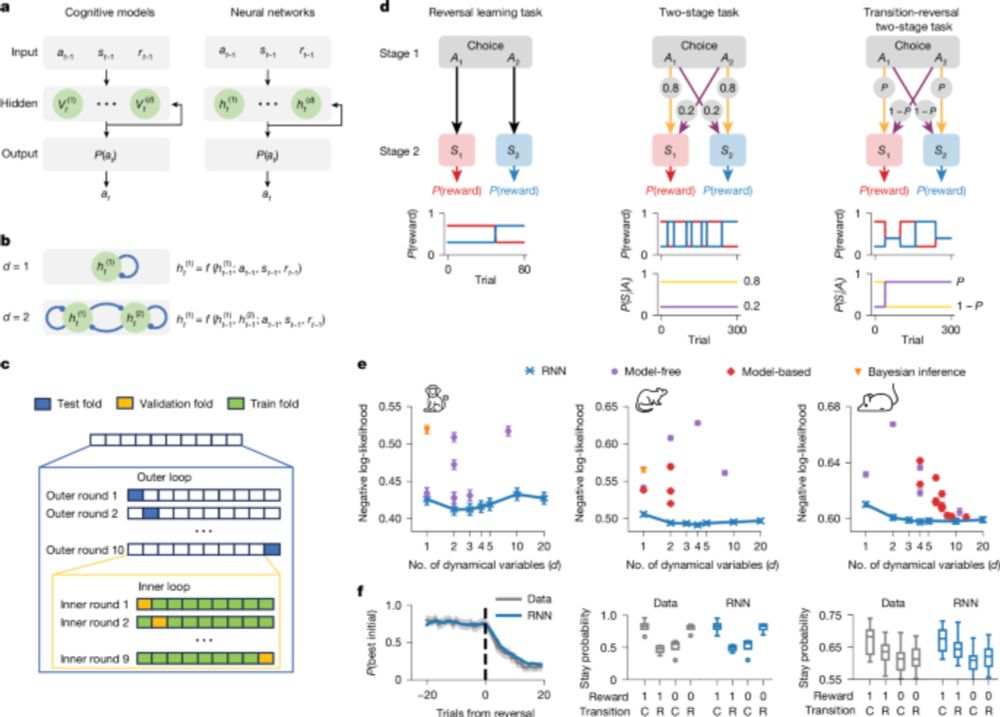
Thrilled to see our TinyRNN paper in @nature! We show how tiny RNNs predict choices of individual subjects accurately while staying fully interpretable. This approach can transform how we model cognitive processes in both healthy and disordered decisions. doi.org/10.1038/s415...
Discovering cognitive strategies with tiny recurrent neural networks - Nature
Modelling biological decision-making with tiny recurrent neural networks enables more accurate predictions of animal choices than classical cognitive models and offers insights into the underlying cog...
doi.org
July 2, 2025 at 7:03 PM
Thrilled to see our TinyRNN paper in @nature! We show how tiny RNNs predict choices of individual subjects accurately while staying fully interpretable. This approach can transform how we model cognitive processes in both healthy and disordered decisions. doi.org/10.1038/s415...
June 26, 2025 at 8:11 AM
Reposted by Xinkai Du

Happy to share that our article, led by @xinkaidu.bsky.social, on confirmatory network modeling has been published in Psychological Methods!
psycnet.apa.org/record/2026-...
psycnet.apa.org/record/2026-...
APA PsycNet
psycnet.apa.org
June 26, 2025 at 5:04 AM
Happy to share that our article, led by @xinkaidu.bsky.social, on confirmatory network modeling has been published in Psychological Methods!
psycnet.apa.org/record/2026-...
psycnet.apa.org/record/2026-...
Thrilled to share that this paper has now been published on Psychological Methods. See 🧵 below for an intro & shinyapp to view the results, as well as non-paywalled version. dx.doi.org/10.1037/met0...
June 26, 2025 at 8:00 AM
Thrilled to share that this paper has now been published on Psychological Methods. See 🧵 below for an intro & shinyapp to view the results, as well as non-paywalled version. dx.doi.org/10.1037/met0...
Reposted by Xinkai Du

Some papers are really good because they make just one point, but they make it really clearly — such as “Statistical Control Requires Causal Justification”
journals.sagepub.com/doi/10.1177/...
journals.sagepub.com/doi/10.1177/...

June 2, 2025 at 5:24 PM
Some papers are really good because they make just one point, but they make it really clearly — such as “Statistical Control Requires Causal Justification”
journals.sagepub.com/doi/10.1177/...
journals.sagepub.com/doi/10.1177/...
The method works both for panel and n=1 data. By enabling researchers to statistically compare networks across groups/individuals, we hope the method opens new avenues for testing genetic influences, developmental theories, treatment mechanisms, and cross-cultural differences.
May 26, 2025 at 12:17 PM
The method works both for panel and n=1 data. By enabling researchers to statistically compare networks across groups/individuals, we hope the method opens new avenues for testing genetic influences, developmental theories, treatment mechanisms, and cross-cultural differences.
I planned to present this method at #SAA2025. Unfortunately I could not make it due to an unforeseen cold. Hope you enjoy the discussion and stay safe and healthy!
May 26, 2025 at 11:08 AM
I planned to present this method at #SAA2025. Unfortunately I could not make it due to an unforeseen cold. Hope you enjoy the discussion and stay safe and healthy!
The paper also comes with a brief tutorial on the usage of the package


May 26, 2025 at 11:08 AM
The paper also comes with a brief tutorial on the usage of the package
We have implemented IVPP in an R package under the same name: github.com/xinkaidupsy/...

GitHub - xinkaidupsy/IVPP
Contribute to xinkaidupsy/IVPP development by creating an account on GitHub.
github.com
May 26, 2025 at 11:08 AM
We have implemented IVPP in an R package under the same name: github.com/xinkaidupsy/...
Second, the method allows the comparison of networks when only a few data points (t = 3 or more) are available per person, a situation that is very common in large-scale longitudinal surveys.
May 26, 2025 at 11:08 AM
Second, the method allows the comparison of networks when only a few data points (t = 3 or more) are available per person, a situation that is very common in large-scale longitudinal surveys.
In contrast, IVPP uncovers edge-level differences through a novel algorithm we present, termed partial pruning, directly constructing the distinct networks of each group/individual. We believe it provides a more meaningful network difference test that reveals the mechanisms underlying heterogeneity.
May 26, 2025 at 11:08 AM
In contrast, IVPP uncovers edge-level differences through a novel algorithm we present, termed partial pruning, directly constructing the distinct networks of each group/individual. We believe it provides a more meaningful network difference test that reveals the mechanisms underlying heterogeneity.
IVPP fills in two essential gaps in the literature: First, previous approaches to comparing dynamical networks unfortunately only report the presence/absence of heterogeneity, and are only viable when intensive measurements are available.
May 26, 2025 at 11:08 AM
IVPP fills in two essential gaps in the literature: First, previous approaches to comparing dynamical networks unfortunately only report the presence/absence of heterogeneity, and are only viable when intensive measurements are available.
The three-month research visit with @sachaepskamp.bsky.social at NUS was a great memory, and even more excited with research output.
Excited to share a novel approach to compare networks models in time-series and panel data, which we term invariance partial pruning (IVPP).
osf.io/vb8dz_v1
Excited to share a novel approach to compare networks models in time-series and panel data, which we term invariance partial pruning (IVPP).
osf.io/vb8dz_v1


May 26, 2025 at 11:08 AM
The three-month research visit with @sachaepskamp.bsky.social at NUS was a great memory, and even more excited with research output.
Excited to share a novel approach to compare networks models in time-series and panel data, which we term invariance partial pruning (IVPP).
osf.io/vb8dz_v1
Excited to share a novel approach to compare networks models in time-series and panel data, which we term invariance partial pruning (IVPP).
osf.io/vb8dz_v1
Reposted by Xinkai Du
🥳thrilled that our dockerHDDM tutorial paper, after many years's work was published in my dream journal AMPPS of @psychscience.bsky.social 🤩
👇
doi.org/10.1177/2515....
The image's been downloaded 10K+⏬ docker Hub
Such a pleasure to work w/ Wanke, Ru Yuan, Haiyang & member of HDDM/HSSM team!
👇
doi.org/10.1177/2515....
The image's been downloaded 10K+⏬ docker Hub
Such a pleasure to work w/ Wanke, Ru Yuan, Haiyang & member of HDDM/HSSM team!

February 14, 2025 at 8:41 AM
🥳thrilled that our dockerHDDM tutorial paper, after many years's work was published in my dream journal AMPPS of @psychscience.bsky.social 🤩
👇
doi.org/10.1177/2515....
The image's been downloaded 10K+⏬ docker Hub
Such a pleasure to work w/ Wanke, Ru Yuan, Haiyang & member of HDDM/HSSM team!
👇
doi.org/10.1177/2515....
The image's been downloaded 10K+⏬ docker Hub
Such a pleasure to work w/ Wanke, Ru Yuan, Haiyang & member of HDDM/HSSM team!
Reposted by Xinkai Du

1/3
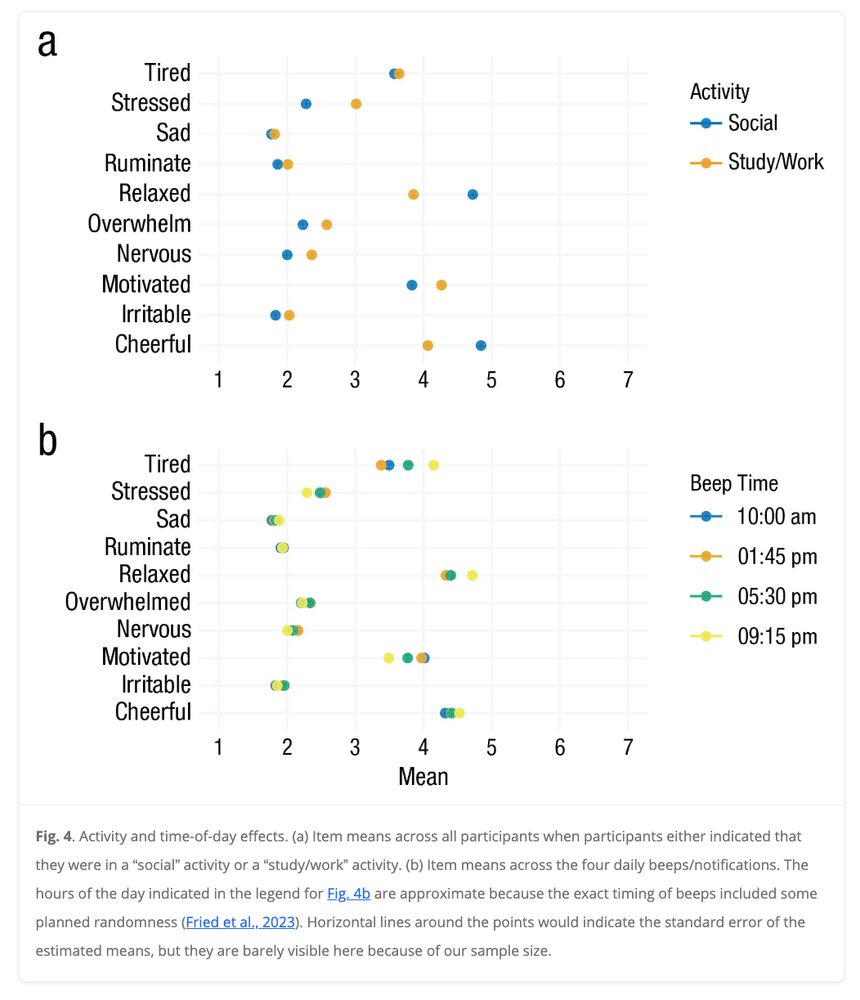
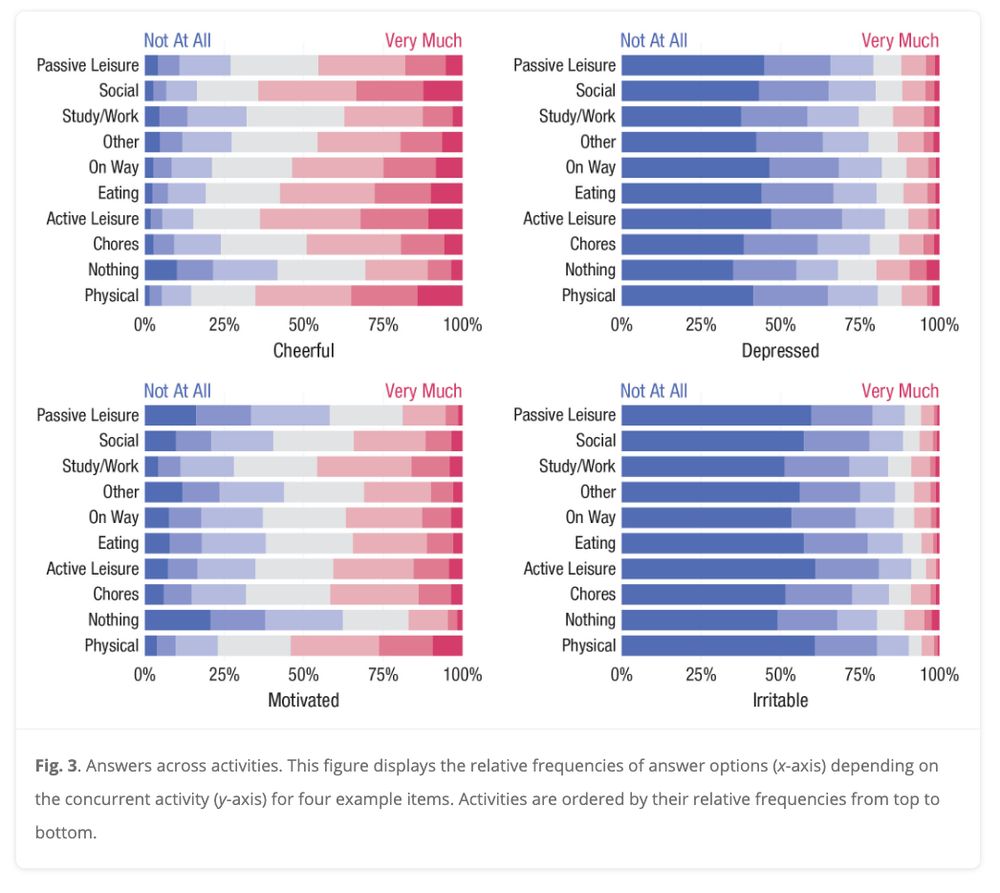
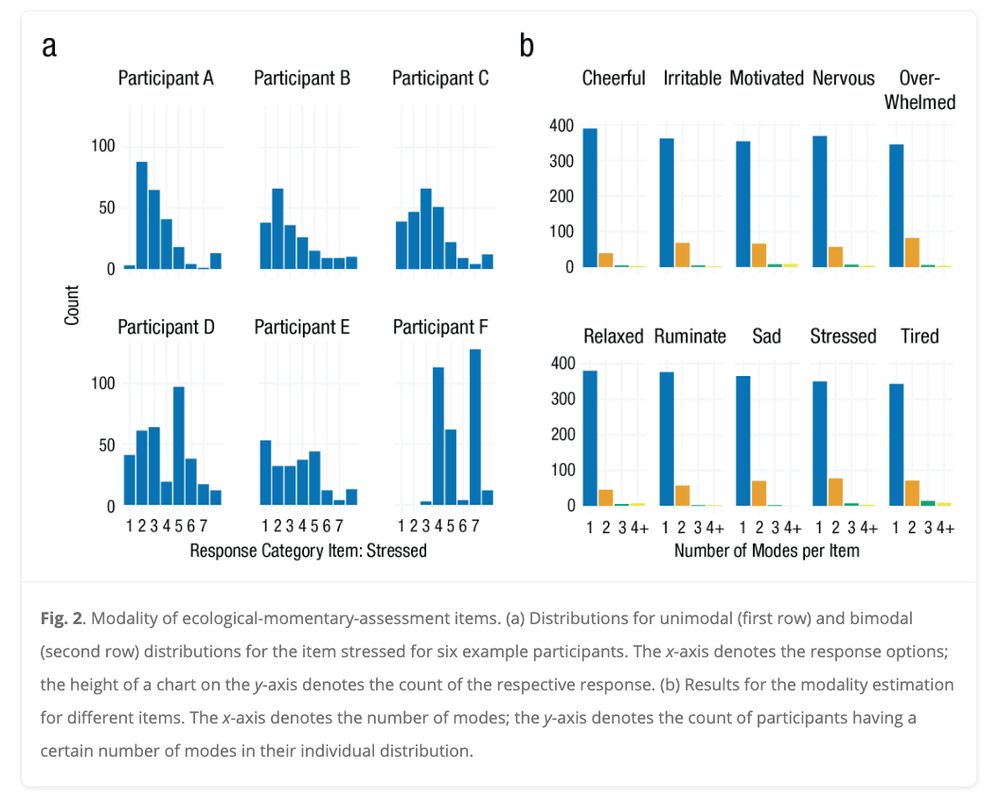
Tutorial on exploring ecological momentary assessment data is online at AMPPS, with:
- Accessible ways to visualize data for better understanding
- Models to get some first insights
- Further reading boxes for more advanced topics
- Reproducible pipeline you can run over your own data
Tutorial on exploring ecological momentary assessment data is online at AMPPS, with:
- Accessible ways to visualize data for better understanding
- Models to get some first insights
- Further reading boxes for more advanced topics
- Reproducible pipeline you can run over your own data

February 13, 2025 at 12:04 PM
1/3
Tutorial on exploring ecological momentary assessment data is online at AMPPS, with:
- Accessible ways to visualize data for better understanding
- Models to get some first insights
- Further reading boxes for more advanced topics
- Reproducible pipeline you can run over your own data
Tutorial on exploring ecological momentary assessment data is online at AMPPS, with:
- Accessible ways to visualize data for better understanding
- Models to get some first insights
- Further reading boxes for more advanced topics
- Reproducible pipeline you can run over your own data
Reposted by Xinkai Du

Check out this important methodological validation study of SEM fit indices for (confirmatory) network modeling. Led by @xinkaidu.bsky.social!
Preprint on using SEM fit indices & conventional cutoffs in confirmatory network analysis updated! Now with a Shiny app for results display.
PsyArXiv: osf.io/preprints/ps...
RG: www.researchgate.net/publication/...
Shiny app: github.com/xinkaidupsy/...
See 🧵 for the summary of results
PsyArXiv: osf.io/preprints/ps...
RG: www.researchgate.net/publication/...
Shiny app: github.com/xinkaidupsy/...
See 🧵 for the summary of results
(PDF) Moving from exploratory to confirmatory network analysis: An evaluation of SEM fit indices and cutoff values in network psychometrics
PDF | Network models are well-suited for phenomena detection, and most empirical network studies have been exploratory so far. Yet, due to the close... | Find, read and cite all the research you need ...
www.researchgate.net
February 7, 2025 at 7:22 AM
Check out this important methodological validation study of SEM fit indices for (confirmatory) network modeling. Led by @xinkaidu.bsky.social!