




Wendel van der Sluis
@wendelvandersluis.bsky.social
Associate Editor, De Gruyter Brill Life Sciences: animal/human behaviour, cognition, anthropology, primatology, amphibians, crustacean research, zoology, sensory perception, (edible) insects and related fields.
The Critically Endangered Nosy Be sportive lemur 🐒 shows 14 distinct calls with graded structure. 🎶 Insights for behaviour & conservation. 🌿 Published in Folia Primatologica.
📖 Open Access: brill.com/view/journal...
@queenfireface.bsky.social @littlefireface.bsky.social
📖 Open Access: brill.com/view/journal...
@queenfireface.bsky.social @littlefireface.bsky.social

February 14, 2026 at 10:39 AM
The Critically Endangered Nosy Be sportive lemur 🐒 shows 14 distinct calls with graded structure. 🎶 Insights for behaviour & conservation. 🌿 Published in Folia Primatologica.
📖 Open Access: brill.com/view/journal...
@queenfireface.bsky.social @littlefireface.bsky.social
📖 Open Access: brill.com/view/journal...
@queenfireface.bsky.social @littlefireface.bsky.social
February’s 2nd issue of Crustaceana – International Journal of Crustacean Research is now online. 🦀📚
brill.com/view/journal...
Discover new research on crustacean diversity, taxonomy & biology worldwide. 🌍🔬
@nephropseu.bsky.social
brill.com/view/journal...
Discover new research on crustacean diversity, taxonomy & biology worldwide. 🌍🔬
@nephropseu.bsky.social

February 14, 2026 at 9:42 AM
February’s 2nd issue of Crustaceana – International Journal of Crustacean Research is now online. 🦀📚
brill.com/view/journal...
Discover new research on crustacean diversity, taxonomy & biology worldwide. 🌍🔬
@nephropseu.bsky.social
brill.com/view/journal...
Discover new research on crustacean diversity, taxonomy & biology worldwide. 🌍🔬
@nephropseu.bsky.social
Saw it. Craved it. Booked it. 🍕📱
New study reveals that it’s not follower count that drives diners – it’s quality, credibility and mouth-watering visuals. 🤳
Food content that feels authentic = real restaurant visits.
Read more:
brill.com/view/journal...
New study reveals that it’s not follower count that drives diners – it’s quality, credibility and mouth-watering visuals. 🤳
Food content that feels authentic = real restaurant visits.
Read more:
brill.com/view/journal...

February 13, 2026 at 11:34 AM
Saw it. Craved it. Booked it. 🍕📱
New study reveals that it’s not follower count that drives diners – it’s quality, credibility and mouth-watering visuals. 🤳
Food content that feels authentic = real restaurant visits.
Read more:
brill.com/view/journal...
New study reveals that it’s not follower count that drives diners – it’s quality, credibility and mouth-watering visuals. 🤳
Food content that feels authentic = real restaurant visits.
Read more:
brill.com/view/journal...
Welcome Dr Kayan Ma as a new Associate Editor for #Crustaceana!
An Associate Professor at Sun Yat-Sen University, her research spans crustacean phylogenomics, systematics & biogeography, with a particular focus on decapods. Her expertise in molecular and phylogeny-based studies will be invaluable. 👏
An Associate Professor at Sun Yat-Sen University, her research spans crustacean phylogenomics, systematics & biogeography, with a particular focus on decapods. Her expertise in molecular and phylogeny-based studies will be invaluable. 👏

February 10, 2026 at 1:16 PM
Welcome Dr Kayan Ma as a new Associate Editor for #Crustaceana!
An Associate Professor at Sun Yat-Sen University, her research spans crustacean phylogenomics, systematics & biogeography, with a particular focus on decapods. Her expertise in molecular and phylogeny-based studies will be invaluable. 👏
An Associate Professor at Sun Yat-Sen University, her research spans crustacean phylogenomics, systematics & biogeography, with a particular focus on decapods. Her expertise in molecular and phylogeny-based studies will be invaluable. 👏
🧠🐒 Monkeys can pretend too.
A Science study shows bonobo Kanzi understood imaginary juice & grapes − the first experimental proof of pretend play in great apes.
Mariska Kret calls it elegant but nuanced: Kanzi was exceptional. As Frans de Waal long argued, the human–animal line is blurry.
A Science study shows bonobo Kanzi understood imaginary juice & grapes − the first experimental proof of pretend play in great apes.
Mariska Kret calls it elegant but nuanced: Kanzi was exceptional. As Frans de Waal long argued, the human–animal line is blurry.

February 7, 2026 at 5:17 PM
🧠🐒 Monkeys can pretend too.
A Science study shows bonobo Kanzi understood imaginary juice & grapes − the first experimental proof of pretend play in great apes.
Mariska Kret calls it elegant but nuanced: Kanzi was exceptional. As Frans de Waal long argued, the human–animal line is blurry.
A Science study shows bonobo Kanzi understood imaginary juice & grapes − the first experimental proof of pretend play in great apes.
Mariska Kret calls it elegant but nuanced: Kanzi was exceptional. As Frans de Waal long argued, the human–animal line is blurry.
🧠🐒 Ook apen kunnen doen alsof. Een Science-studie laat zien dat bonobo Kanzi denkbeeldig sap begreep: 1ste experimentele bewijs voor fantasiespel bij mensapen.
Mariska Kret nuanceert: mooi onderzoek, maar Kanzi was uitzonderlijk. Zoals Frans de Waal liet zien, is de mens–diergrens minder scherp.
Mariska Kret nuanceert: mooi onderzoek, maar Kanzi was uitzonderlijk. Zoals Frans de Waal liet zien, is de mens–diergrens minder scherp.
February 7, 2026 at 5:15 PM
🧠🐒 Ook apen kunnen doen alsof. Een Science-studie laat zien dat bonobo Kanzi denkbeeldig sap begreep: 1ste experimentele bewijs voor fantasiespel bij mensapen.
Mariska Kret nuanceert: mooi onderzoek, maar Kanzi was uitzonderlijk. Zoals Frans de Waal liet zien, is de mens–diergrens minder scherp.
Mariska Kret nuanceert: mooi onderzoek, maar Kanzi was uitzonderlijk. Zoals Frans de Waal liet zien, is de mens–diergrens minder scherp.
Fieldwork in Guinea-Bissau’s Bijagós Islands has uncovered a new Palaemon species! 🌍🦐 By combining morphology and molecular data (16S, COI, H3), researchers have clarified its place among tropical Atlantic shrimp. #Crustaceana
🔗 Read full #OpenAccess study: brill.com/view/journal...
🔗 Read full #OpenAccess study: brill.com/view/journal...

February 5, 2026 at 6:24 PM
Fieldwork in Guinea-Bissau’s Bijagós Islands has uncovered a new Palaemon species! 🌍🦐 By combining morphology and molecular data (16S, COI, H3), researchers have clarified its place among tropical Atlantic shrimp. #Crustaceana
🔗 Read full #OpenAccess study: brill.com/view/journal...
🔗 Read full #OpenAccess study: brill.com/view/journal...
We're delighted to welcome Magnus Johnson to the Board of Associate Editors for Crustaceana. A Senior Lecturer in Environmental Marine Science at the University of Hull (based in Scarborough), his research spans crustaceans, fisheries science, and marine ecology. 🦀🌊 @nephropseu.bsky.social.

February 5, 2026 at 6:02 PM
We're delighted to welcome Magnus Johnson to the Board of Associate Editors for Crustaceana. A Senior Lecturer in Environmental Marine Science at the University of Hull (based in Scarborough), his research spans crustaceans, fisheries science, and marine ecology. 🦀🌊 @nephropseu.bsky.social.
Island evolution can be fast – and bones prove it. 🦴🏝️ A new #OpenAccess study finds Sardinian pine martens follow the island rule: bigger skulls, modest body-mass increase, diet-linked cranial changes, and sex-specific limb adaptations, all evolving in ~8,000 years.
brill.com/view/journal...
brill.com/view/journal...

February 5, 2026 at 8:20 AM
Island evolution can be fast – and bones prove it. 🦴🏝️ A new #OpenAccess study finds Sardinian pine martens follow the island rule: bigger skulls, modest body-mass increase, diet-linked cranial changes, and sex-specific limb adaptations, all evolving in ~8,000 years.
brill.com/view/journal...
brill.com/view/journal...
Reposted by Wendel van der Sluis
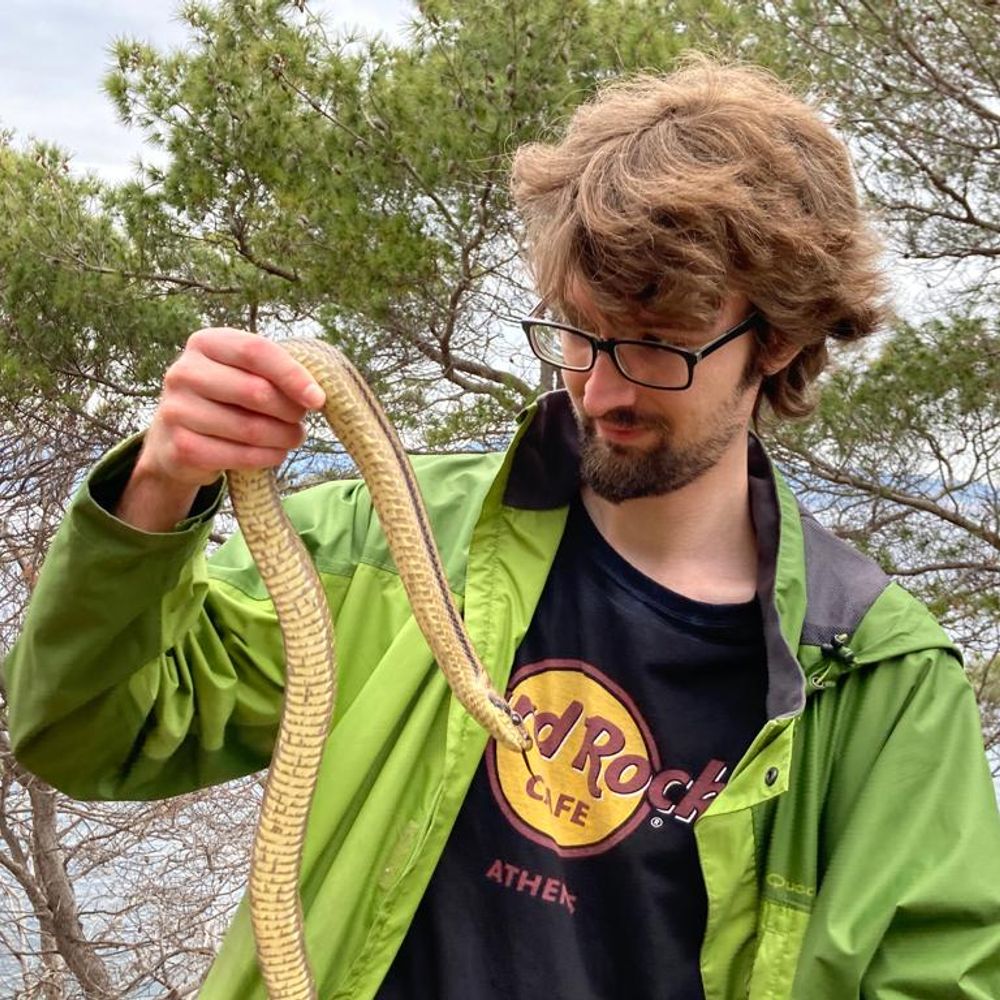
Amazing topic in the lab of an equally amazing PI 🦎🦎

🦎 Funded 4-year PhD position on Lizard Evolutionary Ecology in our lab at UCLouvain (Belgium)! Apply before 9 March! jobs.uclouvain.be/Personnelsci...

February 4, 2026 at 10:37 AM
Amazing topic in the lab of an equally amazing PI 🦎🦎
Feb 2026 issue of @multisensoryres.bsky.social is now online 📖✨ Explore audiovisual crossmodal perception by Charles Spence & Nicola Di Stefano 🧠👂👀 and tactile perception in sighted & blind individuals by Yung-Ting Chen. 🤲 Read more here: brill.com/view/journal...
@imrf.bsky.social
@imrf.bsky.social

February 4, 2026 at 11:25 AM
Feb 2026 issue of @multisensoryres.bsky.social is now online 📖✨ Explore audiovisual crossmodal perception by Charles Spence & Nicola Di Stefano 🧠👂👀 and tactile perception in sighted & blind individuals by Yung-Ting Chen. 🤲 Read more here: brill.com/view/journal...
@imrf.bsky.social
@imrf.bsky.social
Long-tailed #Macaques use tactical deception too! 👀🐒 Dominants sneak hair-pulls to reinforce status – either from behind or during friendly contact. Fascinating peek at social smarts beyond humans. 🧠✨ #Behaviour
🔗 Read more in #OpenAccess: brill.com/view/journal...
🔗 Read more in #OpenAccess: brill.com/view/journal...

February 4, 2026 at 8:49 AM
Long-tailed #Macaques use tactical deception too! 👀🐒 Dominants sneak hair-pulls to reinforce status – either from behind or during friendly contact. Fascinating peek at social smarts beyond humans. 🧠✨ #Behaviour
🔗 Read more in #OpenAccess: brill.com/view/journal...
🔗 Read more in #OpenAccess: brill.com/view/journal...
Reposted by Wendel van der Sluis

Not finished yet and this isn’t a pen and ink illustration, but a black and white rendition of a 3d model, but I love to share this herring. Except for some bones in the pectoral fins the skeleton is all but complete

January 31, 2026 at 11:03 AM
Not finished yet and this isn’t a pen and ink illustration, but a black and white rendition of a 3d model, but I love to share this herring. Except for some bones in the pectoral fins the skeleton is all but complete
Entomology Today features Muhammad “Zee” Ahmed on a #FloridaEntomologist special issue detailing the rapid rise of invasive arthropods in the SE U.S. and urgent needs in detection, diagnostics & management.
entomologytoday.org/2026/01/22/g...
@entsocamerica.bsky.social @flaentomosociety.bsky.social
entomologytoday.org/2026/01/22/g...
@entsocamerica.bsky.social @flaentomosociety.bsky.social

Not If, But When: The Growing Need for Invasive‑Species Research in the Southeast U.S.
A new special issue of Florida Entomologist details how rapidly invasive arthropods are entering the southeast U.S. and highlights needs in detection, diagnostics, and management.
entomologytoday.org
January 30, 2026 at 8:01 AM
Entomology Today features Muhammad “Zee” Ahmed on a #FloridaEntomologist special issue detailing the rapid rise of invasive arthropods in the SE U.S. and urgent needs in detection, diagnostics & management.
entomologytoday.org/2026/01/22/g...
@entsocamerica.bsky.social @flaentomosociety.bsky.social
entomologytoday.org/2026/01/22/g...
@entsocamerica.bsky.social @flaentomosociety.bsky.social
Did you know that 85% of all imported plant material entering the USA passes through Miami, while only a small fraction is inspected? This makes Florida one of the world’s key gateways for invasive insect species posing serious risks to agriculture, natural ecosystems and biodiversity.

January 30, 2026 at 7:59 AM
Did you know that 85% of all imported plant material entering the USA passes through Miami, while only a small fraction is inspected? This makes Florida one of the world’s key gateways for invasive insect species posing serious risks to agriculture, natural ecosystems and biodiversity.
Reposted by Wendel van der Sluis
The next FES conference is set for next year in St. Augustine! We can wait to meet everyone there!
#Entomology #scientificmeeting #staugustine
#Entomology #scientificmeeting #staugustine

December 18, 2025 at 7:19 PM
The next FES conference is set for next year in St. Augustine! We can wait to meet everyone there!
#Entomology #scientificmeeting #staugustine
#Entomology #scientificmeeting #staugustine
Reposted by Wendel van der Sluis
January can be tough enough without an extra deadline looming. That's why we've extended our #ECBB2026 call for symposia to 15 February 2026!
For more information and for the submission form click the link: www.aru.ac.uk/science-and-...
For more information and for the submission form click the link: www.aru.ac.uk/science-and-...

January 28, 2026 at 7:23 AM
January can be tough enough without an extra deadline looming. That's why we've extended our #ECBB2026 call for symposia to 15 February 2026!
For more information and for the submission form click the link: www.aru.ac.uk/science-and-...
For more information and for the submission form click the link: www.aru.ac.uk/science-and-...
A toy horse made for the Chinese Year of the Horse came out a little wrong … the face was put on backward. But it’s a hit. Personally, I like this messed-up face look as it matches better with the eyes!
nos.nl/l/2599764
nos.nl/l/2599764

Huilen na foutje
Een productiefoutje leidt tot een hit in China dat begint aan het Jaar van het Paard.
nos.nl
January 26, 2026 at 4:09 PM
A toy horse made for the Chinese Year of the Horse came out a little wrong … the face was put on backward. But it’s a hit. Personally, I like this messed-up face look as it matches better with the eyes!
nos.nl/l/2599764
nos.nl/l/2599764
Reposted by Wendel van der Sluis

This little chickadee had likely just woken up from its nocturnal hibernation. It was -39C this when I took this. Chickadees can drop their core temperature up to 10C and go into torpor at night to conserve energy in extreme weather. #birds 🌿

January 26, 2026 at 3:07 AM
This little chickadee had likely just woken up from its nocturnal hibernation. It was -39C this when I took this. Chickadees can drop their core temperature up to 10C and go into torpor at night to conserve energy in extreme weather. #birds 🌿
Geoffroy’s spider monkeys switch social groups to share information and combine it in ways that produce new knowledge. See @theguardian.com: www.theguardian.com/science/2026...

Spider monkeys found to share ‘insider knowledge’ to help locate best food
Researchers observed the primates switching social groups and passing information on where to find the ripest fruit
www.theguardian.com
January 26, 2026 at 9:37 AM
Geoffroy’s spider monkeys switch social groups to share information and combine it in ways that produce new knowledge. See @theguardian.com: www.theguardian.com/science/2026...
What happens when closely related species meet but stay distinct? 🦎🧬 A new #OpenAccess study maps the narrow hybrid zone between Danube & Italian crested newts, showing strong selection against hybrids & a cautionary tale about mtDNA quirks 🔍
🔓 brill.com/view/journal...
🔓 brill.com/view/journal...

January 23, 2026 at 1:10 PM
What happens when closely related species meet but stay distinct? 🦎🧬 A new #OpenAccess study maps the narrow hybrid zone between Danube & Italian crested newts, showing strong selection against hybrids & a cautionary tale about mtDNA quirks 🔍
🔓 brill.com/view/journal...
🔓 brill.com/view/journal...
Reposted by Wendel van der Sluis
With ten days to go to submit your symposia proposal, we're here to answer your most burning question: What is the registration cost?
#AcademicTwitter #Conferencechatter #ECBB2026
#AcademicTwitter #Conferencechatter #ECBB2026

January 21, 2026 at 8:43 AM
With ten days to go to submit your symposia proposal, we're here to answer your most burning question: What is the registration cost?
#AcademicTwitter #Conferencechatter #ECBB2026
#AcademicTwitter #Conferencechatter #ECBB2026
To all multisensory researchers out there!
@IMRF2026 is coming; time to submit your abstract here: imrf2026.sciencesconf.org/resource/pag...
You have until 7 February 2026.
De Gruyter Brill Life Sciences looks forward to seeing you in Genoa, Italy, in June 2026!
@multisensoryres.bsky.social
@IMRF2026 is coming; time to submit your abstract here: imrf2026.sciencesconf.org/resource/pag...
You have until 7 February 2026.
De Gruyter Brill Life Sciences looks forward to seeing you in Genoa, Italy, in June 2026!
@multisensoryres.bsky.social
January 21, 2026 at 8:28 AM
To all multisensory researchers out there!
@IMRF2026 is coming; time to submit your abstract here: imrf2026.sciencesconf.org/resource/pag...
You have until 7 February 2026.
De Gruyter Brill Life Sciences looks forward to seeing you in Genoa, Italy, in June 2026!
@multisensoryres.bsky.social
@IMRF2026 is coming; time to submit your abstract here: imrf2026.sciencesconf.org/resource/pag...
You have until 7 February 2026.
De Gruyter Brill Life Sciences looks forward to seeing you in Genoa, Italy, in June 2026!
@multisensoryres.bsky.social
Reposted by Wendel van der Sluis
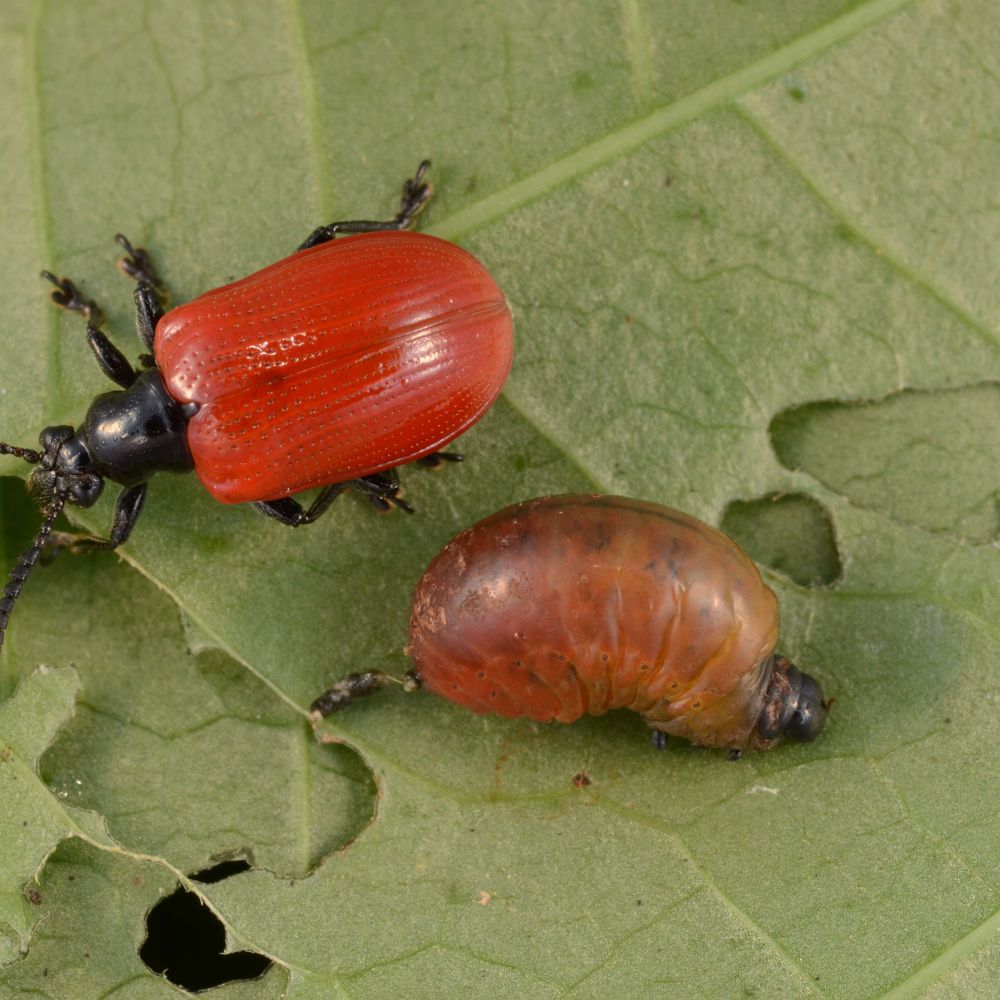
#ElkeDagEenInsect
Zombie! Dit lieveheersbeestje is grotendeels verlamd en zit ook vastgeplakt met wat zijde, maar zal wel verdedigend reageren wanneer verstoord... Waarom? in dat zakje zit een ontwikkeld wespje dat als larve *in* de kever zat, en nu een bodyguard heeft...
#Entomologie #Entomology🐞
Zombie! Dit lieveheersbeestje is grotendeels verlamd en zit ook vastgeplakt met wat zijde, maar zal wel verdedigend reageren wanneer verstoord... Waarom? in dat zakje zit een ontwikkeld wespje dat als larve *in* de kever zat, en nu een bodyguard heeft...
#Entomologie #Entomology🐞

January 19, 2026 at 12:03 PM
#ElkeDagEenInsect
Zombie! Dit lieveheersbeestje is grotendeels verlamd en zit ook vastgeplakt met wat zijde, maar zal wel verdedigend reageren wanneer verstoord... Waarom? in dat zakje zit een ontwikkeld wespje dat als larve *in* de kever zat, en nu een bodyguard heeft...
#Entomologie #Entomology🐞
Zombie! Dit lieveheersbeestje is grotendeels verlamd en zit ook vastgeplakt met wat zijde, maar zal wel verdedigend reageren wanneer verstoord... Waarom? in dat zakje zit een ontwikkeld wespje dat als larve *in* de kever zat, en nu een bodyguard heeft...
#Entomologie #Entomology🐞
What makes humans unique? In Behaviour, Annemie Ploeger reviews @rensbod.bsky.social’s new book Het unieke dier: op zoek naar het specifiek menselijke (The Unique Animal – In Search of What Makes Humans Special). Published in Dutch, with an English translation forthcoming.

January 14, 2026 at 2:58 PM
What makes humans unique? In Behaviour, Annemie Ploeger reviews @rensbod.bsky.social’s new book Het unieke dier: op zoek naar het specifiek menselijke (The Unique Animal – In Search of What Makes Humans Special). Published in Dutch, with an English translation forthcoming.