


Valeria Mazza
@valmazza.bsky.social
Behavioural biologist interested in all things animal cognition. Senior lecturer @UniTuscia. Proud citizen of Humboldt's Republic of the Letters.📖🐛She/her
https://valeriamazza.net
https://valeriamazza.net
Reposted by Valeria Mazza
So excited to see this recommendation coming from the Animal Sentience Committee, really hoping it leads to some real change in decapod protection
www.gov.uk/government/p...
www.gov.uk/government/p...

February 5, 2026 at 8:58 AM
So excited to see this recommendation coming from the Animal Sentience Committee, really hoping it leads to some real change in decapod protection
www.gov.uk/government/p...
www.gov.uk/government/p...
Reposted by Valeria Mazza

New #PhD on #bees (BeeHd?)! Despite the ad saying "UK Students only", a limited number of scholarships are available for international candidates. So please apply!
New PhD alert! We'll be applying animal welfare ideas to look at how stress affects bees, looking at the effect on bee brains with @lenariab.bsky.social, and working with @sensibee.bsky.social developing new monitoring methods.
Please spread the word! #bees #PhD 🧪
www.findaphd.com/phds/project...
Please spread the word! #bees #PhD 🧪
www.findaphd.com/phds/project...

The effect of stress on pollinator behaviour at Newcastle University on FindAPhD.com
PhD Project - The effect of stress on pollinator behaviour at Newcastle University, listed on FindAPhD.com
www.findaphd.com
February 3, 2026 at 3:50 PM
Reposted by Valeria Mazza

I am looking for a PhD student to join my new Socio-Eco-Evo group, hosted in Katie Peichel's Evolutionary Ecology Division @ University of Bern. We're offering a fully funded 4-year position, studying social plasticity and behavioral adaptation among stickleback in Greenland. Please share around!

February 2, 2026 at 12:01 PM
I am looking for a PhD student to join my new Socio-Eco-Evo group, hosted in Katie Peichel's Evolutionary Ecology Division @ University of Bern. We're offering a fully funded 4-year position, studying social plasticity and behavioral adaptation among stickleback in Greenland. Please share around!
Reposted by Valeria Mazza

After years of working with Gifted dogs, this paper marks the end of that chapter for me 🐕
We compared gifted and typical dogs and found that what sets gifted dogs apart may not be curiosity, but their social motivation
Grateful to the dogs and their humans 💙
link.springer.com/article/10.1...
We compared gifted and typical dogs and found that what sets gifted dogs apart may not be curiosity, but their social motivation
Grateful to the dogs and their humans 💙
link.springer.com/article/10.1...

Toy exploration in gifted word learner dogs and typical dogs - Animal Cognition
Labelling has a pronounced effect on increasing infants’ attention to objects. At the same time, infants actively seek social cues when presented with novel objects and early signs of communicative in...
link.springer.com
January 31, 2026 at 3:00 PM
After years of working with Gifted dogs, this paper marks the end of that chapter for me 🐕
We compared gifted and typical dogs and found that what sets gifted dogs apart may not be curiosity, but their social motivation
Grateful to the dogs and their humans 💙
link.springer.com/article/10.1...
We compared gifted and typical dogs and found that what sets gifted dogs apart may not be curiosity, but their social motivation
Grateful to the dogs and their humans 💙
link.springer.com/article/10.1...
Reposted by Valeria Mazza

Urban ants are less picky than rural ants when it comes to sugar solution. Maybe the aphids in cities produce poorer honeydew, reflecting the stress they, or their tree hosts are under?
New paper, with Stanislav Stukalyuk and @trigos-peral.bsky.social.
link.springer.com/article/10.1...
New paper, with Stanislav Stukalyuk and @trigos-peral.bsky.social.
link.springer.com/article/10.1...

Urban Lasius niger ants more readily accept low concentration sucrose solution than rural ants - Urban Ecosystems
Urbanisation causes broad changes in biotic and abiotic factors, which are often detrimental to animals. While extensive attention has been focussed on food resources for pollinators, comparatively li...
link.springer.com
January 30, 2026 at 2:40 PM
Urban ants are less picky than rural ants when it comes to sugar solution. Maybe the aphids in cities produce poorer honeydew, reflecting the stress they, or their tree hosts are under?
New paper, with Stanislav Stukalyuk and @trigos-peral.bsky.social.
link.springer.com/article/10.1...
New paper, with Stanislav Stukalyuk and @trigos-peral.bsky.social.
link.springer.com/article/10.1...
Reposted by Valeria Mazza

My Centre is a unique place to do a PhD in Philosophy, because you can be in constant contact with experts in veterinary medicine, psychology, zoology and policy and be part of a team united by a shared interest in animal minds. We now have our 1st ever PhD scholarship: www.lse.ac.uk/sentience/phd

PhD Scholarship
www.lse.ac.uk
January 30, 2026 at 7:39 AM
My Centre is a unique place to do a PhD in Philosophy, because you can be in constant contact with experts in veterinary medicine, psychology, zoology and policy and be part of a team united by a shared interest in animal minds. We now have our 1st ever PhD scholarship: www.lse.ac.uk/sentience/phd
Reposted by Valeria Mazza

📣 What if animals could help design their own worlds?
Join @zoophilosophy.bsky.social for Letting Animals Speak—a lecture on animal agency, ethics & animal-computer interaction.
📅 Feb 7 | Online | Register here: us06web.zoom.us/meeting/regi...
Join @zoophilosophy.bsky.social for Letting Animals Speak—a lecture on animal agency, ethics & animal-computer interaction.
📅 Feb 7 | Online | Register here: us06web.zoom.us/meeting/regi...

January 29, 2026 at 12:33 PM
📣 What if animals could help design their own worlds?
Join @zoophilosophy.bsky.social for Letting Animals Speak—a lecture on animal agency, ethics & animal-computer interaction.
📅 Feb 7 | Online | Register here: us06web.zoom.us/meeting/regi...
Join @zoophilosophy.bsky.social for Letting Animals Speak—a lecture on animal agency, ethics & animal-computer interaction.
📅 Feb 7 | Online | Register here: us06web.zoom.us/meeting/regi...
Reposted by Valeria Mazza
A permanent junior research scientist position to work on the #ecotoxicology of #soil #foodwebs. Come join us in our new campus in Palaiseau @inrae-france.bsky.social & @agroparistech.fr !
Deadline for applications: March 5, 2026
jobs.inrae.fr/en/open-comp...
Deadline for applications: March 5, 2026
jobs.inrae.fr/en/open-comp...
Junior research scientist in ecotoxicology of soil food webs
CR26-AgroEcoSystem-2 - You will join the Sol&Tox team within the EcoSys (Functional Ecology and Ecotoxicology of Agroecosystems) joint research unit that studies agroecosystem functioning taking into account the biogeochemical processes, material and energy flows, and the functions of organisms interacting with their environment. You will draw on the skills within the unit to work on both abiotic and biotic processes. Your work will build on the research conducted on the fate of contaminants in the environment, organism exposure, and biological responses, and you will be able to draw on the various analytical platforms of EcoSys. You could also make use of the Ecosys experience on some specific soil biological species to set up experiments, as well as the modelling expertise of Ecosys and collaborators (INERIS, Paris-Saclay University, INRAE) to conceptualise the food webs studied experimentally.You will aim to develop an integrative approach to terrestrial ecotoxicology by working at the interface between the structuring of agricultural and peri-urban soil food webs, the propagation of direct and indirect effects linked to diffuse contamination of anthropogenic origin, and the ecosystem functions and services provided by the soils. You will aim to (1) understand how the contaminants spread within food webs, (2) characterise the propagation of the effects of contaminants within these webs via direct and indirect interactions between the different links in the webs, and (3) quantify the consequences of the structural changes of food webs on certain key functions provided by soil organisms (decomposition and recycling of organic matter, aggregation and porosity dynamics, circulation of water and air). You will thus be required to work on themes relating to the relationships between bioavailability of contaminants and their effects on the structuring of food webs, to conduct experiments on links between biodiversity and soil functioning, or even to identify tools to promote soil compartment resilience against chemical contamination. Your work will highlight tipping points beyond which soil functions can no longer be ensured optimally in the presence of diffuse contamination.You will join the Sol&Tox team within EcoSys, located on the Agro Paris Saclay Campus. The Sol&Tox team studies (i) the links between the fate of soil contaminants and their effects on soil organisms, and (ii) the effect of developments, changes in land use, product recycling, and practices on soil organisms and their function. You will complement the approaches on simplified food webs conducted in the laboratory using experimental approaches in semi-natural conditions from mesocosm to plot level. Your work on the understanding of mechanisms responsible for direct or indirect effects on food webs will complement the modelling work being developed within Ecosys to predict the impact of diffuse contamination of agroecosystems on different biological scales (individuals, populations, communities). You will draw on existing skills in laboratory experimentation within the joint research unit on some specific soil species (worms, springtails, enchytraeidae, ground beetles), as well as in modelling the fate of ecotoxicological effects of organic contaminants. You will complement this expertise through experiments and observations in the field to compare the organisation of complex food webs along anthropisation gradients, drawing more particularly on knowledge relating to soil food webs. You will benefit from the support of the isotope and analytical chemistry platforms to measure the transfers and bioaccumulation of pesticide compounds within food webs. Lastly, you will work with experts in soil science and function to measure the impact of structural variations of food webs on ecological soil functions and services.
jobs.inrae.fr
January 28, 2026 at 8:56 AM
A permanent junior research scientist position to work on the #ecotoxicology of #soil #foodwebs. Come join us in our new campus in Palaiseau @inrae-france.bsky.social & @agroparistech.fr !
Deadline for applications: March 5, 2026
jobs.inrae.fr/en/open-comp...
Deadline for applications: March 5, 2026
jobs.inrae.fr/en/open-comp...
Reposted by Valeria Mazza
Job alert! The University of Zurich is hiring a professor for Evolutionary Anthropology and Primatology. Learn more here: www.appointments.mnf.uzh.ch/auth/Apply/0...
Selectus - Home
www.appointments.mnf.uzh.ch
January 27, 2026 at 4:25 PM
Job alert! The University of Zurich is hiring a professor for Evolutionary Anthropology and Primatology. Learn more here: www.appointments.mnf.uzh.ch/auth/Apply/0...
Reposted by Valeria Mazza
For those cephalopod lovers among you, our new updated review of the evidence for cephalpod sentience has now been published in Biological Reviews. (Sadly the picture is of birds rather than cephalopods, as this is the journal cover!)
doi.org/10.1002/brv....
doi.org/10.1002/brv....

Sentience in cephalopod molluscs: an updated assessment
This article evaluates the evidence for sentience – the capacity to have feelings – in cephalopod molluscs: octopus, cuttlefish, squid, and nautilus. Our framework includes eight criteria, covering b...
doi.org
January 21, 2026 at 11:48 AM
For those cephalopod lovers among you, our new updated review of the evidence for cephalpod sentience has now been published in Biological Reviews. (Sadly the picture is of birds rather than cephalopods, as this is the journal cover!)
doi.org/10.1002/brv....
doi.org/10.1002/brv....
Reposted by Valeria Mazza
There is still some time to submit for our Special Collection on social cognition and anthropogenic environments! We are looking forward to hear from you! link.springer.com/collections/... Please do get in touch if you have any questions.
#openaccess #socialcognition
#openaccess #socialcognition
Excited to announce that Eli Garcia-Pelegrin and I are co-editing a special collection for Animal Cognition on "Social Cognition in a Human World". Do you study how urbanization, pollution, heat stress, fragmentation, ... affects cognition? We want to hear from you! link.springer.com/collections/...
Social Cognition in a Human World
As humanity exploits and reshapes the environment to accommodate for development and population growth demands, animals need to adapt to these human-induced ...
link.springer.com
January 20, 2026 at 9:13 AM
There is still some time to submit for our Special Collection on social cognition and anthropogenic environments! We are looking forward to hear from you! link.springer.com/collections/... Please do get in touch if you have any questions.
#openaccess #socialcognition
#openaccess #socialcognition
Reposted by Valeria Mazza
🐶❄️☀️
We’re studying how dogs are affected by cold and heat stress. If you have a dog, please consider completing our anonymous online questionnaire (15–30 min) or sharing it with others who might be interested.
👉 survey.vetmeduni.ac.at/index.php/83...
#DogWelfare #CitizenScience
We’re studying how dogs are affected by cold and heat stress. If you have a dog, please consider completing our anonymous online questionnaire (15–30 min) or sharing it with others who might be interested.
👉 survey.vetmeduni.ac.at/index.php/83...
#DogWelfare #CitizenScience

January 20, 2026 at 11:10 AM
🐶❄️☀️
We’re studying how dogs are affected by cold and heat stress. If you have a dog, please consider completing our anonymous online questionnaire (15–30 min) or sharing it with others who might be interested.
👉 survey.vetmeduni.ac.at/index.php/83...
#DogWelfare #CitizenScience
We’re studying how dogs are affected by cold and heat stress. If you have a dog, please consider completing our anonymous online questionnaire (15–30 min) or sharing it with others who might be interested.
👉 survey.vetmeduni.ac.at/index.php/83...
#DogWelfare #CitizenScience
Reposted by Valeria Mazza
No bull: nice article about our study by David Grimm | Science | AAAS www.science.org/content/arti...

No bull: This Austrian cow has learned to use tools
First evidence for tool use in cattle includes a skill previously seen only in humans and chimpanzees
www.science.org
January 19, 2026 at 6:42 PM
No bull: nice article about our study by David Grimm | Science | AAAS www.science.org/content/arti...
Reposted by Valeria Mazza
Recently out in #animalbehaviour: Yuval Zukerman investigated Interindividual variation in tolerance behavior of #NubianIbex inhabiting human settlements and found that the way humans behave shapes the behavior of the ibex, leading to separate social cliques.
www.sciencedirect.com/science/arti...
www.sciencedirect.com/science/arti...

January 18, 2026 at 9:10 PM
Recently out in #animalbehaviour: Yuval Zukerman investigated Interindividual variation in tolerance behavior of #NubianIbex inhabiting human settlements and found that the way humans behave shapes the behavior of the ibex, leading to separate social cliques.
www.sciencedirect.com/science/arti...
www.sciencedirect.com/science/arti...
Reposted by Valeria Mazza

Anyone who is an expert in #gutmicrobiome research is interested in collaborating with us to study #free-rangingdogs in India? Please get in touch!
January 13, 2026 at 10:24 AM
Anyone who is an expert in #gutmicrobiome research is interested in collaborating with us to study #free-rangingdogs in India? Please get in touch!
Reposted by Valeria Mazza
📣 Annual Meeting of the @ethoges.bsky.social 2026
🗓️ 18–21 Feb 2026 | 📍 Almtal, Austria
Join us in beautiful Grünau im Almtal for inspiring talks and lively discussions!
⚠️ Registration closes this week!
👉 univie.eventsair.com/etho26-dkcog...
@univie.ac.at
🗓️ 18–21 Feb 2026 | 📍 Almtal, Austria
Join us in beautiful Grünau im Almtal for inspiring talks and lively discussions!
⚠️ Registration closes this week!
👉 univie.eventsair.com/etho26-dkcog...
@univie.ac.at


January 13, 2026 at 12:34 PM
📣 Annual Meeting of the @ethoges.bsky.social 2026
🗓️ 18–21 Feb 2026 | 📍 Almtal, Austria
Join us in beautiful Grünau im Almtal for inspiring talks and lively discussions!
⚠️ Registration closes this week!
👉 univie.eventsair.com/etho26-dkcog...
@univie.ac.at
🗓️ 18–21 Feb 2026 | 📍 Almtal, Austria
Join us in beautiful Grünau im Almtal for inspiring talks and lively discussions!
⚠️ Registration closes this week!
👉 univie.eventsair.com/etho26-dkcog...
@univie.ac.at
Reposted by Valeria Mazza
New research on Gifted dogs is out, in @science.org!
Huge congrats to SHANY DROR for her effort and this incredible achievement.
📄 www.science.org/doi/10.1126/...
Huge congrats to SHANY DROR for her effort and this incredible achievement.
📄 www.science.org/doi/10.1126/...

Dogs with a large vocabulary of object labels learn new labels by overhearing like 1.5-year-old infants
Children as young as 18 months can acquire novel words by overhearing third-party interactions. Demonstrating similar learning processes in nonhuman species would indicate that the social-cognitive sk...
www.science.org
January 9, 2026 at 1:06 PM
New research on Gifted dogs is out, in @science.org!
Huge congrats to SHANY DROR for her effort and this incredible achievement.
📄 www.science.org/doi/10.1126/...
Huge congrats to SHANY DROR for her effort and this incredible achievement.
📄 www.science.org/doi/10.1126/...
Reposted by Valeria Mazza
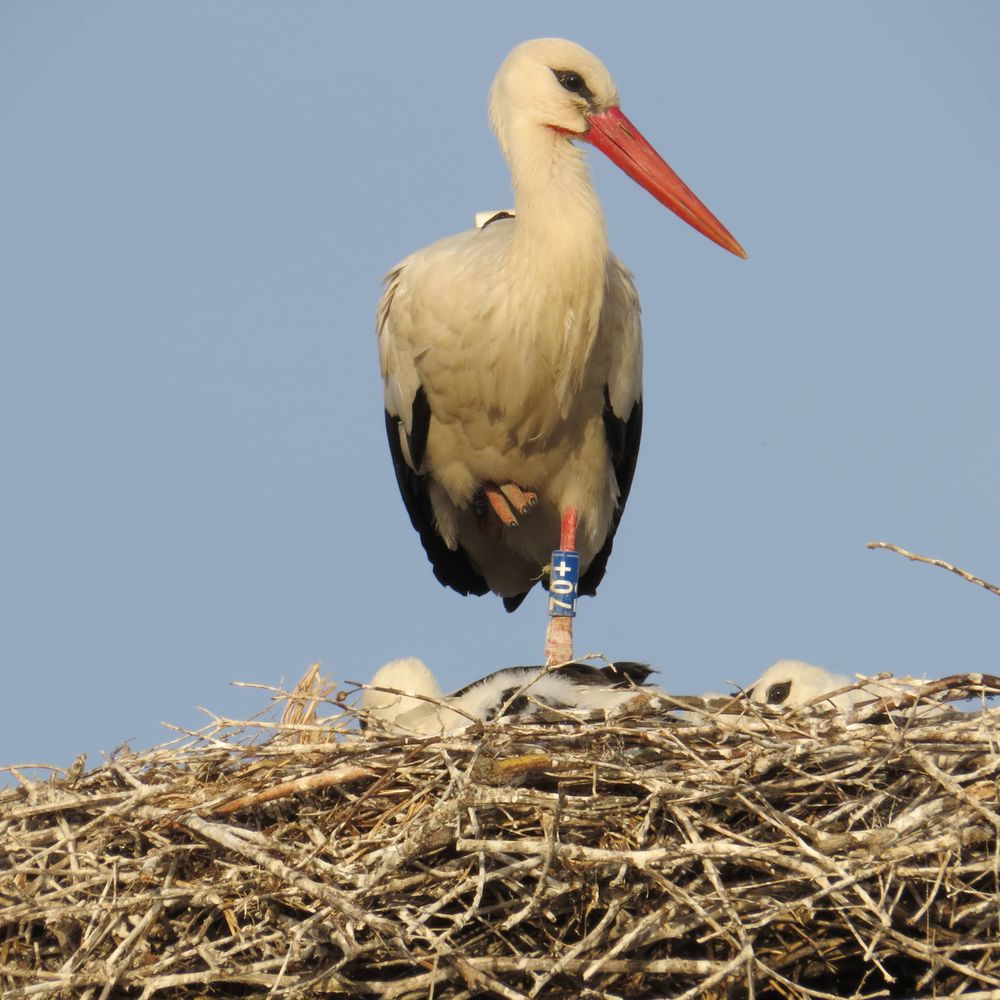
📢📢PhD opportunity!
We are looking for enthusiastic researchers to develop a project looking at the ontogeny of migratory behaviour!
Deadline for expression of interest: 8 February 2026
👉Check details here: drive.google.com/file/d/1wow2...
#migration #ornithology #GPStracking
We are looking for enthusiastic researchers to develop a project looking at the ontogeny of migratory behaviour!
Deadline for expression of interest: 8 February 2026
👉Check details here: drive.google.com/file/d/1wow2...
#migration #ornithology #GPStracking

January 6, 2026 at 11:32 AM
📢📢PhD opportunity!
We are looking for enthusiastic researchers to develop a project looking at the ontogeny of migratory behaviour!
Deadline for expression of interest: 8 February 2026
👉Check details here: drive.google.com/file/d/1wow2...
#migration #ornithology #GPStracking
We are looking for enthusiastic researchers to develop a project looking at the ontogeny of migratory behaviour!
Deadline for expression of interest: 8 February 2026
👉Check details here: drive.google.com/file/d/1wow2...
#migration #ornithology #GPStracking
Reposted by Valeria Mazza
🎉 What a way to end the year!
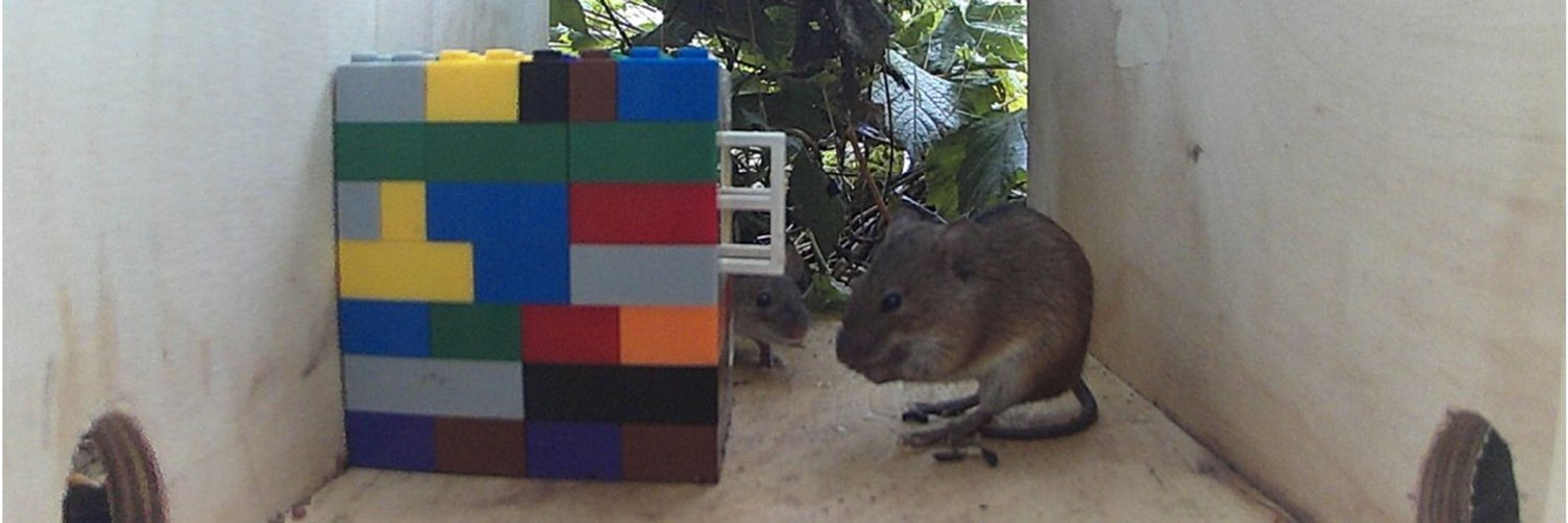
Very excited to see our new paper on 🐭 innovation and mate choice out in @currentbiology.bsky.social!
doi.org/10.1016/j.cub.2025.11.077
With the amazing @fragdarm.bsky.social, @valmazza.bsky.social & Anja Guenther
Very excited to see our new paper on 🐭 innovation and mate choice out in @currentbiology.bsky.social!
doi.org/10.1016/j.cub.2025.11.077
With the amazing @fragdarm.bsky.social, @valmazza.bsky.social & Anja Guenther

December 31, 2025 at 8:53 AM
🎉 What a way to end the year!
Very excited to see our new paper on 🐭 innovation and mate choice out in @currentbiology.bsky.social!
doi.org/10.1016/j.cub.2025.11.077
With the amazing @fragdarm.bsky.social, @valmazza.bsky.social & Anja Guenther
Very excited to see our new paper on 🐭 innovation and mate choice out in @currentbiology.bsky.social!
doi.org/10.1016/j.cub.2025.11.077
With the amazing @fragdarm.bsky.social, @valmazza.bsky.social & Anja Guenther
Reposted by Valeria Mazza
Alexander Pope decried the cruelty of cooking lobsters alive in 1713. 313 years later the practice will finally be banned. www.theguardian.com/world/2025/d...

Boiling lobsters alive to be banned in UK animal cruelty crackdown
Move is part of a long-awaited Labour strategy including outlawing hen cages and ending puppy farming
www.theguardian.com
December 23, 2025 at 8:03 AM
Alexander Pope decried the cruelty of cooking lobsters alive in 1713. 313 years later the practice will finally be banned. www.theguardian.com/world/2025/d...
Reposted by Valeria Mazza
🚨 Tenure-track professorship at Goethe University of Frankfurt, Germany, with a focus on evolutionary ecology of social hymenoptera 🐝🐜
Initially for 6 years:
www.linkedin.com/jobs/view/pr...
Initially for 6 years:
www.linkedin.com/jobs/view/pr...
Goethe University Frankfurt hiring Professur (W1 mit Tenure Track) für Evolutionäre Ökologie der Hymenopteren in Frankfurt, Hesse, Germany | LinkedIn
Posted 11:13:19 PM. Die Professur wird zunächst auf sechs Jahre befristet besetzt, nach erfolgreicher Evaluation…See this and similar jobs on LinkedIn.
www.linkedin.com
December 20, 2025 at 4:43 PM
🚨 Tenure-track professorship at Goethe University of Frankfurt, Germany, with a focus on evolutionary ecology of social hymenoptera 🐝🐜
Initially for 6 years:
www.linkedin.com/jobs/view/pr...
Initially for 6 years:
www.linkedin.com/jobs/view/pr...
Reposted by Valeria Mazza
Our recent paper on lizard societies now online in a special issue of Animal Behaviour. DM if you want me to send you a PDF.

December 20, 2025 at 1:15 PM
Our recent paper on lizard societies now online in a special issue of Animal Behaviour. DM if you want me to send you a PDF.
Reposted by Valeria Mazza
ManyFishes: a big team science collaboration on fish comparative cognition
link.springer.com/article/10.1...
link.springer.com/article/10.1...

ManyFishes: a big team science collaboration on fish comparative cognition - Animal Cognition
Fishes are among the oldest and most diverse groups of vertebrates, encompassing a vast array of species that differ in morphology, ecology, and behavior. While such diversity can pose challenges to c...
link.springer.com
December 17, 2025 at 10:56 AM
ManyFishes: a big team science collaboration on fish comparative cognition
link.springer.com/article/10.1...
link.springer.com/article/10.1...
Reposted by Valeria Mazza

Note that there’s a PhD position on this topic, if you found this interesting! #ASABWinter2025

December 16, 2025 at 4:02 PM
Note that there’s a PhD position on this topic, if you found this interesting! #ASABWinter2025
Reposted by Valeria Mazza

Congratulations to Hélène Dion-Phénix and Gabrielle Gingras for publishing this new paper studying why female blue tits add aromatic plants to their nest. @oikosjournal.bsky.social @nordicoikos.bsky.social

December 14, 2025 at 3:58 PM
Congratulations to Hélène Dion-Phénix and Gabrielle Gingras for publishing this new paper studying why female blue tits add aromatic plants to their nest. @oikosjournal.bsky.social @nordicoikos.bsky.social