



Neil Forbes
@treebeard793.bsky.social
Ecologist, based in South Cumbria. Mostly focused on coastal, wetland, limestone and upland habitats; botany, birds & Natterjacks. Views my own.
Reposted by Neil Forbes

If you missed my talk on alien plants and have an hour to kill before #TheTraitors (haha!), it’s now available here www.youtube.com/watch?v=tCdC.... Enjoy! @bsbibotany.bsky.social

Winter Talk: Urban plants, with Trevor Dines
YouTube video by Botanical Society of Britain and Ireland
www.youtube.com
January 9, 2026 at 5:39 PM
If you missed my talk on alien plants and have an hour to kill before #TheTraitors (haha!), it’s now available here www.youtube.com/watch?v=tCdC.... Enjoy! @bsbibotany.bsky.social
Too early for the #NewYearPlantHunt, Cow Parsely was an unexpected find in Kentmere on 29th Dec given that there was almost nothing else in flower here.
#wildflowerhour
#Cumbria
#wildflowerhour
#Cumbria

January 4, 2026 at 8:54 PM
Too early for the #NewYearPlantHunt, Cow Parsely was an unexpected find in Kentmere on 29th Dec given that there was almost nothing else in flower here.
#wildflowerhour
#Cumbria
#wildflowerhour
#Cumbria
Heathwaite (Arnside Knott) for the #NewYearPlantHunt
Lesser trefoil was unexpected and Procumbent Pearlwort was pleasing due to the sheer improbability of finding one of the tiny flowers at this time of year. Crepis capillaris a bit more expected bit always nice to see
#wildflowerhour
Lesser trefoil was unexpected and Procumbent Pearlwort was pleasing due to the sheer improbability of finding one of the tiny flowers at this time of year. Crepis capillaris a bit more expected bit always nice to see
#wildflowerhour

January 4, 2026 at 8:51 PM
Heathwaite (Arnside Knott) for the #NewYearPlantHunt
Lesser trefoil was unexpected and Procumbent Pearlwort was pleasing due to the sheer improbability of finding one of the tiny flowers at this time of year. Crepis capillaris a bit more expected bit always nice to see
#wildflowerhour
Lesser trefoil was unexpected and Procumbent Pearlwort was pleasing due to the sheer improbability of finding one of the tiny flowers at this time of year. Crepis capillaris a bit more expected bit always nice to see
#wildflowerhour
The #Winter10 (16) for the #NewYearPlantHunt
#wildflowerhour
#Arnside Village, #Cumbria
An equal split between native and naturalised species (I think).
Names in Alt.
#wildflowerhour
#Arnside Village, #Cumbria
An equal split between native and naturalised species (I think).
Names in Alt.

January 4, 2026 at 8:46 PM
The #Winter10 (16) for the #NewYearPlantHunt
#wildflowerhour
#Arnside Village, #Cumbria
An equal split between native and naturalised species (I think).
Names in Alt.
#wildflowerhour
#Arnside Village, #Cumbria
An equal split between native and naturalised species (I think).
Names in Alt.
We really weren't expecting to find Early Hair-grass, Aira praecox at Low Wood in the Duddon Valley on the #NewYearPlantHunt. Early normally means April not Jan. The supporting cast included Hazel catkins & Wavy Bittercress.
#wildflowerhour
#Cumbria
#wildflowerhour
#Cumbria


January 4, 2026 at 8:42 PM
We really weren't expecting to find Early Hair-grass, Aira praecox at Low Wood in the Duddon Valley on the #NewYearPlantHunt. Early normally means April not Jan. The supporting cast included Hazel catkins & Wavy Bittercress.
#wildflowerhour
#Cumbria
#wildflowerhour
#Cumbria
The #Winter 10 (12) from @rspbengland.bsky.social #Hodbarrow
#NewYearPlantHunt for #wildflowerhour
Silver Hair-grass was the least expected species. Rough Hawkbit and Smooth Hawk's-beard were nice to get. & Tim Rich has kindly confirmed that we can count the Scarlet Pimpernel as flowering 😁
#NewYearPlantHunt for #wildflowerhour
Silver Hair-grass was the least expected species. Rough Hawkbit and Smooth Hawk's-beard were nice to get. & Tim Rich has kindly confirmed that we can count the Scarlet Pimpernel as flowering 😁

January 4, 2026 at 8:30 PM
The #Winter 10 (12) from @rspbengland.bsky.social #Hodbarrow
#NewYearPlantHunt for #wildflowerhour
Silver Hair-grass was the least expected species. Rough Hawkbit and Smooth Hawk's-beard were nice to get. & Tim Rich has kindly confirmed that we can count the Scarlet Pimpernel as flowering 😁
#NewYearPlantHunt for #wildflowerhour
Silver Hair-grass was the least expected species. Rough Hawkbit and Smooth Hawk's-beard were nice to get. & Tim Rich has kindly confirmed that we can count the Scarlet Pimpernel as flowering 😁
That is an excellent way of putting it
January 3, 2026 at 8:02 PM
That is an excellent way of putting it
Fair enough, that's what I thought. Frustrating though but the rules are the rules.
January 3, 2026 at 7:55 PM
Fair enough, that's what I thought. Frustrating though but the rules are the rules.
Thanks @bsbibotany.bsky.social . As the sepals are quite spread out I think this may indicate that the flowers have been open, but have since closed up. It looks like the sepals are appressed to the petals quite tightly when in bud from 📷. There weren't any stigmas or stamens visible though 🤔
January 3, 2026 at 5:48 PM
Thanks @bsbibotany.bsky.social . As the sepals are quite spread out I think this may indicate that the flowers have been open, but have since closed up. It looks like the sepals are appressed to the petals quite tightly when in bud from 📷. There weren't any stigmas or stamens visible though 🤔
Reposted by Neil Forbes

We've been working with @metoffice.gov.uk to analyse 10 years of #NewYearPlantHunt data.
The analysis provides the clearest evidence yet of how rising temperatures are impacting the British & Irish flora, with knock-on effects for all our wildlife.
www.theguardian.com/environment/...
The analysis provides the clearest evidence yet of how rising temperatures are impacting the British & Irish flora, with knock-on effects for all our wildlife.
www.theguardian.com/environment/...

Winter blooming of hundreds of plants in UK ‘visible signal’ of climate breakdown
New year plant hunt shows rising temperatures are shifting natural cycles of wildflowers such as daisies
www.theguardian.com
January 2, 2026 at 9:25 AM
We've been working with @metoffice.gov.uk to analyse 10 years of #NewYearPlantHunt data.
The analysis provides the clearest evidence yet of how rising temperatures are impacting the British & Irish flora, with knock-on effects for all our wildlife.
www.theguardian.com/environment/...
The analysis provides the clearest evidence yet of how rising temperatures are impacting the British & Irish flora, with knock-on effects for all our wildlife.
www.theguardian.com/environment/...
Any thoughts on including this Lysimachia arvensis in the #NewYearPlantHunt ?
We've erred on the side of caution and omitted it at present but aware that the flowers can close up in certain weather conditions. It was a fairly bright, cold and dry day though.
@bsbibotany.bsky.social
We've erred on the side of caution and omitted it at present but aware that the flowers can close up in certain weather conditions. It was a fairly bright, cold and dry day though.
@bsbibotany.bsky.social

January 3, 2026 at 11:31 AM
Any thoughts on including this Lysimachia arvensis in the #NewYearPlantHunt ?
We've erred on the side of caution and omitted it at present but aware that the flowers can close up in certain weather conditions. It was a fairly bright, cold and dry day though.
@bsbibotany.bsky.social
We've erred on the side of caution and omitted it at present but aware that the flowers can close up in certain weather conditions. It was a fairly bright, cold and dry day though.
@bsbibotany.bsky.social
Some amazing figures from the first two days of the #NewYearPlantHunt. We've managed two surveys so far in Cumbria. The most unexpected finds have been both Aira praecox and caryophyllea. Lets see what we can find today.
@bsbibotany.bsky.social
@bsbibotany.bsky.social


January 3, 2026 at 11:24 AM
Some amazing figures from the first two days of the #NewYearPlantHunt. We've managed two surveys so far in Cumbria. The most unexpected finds have been both Aira praecox and caryophyllea. Lets see what we can find today.
@bsbibotany.bsky.social
@bsbibotany.bsky.social
Crepis capillaris (Smooth Hawk's-beard) on Arnside Knott today. Looking likely to be a few in flower for the #NewYearPlantHunt.
2 days to go.
@bsbibotany.bsky.social
2 days to go.
@bsbibotany.bsky.social

December 30, 2025 at 3:40 PM
Crepis capillaris (Smooth Hawk's-beard) on Arnside Knott today. Looking likely to be a few in flower for the #NewYearPlantHunt.
2 days to go.
@bsbibotany.bsky.social
2 days to go.
@bsbibotany.bsky.social
One of the more common winter-flowering grasses - Dactylis glomerata, Cock's-foot.
#wildflowerhour
Witherslack, South #Cumbria
#wildflowerhour
Witherslack, South #Cumbria

December 28, 2025 at 8:49 PM
One of the more common winter-flowering grasses - Dactylis glomerata, Cock's-foot.
#wildflowerhour
Witherslack, South #Cumbria
#wildflowerhour
Witherslack, South #Cumbria
I walked right past this one 3 times before I finally spotted it.
Nipplewort, Lapsana communis.
#StillFlowerimg for #wildflowerhour
Witherslack
South #Cumbria
Nipplewort, Lapsana communis.
#StillFlowerimg for #wildflowerhour
Witherslack
South #Cumbria

December 28, 2025 at 8:34 PM
I walked right past this one 3 times before I finally spotted it.
Nipplewort, Lapsana communis.
#StillFlowerimg for #wildflowerhour
Witherslack
South #Cumbria
Nipplewort, Lapsana communis.
#StillFlowerimg for #wildflowerhour
Witherslack
South #Cumbria
Becoming something of a regular find in December (but nowhere near as much of an outlier as my October 2023 record). Just one in flower, plus one in bud, from a cast of hundreds.
Saxifraga tridactylites, Rue-leaved Saxifrage.
#wildflowerhour
Yewbarrow, #Cumbria
Saxifraga tridactylites, Rue-leaved Saxifrage.
#wildflowerhour
Yewbarrow, #Cumbria


December 28, 2025 at 8:17 PM
Becoming something of a regular find in December (but nowhere near as much of an outlier as my October 2023 record). Just one in flower, plus one in bud, from a cast of hundreds.
Saxifraga tridactylites, Rue-leaved Saxifrage.
#wildflowerhour
Yewbarrow, #Cumbria
Saxifraga tridactylites, Rue-leaved Saxifrage.
#wildflowerhour
Yewbarrow, #Cumbria
The #Winter10 (11)
#wildflowerhour
Rue-leaved Saxifrage, Primrose, Nipplewort, Petty Spurge, Gorse, Cock's-foot, Annual Meadow-grass, Wavy Bittercress, Hazel, Creeping Buttercup & Daisy.
Lets see if I can do as well on the #NewYearPlantHunt next week.
All from Witherslack, South #Cumbria
#wildflowerhour
Rue-leaved Saxifrage, Primrose, Nipplewort, Petty Spurge, Gorse, Cock's-foot, Annual Meadow-grass, Wavy Bittercress, Hazel, Creeping Buttercup & Daisy.
Lets see if I can do as well on the #NewYearPlantHunt next week.
All from Witherslack, South #Cumbria

December 28, 2025 at 8:14 PM
The #Winter10 (11)
#wildflowerhour
Rue-leaved Saxifrage, Primrose, Nipplewort, Petty Spurge, Gorse, Cock's-foot, Annual Meadow-grass, Wavy Bittercress, Hazel, Creeping Buttercup & Daisy.
Lets see if I can do as well on the #NewYearPlantHunt next week.
All from Witherslack, South #Cumbria
#wildflowerhour
Rue-leaved Saxifrage, Primrose, Nipplewort, Petty Spurge, Gorse, Cock's-foot, Annual Meadow-grass, Wavy Bittercress, Hazel, Creeping Buttercup & Daisy.
Lets see if I can do as well on the #NewYearPlantHunt next week.
All from Witherslack, South #Cumbria
Reposted by Neil Forbes

A canopy beneath the canopy...
The magic of an Irish rainforest.
The magic of an Irish rainforest.

December 22, 2025 at 7:17 AM
A canopy beneath the canopy...
The magic of an Irish rainforest.
The magic of an Irish rainforest.
Reposted by Neil Forbes

It's not every day you find a new native species for Scotland! Day 22 of my botanical #adventcalendar is Shiny Glasswort - a nationally rare plant never recorded in Scotland before
Growing in a salt pan on the Forth Estuary - branching pattern, colour and flower size the ID clues
#wildflowerhour
Growing in a salt pan on the Forth Estuary - branching pattern, colour and flower size the ID clues
#wildflowerhour


December 22, 2025 at 7:25 AM
It's not every day you find a new native species for Scotland! Day 22 of my botanical #adventcalendar is Shiny Glasswort - a nationally rare plant never recorded in Scotland before
Growing in a salt pan on the Forth Estuary - branching pattern, colour and flower size the ID clues
#wildflowerhour
Growing in a salt pan on the Forth Estuary - branching pattern, colour and flower size the ID clues
#wildflowerhour
Reposted by Neil Forbes
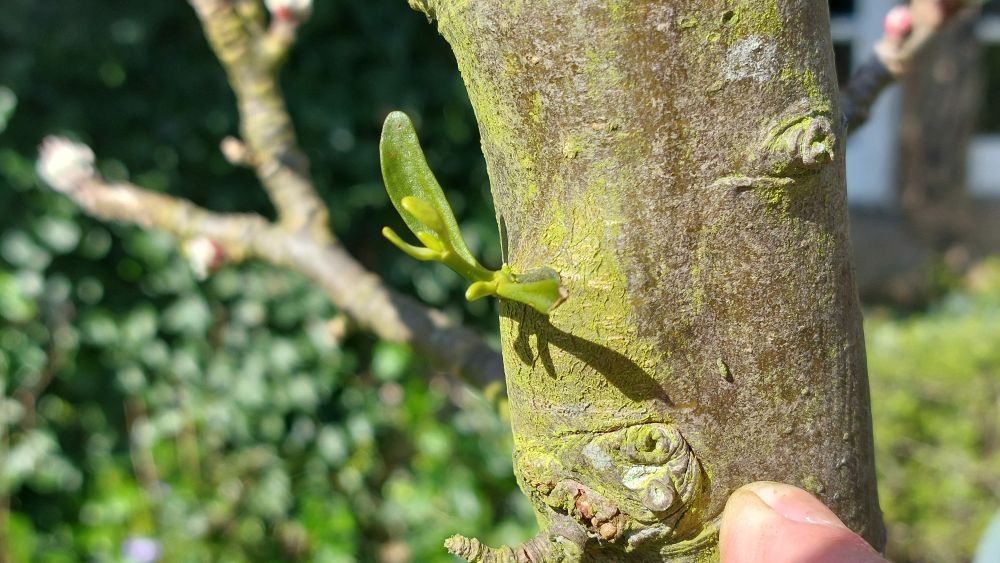
Feb 2021 stuck 10 dehydrated Mistletoe seeds to our 2 apple trees Today plants doing well....
#WildflowerHour #Northumberland #WildlifeGarden
#WildflowerHour #Northumberland #WildlifeGarden


December 20, 2025 at 9:56 AM
Feb 2021 stuck 10 dehydrated Mistletoe seeds to our 2 apple trees Today plants doing well....
#WildflowerHour #Northumberland #WildlifeGarden
#WildflowerHour #Northumberland #WildlifeGarden
Gorse, brightening a #winters day in South Cumbria.
It had many uses on the past, including as winter fodder for horses and cattle (after being crushed). A fascinating account here - share.google/T6HC2VJdvqyG...
#wildflowerhour
It had many uses on the past, including as winter fodder for horses and cattle (after being crushed). A fascinating account here - share.google/T6HC2VJdvqyG...
#wildflowerhour


December 21, 2025 at 8:00 PM
Gorse, brightening a #winters day in South Cumbria.
It had many uses on the past, including as winter fodder for horses and cattle (after being crushed). A fascinating account here - share.google/T6HC2VJdvqyG...
#wildflowerhour
It had many uses on the past, including as winter fodder for horses and cattle (after being crushed). A fascinating account here - share.google/T6HC2VJdvqyG...
#wildflowerhour
Reposted by Neil Forbes

It's time for the Gov to stop (ab)using nature as the scapegoat for its planning woes... review after review shows that Nature isn't to blame!

Reeves’s planning overhaul stalls as senior adviser quits after four months

Reeves’s planning overhaul stalls as senior adviser quits after four months
Exclusive: Catherine Howard’s exit comes amid disagreements at top of government about how far to push deregulation agenda
www.theguardian.com
December 14, 2025 at 10:38 PM
It's time for the Gov to stop (ab)using nature as the scapegoat for its planning woes... review after review shows that Nature isn't to blame!
It's pretty late to find Lesser Trefoil (Trifolium dubium) #StillFlowering. Then again, it's so easy to miss when there's only a little and I only found the one flower here at Arnside Knott earlier in the week.
Early for #Wildflowerhour this week.
@nationaltrust.org.uk
Early for #Wildflowerhour this week.
@nationaltrust.org.uk

December 14, 2025 at 6:54 PM
It's pretty late to find Lesser Trefoil (Trifolium dubium) #StillFlowering. Then again, it's so easy to miss when there's only a little and I only found the one flower here at Arnside Knott earlier in the week.
Early for #Wildflowerhour this week.
@nationaltrust.org.uk
Early for #Wildflowerhour this week.
@nationaltrust.org.uk
Smooth Hawk's-beard (Crepis capillaris) tends to be one of the latest flowering winter species outside of the genuine year-rounders up here. Still some in flower on the most species-rich limestone grasslands.
Will it make it to the #NewYearPlantHunt though?
Early for #wildflowerhour
Will it make it to the #NewYearPlantHunt though?
Early for #wildflowerhour

December 14, 2025 at 6:45 PM
Smooth Hawk's-beard (Crepis capillaris) tends to be one of the latest flowering winter species outside of the genuine year-rounders up here. Still some in flower on the most species-rich limestone grasslands.
Will it make it to the #NewYearPlantHunt though?
Early for #wildflowerhour
Will it make it to the #NewYearPlantHunt though?
Early for #wildflowerhour